
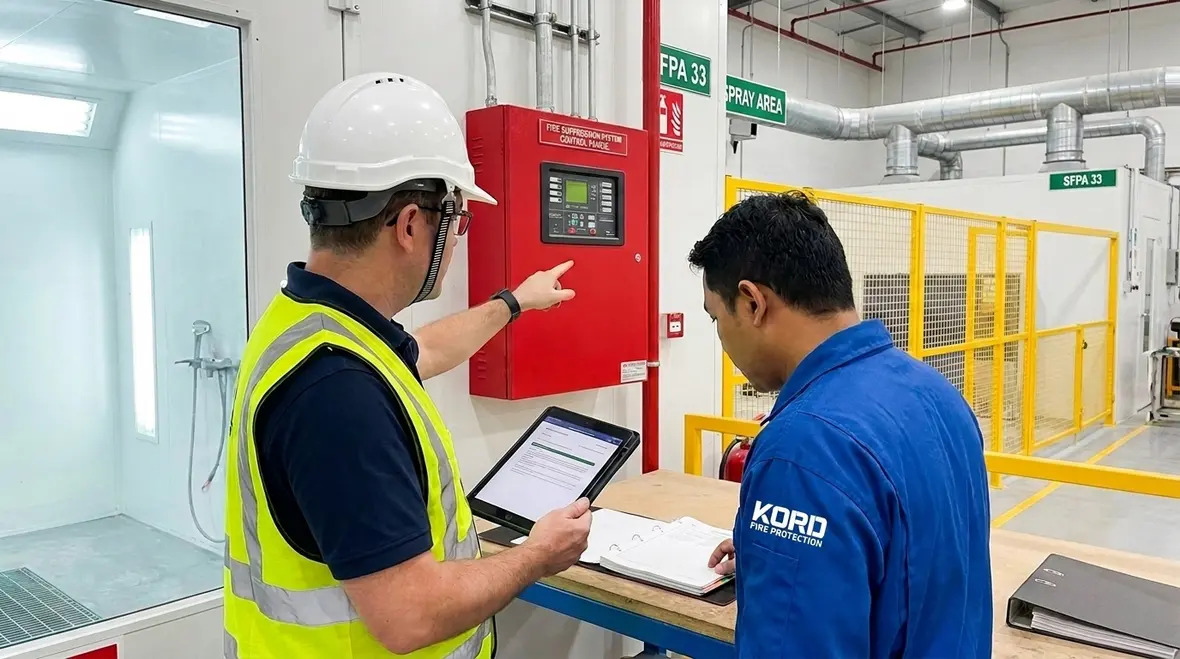
NFPA 33 Section 3.1: Rules for Interpreting the Definitions Chapter
Quick Answer: NFPA 33 Section 3.1 establishes how to read and apply the standard’s definitions. It clarifies scope, meaning, and consistency across installation, maintenance, inspection, and enforcement decisions. Facility teams should document how they interpret terms to prevent gaps, nonconformities, and enforcement delays.
If you are tightening documentation and inspection workflows around defined terms, Kord Fire Protection’s inspection, testing, and maintenance services can help support a more consistent, audit-ready compliance process.
Why NFPA 33 definitions interpretation rules matter in day-to-day compliance
Commercial, industrial, and retail facilities often treat definitions as “reference-only.” In practice, NFPA 33 definitions interpretation rules directly influence classification of processes, acceptable controls, inspection intervals, and documentation expectations. When teams misread a defined term, they frequently select incorrect equipment, apply the wrong inspection method, or fail to maintain required components.
That impacts both safety performance and audit outcomes. Inspectors and AHJs typically evaluate whether a facility’s written procedures and field conditions align with the standard’s terminology, not just its general intent. Kord Fire Protection helps organizations translate definitions into operational procedures, then keeps those procedures current through testing, inspections, and maintenance.
What Section 3.1 does: set the interpretive framework
NFPA 33 Section 3.1 provides the rules for interpreting the Definitions chapter. These rules are the guardrails for every later use of defined terms throughout the document. The purpose is consistency: a facility should not “interpret by habit” or by alternative industry wording when the standard defines a term with a specific meaning.
In field settings, the interpretive framework affects several operational touchpoints:
- Process review and hazard categorization before commissioning or major modifications
- Equipment selection criteria for ventilation, detection, control, and protection systems
- Inspection and maintenance planning, including which components qualify for required attention
- Training and procedure writing to ensure technicians use the same defined language
Facility leaders should treat Section 3.1 as a compliance standard within the standard. It governs how every defined word becomes an enforceable requirement later in the document.
How to apply the definitions correctly: operational procedures that hold up in audits
To make NFPA 33 definitions interpretation rules usable, organizations should convert them into repeatable workflow. This is where many facilities struggle, especially in multi-tenant retail, contract manufacturing environments, and remodels where responsibility shifts between teams.
1) Build a “defined terms” crosswalk tied to site operations
Create a crosswalk that links each relevant defined term to actual site conditions. For example, a defined classification should connect to the specific process area, equipment list, control scheme, and maintenance actions. Avoid generic mapping such as “this applies to the production room.” Auditors expect clarity on what exactly meets the defined criteria.
2) Validate terminology during inspections, not after findings
Before formal inspections, technicians and safety staff should walk the system and confirm that the narrative in inspection procedures matches the defined language used in the standard. Common failure points include outdated schematics, changed process chemicals, and equipment swaps that did not trigger a definitions review.
3) Maintain documentation that demonstrates consistent interpretation
Documentation should show how the facility interpreted defined terms at the time requirements were established. A strong package typically includes:
- Reference list of applicable definitions and the facility’s interpretation notes
- Updated SOPs reflecting the defined terms in use by technicians
- Inspection and maintenance records showing the correct components were serviced
- Change control records for replacements and process updates
Kord Fire Protection supports these workflows by helping teams plan inspections and maintenance so their practices stay aligned with the standard’s terminology, even as operations evolve.
Common compliance challenges caused by definition misinterpretation
Misinterpretation rarely results from poor intent. It usually stems from operational pressures, incomplete training, or inconsistent ownership of standards compliance across vendors. These challenges typically appear in recurring patterns.
Case pattern: process changes that do not update the definitions crosswalk
Facilities frequently modify blends, vendors, or operating schedules. If the defined term depends on specific characteristics and the crosswalk is not updated, the inspection scope may no longer match the process. That creates exposure to both safety risk and compliance findings.
Case pattern: contractors use “common terminology” that conflicts with NFPA 33
Different contractors may use informal labels for equipment and areas. If the facility does not require terminology alignment to the standard, installation and maintenance documentation can drift from required definitions.
Case pattern: maintenance actions do not match defined components
Another frequent failure point involves component identification. Technicians may service parts they recognize but miss parts that are required because they fall under a defined category. Tight interpretation through Section 3.1 prevents this by ensuring scope matches defined terms.
Commercial and industrial facilities reduce these risks by pairing defined terms with field verification and by maintaining a living compliance procedure set, supported by recurring testing and maintenance programs.
What “good” looks like: inspection-ready interpretation practices
Organizations that consistently pass reviews usually implement three things: clarity, traceability, and verification.
Clarity
Defined terms must appear in SOPs, checklists, and work orders using consistent wording. Technicians should understand what triggers an inspection action because it matches the definition, not just because it “sounds similar.”
Traceability
Interpretation decisions should be traceable to the standard text. When teams adjust procedures, they should record why the interpretation applies and how it connects to the facility’s current operating conditions.
Verification
Verification includes field checks of the equipment mechanisms tied to the defined requirements. That may involve inspecting actuation, accessibility, ventilation performance, detection readiness, and the condition of related interfaces. The goal is to ensure the defined scope maps to actual working systems.
For organizations seeking a practical compliance partner, Kord Fire Protection helps commercial facilities align inspection and maintenance programs with NFPA 33 expectations over time.
Frequently Asked Questions
Conclusion and call to action
NFPA 33 Section 3.1 sets the rules for interpreting definitions that drive enforceable requirements throughout the standard. Facilities that operationalize these rules through crosswalks, documented interpretation, and field verification reduce risk and prevent scope drift during process changes. Kord Fire Protection can help your team translate definitions into inspection-ready procedures and maintain compliance through ongoing testing and maintenance. Request a compliance review to confirm your interpretation practices are audit-ready.
External resources and related content
If your organization is building a broader fire safety compliance program alongside NFPA 33, consider aligning documentation and inspection practices with your overall code strategy. You can review Kord Fire Protection resources here: Kord Fire Protection.
For related reading, see NFPA 1 Section 3.3 General Fire Code Definitions for another practical look at how defined code language shapes real-world compliance decisions.

Join Our Newsletter!
Get the latest fire safety tips delivered straight to your inbox From our Newsletter.



