
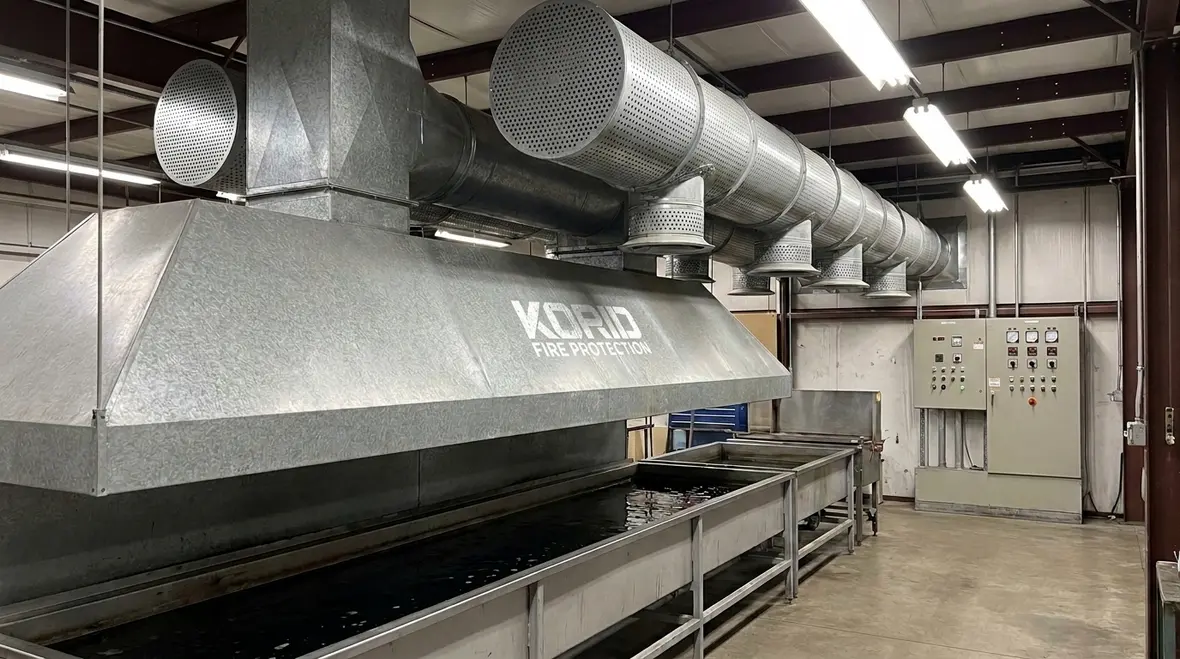
NFPA 34 Section 7.4: Make-Up Air for Dipping and Coating Exhaust
Quick Answer
NFPA 34 Section 7.4 requires make-up air controls that support safe operation of dipping and coating exhaust systems. Facilities must balance ventilation performance, maintain appropriate air movement, and prevent unsafe conditions such as inward leakage of contaminated air and loss of capture efficiency.
For facilities building stronger inspection routines around these systems, Kord Fire Protection’s fire protection compliance auditing guide is a useful related resource, especially when ventilation performance needs to be documented alongside broader life safety readiness.
Why Section 7.4 matters for dipping and coating exhaust
Dipping and coating operations routinely generate flammable or combustible vapors, overspray particulates, and solvent laden air. Exhaust systems remove those contaminants, but they also create negative pressure in work areas. NFPA 34 make-up air dipping coating exhaust requirements focus on replacing that air in a controlled way so the exhaust system continues to capture hazards without creating new risks through poor mixing, short circuiting, or backflow.
In practice, compliance failures often come from make-up air that is uncontrolled, incorrectly located, inadequately interlocked with exhaust, or poorly maintained. Commercial and industrial facilities also face additional constraints, including tight building envelopes, energy efficiency goals, and production schedules that reduce time for inspections and testing. A reliable compliance program treats make-up air as an engineered safety system, not a comfort feature.
What NFPA 34 expects from make-up air controls
Section 7.4 addresses make-up air intended to support exhaust performance for dipping and coating applications. The central objective is to maintain safe air movement patterns while sustaining effective contaminant capture. NFPA 34 make-up air dipping coating exhaust provisions typically drive facilities toward the following engineering controls and operational practices.
1) Maintain ventilation balance and capture efficiency
Exhaust flow removes contaminated air. Make-up air replaces it. When replacement air is insufficient, improperly distributed, or released in a way that disrupts capture zones, vapors can escape into the work area. When replacement air is excessive or directed incorrectly, it can push contaminants away from exhaust hoods, increasing off target exposure and combustible atmosphere formation.
2) Avoid unsafe pressurization and backflow
Negative pressure can be appropriate for hazardous exhaust rooms, but it must not cause uncontrolled infiltration of air that carries flammable vapors into adjacent spaces. Conversely, make-up air that overcompensates can reduce containment by weakening hood capture or causing eddies that spread vapors. Facilities must confirm that the installed system maintains the intended pressure relationships under actual operating conditions.
3) Provide reliability through interlocks and control sequences
Many installations rely on airflow interlocks or control logic that links make-up air operation to exhaust operation. This reduces the risk of running make-up air while exhaust is down or impaired. Control sequences also support orderly start up and shutdown, which matters for volatile materials that can release vapor when production resumes.
4) Ensure ducting, inlets, and distribution support containment
Make-up air delivery location and discharge momentum matter. High velocity discharges can create turbulence that undermines capture. Low velocity delivery that fails to overcome stratification can allow vapor accumulation. NFPA 34 compliance efforts should include placement reviews that consider hood geometry, workpiece positions, airflow obstructions, and the actual operating state of production lines.
How to design and operate make-up air without undermining exhaust
Good compliance starts with engineered airflow planning. Installations frequently fail because make-up air is treated as a generic building system instead of a tuned partner to the exhaust system.
Facilities that also need recurring inspections, testing, and preventive maintenance across related protection systems can naturally fold this work into Kord Fire Protection’s fire safety inspections and preventive maintenance services, which helps keep ventilation-related findings from getting stranded in a separate compliance bucket.
Distribution strategy: where make-up air goes
Make-up air should support capture patterns and prevent contaminated air from recirculating. In dipping and coating areas, distribution often targets the supply zone that balances the exhaust hood without blasting vapors away from it. Engineers typically account for:
- Hood type and placement
- Observed vapor migration at different airflow rates
- Door openings, personnel traffic, and forklift pathways
- Localized obstructions such as racks, conveyor structures, and spray booths
Control sequencing: interlock and fault handling
Systems should define what happens during abnormal conditions. Common failure points include:
- Exhaust failure with continued make-up air delivery
- Make-up air fan running in the wrong speed range after a controls retrofit
- Damper failures that restore air delivery only after prolonged manual intervention
- Sensor drift on airflow monitoring points used for interlocks
To mitigate those issues, facilities should verify interlock logic, confirm sensor calibration intervals, and document setpoints and alarm responses tied to airflow performance.
Airflow verification and balancing methods
Compliance verification should not rely solely on nameplate fan curves. Practical methods include airflow measurements at key locations, checks of duct leakage, damper verification, and smoke or tracer testing to observe airflow patterns during normal production conditions. Where feasible, facilities should evaluate make-up air behavior with doors in their worst case operational state.
Inspection, testing, and maintenance that supports compliance
NFPA 34 make-up air dipping coating exhaust compliance depends on ongoing operational integrity. Maintenance is often where systems drift out of spec.
What to inspect during routine checks
Commercial facilities should include targeted checks for:
- Make-up air fan operation, speed control, and vibration or bearing condition
- Dampers for proper position feedback and smooth movement
- Airflow sensors used for interlocks, including calibration status
- Distribution nozzles or diffusers for obstructions and residue buildup
- Exhaust system performance indicators that signal capture deterioration
Common causes of make-up air noncompliance
In the field, the most frequent drivers include:
- Seasonal temperature effects that change air density and alter actual delivered flow
- Production upgrades that change hood or booth flow requirements without adjusting make-up air
- Control wiring changes during contractor work that defeat intended interlocks
- Duct modifications that introduce leakage or alter velocity profiles
Recommended documentation expectations
Facilities should maintain a clear compliance file that includes system design intent, as built drawings, airflow test reports, interlock descriptions, and maintenance logs. This supports both internal audits and external third party reviews, and it helps technical staff respond quickly when symptoms appear, such as increased odor, visible vapor migration, or complaints from adjacent areas.
Operational best practices for commercial and industrial sites
Even well designed systems can underperform when operating procedures do not match the engineering assumptions. Facilities should standardize start up, shutdown, and production changeover steps.
Start up and shutdown sequencing
Make-up air should align with exhaust system readiness. If production begins before exhaust stabilizes, volatile emissions can escape before capture is established. Similarly, if exhaust stops while make-up air continues, air movement can disperse remaining vapors into the workspace.
Production mode changes
Dipping and coating schedules often change based on part types, solvent loads, and material chemistry. Where the exhaust system changes speed, damper positions, or filtration mode, the make-up air system should respond accordingly or use a controlled hierarchy of setpoints.
Training and accountability
Operators should understand what interlocks mean operationally, what alarms require immediate response, and how to recognize signs of capture loss. This reduces the likelihood that teams bypass alarms or delay corrective action to avoid production downtime.
Partnering for sustained compliance: why Kord Fire Protection helps
Commercial facilities benefit from a compliance partner that treats NFPA 34 make-up air dipping coating exhaust as a system performance requirement, not just a one time inspection item. Kord Fire Protection supports ongoing testing, documentation, and maintenance coordination so ventilation controls remain aligned with the hazards they manage.
If your site needs a structured approach to inspection readiness, deficiency tracking, or verification of ventilation system performance, Kord Fire Protection can help establish repeatable procedures that reduce recurring gaps and protect production continuity.
Frequently Asked Questions
Conclusion
NFPA 34 Section 7.4 focuses on engineered make-up air that supports dipping and coating exhaust performance and containment. Facilities should verify airflow balance, interlock operation, and distribution effectiveness, then maintain the system through routine inspection and calibration. To reduce operational drift and inspection surprises, engage Kord Fire Protection for ongoing testing, documentation support, and maintenance coordination that keeps NFPA 34 make-up air dipping coating exhaust controls aligned with real world production.

Join Our Newsletter!
Get the latest fire safety tips delivered straight to your inbox From our Newsletter.



