
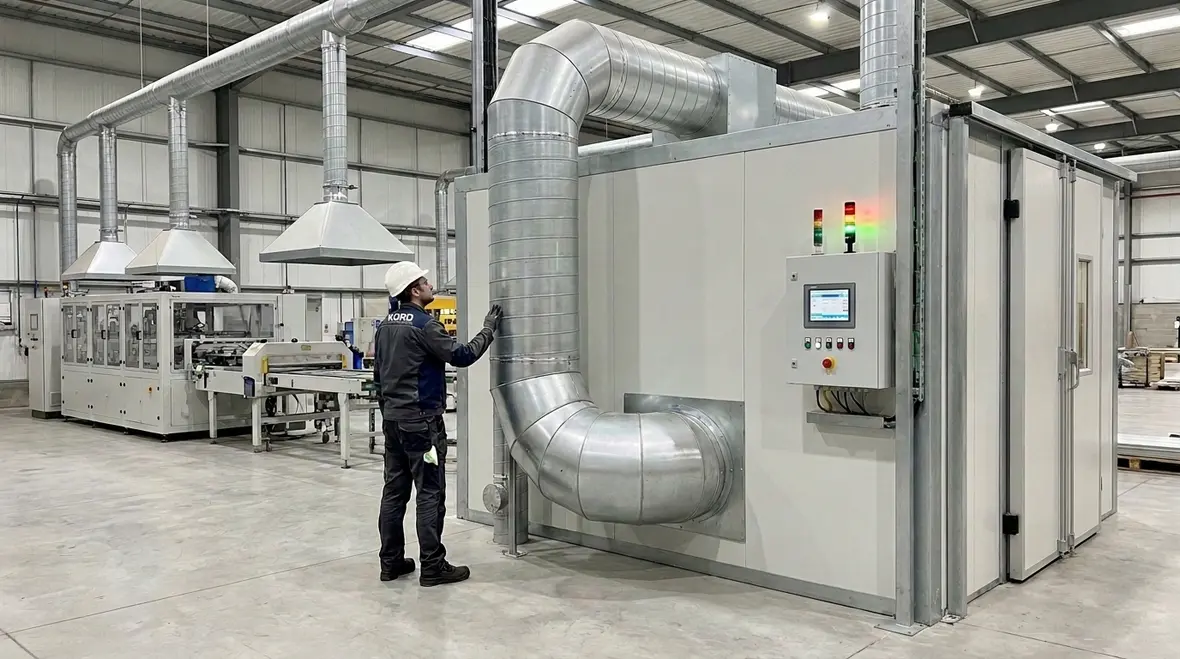
NFPA 33 Section 13.8: Ventilation for Drying, Curing, and Fusion Processes
Quick Answer: NFPA 33 Section 13.8 requires engineered ventilation controls during drying, curing, and fusion to keep vapor concentrations below hazardous levels and manage combustible residues. Facilities must size, maintain, and verify ventilation effectiveness, with documented inspection and ongoing performance checks.
For additional background on broader inspection, maintenance, and compliance support, see Kord Fire Protection services.
Why NFPA 33 drying curing process ventilation requirements matter in real facilities
In commercial and industrial settings, drying, curing, and fusion operations often release volatile vapors and, in some cases, combustible byproducts. NFPA 33 drying curing process ventilation requirements are written to reduce ignition risk, limit hazardous vapor concentrations, and support reliable control of flammable atmospheres. The practical challenge is that ventilation performance can drift due to filter loading, duct leakage, fan wear, damper mispositioning, or product and process changes that alter vapor generation rates.
From a compliance standpoint, AHJs typically expect ventilation to be properly designed, installed, and maintained, with evidence that the system continues to perform as intended. Kord Fire Protection supports facilities by helping them translate code language into an inspection, testing, and maintenance program that aligns with everyday production realities.
What Section 13.8 expects for drying, curing, and fusion
Section 13.8 focuses on ventilation controls during processes that generate flammable vapors. While exact wording depends on the NFPA 33 edition adopted by the authority having jurisdiction, the operational intent remains consistent: the ventilation must capture and remove vapors effectively, prevent vapor accumulation in hazardous areas, and protect the process equipment and surrounding spaces from unsafe conditions.
In practice, compliance programs usually address three core areas:
- Capture and direction of airflow at the source where vapors are generated, not just general room ventilation.
- Proper exhaust routing through ducts, fans, and exhaust systems designed for contaminated air.
- System reliability and verification through inspection, testing, and maintenance records.
Key performance expectations that drive design decisions
Ventilation for these processes does not behave like typical HVAC. Vapors may be lighter than air, may stratify, and may vary by temperature, coating formulation, cure cycle, and airflow disturbances. Ventilation effectiveness depends on accurate capture, adequate transport velocity in ductwork, and safe exhaust handling. Common design drivers include:
- Whether the equipment requires localized exhaust at the cabinet, conveyor, or curing chamber.
- How the facility manages makeup air so exhaust does not create negative pressure problems or disrupt capture.
- How the facility handles exhaust discharge location and whether it could create reentry risks.
- How the ventilation system deals with heat and residues produced during curing and fusion.
How to evaluate ventilation effectiveness during the drying and curing cycle
Many compliance gaps appear after the system is installed, not during initial commissioning. NFPA 33 drying curing process ventilation requirements require ongoing confidence that the ventilation still achieves intended vapor control as conditions change.
Operational checks facilities can document
A defensible program includes checks that correlate system operation with the process mode. Facilities should define when ventilation must run relative to coating application, dwell times, heat cycles, and shutdown. Documentation commonly includes:
- Fan and damper status during each process step, including startup, normal operation, and shutdown.
- Indicator readings (such as airflow indicators) aligned with calibration or acceptance values.
- Filter and duct condition inspections to verify that capture is not reduced by loading or blockage.
- Exhaust discharge observation to ensure discharge is unobstructed and maintained.
Common failure points that cause noncompliance
Field experience shows repeated patterns:
- Filter saturation reduces airflow and increases vapor migration into the room.
- Loose duct joints or damaged flexible connections cause leakage that lowers capture effectiveness.
- Improper fan selection or fan speed changes during maintenance or upgrades.
- Blocked or partially obstructed capture hoods from production clutter or incorrect setup.
- Misaligned dampers due to automation updates, local control wiring changes, or incorrect setpoints.
These are not just maintenance issues. They become fire safety and code compliance issues because reduced capture can allow flammable vapor mixtures to form outside the intended control zone.
Equipment and controls: what auditors typically look for
During inspections, authorities having jurisdiction often look for evidence that ventilation is engineered and controlled as part of the fire safety strategy, not treated as a convenience feature. The following elements commonly surface in compliance reviews.
Ventilation interlocks and operating logic
Ventilation control logic should ensure that the ventilation system operates when vapors are produced. Where the facility uses interlocks or process start permits, the intent is straightforward: drying, curing, and fusion steps should not run under conditions that would defeat capture. Auditors commonly ask how the system confirms that airflow is sufficient before the hazardous operation begins.
Airflow indicators, monitoring, and verification practices
Facilities frequently rely on airflow measurement or indicators. The compliance question becomes whether those devices are maintained and whether the readings are reliable. A robust program includes:
- Calibration or functional verification per manufacturer recommendations.
- Clear acceptance criteria tied to the design intent.
- Maintenance intervals that reflect real loading conditions, not generic schedules.
Residue management and exhaust system conditioning
As products cure, they may leave residues that affect duct cleanliness, airflow, and even fire risk. NFPA 33 expectations typically extend to the need for safe operation and maintenance that prevents unsafe accumulation. Facilities should ensure:
- Ducts remain free of excessive deposits that restrict airflow.
- Fans and motors operate within safe temperature limits and are kept clean.
- Maintenance personnel understand how residues change over time and how that changes ventilation performance.
Maintenance and inspection: turning code intent into a repeatable program
Compliance collapses when ventilation maintenance becomes reactive. NFPA 33 drying curing process ventilation requirements are best met through a planned inspection and testing cadence that tracks ventilation performance and verifies ongoing reliability.
Recommended maintenance elements for drying and curing ventilation systems
- Pre use checks for fan operation, damper position, and capture hood placement.
- Periodic inspections of ducts, joints, seals, and airflow paths.
- Filter and strainer management based on real product loading and differential pressure trends.
- Functional verification of interlocks and alarm indicators used to protect against loss of ventilation.
- Recordkeeping that aligns maintenance findings with corrective actions and re verification.
Because ventilation performance depends on multiple components, it also depends on coordination across disciplines. Production teams need to understand what maintenance findings mean for process operations. Facilities need a clear stop or slow policy when ventilation systems underperform. Kord Fire Protection helps commercial and industrial customers establish inspection and maintenance workflows that support both production continuity and defensible compliance.
If you’re working through broader spray operation requirements, this related article on what NFPA 33 covers helps connect ventilation obligations to the larger compliance picture.
Frequently Asked Questions
Conclusion and call to action
Ventilation for drying, curing, and fusion must deliver reliable vapor control, not just exhaust air movement. If your program lacks defined verification steps, maintenance trending, and documented performance checks, your NFPA 33 drying curing process ventilation requirements may be at risk. Schedule a compliance focused review with Kord Fire Protection to assess system condition, inspection coverage, and documentation readiness, then build a maintenance and testing plan that supports safe, consistent operations.

Join Our Newsletter!
Get the latest fire safety tips delivered straight to your inbox From our Newsletter.



