
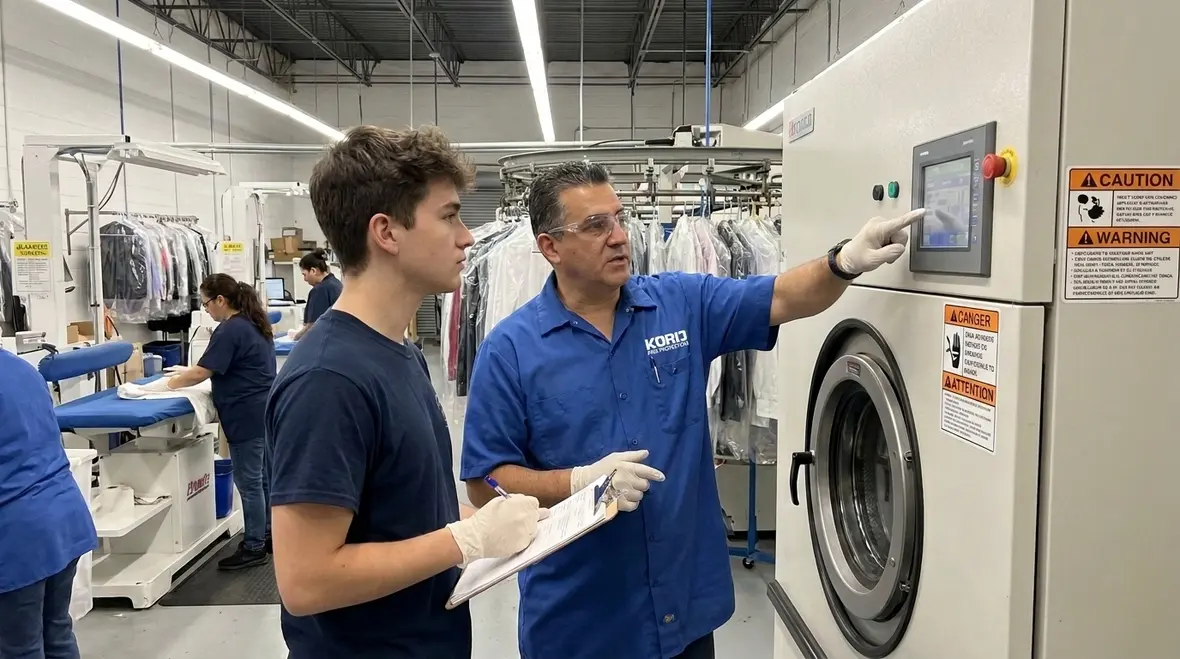
NFPA 32 Section 5.5 Employer Training Responsibilities: Owner Obligations
Quick Answer
Under NFPA 32 Section 5.5, the owner must ensure employer training responsibilities for drycleaning operations are established, documented, and kept current. This includes job specific instruction, safe work practices, emergency response awareness, and verification of competency for affected employees.
For a practical look at how documented fire readiness holds up during real reviews, see commercial fire safety audits. For recordkeeping support that inspectors can actually follow without squinting at mystery paperwork, Kord Fire Protection also covers fire safety system documentation for compliance. ([kordfire.com](https://kordfire.com/commercial-fire-safety-audit-step-by-step-process/?utm_source=openai))
Why NFPA 32 employer training responsibilities drycleaning facilities draw scrutiny
Drycleaning environments combine flammable liquid use, specialized equipment, ventilation systems, and frequent handling of chemicals. That mixture increases the likelihood that employees will face ignition sources, exposure hazards, or unsafe operating sequences during routine work or abnormal conditions. NFPA 32 employer training responsibilities drycleaning facilities therefore focus on preventing “assumption based” work practices that can develop when equipment runs day after day without formal competency checks.
From a compliance standpoint, inspectors often look for evidence that training is not just scheduled, but tied to the actual equipment and tasks in the facility. That includes who is trained, what they were trained on, when it was last reviewed, and whether the training addresses the specific control measures used by the facility.
Section 5.5 in plain terms: what owners must ensure
NFPA 32 Section 5.5 establishes employer level responsibilities that begin with the owner or managing party, even when the day to day training is delivered by supervisors. Owner obligations typically include the following core elements:
-
Training programs are established for affected employees. Affected employees include anyone whose duties involve drycleaning operations, solvent handling, machine startup and shutdown, maintenance interactions, waste handling, and emergency response participation.
-
Training reflects the facility’s processes and equipment. Training content should match the specific drycleaning system, including solvent system configuration, filtration methods, still or recovery equipment processes, and ventilation control strategies.
-
Training occurs initially and after changes. When processes, chemicals, equipment, or operating procedures change, the owner must ensure training is updated to match the new risk profile.
-
Competency is verified, not presumed. Owners must be able to show that employees can perform tasks safely and follow correct operating steps under routine and abnormal conditions.
What “job specific” training should cover in drycleaning operations
High quality training under NFPA 32 employer training responsibilities for drycleaning operations goes beyond general fire awareness. It connects the employee’s task to ignition control, safe solvent handling, and emergency outcomes. Key training topics commonly include:
Solvent hazards and ignition control fundamentals
-
Hazard recognition for the specific solvent used, including how vapors can accumulate and how ignition risks change with ventilation conditions.
-
Understanding sources of ignition relevant to the facility, including hot surfaces, electrical equipment, and operational practices that can create sparking or localized heating.
-
Safe handling of solvent containers, transfers, and equipment interfaces to minimize spills and vapor release.
Machine operation, startup, shutdown, and abnormal condition response
Training should directly address the sequence of operations for drycleaning machines and related recovery equipment. Employers should teach employees to recognize abnormal signs such as unusual odors, unexpected vapor behavior, pressure or temperature deviations, and filtration system irregularities. Employees should also understand when to stop operations and notify supervision rather than “continue and troubleshoot.”
Operational controls often fail in predictable ways, including:
-
Improper startup when recovery or ventilation is not in the correct state.
-
Bypassing interlocks or skipping steps because the process “always works.”
-
Inadequate spill control practices during transfers or maintenance.
Waste, filtration, and residue handling procedures
Owners should ensure training includes how waste is classified, stored, and managed within the facility, along with safe container handling. Filtration systems and residues can present specific ignition and exposure concerns if not handled according to site procedures. Training should reinforce:
-
Container labeling and closed storage practices.
-
Segregation of incompatible materials where applicable.
-
Procedures for cleaning and waste turnover that prevent solvent release.
Emergency awareness aligned to the facility’s protection strategy
Training should prepare employees to support emergency response even when a fully staffed fire brigade is not available. This includes basic roles and actions such as activating alarms per site procedure, assisting with evacuation, communicating location and condition details, and understanding the boundaries of what employees should attempt during an incident.
Documentation and inspection readiness: owner proof that training was done
NFPA 32 employer training responsibilities for drycleaning operations become enforceable through documentation and practical performance. Owners should implement a training record system that an inspector can audit quickly. At minimum, training documentation should include:
-
Employee name and role or job function.
-
Date of training and the training topics covered.
-
Who delivered the training and their qualifications.
-
Evidence of understanding, such as competency checks, practical demonstrations, quizzes, or documented supervisor verification.
-
Training updates triggered by changes in equipment, chemicals, or procedures.
Common failure points include outdated materials, generic training that does not reflect the specific machines on site, and missing linkage between maintenance tasks and safe work instructions. Owners also run into challenges when turnover occurs and newly assigned employees begin tasks without a completed onboarding training path.
To support inspection readiness, Kord Fire Protection typically helps facilities align fire safety documentation with real operational conditions through ongoing compliance and maintenance support. If owners want broader fire life safety support across codes and recurring inspections, Kord Fire Protection can help establish a dependable, reviewable compliance workflow. For a deeper look, see Fire Protection Compliance Auditing Guide by Kord and Fire Safety Compliance Management with Automated Documentation. ([kordfire.com](https://kordfire.com/fire-protection-compliance-auditing-guide-by-kord/?utm_source=openai))
For related guidance on maintaining documented fire safety readiness in commercial environments, see Kord Fire Protection. ([kordfire.com](https://kordfire.com/?utm_source=openai))
Maintenance and testing intersect with training: reducing the gap between policy and reality
Training works best when the systems employees depend on are maintained and verified. Owners should connect training content to the actual performance of protection systems, operating controls, and safety equipment. When inspections or service events are deferred, employees can face conditions that do not match the training assumptions.
Practical examples of training and maintenance alignment include:
-
Ventilation dependent processes: Employees need to understand the operational significance of ventilation status, but only if ventilation performance is routinely tested and deficiencies are corrected.
-
Interlocks and safety controls: Training should emphasize correct operation sequences, while service technicians should maintain those controls so that employees are not forced to work around malfunctioning components.
-
Emergency systems availability: If alarms or related emergency signaling are not maintained, employees may not receive the expected signals during an incident.
Kord Fire Protection supports commercial facilities with recurring service, testing coordination, and documentation practices that help owners demonstrate due diligence. This approach reduces the “training gap” that often appears when equipment condition changes faster than procedures are updated. Owners looking to tighten readiness can also review Kord Fire Protection’s guidance on protecting commercial and industrial buildings with inspections. ([kordfire.com](https://kordfire.com/protect-commercial-and-industrial-buildings-with-inspections/?utm_source=openai))
Owner best practices: building a training program that holds up over time
Owners can strengthen NFPA 32 Section 5.5 compliance by implementing an integrated training and review cycle:
-
Map tasks to hazards. Break down drycleaning roles by task, including solvent transfer, machine operation, maintenance assistance, and waste handling. Assign each task a hazard and control measure linkage.
-
Standardize onboarding. Require new employee training before unsupervised machine operation. Use competency verification rather than sign in sheets.
-
Schedule refresh training. Reinforce key steps and emergency awareness at defined intervals or when updates occur.
-
Trigger retraining after changes. Retrain when equipment is replaced, solvents are changed, ventilation controls are modified, or written operating procedures are revised.
-
Conduct periodic audits. Supervisors should observe performance, correct unsafe shortcuts, and document actions taken. Audits improve training relevance and reduce repeat issues.
This disciplined approach supports NFPA 32 employer training responsibilities drycleaning compliance and helps keep day to day operations aligned with the facility’s current risk controls.
Frequently Asked Questions
Call to action: secure compliance before the next inspection window
Owners should review their NFPA 32 employer training responsibilities drycleaning documentation, verify task specific coverage, and confirm competency evidence for all affected employees. Then align training assumptions with current equipment condition through a disciplined maintenance and testing program. Kord Fire Protection can support commercial facilities with ongoing compliance coordination and service readiness. Schedule a compliance review now to close training gaps and strengthen inspection confidence.

Join Our Newsletter!
Get the latest fire safety tips delivered straight to your inbox From our Newsletter.



