
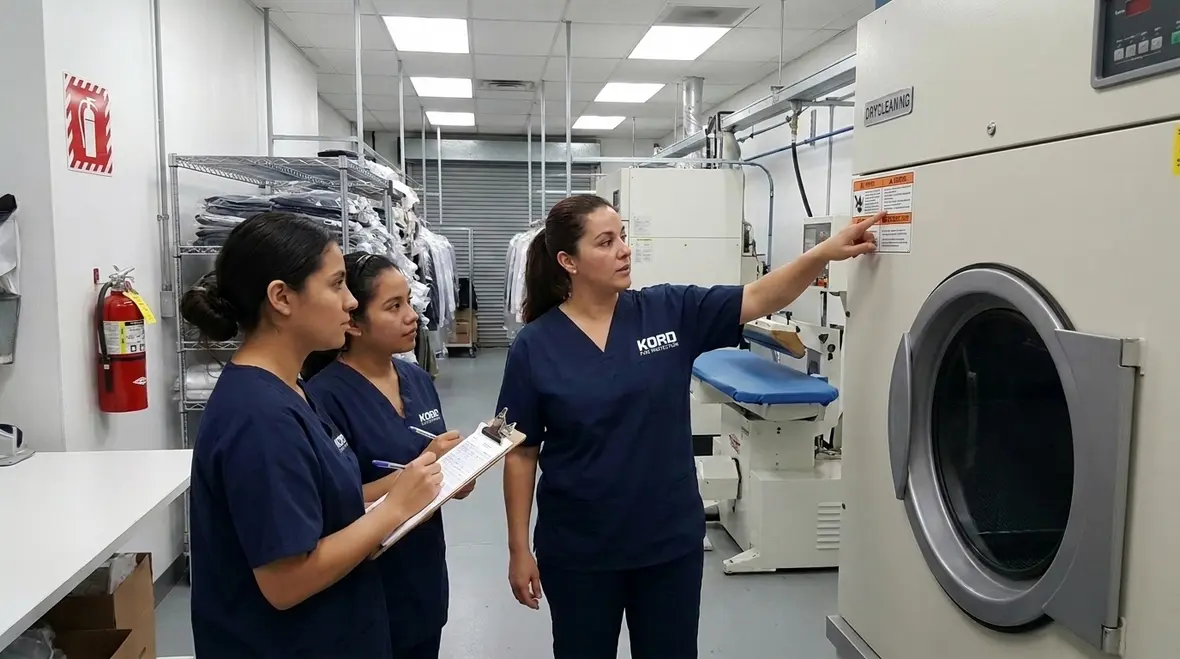
NFPA 32 Section 5.4 Employee Training: What Drycleaning Staff Must Know
Quick Answer: NFPA 32 Section 5.4 requires drycleaning staff to receive job specific fire safety training tied to equipment hazards, operating procedures, and emergency actions. Effective training covers safe handling, shutdown and response steps, and how to keep fire protection features working as installed.
For facilities tightening up inspection readiness and ongoing system reliability, it helps to pair staff training with a broader fire protection service plan that covers inspections, testing, troubleshooting, and repairs across the building’s life safety systems.
Why NFPA 32 employee training drycleaning staff matters in real operations
In commercial and industrial drycleaning facilities, ignition sources and failure points tend to be predictable: flammable solvent vapor, ignition by hot surfaces or electrical components, improper housekeeping, and delayed response. NFPA 32 employee training drycleaning staff centers on making sure each employee understands the hazards specific to the solvent system, the control of ignition sources, and the procedures that limit fire and prevent escalation during the first critical minutes.
Training also supports repeatable performance. When staff can identify abnormal machine conditions, perform correct shutdown steps, and act within the facility’s emergency plan, incident severity typically decreases. It also reduces inspection and maintenance gaps that lead to recurring noncompliance.
What Section 5.4 covers: training content, competency, and documentation
NFPA 32 Section 5.4 focuses on employee training as a control measure, not a one time orientation. Facilities should treat training as a structured program with initial instruction, periodic refreshers, and documented competency checks. The objective is consistent hazard recognition and correct response under operational stress.
Training expectations that typically drive compliance
- Job specific procedures: Staff training must match the tasks employees perform, including operation of solvent handling systems, loading and unloading, and maintenance support activities.
- Hazard understanding: Employees must understand how solvent vapor behaves, the consequences of vapor release, and why ignition prevention is a continuous requirement.
- Normal and abnormal operation: Training should include what “not normal” looks like, such as unusual odors, abnormal pressure or temperature behavior, unexpected burner or heating anomalies, or vapor control failures.
- Emergency response: Staff should know immediate actions such as stopping operations when required, activating alarms, protecting egress routes, and communicating accurate information to responders.
- Fire protection system awareness: Employees should understand what equipment exists and what it is expected to do, including practical limitations that staff must not circumvent.
Documentation: Facilities should maintain training records that indicate content delivered, dates, employee roles trained, and evidence of understanding. Auditors typically expect that the program aligns with facility equipment and operating modes, not generic classroom slides.
Drycleaning equipment hazards staff must recognize during daily work
Training becomes meaningful only when employees can recognize the hazards associated with real equipment. Drycleaning staff should be able to connect operational steps with ignition control and vapor management.
Common hazard themes drycleaning staff must understand
- Solvent vapor accumulation: Employees should recognize conditions that can increase vapor concentration, including leaks, improper sealing, or prolonged door openings.
- Ignition source control: Training should emphasize keeping ignition sources controlled and understanding why certain maintenance actions or improper work practices can create risk.
- Hot surfaces and process equipment: Staff should know which components can be hot during operation and why approaching or servicing without correct procedures increases exposure.
- Electrical and mechanical abnormality: Employees should know what to do when indicators suggest abnormal operation, such as frequent shutdowns, sensor faults, or unusual noises.
- Housekeeping and waste control: Staff must understand how residues and contaminated materials can create additional fuel and promote unintended vapor generation.
High value operational behaviors training should reinforce
- Correct loading and unloading practices that limit vapor release.
- Proper handling of waste and rags, aligned with facility procedures.
- Clear “stop and call” triggers when the machine behaves abnormally.
- Understanding shutdown sequences that reduce risk while maintaining safe conditions for staff and responders.
Emergency action training: what staff should do in the first minutes
NFPA 32 Section 5.4 training should support immediate, coordinated decisions. Facilities often focus on alarms but fail to train employees on time critical actions that reduce escalation.
Minimum emergency actions staff should be trained to perform
- Stop operations when required: Employees should know the circumstances that warrant stopping the process, including suspected vapor release or equipment malfunction.
- Activate the facility alarm process: Staff should understand how to notify occupants and ensure the correct escalation path is followed.
- Preserve evacuation and access: Employees should know how to keep doors and egress routes clear and avoid actions that trap personnel.
- Communicate accurately: Staff should be trained to report what is happening, where it is located, whether vapors are involved, and what operational conditions were present.
- Support incident management: Employees should know how to assist only within their capabilities and do not attempt risky interventions.
For commercial tenants and retail locations, training should also account for building management processes, local access requirements, and coordinated response expectations with the fire department.
How training connects to maintenance and inspection: avoid the recurring failure points
Training and maintenance must reinforce each other. A well trained staff cannot compensate for compromised equipment, obstructed protection features, or degraded controls. Compliance often breaks at the intersection: employees follow procedures, but the facility loses the system integrity that those procedures depend on.
Operational and compliance challenges facilities commonly face
- Inconsistent checks between planned maintenance visits: Small changes in operation can signal early failures.
- Blocked or neglected access to valves, detectors, and suppression components: This delays response and increases risk.
- Out of calibration or failing sensors and controls: Abnormal machine behavior can be misinterpreted without the proper performance baselines.
- Training that does not match equipment configuration: Employees learn generic steps that do not reflect the actual solvent system, controls, or shutoff methods installed.
- Documentation gaps: Records may exist, but they may not clearly tie training content to job roles and equipment hazards.
Kord Fire Protection helps commercial facilities protect NFPA aligned operations by supporting inspection readiness, testing, and ongoing service for fire protection systems and related compliance requirements. This approach helps facilities keep equipment working as intended, which strengthens the effectiveness of NFPA 32 employee training drycleaning staff programs.
To support broader compliance workflows, facilities can also review related guidance from Kord Fire Protection here: fire safety system documentation for compliance.
Building a practical training program: roles, refreshers, and verification
A compliant training program is operational, measurable, and role based. It identifies which employees handle solvent processes, who supports maintenance, and who carries emergency responsibilities.
Recommended program structure facilities can implement
- Initial training tailored to job functions: Align training topics with the equipment each employee uses and the tasks each employee performs.
- Scenario based drills: Train employees using “what if” incidents that match facility risk, such as a suspected leak, abnormal machine indicators, or blocked ventilation.
- Periodic refresher training: Use refreshers to reinforce shutdown triggers, emergency steps, and updated procedures after equipment changes.
- Verification of understanding: Validate competency through checks that confirm employees can describe correct actions and recognize hazards.
- Change management: When machines, controls, or processes change, update training and verify affected employees.
Facilities should align their internal training plan with inspection and maintenance schedules. When service events change system performance, the staff training must reflect those operational realities.
Frequently Asked Questions
Conclusion and call to action
Drycleaning staff training under NFPA 32 Section 5.4 succeeds when it is job specific, scenario based, and supported by equipment that performs as installed. Kord Fire Protection can support your compliance readiness through inspection coordination, testing, and ongoing maintenance. Take the next step: review your training records, confirm they match your current equipment configuration, and schedule a service and inspection planning session to close any gaps before the next audit.

Join Our Newsletter!
Get the latest fire safety tips delivered straight to your inbox From our Newsletter.



