
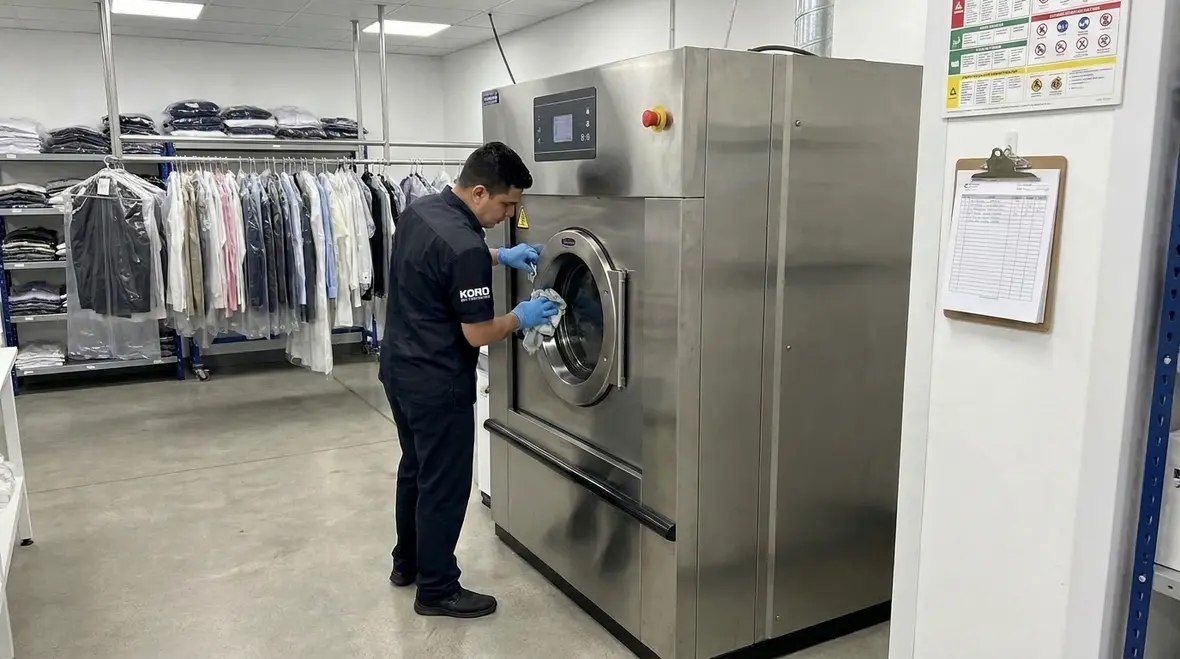
NFPA 32 Section 5.6 Maintenance and Housekeeping: Keeping a Drycleaner Compliant
Quick Answer
NFPA 32 Section 5.6 focuses on maintaining clean, drycleaner-ready work areas to control ignition hazards, solvent vapor risk, and housekeeping-driven fire spread. Compliance requires documented inspections, prompt repair of leaks, controlled waste handling, and consistent removal of combustible residue.
What NFPA 32 Section 5.6 is trying to prevent in real facilities
In commercial and industrial drycleaning environments, housekeeping is not cosmetic. NFPA 32 maintenance housekeeping drycleaning requirements address the predictable failure path: residues accumulate, ignition sources remain available, minor solvent releases expand, and combustible materials provide pathways for rapid fire growth. Section 5.6 ties directly to how drycleaning equipment fails in practice, including small leaks, carbonized lint, dripped solvent pooling, and blocked ventilation that increases vapor persistence.
From a compliance standpoint, the standard expects a facility to operate like a controlled hazard system. That means the maintenance program and the daily cleaning program must align, and records must prove the process happens consistently.
A related planning resource that fits naturally with this topic is electrical preventive maintenance services, especially where housekeeping findings overlap with motors, controls, and contamination around powered equipment.
Where housekeeping creates ignition risk: the drycleaner’s most common trouble zones
NFPA 32 maintenance housekeeping drycleaning controls should prioritize the locations where fuels, vapors, and ignition sources intersect. Facilities typically see issues in these areas:
1) Floors, sumps, and spill-prone zones
Loose lint, oily residue, and solvent soaked debris collect under and around machinery and at transfer points. Even when the equipment operates correctly, spills and condensate can occur during loading, unloading, and filter changes. If residue builds, it can increase the probability of ignition from hot surfaces, electrical components, or friction heating.
2) Filters, lint traps, and dryer exhaust paths
Laundry and drycleaning soils often include fibers, packaging debris, and breakdown products that accumulate in lint collection systems and exhaust ducting. When airflow decreases, vapor can linger longer, and temperatures in localized areas can rise. Housekeeping here is a fire prevention control, not a production convenience.
3) Transfer hoses, connections, gaskets, and drip points
Small leaks rarely announce themselves with a visible spill every time. More often, they show up as wetness, discoloration, or odor that does not get addressed immediately. Housekeeping closes the loop by detecting residue patterns that indicate a developing leak. Maintenance follows that evidence with repair and verification.
4) Electrical enclosures and junction areas
Dust and lint can enter cable trays, motor starters, and instrument housings. Contamination can lead to overheating, reduced cooling performance, or malfunction during critical control cycles. A clean enclosure is part of the engineered safety strategy.
NFPA 32 maintenance housekeeping drycleaning: operational expectations you should build into your program
Section 5.6 demands more than occasional cleaning. It requires systematic maintenance and housekeeping tied to fire safety objectives. Facilities typically satisfy the intent by implementing a cycle of inspection, cleaning, repair, and documentation.
Daily and shift based cleaning controls
Remove lint, accumulated residue, and debris from equipment bases, floors, and around controls before residue levels increase.
Verify waste containers remain closed and positioned to prevent drips, overflow, and spread of contaminated materials.
Confirm spill response materials are present, compatible with solvent hazards, and accessible for rapid containment.
Scheduled maintenance alignment with housekeeping findings
Inspect gaskets, seals, hose condition, and clamps on a defined interval. Treat housekeeping residue patterns as early warning signals.
Clean or replace filters and lint collection components according to the equipment manufacturer requirements and operating conditions.
Maintain ventilation performance for drying and exhaust operations so vapor does not persist due to blockages.
Housekeeping procedures that reduce downtime risk
Compliance also requires practicality. Facilities that succeed build standardized methods for cleaning that minimize exposure time and prevent solvent spread. Procedures should define approved materials, safe isolation steps, and how to manage contaminated waste streams so housekeeping does not create new hazards.
To strengthen readiness, many facilities partner with Kord Fire Protection to align fire protection inspections with drycleaning operations and documentation expectations. That partnership reduces the chance that housekeeping is treated as a separate task from the life safety program.
For related commercial fire protection planning, see Kord Fire Protection and discuss how inspection and maintenance schedules can be integrated across the facility.
Inspection and documentation: proving housekeeping happens, not just claiming it
Most enforcement and audit friction comes from the gap between process and proof. NFPA 32 maintenance housekeeping drycleaning compliance improves when inspections include specific checks, frequency, and corrective action tracking.
What to document for best audit outcomes
Date, area inspected, and condition observed for floors, exhaust paths, lint collection systems, and waste storage areas.
Findings that indicate abnormal conditions such as unusual residue buildup, staining patterns, or repeated small spills.
Corrective action details, including repair work orders, parts replaced, and when the system returned to normal condition.
Follow up verification after repairs to confirm no renewed leakage or residue accumulation.
Common failure points that trigger noncompliance
Cleaning tasks treated as “as needed” without defined triggers and frequency.
Waste containers used beyond intended capacity or stored in locations that allow drips and residue migration.
Blocked or partially obstructed exhaust and ducting overlooked until performance issues appear.
Maintenance performed without cleaning verification, leaving residue that can mask a continuing leak.
Corrective actions: when housekeeping finds a problem, what to do next
When residue, wetness, or odor patterns appear, the response must move quickly and follow a consistent decision path. Housekeeping findings should not become “background clutter” for the next shift.
Step 1: Control the hazard
Stop or limit operation where feasible to prevent vapor escalation and continued contamination.
Contain spills with procedures designed for solvent hazards and dispose of contaminated materials as required.
Step 2: Identify the cause, not only the symptom
Inspect seals, fittings, hoses, and connections associated with the residue location.
Verify exhaust and ventilation routes are clear and functioning, because blocked airflow can increase residue persistence and vapor duration.
Step 3: Verify after repair
Clean the affected area completely so the facility can confirm the leak path is corrected.
Monitor the same zone after return to service to confirm no recurrence.
For facilities that want fewer surprises during compliance cycles, Kord Fire Protection can support the broader fire readiness program, including inspection and maintenance integration so housekeeping corrective actions align with life safety documentation.
Frequently Asked Questions
Conclusion and next step
NFPA 32 Section 5.6 compliance succeeds when NFPA 32 maintenance housekeeping drycleaning becomes a documented operating system, not a task checklist. Build defined inspection frequencies, prioritize spill and lint accumulation zones, repair the source of residue, and verify results after maintenance. To reduce compliance risk across the full facility, contact Kord Fire Protection to align your inspection and maintenance schedules with your day to day drycleaning operations.

Join Our Newsletter!
Get the latest fire safety tips delivered straight to your inbox From our Newsletter.



