
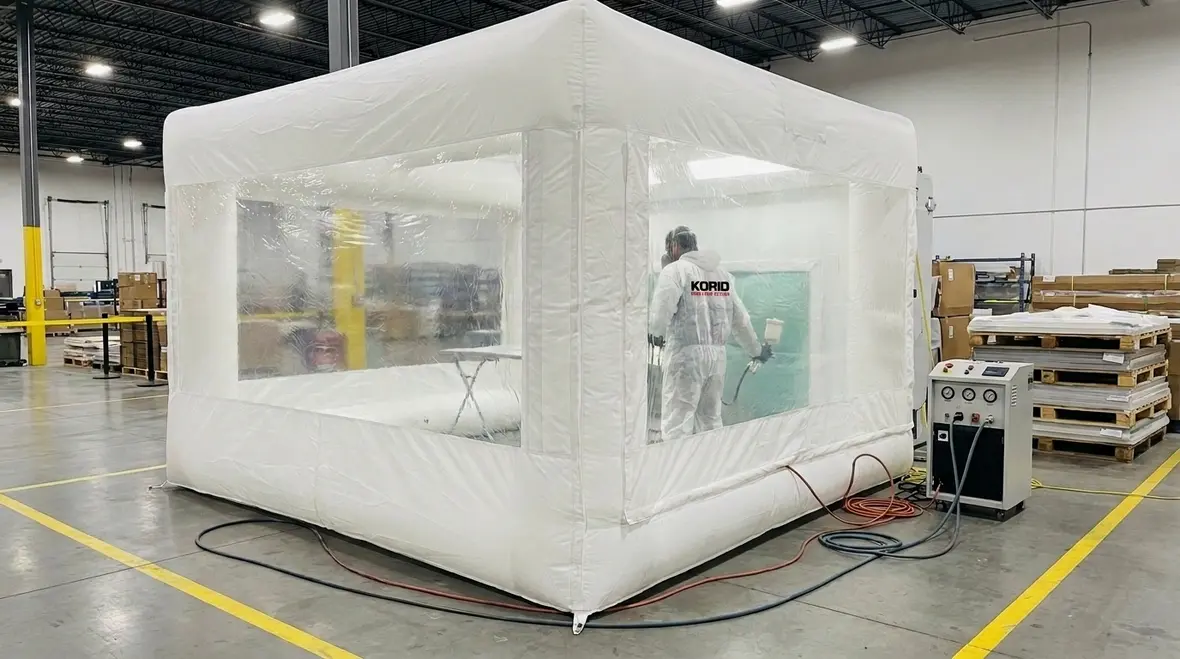
NFPA 33 Section 14.4: Inflatable Finishing Workstations (Air Rooms)
Quick Answer: NFPA 33 Section 14.4 addresses inflatable finishing workstation air rooms by requiring controls that manage ignition hazards, flammable vapors, and electrical safety. Compliance depends on proper design, installation, inspection, and maintenance practices that prevent air leakage and ignition source exposure.
Facilities that manage spray operation hazards often pair enclosure compliance planning with broader fire protection services in Southern California to keep inspections, repairs, and documentation aligned across the building. ([kordfire.com](https://kordfire.com/fire-protection-services-southern-california/?utm_source=openai))
What NFPA 33 Section 14.4 Requires for Inflatable Air Rooms
NFPA 33 governs spray application processes where flammable vapors may be present. Section 14.4 focuses on inflatable finishing workstations, commonly called air rooms, that use air-supported structures to create controlled spaces for finishing operations. For facilities adopting an NFPA 33 inflatable finishing workstation air room, the central compliance theme is hazard control through reliable containment, safe air management, and electrical and ignition source prevention that aligns with the spray process risk profile.
From a practical standpoint, inspectors evaluate not only the inflatable structure itself, but also the operating sequence, ventilation and airflow continuity, bonding and grounding practices, housekeeping, and documented maintenance. An air room that looks intact can still be noncompliant if airflow performance, sealing integrity, or equipment interlocks do not consistently protect against ignition hazards.
How an Air Room Is Actually Used: Operating Logic That Drives Compliance
An inflatable air room is not a static enclosure. It is an engineered enclosure that relies on continuous airflow and pressure management while finishing operations occur. Most compliance failures happen during normal use, such as start up, shutdown, filter loading, or transitional operating modes when doors open or airflow changes.
Start up and sequencing controls
Compliance expectations typically require that the airflow supporting the air room is established before spraying begins. Many systems include controls intended to prevent spraying if airflow is not within required parameters. Facilities must verify the actual field sequence matches the design intent and safety controls.
- Spray equipment enable conditions must be tied to ventilation or airflow status where required by the system design.
- Operators must understand purge and warm up time expectations so they do not bypass safety interlocks.
- Interlock set points and sensor placement must reflect real airflow paths, not assumptions made during design.
Containment performance during operation
During finishing, the air room must maintain separation between flammable atmosphere and ignition sources. In practice, that means the enclosure must remain intact, supply air distribution must function as intended, and exhaust pathways must capture overspray and vapor.
- Air leakage can dilute or redirect flammable vapors, changing the hazard profile near electrical equipment and service openings.
- Door cycles and entry traffic can create momentary loss of containment if airflow recovery time is too slow.
- Damaged film or seams can cause localized exposure pockets even when the overall room appears inflated.
Common Equipment Mechanisms and Failure Points in Inflatable Workstations
Air rooms depend on fabric integrity, inflation air delivery, and air movement control devices. NFPA 33 compliance hinges on whether those mechanisms remain reliable over time and under real operating conditions.
Inflation air and pressure stability
Inflation systems keep the structure expanded and support the airflow pattern that controls the spray environment. Typical failure points include worn blower components, clogged inlet filters, restricted duct runs, or misadjusted pressure control.
- Clogging reduces airflow and can create underpressurization that compromises containment.
- Pressure relief behavior may shift when maintenance is delayed, affecting fabric tension and seam integrity.
- Vibration and vibration isolation issues can loosen fittings that affect airflow direction.
Seals, seams, and replacement cycle management
Inflatable enclosures operate in an environment exposed to overspray residue, cleaning chemicals, and abrasion. Even small tears or seam separation can grow and create hazardous leakage pathways.
- Damaged seams and repaired patches must be documented and evaluated for continued integrity.
- Cleaning procedures must avoid degrading the fabric or coatings used to maintain controlled airflow characteristics.
- Replacement intervals should reflect actual usage, solvent exposure, and maintenance history, not generic timelines.
Electrical and ignition source control
Finishing areas can contain flammable vapors. Electrical devices, motors, heaters, and controls must be selected and maintained to minimize ignition risk. Air rooms often include blowers, instrumentation, and control panels that can become noncompliant due to improper installation or degraded components.
- Loose or corroded connections can lead to overheating or sparking.
- Improper bonding and grounding can allow static charge accumulation in the presence of flammable atmospheres.
- Unauthorized modifications to controls or mobile equipment inside the air room can defeat the original safety design.
Inspection and Maintenance Practices That Hold Up Under Audit
Routine inspection and documented maintenance are where many commercial facilities struggle. A compliant NFPA 33 inflatable finishing workstation air room requires proof of performance over time, not just initial installation compliance.
What to inspect on a recurring basis
- Inflatable structure integrity: seams, panels, and visible damage patterns near high traffic zones and door areas.
- Air movement performance: inlet and outlet obstructions, filter loading indicators, and airflow verification where the system supports it.
- Control function checks: interlocks, alarms, and permissives that block spraying when airflow is insufficient.
- Electrical inspection: condition of wiring, enclosures, motors, and grounding continuity evidence.
Documentation that reduces compliance risk
Audits typically reward facilities that maintain clear records. A strong documentation set includes inspection forms, calibration and test reports where applicable, corrective action logs, and parts replacement evidence.
- Documented maintenance history for blowers, filters, pressure controls, and any enclosure repairs.
- Corrective action timelines for damage found during routine rounds.
- Operator training records for start up, shutdown, and interlock response procedures.
For ongoing commercial compliance support, Kord Fire Protection helps facilities validate field performance, manage inspection and test programs, and close gaps that commonly appear after installation. To explore related standards and service approaches, review resources like Kord Fire Protection services and related spray operation guidance such as NFPA 33 Section 1.5 equivalency. ([kordfire.com](https://kordfire.com/?utm_source=openai))
Compliance in Real Commercial Settings: Retail, Industrial, and Tenant Operations
Inflatable air rooms appear across manufacturing, automotive finishing, and specialized retail finishing operations. Each environment creates unique operational pressure that can undermine safe performance if compliance is not managed continuously.
Industrial and manufacturing facilities
High throughput increases door cycles, overspray accumulation, and the likelihood of airflow changes. Facilities should ensure housekeeping practices prevent residue buildup that can obstruct exhaust pathways or degrade enclosure materials.
Automotive and equipment finishing
Large parts can change airflow patterns and require verification that exhaust capture remains effective across different work geometries. A compliance program should include practical checks that reflect the actual range of product sizes and spray patterns.
Retail and light industrial finishing
Retail environments can involve more tenant variability, part time operators, and less specialized training. These factors increase the chance that safety interlocks are bypassed or that maintenance intervals are missed.
Whether the air room supports production finishing or periodic touchups, the facility must maintain consistent operating discipline. Kord Fire Protection assists commercial sites in building repeatable compliance workflows that survive staffing changes and equipment aging.
Frequently Asked Questions
Get Compliant, Stay Compliant
Facilities that operate an NFPA 33 inflatable finishing workstation air room should not rely on install documentation alone. Schedule a compliance review that verifies operating sequence, airflow performance, enclosure integrity, and electrical safety, then implement an inspection and maintenance program you can prove during audits. Contact Kord Fire Protection to support ongoing testing, documentation, and corrective actions tailored to your finishing operations.

Join Our Newsletter!
Get the latest fire safety tips delivered straight to your inbox From our Newsletter.



