
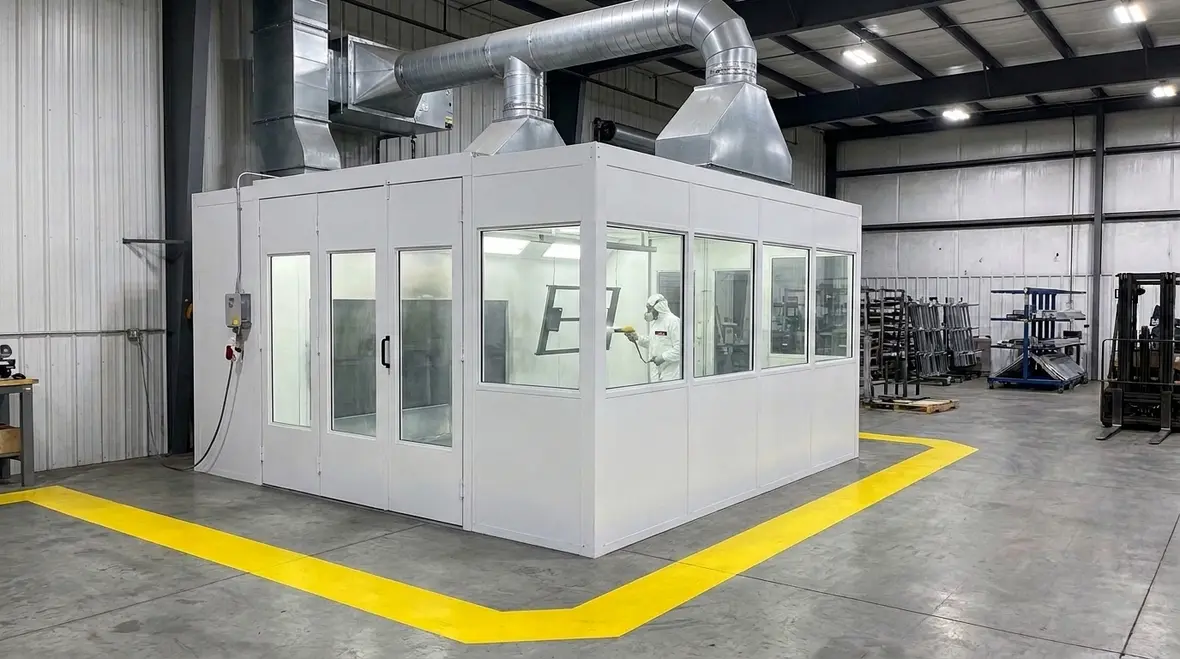
NFPA 33 Section 15.4: Location Requirements for Powder Coating Areas
Quick Answer
NFPA 33 Section 15.4 sets how powder coating areas must be located, separated, and controlled to reduce ignition and explosion risks. Facilities must manage exposure pathways, protect adjacent spaces, and define safe boundaries for equipment, ventilation, and housekeeping. Compliance depends on the site layout, processes, and maintenance discipline.
Facilities working through inspection readiness or long-term hazard control often benefit from broader fire protection services in Southern California, especially when powder coating risks overlap with suppression, alarms, and documentation needs.
What NFPA 33 powder coating location requirements mean in the real world
NFPA 33 powder coating location requirements focus on where powder operations occur and how those areas interface with the rest of the facility. In practice, this section addresses more than “room placement.” It requires that the powder coating area be arranged to limit ignition hazards, control combustible powder accumulation, and prevent unsafe transfer of dust, air movement, and process byproducts into occupied or higher risk spaces.
For commercial and industrial facilities, the most common compliance failures come from incomplete layout reviews, changes to building use over time, poor control of housekeeping zones, and ventilation or isolation systems that degrade after commissioning. A robust compliance program treats Section 15.4 as an ongoing inspection and maintenance requirement, not a one-time design checkbox.
How Section 15.4 governs “where” powder coating can operate
Section 15.4 evaluates placement through a risk lens: the fire and explosion potential of dispersed powder, the likelihood of ignition sources, and the ability to contain or control powder migration. While exact interpretation depends on the facility configuration and the specific powder coating operations, the underlying compliance intent remains consistent. Powder coating must not create unacceptable exposure conditions for other areas.
Core location controls you must verify during walkthroughs
- Boundaries and separation: The powder area must be defined so that powder-laden air, dust, and cleaning residue do not contaminate adjacent spaces where ignition sources or occupancy create unacceptable risk.
- Protection against ignition and spread: The arrangement should minimize the probability that an ignition event inside the powder area results in propagation into nearby rooms, corridors, or storage zones.
- Controlled airflow direction: Ventilation and air handling must support safe operation and reduce the chance that combustible dust escapes containment.
- Alignment with process equipment: Spray guns, powder delivery systems, reclaim systems, and filtering equipment influence where powder can accumulate and where escape routes develop.
- Building use changes: Retail or light industrial spaces sometimes evolve. Section 15.4 compliance must be revisited when adjacent spaces change occupancy, storage class, or ignition risk.
Design and layout factors that drive compliance outcomes
Commercial facilities rarely struggle because the powder booth exists. The problem usually arises from how the booth and recovery systems integrate with the building. Section 15.4 location requirements require a coherent design where containment, ventilation, and housekeeping support each other.
1) Adjacent occupancy and ignition source management
Powder coating areas must be sited with attention to what sits next door. Areas containing open flames, high temperature equipment, welding, cutting, certain HVAC return paths, or busy traffic corridors can elevate risk if powder migration is not controlled. In many facilities, the “adjacent exposure” risk grows over time as maintenance shops, storage racks, and electrical panels shift location.
2) Powder migration pathways you should treat as high-risk
Even when powder is “supposed” to stay inside the booth, practical operations create migration pathways. Inspect for:
- Accumulation behind baffles, under conveyor sections, and inside reclaimed powder enclosures.
- Dust buildup at roof penetrations, cable trays, and ductwork interfaces where vibration and airflow disturb settled powder.
- Leaks around filter housings, quick disconnects, and powder hose connections.
- Improper transition zones where clean and dirty areas meet, such as personnel access doors and maintenance access panels.
3) Ventilation and isolation as location issues, not only equipment issues
In powder coating, ventilation controls where powder goes. Airflow rates, pressure relationships, and filter performance affect whether dust stays within the powder area boundaries. When building mechanical systems change, such as through tenant improvements or HVAC balancing, the direction and strength of airflow can shift, undermining location compliance.
Where ventilation is critical, Kord Fire Protection supports facilities with ongoing service planning to confirm that engineered controls remain effective. For additional context on maintenance strategy and long-term readiness, review the full lifecycle of fire protection servicing and fire suppression system maintenance basics for owners.
Operational controls that make Section 15.4 workable day to day
Location requirements fail when operations drift. A compliant powder coating area needs written procedures, trained personnel, and routine verification. The “where” requirement depends on the continued effectiveness of “how” the area runs.
Housekeeping zones and inspection cadence
Facilities should define housekeeping zones that match the location risk created by airflow and powder handling. Cleaning methods must avoid resuspending dust and must reach hidden accumulation points. Establish inspection frequency for:
- Filters, filter frames, and gasket integrity
- Conveyors, booth ledges, and reclaim transfer points
- Ductwork taps, collection plenums, and dust collector enclosures
- Floor surfaces at boundaries, including door thresholds and loading interfaces
Change management for layout and process
Many facilities modify production without treating NFPA 33 location requirements as a re-review trigger. Examples include:
- Adding new ovens, curing units, or staging locations near powder areas
- Relocating compressed air lines, electrical cabinets, or maintenance stations
- Expanding reclaim capacity or changing powder transport methods
- Modifying HVAC return paths or adding make up air
When these changes occur, the powder area boundary assumptions from the original layout can become invalid. The correction often requires both physical adjustments and documentation updates.
Common failure points during inspections and how to prevent them
Field experience shows repeated patterns that undermine NFPA 33 powder coating location requirements. These issues typically surface during insurance safety reviews, internal audits, or authority having jurisdiction inspections.
Failure point 1: Powder area boundaries that look correct but do not function
Painted lines, partial barriers, or poorly sealed access panels can create a false sense of compliance. Powder escape happens through small leakage points amplified by airflow and cleaning activities.
Failure point 2: Ventilation performance that degrades
Filter loading, gasket wear, and duct leakage can change pressure relationships. When filtration or airflow weakens, the location risk expands beyond the intended boundaries.
Failure point 3: Incomplete documentation and last mile verification
Some facilities have design drawings but lack inspection records that confirm current conditions match the original placement and control strategy. That gap increases risk during insurance renewals and AHJ follow-up questions.
Failure point 4: Housekeeping methods that resuspend dust
Dry sweeping, compressed air blowdowns, or vacuum systems that are not appropriate for combustible dust can redistribute settled powder and increase the area’s effective hazard footprint.
Kord Fire Protection helps facilities maintain defensible compliance by supporting inspection planning, documentation readiness, and maintenance alignment for fire protection and dust hazard controls. When powder coating operations evolve, a service partner can help ensure engineered safety remains intact.
Frequently Asked Questions
Conclusion and call to action
NFPA 33 Section 15.4 location requirements protect facilities by controlling where powder hazards exist and how they remain contained. To keep compliance credible, verify boundaries, maintain ventilation performance, document housekeeping effectiveness, and re evaluate after any building or process change. Contact Kord Fire Protection to support ongoing inspection readiness, maintenance planning, and practical compliance assurance for commercial powder coating operations.

Join Our Newsletter!
Get the latest fire safety tips delivered straight to your inbox From our Newsletter.



