
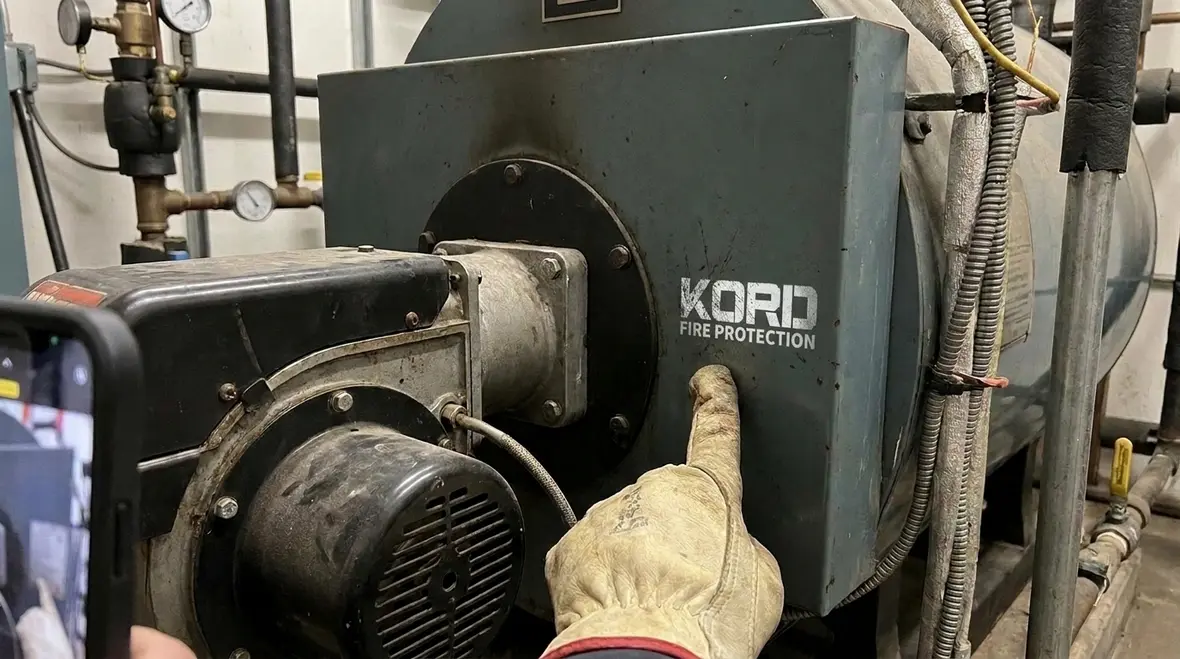
NFPA 31 Section 13.2: Listing Requirements for Oil-and-Gas Appliances
Quick Answer: NFPA 31 Section 13.2 requires oil and gas appliances used in oil burning installations to be listed for their specific application. Listing confirms the appliance has met approved safety performance, installation conditions, and labeling requirements. Non listed appliances can trigger compliance failures and operating risk.
Why Section 13.2 matters in the real world
NFPA 31 governs the safe handling, storage, and use of liquid fuels and related equipment, with specific provisions for oil burning equipment and oil and gas appliances. In commercial and industrial settings, the NFPA 31 oil gas appliance listing requirements directly influence whether a facility can pass inspections, operate without code violations, and maintain consistent fire and life safety performance across renovations and equipment swaps.
Section 13.2 functions as a gatekeeper requirement. It does not simply ask whether equipment “works.” It requires that appliances be evaluated and approved through recognized listing processes, and then installed, labeled, and maintained according to the listing conditions and the code. This protects occupants and reduces the likelihood of uncontrolled ignition, unsafe combustion, improper venting or flue behavior, and system mismatches during commissioning and service.
If your team is also working through burner-specific installation details, a useful related reference near this topic is NFPA 31 Section 10.2: Basic Requirements for Installing Oil Burners. It fits naturally here because listing compliance usually falls apart when the appliance, burner, controls, and venting are treated like separate islands instead of one coordinated system.
What qualifies as “listed” under NFPA 31
For compliance with NFPA 31 Section 13.2, an oil or gas appliance must be listed for the intended use and installation context. In practice, “listed” means the appliance has undergone safety testing and evaluation by an approved third party, and the results support its use under specific conditions. The listing typically ties to:
- Fuel type and firing characteristics (oil versus gas, and burner behavior)
- Installation and operational constraints defined by the manufacturer and the listing
- Ventilation, chimney or vent system compatibility and combustion air requirements
- Controls and safety shutoff behavior validated during testing
- Intended environment including residential versus commercial or industrial contexts where applicable
Commercial facilities often try to substitute equipment “equivalent in function.” Section 13.2 typically does not reward equivalence without an applicable listing. If the appliance is not listed for the code scenario, the inspection authority may require replacement, modification to meet the listing conditions, or a documented engineering compliance path that aligns with the listing scope.
Where listing failures show up during inspections
Most NFPA 31 oil gas appliance listing requirement issues occur at the practical interfaces between procurement, installation, and service. Common failure points include these:
1) Missing or mismatched labeling
Appliances may be present, but facility teams discover that nameplates, burner labels, or model number identifiers do not match the documented listing. Listing verification is usually a straightforward paper check, but it becomes difficult when equipment has been reinstalled, repaired with non matching components, or swapped during past maintenance without updating records.
2) Using appliances outside the listing scope
A listing may permit certain vent configurations or firing rates. When an installer changes vent length, diameter, draft conditions, or air supply arrangements, the appliance may operate outside what the listing validated. Section 13.2 expectations align with staying within listing conditions and the code intent.
3) Control and safety device drift over time
Some of the most severe compliance problems happen after initial commissioning. If safety controls, ignition modules, flame detection sensors, or limit controls drift due to incorrect calibration, component substitutions, or poor maintenance, the appliance can lose the tested safety behavior reflected in its listing. This can trigger operational shutdown issues, unsafe combustion, or repeated nuisance lockouts that lead to improper bypasses.
4) Renovation and equipment staging in retail and industrial locations
In retail corridors, distribution centers, and industrial process buildings, changes to occupancy layouts or mechanical room layouts can affect clearances, access for inspection and service, and vent routing. Listing conditions do not automatically transfer to a new layout. The facility may need an updated compliance verification after major work.
How to verify NFPA 31 oil gas appliance listing requirements before installation
Facilities that manage multiple sites typically reduce risk through a repeatable verification workflow. The objective is to confirm the appliance is listed for the specific scenario and that the installation plan aligns with the listing and NFPA 31 requirements.
- Collect appliance documentation during procurement. Confirm the manufacturer, model number, fuel type, and control configuration match the listing. Require submittals that include the listing authority details and the installation conditions.
- Confirm site installation details. Review vent and flue routing, combustion air supply, clearances, and draft or pressure conditions. Any deviations from the listing requirements must be addressed through manufacturer instructions and an approved compliance path.
- Verify component compatibility. Replace only with components intended for the appliance model and listing. Mis matched ignition parts, flame sensors, or fuel trains can create behavior that no longer matches the tested safety design.
- Commission and document start up. Record burner settings, safety shutoff timing verification, combustion verification, and correct venting behavior. Documentation matters during follow up inspections and incident investigations.
- Plan for ongoing maintenance checks. Listing compliance depends on continued correct operation. Maintenance plans should include safety controls performance checks and inspection of combustion performance and venting integrity.
For teams that need a practical installation and compliance approach for oil burning equipment, Kord Fire Protection provides a focused reference: NFPA 31 practical guide to oil burning equipment installation. It supports the operational thinking required to align equipment, venting, and safe commissioning practices.
Maintenance and inspection requirements that protect listing integrity
Listing is not a one time ticket. In commercial environments, the integrity of listed operation depends on how the facility manages ongoing inspection, cleaning, and functional testing. Common mechanisms and routine checks that preserve safe performance include:
- Flame detection reliability: Verify flame sensor condition and correct signal behavior. Contamination can cause intermittent shutdowns or unstable combustion patterns.
- Ignition system performance: Confirm ignition electrodes, wiring integrity, and ignition timing align with the manufacturer’s instructions.
- Fuel train components: Inspect valves, filters, regulators, and pressure controls for correct operation and absence of leakage or contamination.
- Combustion and draft behavior: Confirm venting and draft performance supports stable combustion under the expected operating regime.
- Safety shutoff verification: Test controls to confirm the appliance shuts down safely on loss of flame or abnormal operating conditions.
Commercial facilities benefit from a service partner that treats NFPA 31 compliance as an operating standard rather than a documentation event. Kord Fire Protection supports ongoing testing and maintenance workflows that help facilities maintain safe, listed operation over time and reduce repeat inspection findings across multiple locations.
Frequently Asked Questions
Conclusion and next step
Facilities that treat NFPA 31 oil gas appliance listing requirements as a procurement and maintenance standard stay inspection ready and reduce fire and life safety risk. Kord Fire Protection can help verify listing documentation, confirm installation conditions, and support ongoing testing and maintenance that protects the safety behavior reflected in the listing. Contact Kord Fire Protection to schedule a compliance review for your oil and gas appliances and related venting systems.

Join Our Newsletter!
Get the latest fire safety tips delivered straight to your inbox From our Newsletter.



