
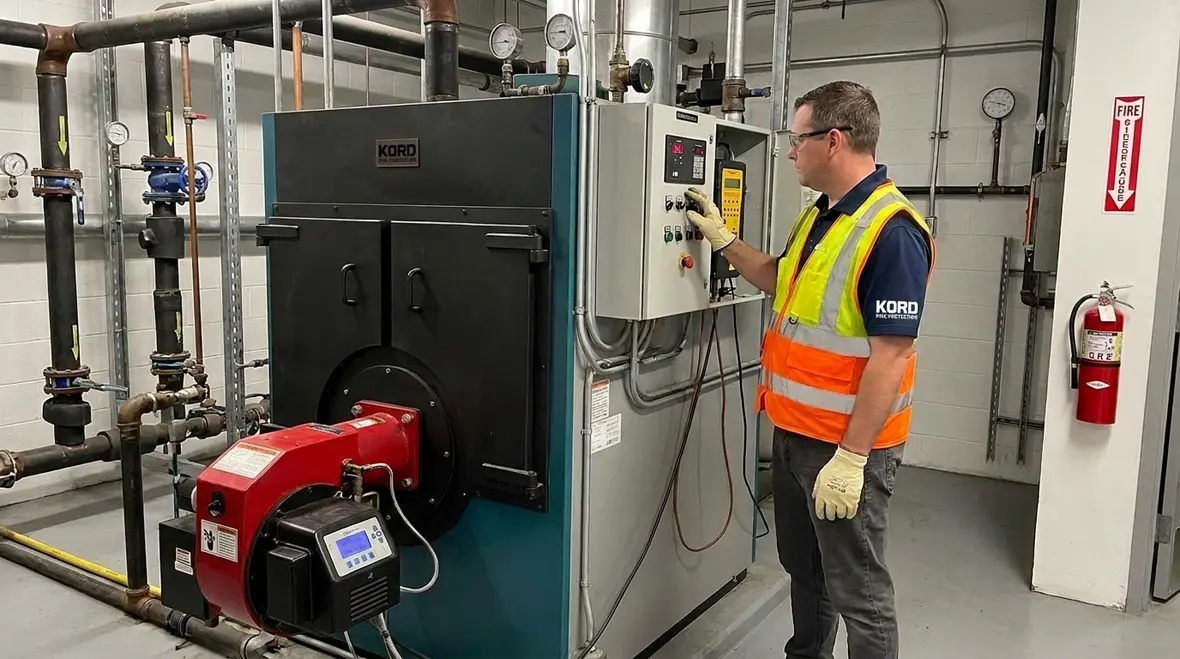
NFPA 31 Section 12.11: Operating Used Oil-Burning Appliances Safely
Quick Answer
NFPA 31 Section 12.11 sets practical safeguards for how used oil-burning appliances operate day to day. It addresses safe ignition and shutdown, proper fuel handling, required appliance controls and limits, and inspection points that prevent soot buildup, oil carryover, and unsafe combustion conditions.
Why NFPA 31 used oil appliance operating requirements matter in real facilities
Commercial, industrial, and retail facilities often run used oil-burning equipment in environments where service access, operating schedules, and housekeeping standards vary. NFPA 31 used oil appliance operating requirements focus on maintaining controlled combustion and safe appliance behavior while the burner cycles through start, steady operation, and shutdown.
In day to day practice, the biggest compliance gaps usually appear in operational oversight rather than initial installation. Facilities may have the correct equipment but fail to maintain setpoints, monitor alarms and limit conditions, manage fuel quality, or verify that combustion remains stable over time. Those failures can increase smoke, produce carbon deposits, and create unsafe conditions that inspectors commonly evaluate.
For installation and equipment context that supports safe operation, review NFPA 31: a practical guide to oil-burning equipment installation to see how the operating requirements connect to burner design, location considerations, and commissioning fundamentals.
If you need a practical maintenance framework near the start of this discussion, Kord Fire Protection’s inspection, testing, and maintenance approach is a useful companion for documenting recurring checks and restoring safe operating baselines naturally into a facility workflow.
What Section 12.11 expects during start-up, operation, and shutdown
NFPA 31 Section 12.11 addresses operating practices that keep used oil appliances within safe parameters. Section 12.11 is not limited to the burner flame. It governs how the entire appliance system performs while fuel, air, controls, and exhaust conditions interact.
1) Safe start-up practices
Start-up establishes combustion stability. When used oil appliances do not ignite cleanly or reach steady combustion slowly, facilities risk incomplete combustion and residue formation. Section 12.11 operating expectations commonly lead facilities to implement:
- Procedures that prevent ignition attempts when abnormal conditions exist, such as airflow problems or suspected control lockout causes.
- Verification that safety controls and burner interlocks respond correctly before relying on the unit for production heating.
- Controlled warm-up so flame monitoring systems can confirm stable combustion before normal load levels are expected.
2) Stable operation under varying loads
Commercial sites often change operating loads due to facility demand, production schedules, occupancy patterns, and door openings. Section 12.11 ties safety to consistent combustion performance during cycling. The operational goal is to prevent conditions that accelerate soot, oil carryover, or overheating.
Operational controls and monitoring should support:
- Consistent atomization and fuel delivery behavior so oil does not pool, drip, or overfeed.
- Correct combustion air delivery so oxygen and mixing remain sufficient for the burner design.
- Reliable flame detection that can identify an unsafe flame condition rather than masking it.
3) Safe shutdown and post-shutdown conditions
Shutdown operations reduce risks tied to residual heat, residual fuel, and exhaust system conditions. Section 12.11 operating requirements support practices that include:
- Using the unit’s designed shutdown sequence so valves, pumps, and controls complete their safety functions.
- Avoiding manual overrides that bypass safety interlocks, especially during maintenance windows.
- Ensuring that the appliance cool-down and any purge or post-purge logic functions as intended.
Combustion safety: the operational mechanisms inspectors look for
During inspections, authorities typically evaluate whether the appliance operates in a controlled, repeatable manner. That evaluation often translates into looking for specific indicators of unsafe combustion or unstable burner operation. The mechanisms tied to these indicators include fuel delivery behavior, atomization, air supply, ignition system function, and the performance of safety limits and flame supervision.
Fuel handling and delivery stability
Used oil appliance safety depends on consistent fuel feed. When fuel viscosity, water content, or contaminants vary beyond the appliance’s operating design intent, the system can produce poor atomization and unpredictable combustion. Operationally, facilities need a discipline for:
- Preventing cross-contamination or incompatible fluids from entering the used oil system.
- Maintaining the correct feed conditions for the burner design, including pump performance and line integrity.
- Monitoring for leaks around hoses, fittings, and valves that can create fuel accumulation near hot surfaces.
Flame detection and safety control response
Flame supervision protects against unsafe ignition and unsafe loss of flame conditions. If a facility does not maintain detection sensitivity or does not investigate recurring lockouts, the control system can repeatedly react without identifying the root cause. Common operational failure points include:
- Dirty electrodes or flame sensors that drift out of effective operating range.
- Improper wiring, connectors, or grounding that produces intermittent flame signal faults.
- Bypassing safety controls for troubleshooting, which undermines the operating intent of NFPA 31 used oil appliance operating requirements.
Limits, alarms, and interlocks
Used oil appliances typically rely on limit controls and interlocks to prevent overheating and unsafe operating states. When operating procedures do not include verification of limit trips, inspections can expose that the equipment never demonstrates the expected safety response under abnormal conditions. Facilities commonly correct issues such as:
- Blocked or restricted airflow paths that prevent the unit from sustaining safe combustion.
- Misadjusted setpoints that allow unsafe exhaust or combustion conditions to persist.
- Faulty components masked by repeated reset cycles instead of root-cause repair.
Common compliance risks in day-to-day operation
Even when equipment is installed correctly, day-to-day operational drift can cause noncompliance. The following risks show up frequently in commercial and industrial environments, particularly where staffing changes or maintenance schedules are inconsistent.
1) Inadequate cleaning and combustion residue management
Used oil burners can accumulate soot and residue when combustion is not optimized or when fuel characteristics change. Residue can insulate heat exchange surfaces, affect draft behavior, and contribute to smoke. Operationally, this becomes a safety and compliance issue, not just an efficiency problem.
2) Fuel variability without operational adjustment
Facilities often treat fuel delivery as a procurement issue and overlook operational impacts. When fuel quality shifts, the burner may require adjustments within the permitted range and may need component servicing. Without that discipline, combustion stability deteriorates and Section 12.11 operating safeguards become harder to sustain.
3) Poor documentation of operating events
During audits and inspections, authorities frequently request evidence that the facility followed operating procedures, including responses to abnormal conditions. Lack of logs, incomplete maintenance records, and undocumented resets can indicate a weak operating control environment.
4) Maintenance performed without restoring safety condition baselines
Service work that replaces parts is not enough if the facility does not restore proper combustion setpoints, verify control function, and confirm stable operation after adjustments. NFPA 31 used oil appliance operating requirements assume that safe operation remains active after servicing.
Operational inspection, testing, and maintenance workflow
A reliable compliance workflow aligns operational checks with the equipment’s safety architecture. Kord Fire Protection supports commercial facilities by pairing practical inspection routines with documented verification so NFPA 31 used oil appliance operating requirements can be demonstrated with confidence.
What facilities should schedule
- Periodic combustion performance verification to confirm stable flame behavior and acceptable exhaust characteristics.
- Control and safety device checks to ensure interlocks, limits, and flame supervision perform as designed.
- Fuel system integrity inspection for leaks, line condition, fittings, valves, and pump performance.
- Burner component inspection and cleaning for residue, sensor condition, and ignition system functionality.
How to handle recurring lockouts or unstable flame
Recurring safety lockouts should trigger a structured investigation rather than repeated resets. A robust approach includes:
- Reviewing recent fuel deliveries and any change in handling practices.
- Inspecting combustion air delivery and draft behavior for restrictions.
- Verifying flame detection cleanliness and wiring integrity.
- Checking for oil overfeed or atomization issues based on the burner’s operating symptoms.
When facilities rely on a service partner, the goal is consistent restoration of safe operating baselines after every issue. That discipline reduces downtime, limits smoke complaints, and strengthens defensibility during inspections.
Frequently Asked Questions
Conclusion: keep used oil appliances safely within operating limits
NFPA 31 Section 12.11 requires more than having equipment installed. Facilities must operate used oil-burning appliances with disciplined start-up, stable combustion, safe shutdown practices, and documented checks of safety controls. If your site struggles with lockouts, smoke complaints, or inconsistent performance, Kord Fire Protection can help you validate safe operation and maintain ongoing compliance through testing, inspection, and maintenance. Schedule a review to align your procedures with NFPA expectations and reduce risk.

Join Our Newsletter!
Get the latest fire safety tips delivered straight to your inbox From our Newsletter.



