
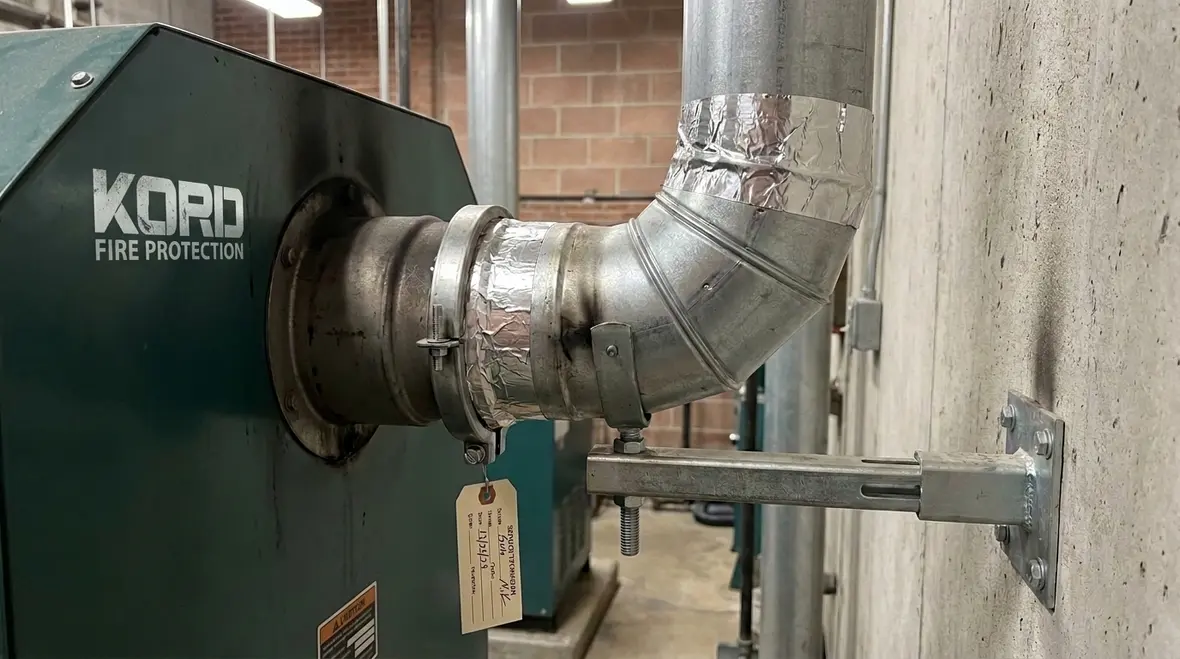
NFPA 31 Section 13.6: Flue Connections for Oil-Gas Appliances
Quick Answer: NFPA 31 Section 13.6 sets the minimum requirements for safe, leak-resistant flue connections between oil or gas appliances and the venting system. It addresses connection materials, sealing, sizing, alignment, support, and inspection readiness to reduce fire and combustion byproduct hazards.
For facilities managing broader compliance issues across multiple life safety systems, fire protection services in Southern California can help tie inspection planning, repairs, and documentation into one practical workflow.
Why NFPA 31 oil gas appliance flue connections matter in real facilities
For commercial, industrial, and retail sites, flue connections sit at the boundary between combustion and the building. When they fail, the failure often shows up as soot staining, odor complaints, nuisance shutdowns, or elevated carbon monoxide risks. For that reason, NFPA 31 oil gas appliance flue connections are treated as a controlled component system, not a “field fit” afterthought.
Section 13.6 focuses on connection practices that maintain vent integrity during normal operation, start up, shutdown, and upset conditions such as draft changes or condensate formation. Compliance also supports inspection outcomes by making the flue connection system accessible, serviceable, and verifiable.
What Section 13.6 requires at the connection interface
NFPA 31 Section 13.6 concentrates on how the appliance connects to the flue and how that joint remains reliable over time. In practice, that means the system must be assembled so it does not leak combustion products, sag, separate, or create combustion air imbalance.
Connection integrity: prevent leakage and reverse flow
Flue connections must resist leakage at joints and through fittings. Poor alignment, improper gasket or seal selection, loose clamps, or incompatible materials can allow products of combustion to escape. Escaping products can deposit soot on surrounding surfaces and compromise indoor air quality.
Facilities often see joints “work loose” when vibration or thermal cycling is present. Section 13.6 expectations are intended to keep the joint stable so the appliance maintains proper draft characteristics.
Correct materials and compatible components
Even when the connection appears tight, incompatible materials can fail prematurely. Corrosion from condensate, thermal mismatch that loosens joints, and liner or adapter incompatibility can degrade the connection seal and integrity.
Commercial projects frequently mix appliance manufacturers’ components with contractor-supplied fittings. Section 13.6 compliance requires that the connection components work as a designed system, not a loosely matched set of parts.
Support and alignment to avoid sagging and separation
Gravity and thermal expansion place mechanical stress on flue joints. If supports are missing, undersized, or installed in the wrong locations, the connection can sag. Sagging increases joint strain and can open a seam that was tight at commissioning.
After a service visit, reassembly often introduces misalignment. Section 13.6 compliance expects proper alignment, proper mechanical fastening, and a connection that stays seated through operating cycles.
Operational failure points that drive noncompliance
Even well-designed flue systems fail when installation practices or maintenance procedures introduce risk. Section 13.6 effectively targets the common mechanisms behind those failures.
Condensate and soot buildup at joints
Condensate can form where exhaust temperatures drop, especially on long runs, poorly insulated sections, or areas exposed to cold air. Condensate combined with soot can increase corrosion risk at joints and fittings. Over time, that can loosen seals and create leakage paths.
Operational symptoms include frequent burner sooting, abnormal draft readings, and visible discoloration around joints. These are not cosmetic issues. They frequently indicate connection integrity problems.
Improper sealing methods or wrong seal location
Some field-installed seals reduce leak risk initially, then fail under thermal cycling or do not remain compatible with flue gas chemistry. Others are placed where they block inspection or become trapped in areas that experience the most movement.
Section 13.6 expects sealing approaches that maintain integrity while allowing the system to be verified. If maintenance staff cannot inspect or re-seat the connection correctly, the facility increases risk.
Clamps, fasteners, and torque issues after maintenance
Vibration, uneven tightening, and “reused” mechanical parts can lead to gradual loosening. When clamps are not sized correctly or are tightened inconsistently, joints can separate slightly under thermal expansion.
For commercial service teams, this is a recurring compliance challenge because maintenance tasks are often performed quickly to reduce downtime. A controlled, repeatable reassembly process reduces the chance of noncompliant installation outcomes.
Vent system integration problems
Flue connections do not work in isolation. If the vent piping, chimney connection, draft control, or termination arrangement introduces backpressure or abnormal draft, the connection joints may experience stresses beyond what they were built to handle. That can accelerate seal degradation and create leakage.
Inspection, testing, and documentation for Section 13.6 compliance
NFPA 31 compliance is not complete when the appliance starts. Facilities need inspection and verification processes that confirm connection integrity and safe operation. In most commercial environments, this includes routine checks aligned with service intervals, turnover inspections, and after-repair verification.
What inspectors and service technicians typically verify
- Joint condition: visible gaps, staining, soot accumulation, and signs of leakage around connection points.
- Mechanical stability: proper support spacing, no sagging, and clamps seated firmly without deformation.
- Material compatibility: correct fittings and adapters, no unauthorized substitutions, and no incompatible sealants.
- Accessibility: the connection remains inspectable without destructive removal.
- Operational indicators: draft performance, combustion stability, and any abnormal alarms that suggest vent or connection issues.
Commercial documentation expectations
Commercial and retail facilities often require service records for audit readiness, vendor assurance, and insurance requirements. Good documentation ties together what was observed, what was adjusted, and how the system performed after work.
Kord Fire Protection supports ongoing compliance with practical service workflows that help ensure NFPA 31 oil gas appliance flue connections remain verifiable across maintenance cycles.
How to reduce risk during installation and retrofit work
Most flue connection problems begin during installation handoffs, retrofit modifications, or “quick fixes” after equipment replacement. A controlled approach reduces rework and improves inspection outcomes.
Use a connection assembly checklist at the start of work
- Verify the appliance manufacturer connection requirements and approved fittings.
- Confirm flue sizing and routing consistency with the design intent.
- Plan support points to prevent sagging under thermal cycling.
- Confirm sealing method and placement supports later inspection and reassembly.
- Document the configuration before commissioning for traceability.
Plan access so maintenance does not destroy compliance
In many facilities, flue connections are concealed behind panels or in tight mechanical rooms. If access is restricted, maintenance becomes disruptive and risks damaging joints. Section 13.6 compliance supports an environment where technicians can inspect and correct connection issues without bypassing requirements.
Link compliance planning to the facility equipment strategy
Flue connections often interact with multiple appliances, shared vent paths, and building pressure conditions. A coordinated approach avoids unintended consequences such as draft reversal or pressure imbalance that can stress the connection joints.
For a broader installation and equipment context, facility teams can use this practical reference: NFPA 31 practical guide to oil burning equipment installation to align installation practices with ongoing compliance needs.
Frequently Asked Questions
Next step: schedule a compliance-focused flue connection verification
Kord Fire Protection helps commercial facilities verify NFPA 31 oil gas appliance flue connections through practical inspections, service coordination, and maintenance documentation that supports ongoing audit readiness. Arrange a site visit to review flue joints, supports, and reassembly practices, and to address connection risks before they become operational failures. Contact Kord Fire Protection to book a compliance-focused assessment.

Join Our Newsletter!
Get the latest fire safety tips delivered straight to your inbox From our Newsletter.



