
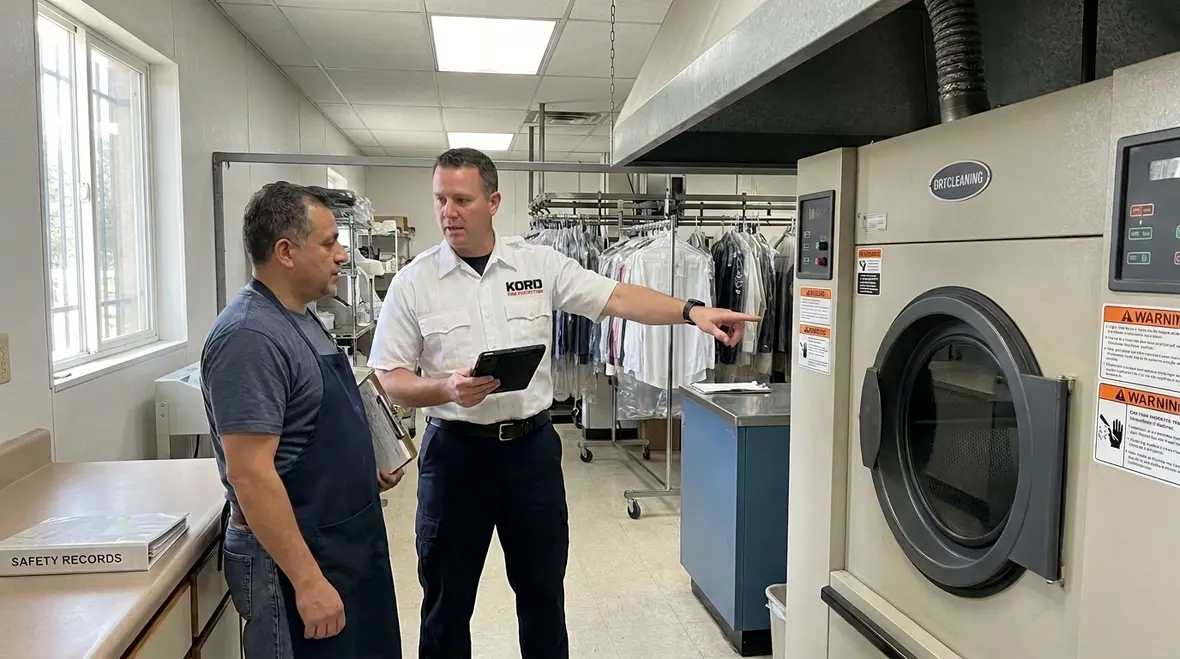
NFPA 32 Section 1.5 Enforcement: Who Enforces the Drycleaning Facility Code?
Quick Answer
NFPA 32 Section 1.5 assigns enforcement responsibility to the authority having jurisdiction (AHJ), typically a local fire marshal or designated fire code official. For drycleaning facilities, AHJs evaluate compliance through plan review, inspections, and enforcement actions tied to fire and life safety hazards.
If your team is building the documentation side of inspection readiness, ITM fire protection inspection testing maintenance is a useful companion resource for understanding how records, testing, and ongoing maintenance support smoother AHJ interactions.
Introduction: What “Section 1.5 Enforcement” Means in Practice
NFPA 32 is a safety standard that addresses fire protection requirements for commercial drycleaning operations. In Section 1.5, the enforcement framework centers on one concept: enforcement occurs through the authority having jurisdiction (AHJ). That AHJ is the entity empowered to interpret, enforce, and apply applicable portions of NFPA 32 within its local jurisdiction, often alongside adopted fire and building codes.
For commercial stakeholders searching for NFPA 32 enforcement authority drycleaning facilities, the key takeaway is straightforward: compliance is not just a document exercise. The AHJ expects the facility to maintain ongoing operational readiness, and it verifies that through inspections, testing records, and how the building and equipment are managed day to day.
Who Typically Acts as the AHJ for Drycleaning Facilities?
In most communities, the AHJ for NFPA 32 enforcement authority drycleaning facilities is one of the following:
- Local Fire Marshal or Fire Prevention Bureau: Common lead for periodic inspections and enforcement actions related to fire code compliance.
- Fire Code Official or Deputy Chief: May oversee enforcement priorities, permit conditions, and escalation steps.
- Building Department Authority: Sometimes coordinates enforcement for permits and construction-related scope, especially for new facilities or major renovations.
- State or Provincial Fire Marshal: Applicable where state-level adoption and enforcement programs exist.
Operationally, the AHJ may also rely on specialized inspectors, contract plan reviewers, or third party testing agencies for technical evaluations. However, the final enforcement decision remains with the AHJ or delegated authority.
How the AHJ Enforces NFPA 32: Inspections, Documentation, and Field Verification
AHJ enforcement usually proceeds through three layers. Facilities that prepare for all three layers tend to pass inspections with fewer disruptions.
1) Plan Review and Permitting
For new installations, tenant improvements, or equipment replacement, the AHJ often evaluates whether the design supports safe operation. Typical review points include:
- Hazard controls for flammable liquid use and storage
- Ventilation and exhaust provisions for emissions and vapor control
- Fire detection, alarm, and suppression strategy where required by the adopted code framework
- Mechanical system interfaces such as connections between dryer processes, ventilation systems, and alarms or shutdown controls
2) Initial Inspection for Commissioning Readiness
Before the facility begins normal operation, inspectors verify that equipment is installed and operational in a manner consistent with approved plans and manufacturer requirements. Common field verification items include:
- Proper operation of drycleaning machine safety features tied to vapor control and shutdown behavior
- Verification that ducting, exhaust, and make up air are functioning as designed
- Evidence that labeling and access support safe operation and maintenance
3) Ongoing Periodic Inspections and Enforcement Actions
After opening, the AHJ typically expects consistent maintenance and documentation. Enforcement intensity increases when hazards are likely, such as during operational changes, equipment aging, or repeated inspection findings.
Failure patterns frequently involve inconsistent recordkeeping, deferred maintenance, and equipment settings that drift from required conditions. These issues may trigger corrective action orders, re inspection requirements, and in serious cases, operation restrictions.
What the AHJ Looks for During Enforcement: Common Failure Points
Drycleaning hazards can shift quickly if equipment performance declines. The AHJ generally looks for both passive readiness and active operational integrity. The following are common problem areas that drive violations.
Process and Safety Control Integrity
Drycleaning systems rely on integrated controls to manage flammable vapors and safe operation cycles. Common failure points include:
- Misadjusted or failing interlocks that compromise safe shutdown behavior
- Improper operation of pumps, valves, and transfer lines that increase leakage potential
- Worn components that do not hold tight tolerances, especially in older installations
Ventilation and Exhaust Performance
Vapor control depends on reliable airflow and correct duct function. Frequent enforcement issues include:
- Blocked or partially restricted ductwork due to lint and particulate accumulation
- Exhaust fan performance drift due to worn bearings or electrical degradation
- Improper balancing that creates negative pressure problems or inconsistent vapor removal
Maintenance Records and Testing Evidence
Many enforcement actions hinge on what can be proven. The AHJ often expects maintenance logs, testing records, and evidence that corrective actions occurred. Typical documentation gaps include:
- Missing inspection tags or incomplete service reports
- Unverified repair scope after failures or alarms
- Inadequate documentation of ongoing checks required to maintain safety performance
How Kord Fire Protection Supports NFPA 32 Compliance With AHJ-Ready Documentation
Even when facility staff follow manufacturer procedures, enforcement outcomes often depend on consistency, traceability, and technical verification. Kord Fire Protection helps commercial operators build an AHJ-ready compliance program that supports safe operation and reduces inspection friction.
For ongoing compliance support, Kord Fire Protection can assist with inspection readiness, testing support, and maintenance coordination so your facility maintains operational integrity rather than performing compliance only at renewal time.
To explore related services and resources, see fire protection services in Southern California.
How to Confirm Your Local NFPA 32 Enforcement Authority Drycleaning Facilities
Because NFPA 32 adoption varies by jurisdiction, the facility should confirm the local enforcement pathway before major work or equipment replacement. A practical approach includes:
- Identify the AHJ contact through your local fire department website or permit office.
- Ask for adoption details, including whether NFPA 32 is incorporated by reference, modified, or applied alongside other codes.
- Request inspection schedules and submittal requirements for permits, plan reviews, and initial acceptance testing.
- Align your maintenance plan to enforcement expectations, including who performs required checks and how results are recorded.
This process reduces the risk of last minute corrections and helps the facility demonstrate that operational practices support the code intent.
Frequently Asked Questions
Conclusion and Call to Action
NFPA 32 Section 1.5 enforcement centers on the AHJ, usually the local fire marshal, and it depends on verifiable operational readiness, not just installed equipment. Start by confirming your local enforcement expectations and aligning maintenance documentation to inspection realities. Then build a sustained compliance program that supports safe control, reliable ventilation, and traceable test results. Contact Kord Fire Protection to strengthen AHJ-ready compliance for your drycleaning operation.

Join Our Newsletter!
Get the latest fire safety tips delivered straight to your inbox From our Newsletter.



