
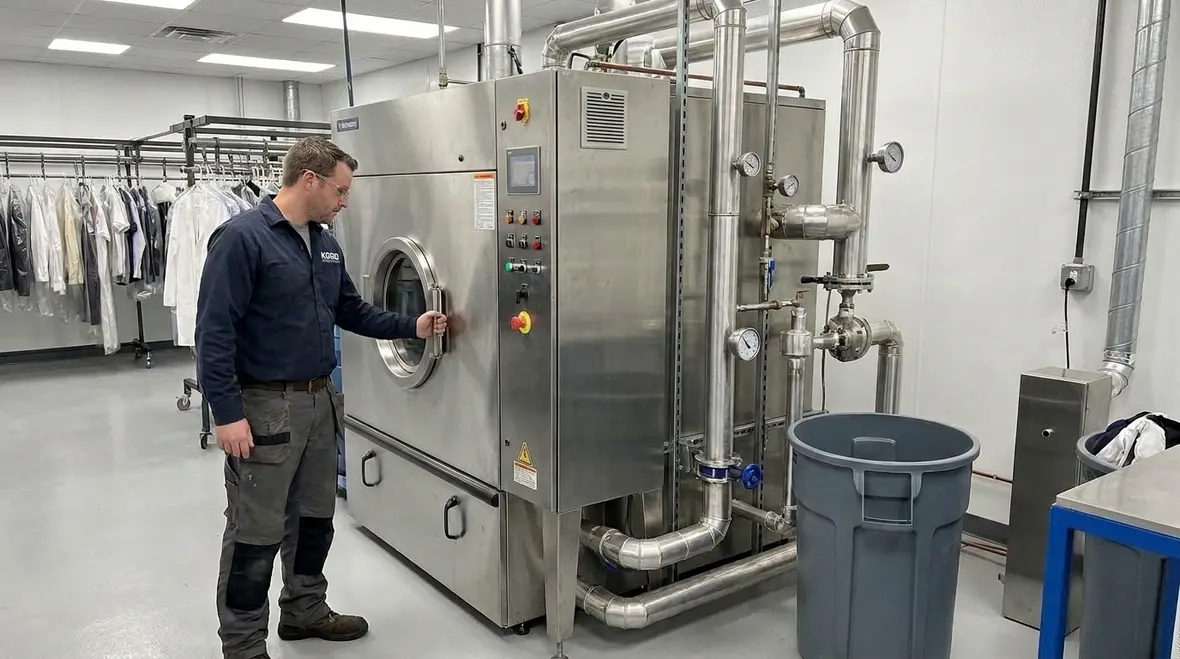
NFPA 32 Section 7.7: Drycleaning Equipment and Stills for Type II Facilities
Quick Answer
NFPA 32 Section 7.7 sets practical fire safety requirements for Type II drycleaning operations, focusing on how drying and solvent handling equipment is designed, operated, maintained, and inspected. Compliance depends on controlling ignition sources, managing solvent vapor, and ensuring safe operating conditions through routine maintenance.
If you are building a broader inspection readiness program, local fire protection services can help tie equipment oversight, maintenance scheduling, and corrective action support into one cleaner workflow.
Why NFPA 32 Section 7.7 matters for Type II drycleaning
NFPA 32 Section 7.7 governs the safe use of drycleaning equipment and still systems in Type II facilities. For owners and safety managers, the real-world challenge is that fire risk is rarely caused by one catastrophic failure. Instead, ignition can result from normal operational degradation such as solvent leakage, worn seals, failed switches, improper burner adjustment, or unmaintained solvent containment components. These issues directly affect the safe operating envelope for NFPA 32 Type II drycleaning equipment stills and related drying and distillation components.
Within the broader compliance landscape, Section 7.7 works alongside other NFPA 32 requirements covering flammable and combustible liquid storage, handling, ventilation expectations, and ignition control. The outcome should be a system that limits vapor release, controls heat input, and maintains reliable controls that shut down equipment when conditions become unsafe.
What “Type II” changes in the field
Type II drycleaning facilities generally operate with processes and equipment arrangements that require tighter control of solvent vapor and distillation risks than simpler configurations. In practice, that means the still is treated as a critical safety subsystem. Facilities must address both engineering controls (how the still is constructed and configured) and operational controls (how it is run and maintained daily).
For commercial and industrial sites, common triggers for noncompliance include:
- Maintenance deferral that allows gasket hardening and seal leakage around still connections
- Unauthorized replacement of components with parts that do not meet the same temperature or pressure ratings
- Control failures that prevent safe shutdown during upset conditions
- Improper installation of still accessories that affect vapor capture or condensation
Inside NFPA 32 Type II drycleaning equipment stills: operational mechanics and hazards
NFPA 32 Type II drycleaning equipment stills typically perform solvent distillation and recycling. During operation, heat drives solvent to separate and return usable solvent while removing contaminants. This process creates a recurring hazard cycle: heat generation, vapor production, and vapor containment. When the containment or control system weakens, vapor concentration and ignition potential can increase.
Key components inspectors and technicians focus on
Fire safety evaluations generally concentrate on how components perform under normal operating loads and during fault conditions. Common focus points include:
- Still vessel and associated piping: Condition of joints, flanges, fittings, and evidence of seepage or corrosion.
- Seals and gaskets: Degradation that allows vapor to escape into the room environment.
- Burners or heating systems: Correct settings, secure wiring, and stable combustion behavior.
- Controls and interlocks: Operation of safeties such as limit controls and shutdown logic.
- Condensation and vapor return pathways: Efficiency and blockage checks that can cause pressure or vapor management issues.
Common failure points that create ignition risk
In many commercial facilities, problems emerge from routine wear. Examples that can undermine compliance include:
- Vapor leaks around service connections or worn seals, leading to flammable vapor in the work area.
- Overheating or unstable temperature control caused by faulty sensors, miscalibration, or damaged wiring.
- Blocked condensers or impaired vapor pathways resulting in vapor carryover and unsafe operating conditions.
- Improper cleaning practices that leave residues that interfere with safe heat transfer or contaminate controls.
- Loose electrical terminations that increase resistance and create heat at connections.
How compliance is verified: inspection, testing, and documentation
NFPA 32 Section 7.7 compliance is not achieved by design alone. It relies on repeatable operational verification. Inspections typically look for evidence that the still system operates as intended, including safe shutdown performance, integrity of vapor containment, and absence of leakage.
What an effective compliance inspection plan includes
For a commercial, industrial, or retail facility, a strong inspection program usually includes:
- Routine leak checks during operation and after shutdown, with documented findings and corrective actions.
- Verification of safe control operation, including limit control function and response to abnormal conditions.
- Review of maintenance records for parts replacement, calibration, and corrective repairs that affect still performance.
- Visual and mechanical integrity checks for piping, supports, and areas prone to corrosion or stress.
- Cleaning and housekeeping confirmation to reduce the likelihood of residues contributing to ignition risk.
Operational procedures that prevent violations
Equipment can pass inspections and still fail due to operational habits. Compliance improves when facilities implement clear procedures for:
- Start up and shutdown sequences that prevent abnormal vapor or temperature conditions
- Qualified personnel for adjustments that affect combustion, heating, and controls
- Lockout and safe work steps during repairs or filter and component servicing
- Change control for parts, burner components, and control modules
These practices align with the intent behind Section 7.7, which emphasizes maintaining safe performance over the equipment lifecycle. That lifecycle includes the realities of busy shops, variable load schedules, and seasonal maintenance constraints.
Maintenance requirements that protect NFPA 32 Type II equipment stills
Maintenance is where most compliance gaps originate. A still system requires ongoing attention because heat, solvent exposure, vibration, and cycling degrade components. To stay aligned with NFPA 32 expectations, maintenance must be proactive, not reactive.
Maintenance actions that directly reduce fire risk
- Seal and gasket replacement before leakage becomes visible or measurable.
- Calibration checks for temperature and control devices that affect safe operating range.
- Combustion verification for heating systems to maintain stable operation and avoid overheating.
- Condensation pathway cleaning to preserve vapor management and reduce carryover.
- Electrical inspections for signs of heat damage, looseness, or insulation deterioration.
Documentation and corrective action discipline
Even when repairs are completed, facilities must track what changed and why. Documentation should include part identification, inspection results, test outcomes, and follow-up verification. This becomes critical during insurance reviews, regulatory checks, or internal audits.
To support ongoing compliance, Kord Fire Protection helps commercial facilities build and sustain inspection readiness through technical services such as fire protection system evaluations, compliance support, and maintenance coordination. Facilities that treat compliance as a managed program typically reduce downtime, avoid repeat corrective actions, and maintain consistent readiness for authorities having jurisdiction.
That also pairs naturally with stronger fire safety system documentation for compliance, because if the repair happened but nobody can prove it, inspections tend to get a lot less charming in a hurry.
Planning for ongoing compliance: practical next steps
Facilities should treat NFPA 32 Section 7.7 as a living requirement, not a one time checklist item. A practical compliance path includes scheduled equipment assessments, documented maintenance intervals, and technician qualification controls. It also includes a clear escalation process when abnormal readings or leakage indicators appear.
If a facility wants a structured approach to maintaining readiness, Kord Fire Protection can support a maintenance and compliance workflow tailored to commercial operations. This helps ensure NFPA 32 Type II drycleaning equipment stills remain within safe operating conditions over time.
Frequently Asked Questions
Call to Action
To keep your NFPA 32 Type II drycleaning equipment stills compliant and operating safely, schedule a technical review and maintenance verification with Kord Fire Protection. A focused assessment helps identify leak-prone components, control weaknesses, and documentation gaps before they become enforcement issues or loss events. Contact Kord Fire Protection to plan an inspection readiness workflow aligned with your operation and maintenance schedule.

Join Our Newsletter!
Get the latest fire safety tips delivered straight to your inbox From our Newsletter.



