
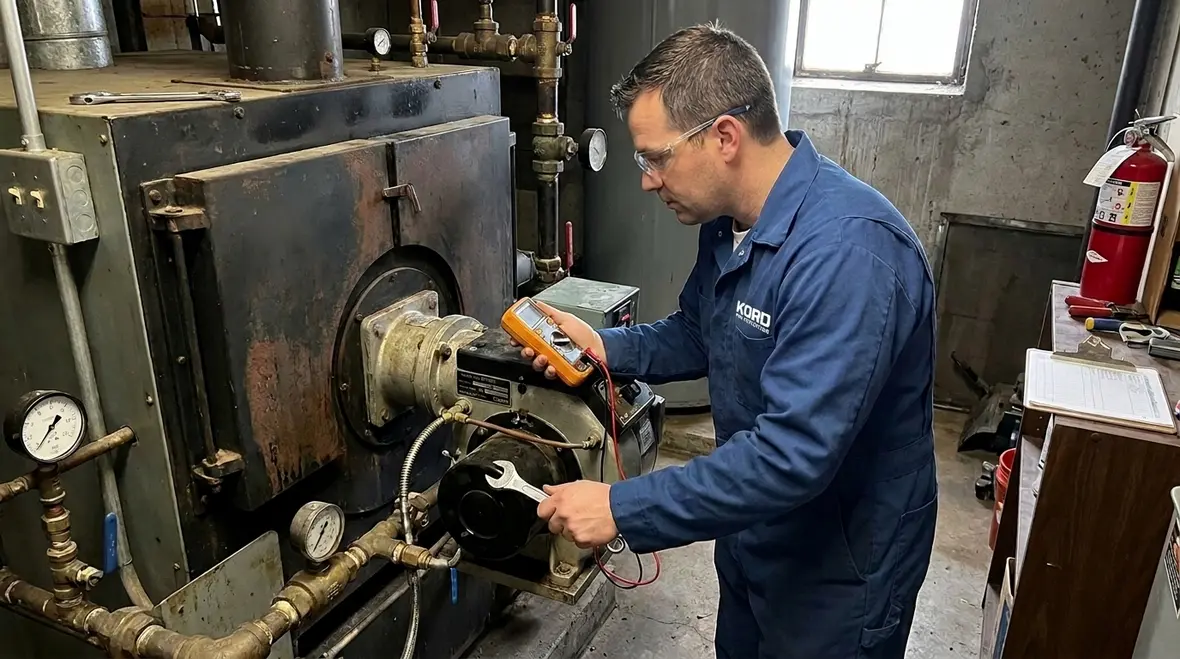
NFPA 31 Section 12.7: Burner Requirements for Used Oil Appliances
Quick Answer
NFPA 31 Section 12.7 sets the burner performance, safety, and installation controls for used oil appliances to reduce ignition hazards, improper combustion, and system malfunctions. Compliance hinges on correct burner design, listed components, proper wiring, verified operation, and ongoing maintenance and testing.
What NFPA 31 used oil burner requirements actually control in the field
Commercial facilities that burn used oil often focus on the tank and piping first, but NFPA 31 Section 12.7 targets the burner as the most safety critical control point. These NFPA 31 used oil burner requirements shape how fuel is delivered, how combustion air and ignition are managed, and how abnormal conditions are prevented or shut down.
In practice, inspectors and insurers look for burner components that match the appliance listing, correct fuel train configuration, safe control logic, and proof that the unit operates within its designed operating envelope. Facilities must also plan for real world failure modes, such as contaminated fuel, clogged strainers, failed combustion air pathways, and control lockouts after abnormal combustion.
Where Section 12.7 fits in the appliance stackup
NFPA 31 organizes used oil appliance safety around a systems approach: fuel handling, ignition, combustion, venting, controls, and shutdown behavior. Section 12.7 focuses specifically on the burner side of that system. The burner must integrate correctly with the appliance and its controls, not just “fit” physically.
For commercial, industrial, and retail operations, this matters because many sites retrofit or swap burner components over time. If the burner is not compatible with the appliance listing or the control sequence has changed, the facility can lose code compliance even when the equipment appears to run.
Facilities should treat the burner as a controlled assembly. Any replacement, upgrade, or adjustment requires verification against the appliance listing, manufacturer instructions, and applicable NFPA 31 provisions. A practical guide to installation and compliance considerations is available here: NFPA 31: A Practical Guide to Oil Burning Equipment Installation.
Near the top of any burner compliance conversation, it also helps to review the installation fundamentals in NFPA 31 Section 10.2: Basic Requirements for Installing Oil Burners, since burner performance problems love to masquerade as “it probably just needs a tweak” when the real issue is configuration drift.
Burner design, controls, and safety functions you must verify
To meet NFPA 31 used oil burner requirements, the burner system must reliably produce safe ignition and stable combustion under normal operation and respond predictably under fault conditions. The following are common compliance elements that commercial fire safety professionals validate during plan review, commissioning, and periodic inspections.
1) Correct burner type and listed appliance configuration
Section 12.7 expectations begin with matching the burner to the used oil appliance as listed. The burner must be designed for the fuel type and rated operating range. Substituting parts, mixing control components, or using non approved configurations can introduce uncontrolled combustion behavior or bypass safety functions.
2) Ignition performance and reliable light off sequence
Used oil burners depend on a controlled ignition sequence. Facilities should confirm that ignition timing, flame sensing, and retry logic align with manufacturer requirements. A common failure point is flame detection that is affected by soot, oil residue, or sensor contamination, leading to frequent lockouts or incomplete combustion.
3) Combustion air and draft management
Proper air supply controls combustion efficiency and soot formation. In real installations, blocked air intakes, damaged combustion air inlets, or restricted vents change draft behavior. These changes can cause smoky operation, increased deposits, and abnormal combustion conditions that push the system toward unsafe shutdown states. For teams comparing burner behavior to air supply conditions, NFPA 31 Section 5.5: Combustion Air for Commercial and Industrial Installations is a strong companion read.
4) Fuel delivery, filtration, and contamination controls
Used oil variability affects atomization and stability. NFPA 31 used oil burner requirements consider the burner fuel train as a safety critical pathway. Facilities should verify that strainers, filters, pumps, valves, and suction piping match the design and that maintenance keeps contamination levels within safe limits.
5) Safety shutdown behavior and interlocks
Burners must stop safely when abnormal conditions occur, such as flame failure, loss of combustion air, or fuel control faults. Inspectors expect that safety controls function as intended and that lockouts are not defeated. Bypassing safeties to restore operations temporarily creates a high risk condition and often results in noncompliance findings during fire inspection.
Why burners fail in commercial used oil systems
Even when equipment starts successfully, operational stresses can cause drift away from safe combustion. Facilities typically encounter repeat issues that map directly to Section 12.7 expectations for controlled burner operation and safe shutdown. Understanding these patterns improves inspection readiness and reduces downtime.
Fuel related failures
-
Clogged strainers and filters: Restriction changes flow and atomization quality, often triggering ignition problems or smoky combustion.
-
Water and debris in used oil: Inconsistent atomization can create unstable flames and increased carbon deposits on flame sensors.
-
Loose or degraded fuel connections: Air ingestion or small leaks can affect pressure control and combustion stability.
Combustion and venting failures
-
Vent restrictions or soot buildup: Elevated backpressure and poor draft alter air fuel ratios and can lead to flame instability.
-
Combustion air pathway obstructions: Blocked inlets or incorrect pressure balancing changes flame quality.
-
Worn burner components: Nozzle performance drift and air damper wear impact atomization and airflow control.
Controls and sensing failures
-
Flame sensor contamination: Soot and oil film prevent reliable flame proof, causing nuisance lockouts.
-
Electrical connection degradation: Vibration, moisture exposure, and aging terminations can create intermittent failures.
-
Improper adjustments: “Tuning” without verification against manufacturer specifications can push the burner outside safe parameters.
For sites that operate year round, these failures often show up during seasonal transitions. Burner readiness checks should therefore include verification after prolonged off cycles and after significant fuel source changes.
How commercial teams should inspect and maintain burners for ongoing compliance
Compliance stays current only when the facility controls burner condition, not just installation records. A strong inspection and maintenance workflow aligns operational checks with burner safety functions.
Pre use checks and start up verification
-
Confirm correct appliance configuration: Verify burner model, control module compatibility, and listed configuration documentation.
-
Inspect ignition and flame sensing: Ensure flame proof occurs reliably and remove contamination that can mask flame detection.
-
Verify combustion air and draft: Confirm air paths are unobstructed and venting is free of blockage.
-
Check fuel train condition: Confirm filters and strainers are within service limits and that pump performance remains stable.
Periodic functional testing and documentation
Inspections should test the burner response to abnormal conditions in a controlled manner, consistent with manufacturer and NFPA expectations. Document results, including observed combustion quality, any lockouts, and corrective actions. If the system uses alarms or remote monitoring, confirm alert thresholds reflect safe operation, not just “running” status.
Maintenance that protects safety systems
Maintenance should treat safety components as critical. That includes replacing worn atomizing parts on schedule, cleaning flame sensing systems, verifying electrical integrity, and ensuring control interlocks remain operational. If adjustments are made, verify performance outcomes using manufacturer recommended testing methods.
Kord Fire Protection supports commercial facilities by aligning burner service activities with compliance expectations, coordinating testing, and maintaining documentation that simplifies inspection cycles. When burner conditions drift, small issues become safety and reliability problems quickly, so a proactive maintenance plan helps facilities stay audit ready.
Frequently Asked Questions
Next step: keep your used oil burner compliant before inspection pressure hits
NFPA 31 used oil burner requirements are easiest to meet when burner configuration, safety functions, and combustion condition stay controlled between service cycles. Kord Fire Protection can help commercial operators validate burner setup, coordinate functional testing, and maintain documentation aligned with inspection expectations. Schedule a compliance review and service plan so your used oil appliance stays reliable, safe, and audit ready.

Join Our Newsletter!
Get the latest fire safety tips delivered straight to your inbox From our Newsletter.



