
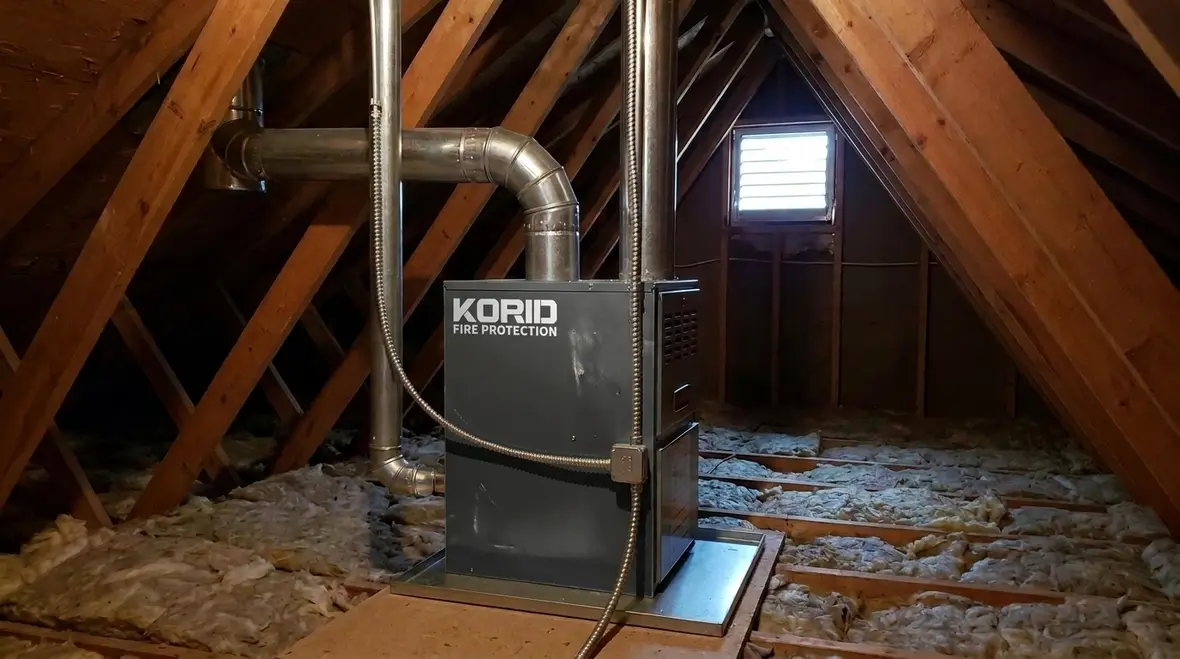
NFPA 31 Section 10.7: Attic Furnace Installation Requirements
Quick Answer
NFPA 31 Section 10.7 sets minimum fire safety controls for installing oil-fired furnaces in attics, emphasizing combustion air, venting, electrical and wiring safety, clearances to combustibles, and inspection-ready documentation. Successful compliance depends on correct installation, commissioning, and documented maintenance to prevent ignition and overheating hazards.
If you are tightening up inspection readiness across the building, fire protection services in Southern California can help support broader compliance planning beyond a single attic furnace issue.
What Section 10.7 is trying to prevent
Attic furnace installations create a high consequence fire scenario. Heat buildup, delayed smoke detection, combustible storage, and complex ducting pathways increase both fire growth potential and the time required to identify a fault. NFPA 31 attic furnace installation requirements therefore focus on controlling ignition sources and ensuring the appliance operates safely under normal and abnormal conditions.
In commercial, industrial, and retail buildings, the attic is often part of building systems, shared maintenance spaces, or service corridors. Compliance becomes more difficult when multiple contractors touch the same area, when insulation or storage practices change, or when equipment is replaced without updating commissioning documentation.
Key NFPA 31 attic furnace installation requirements you must verify
Facilities typically fail compliance audits when “installed correctly” is assumed without confirming the specific safeguards tied to attic placement. Section 10.7 requirements are not just a one time install check. They depend on ongoing maintainability, clearances, and safe operation of the burner and venting system.
1) Location, clearance, and combustible control
The installation must maintain required clearances to combustible materials, considering the real conditions in the attic. This includes insulation compression, insulation settling over time, ductwork and wiring routes, and any materials stored or later added by tenants. Inspectors expect the furnace and burner components to remain accessible for service without pushing combustible materials away by improvisation.
Common failure points in the field include missing clearance guards, insulation placed too close to hot surfaces, and rework that changes airflow around the appliance. For commercial sites, where tenant alterations occur, clearances should be verified after any refurbishment, not only at initial commissioning.
2) Venting, flue integrity, and proper draft
NFPA 31 places heavy emphasis on venting safety because blocked or leaking flue systems can create carbon monoxide, soot deposition, and overheating risks. For attic furnace installations, venting must be routed and supported so it remains mechanically secure and does not degrade due to vibration, thermal movement, or condensation.
Operational verification matters. Inspectors and maintenance teams should confirm:
- Flue sections remain properly connected and sealed as required by the governing installation method.
- Vent terminations and routing do not introduce restrictions.
- Draft conditions remain stable during operation, especially during wind events or when air handling systems alter pressure relationships.
In practice, soot accumulation and minor vent leaks often go unnoticed until performance drops. A documented test and inspection program prevents “silent failures” that are common in attic environments.
3) Combustion air and ventilation for attic placement
Attics do not behave like mechanical rooms. Temperature stratification, limited mixing, and pressure imbalances can affect burner combustion and draft. NFPA 31 requirements for combustion air and ventilation must account for attic conditions, including how air pathways interact with exhaust fans, makeup air units, and envelope tightness.
Commercial operators should avoid assumptions such as “there is always enough air” based on nominal attic volume. Instead, verify that the installation provides the required combustion air strategy and that no equipment changes reduce that supply. This becomes critical when facilities add weatherization, install new roof penetrations, or modify HVAC sequences.
4) Electrical safety, controls, and wiring protection
Attic installations often require careful routing of electrical wiring and control circuits. NFPA 31 expectations align with the broader need to protect wiring from physical damage, heat exposure, and improper connection practices. Inspectors look for secure terminations, correct protective methods, and reliable operation of safety controls.
Maintenance teams should check:
- Control wiring integrity, strain relief, and routing away from heat sources.
- Proper operation of limit controls, ignition systems, and burner safety interlocks.
- Signs of overheating, discoloration, or insulation degradation at terminal points.
How inspection and testing typically go in commercial facilities
In commercial settings, compliance is usually evaluated against two things: what the system looks like today and whether it behaves safely under test. For NFPA 31 attic furnace installation requirements, auditors and AHJs typically expect evidence of safe operation, not only installation markings.
Commissioning evidence that reduces compliance risk
To support inspection readiness, facilities should maintain commissioning and service records showing:
- Burner setup parameters and verification of correct operating conditions.
- Flue and vent performance checks, including leakage and draft characteristics where applicable.
- Cleaning and service history for burner components and heat transfer surfaces.
This is where many sites struggle. Attic equipment changes hands between trades, and service documentation can be incomplete. Kord Fire Protection supports ongoing compliance planning so records remain audit ready and equipment performance does not degrade unnoticed. For teams wrestling with paperwork chaos, fire safety system documentation for compliance adds useful context.
Operational failure modes inspectors watch for
Attic furnace issues often present as performance symptoms first. Inspectors may connect these symptoms to installation factors tied to Section 10.7, including:
- Frequent nuisance shutdowns due to abnormal draft, air supply issues, or control malfunction.
- Excess soot, indicating combustion problems, vent restrictions, or air imbalance.
- Delayed ignition or unstable flame behavior linked to burner maintenance gaps.
- Overheating indicators such as limit trips and elevated temperatures at unsafe locations.
Common compliance challenges in attics for oil burning equipment
Even when the initial installation met requirements, commercial realities can change the risk profile. NFPA 31 attic furnace installation requirements are sensitive to modifications and maintenance quality. Typical challenges include:
- Insulation disturbance: Re insulation projects can reduce clearances and restrict airflow near the appliance.
- Mechanical modifications: HVAC upgrades can alter pressure and airflow patterns affecting combustion air and draft.
- Uncontrolled storage: Attics sometimes become temporary storage zones, increasing combustible loading.
- Deferred burner service: Soot buildup and nozzle or electrode degradation can change combustion characteristics.
- Vent penetrations and roof work: Replacement penetrations can introduce misalignment, leaks, or incorrect termination behavior.
These challenges are not theoretical. They appear frequently across industrial warehouses, retail strip centers, and mixed use buildings where service access and tenant changes are constant.
Where to focus maintenance to stay compliant long term
Compliance is sustained through preventive service and documented verification. Kord Fire Protection supports commercial asset owners and facility managers with inspection support, operational checks, and maintenance coordination designed to protect both people and property in high consequence attic spaces.
For additional context on installation considerations for oil burning equipment, refer to this practical resource: NFPA 31 practical guide to oil burning equipment installation.
Frequently Asked Questions
Call to action
If your facility depends on an attic furnace, align installation details, commissioning evidence, and maintenance records with NFPA 31 attic furnace installation requirements before an inspection finds issues. Kord Fire Protection helps commercial operators manage compliance risk with practical verification, ongoing service support, and audit ready documentation. Book a site assessment to confirm your furnace, venting, clearances, and operating conditions meet current safety expectations.

Join Our Newsletter!
Get the latest fire safety tips delivered straight to your inbox From our Newsletter.



