
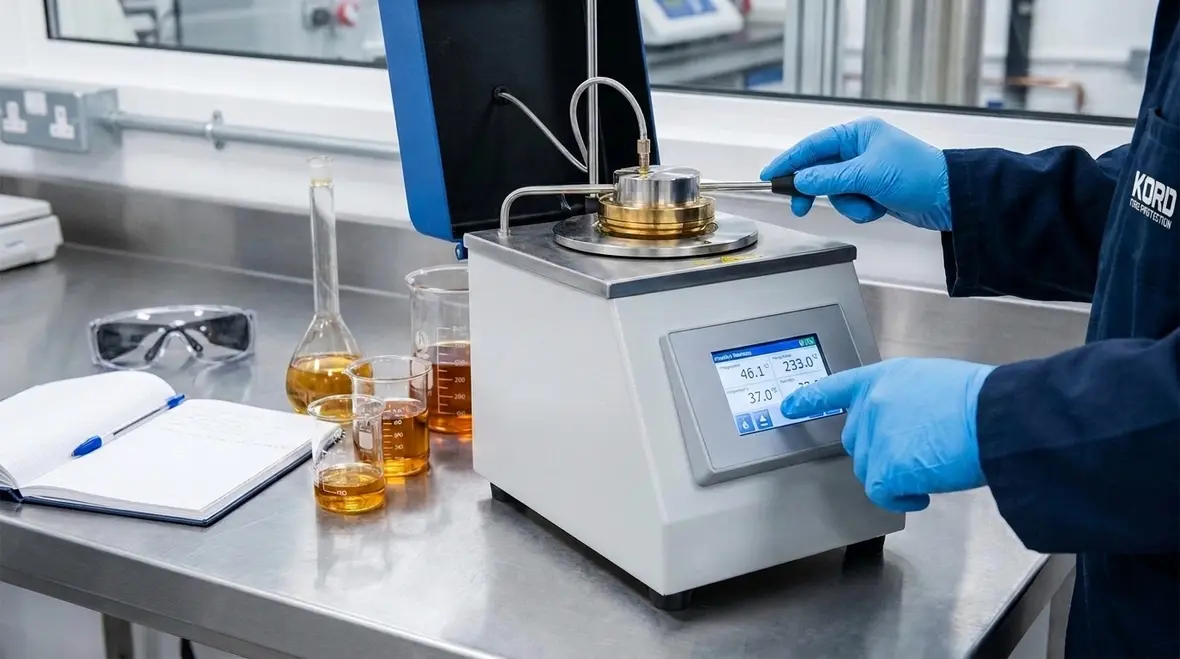
NFPA 30 Section 4.4: Flash Point Determination Methods for Classification
Quick Answer: NFPA 30 Section 4.4 requires controlled, standardized flash point testing to classify flammable and combustible liquids accurately. Facilities should select the correct test method, ensure instrument readiness, prevent contamination and mislabeling, and document results for compliance, operating permits, and safer storage and handling.
Why NFPA 30 Section 4.4 flash point testing drives safe classification
Flash point determines how NFPA 30 classifies flammable and combustible liquids, which then governs storage limits, ventilation assumptions, segregation, container requirements, and ignition source controls. When a facility uses the wrong determination method, poor sampling practices, or inaccurate instrumentation, the resulting classification can be noncompliant and unsafe.
For compliance teams working under NFPA 30 Section 4.4 determining flash point for classification, the most common operational risk is not the wording of the section itself. The real risk is how the organization implements the method: sampling, sample conditioning, test equipment calibration, ignition system performance, and record control.
Commercial owners and facilities teams can reduce this risk by aligning procurement paperwork, SDS data, internal testing procedures, and maintenance practices with the test method used for classification. For a broader overview of how the standard regulates flammable liquid hazards, see how NFPA 30 regulates flammable liquids. If your team also needs broader fire protection services in Southern California, that support can fit naturally into a larger compliance program.
What Section 4.4 is trying to control
NFPA 30 Section 4.4 is designed to ensure flash point data comes from a standardized determination method that produces repeatable results. Classification decisions depend on those results, so the standard expects discipline around test execution and quality assurance.
Classification consequences for facility operations
- Storage and segregation rules may tighten if liquids classify as flammable rather than combustible.
- Ventilation and vapor control assumptions may change because vaporization behavior at handling temperatures differs by class.
- Permit conditions and inspection outcomes often rely on documented flash point determinations rather than assumptions.
- Planning for spill response, hot work controls, and ignition source management depends on correct classification.
Compliance challenge in day to day operations
Many sites receive liquids with an SDS that lists a flash point, but SDS values may reflect different test methods, sample treatments, or supplier reporting practices. When classification relies on a site owned test result, the facility must control method selection and provide traceable documentation to support the classification decision under NFPA 30 Section 4.4 determining flash point for classification.
How the method selection affects the flash point outcome
Flash point testing is sensitive to method mechanics, sample conditioning, and the ignition system. Therefore, NFPA 30 Section 4.4 requires that the determination method used for classification be selected and applied correctly. The goal is not just to run a test, but to run it in a way that yields comparable, defensible results.
Operational factors that commonly change results
- Sample condition and temperature history: Samples warmed or cooled inconsistently can yield different vapor characteristics.
- Contamination: Water, residues, or mixed products can shift flash point behavior.
- Evaporation and headspace: Poor container handling during sampling can remove volatile fractions.
- Ignition timing and detection: Probe timing, ignition energy, and flame detection influence the reported flash point.
- Thermal control: Heating rates and temperature sensing accuracy affect the threshold where ignition occurs.
Procedure discipline that inspectors look for
Facilities commonly fail compliance due to documentation gaps rather than test execution alone. A strong approach includes: controlled sampling steps, method identification, instrument traceability, recorded temperature profiles, and retention of raw test data. When results support classification updates, the facility should also update labeling, inventory databases, training materials, and storage drawings.
What good flash point testing looks like in real facilities
Reliable flash point determination depends on more than trained technicians. It depends on equipment readiness and maintenance controls. Commercial laboratories and in house safety teams typically face the same failure points: calibration drift, worn ignition components, incorrect operating settings, and inconsistent sample transfer practices.
Equipment mechanisms that drive repeatability
- Temperature sensing and control: Temperature sensors and control circuits must be verified and monitored to prevent systematic bias.
- Ignition system performance: Ignition energy and alignment influence whether a marginal ignition is detected.
- Test cup integrity: Cleanliness and correct cup fit prevent false results caused by residues or geometry changes.
- Air flow and vapor behavior controls: Some systems depend on controlled airflow or cup lid behavior, so operational settings must match the method.
- Data logging: Automated logging should be validated so the reported flash point threshold reflects the true measurement.
Maintenance requirements that reduce compliance risk
A compliance minded maintenance plan should include routine functional checks, calibration intervals, and corrective action triggers. When technicians replace sensors, ignition components, or adjust thermal settings, the facility should verify performance and retain maintenance records so the flash point determination remains defensible for NFPA 30 Section 4.4 determining flash point for classification.
Common failure points in commercial, industrial, and retail settings
- Testing performed using older or modified equipment settings without a documented method confirmation.
- Samples taken from containers that were opened earlier than the test schedule allows, causing volatilization changes.
- Inconsistent cleaning protocols for test cups and accessories, leading to residue carryover.
- Relying solely on supplier SDS flash points without verifying method compatibility with site classification rules.
Documentation, traceability, and audit readiness for classification
NFPA 30 classification decisions must stand up under inspection. That means the facility needs a documentation package that links the flash point determination to the classification, storage design basis, and current inventory control.
Minimum documentation elements to maintain
- Test method identification: The method name and any relevant operating parameters tied to the procedure.
- Instrument records: Calibration status, maintenance history, and evidence of instrument readiness.
- Sampling record: Container identification, sampling time, sample handling steps, and any deviations.
- Raw test data: Temperature versus time profile, ignition events, and final flash point result.
- Classification mapping: The classification decision and how the result supports it under NFPA 30.
- Version control: Controlled storage in a system that preserves the audit trail for future re inspection cycles.
Practical compliance approach for ongoing operations
Commercial facilities typically benefit from a recurring workflow: confirm storage category assumptions, verify flash point method alignment when product formulations change, and update hazard communication materials. Kord Fire Protection can support this lifecycle by helping facilities coordinate compliance testing, inspection preparedness, and maintenance planning with the operational realities of storage rooms, service bays, warehouses, and retail back rooms.
How Kord Fire Protection supports NFPA 30 flash point compliance programs
Many organizations already have testing staff. The gap appears when flash point classification results must integrate into facility wide safety controls and inspection readiness. Kord Fire Protection helps bridge that gap through structured compliance support, practical document management, and ongoing service aligned with NFPA 30 expectations for flammable liquids.
- Review of facility classification assumptions against documented flash point determination evidence.
- Support for inspection readiness through organized compliance documentation and hazard communication alignment.
- Maintenance coordination so test equipment and safety controls do not drift out of compliance due to calendar gaps or incomplete records.
- Facility specific planning for storage arrangement impacts caused by classification changes.
If the facility needs to tighten controls around NFPA 30 Section 4.4 determining flash point for classification, Kord Fire Protection can help establish a repeatable process that reduces audit risk and improves safety outcomes.
Frequently Asked Questions
Get classification defensibility before the next inspection
Flash point determination under NFPA 30 Section 4.4 becomes a compliance success when method selection, equipment readiness, and documentation discipline operate as one system. Kord Fire Protection can help your facility strengthen testing integration, maintain audit ready records, and align storage and safety controls to the classification basis. Contact Kord Fire Protection today to review your flash point evidence workflow and close the gaps that cause inspection findings.
Learn how NFPA 30 regulates flammable liquids for additional context on how flash point classification drives facility requirements.

Join Our Newsletter!
Get the latest fire safety tips delivered straight to your inbox From our Newsletter.



