
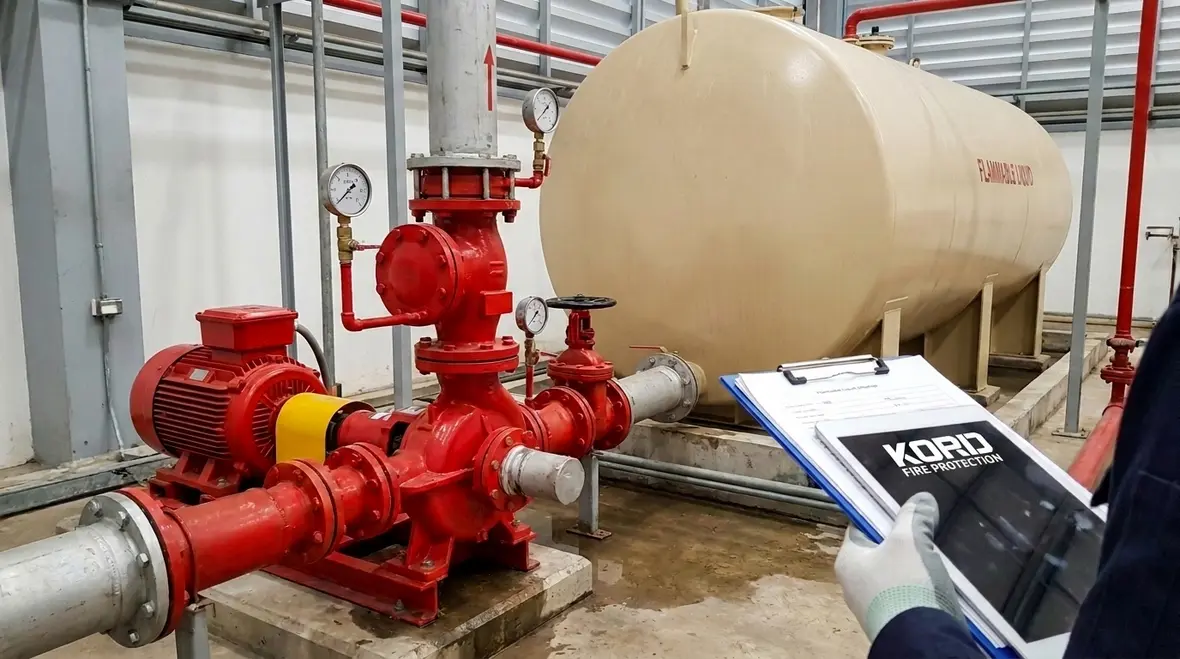
NFPA 30 Section 16.7 Water Supply for Storage Protection Systems
Quick Answer
NFPA 30 Section 16.7 sets the minimum performance expectations for the water supply that supports storage protection systems for flammable liquids. It emphasizes dependable capacity, acceptable pressure and flow, practical connection methods, and ongoing maintenance so the system can operate when needed.
What NFPA 30 Section 16.7 requires in practical terms
In facilities handling flammable liquids, NFPA 30 Section 16.7 water supply protection systems focuses on whether the water supply can reliably deliver fire protection performance under real-world conditions. Inspectors and insurers typically look for more than “a hydrant is nearby.” They evaluate whether the water supply is sized, arranged, monitored, and maintained to deliver required flow and pressure to the storage protection features it supports.
Common compliance gaps include undersized connections, unverified water supply performance, missing backflow and control arrangements, improper valve positions, and a lack of documented testing. These issues can delay system operation or reduce discharge effectiveness during an emergency.
For facilities that want a practical service path tied to water supply performance, fire pump testing and certification process planning fits naturally into broader readiness efforts.
How the water supply supports storage protection systems
Storage protection systems often depend on water to control fire conditions around tanks, containers, or hazardous materials storage areas. Section 16.7 addresses the water source and delivery performance because the rest of the system is only as effective as its supply.
Key performance elements you must be able to demonstrate
- Flow availability: The water supply must provide the required rate to the system components without unacceptable throttling.
- Pressure performance: Available pressure at operating conditions must support discharge performance, including friction and elevation losses.
- Reliable delivery path: Pipe routing, fittings, and valves must not introduce unexpected restrictions.
- Operational readiness: Water supply controls must be accessible and maintained so they are in the correct condition at all times.
For commercial, industrial, and retail sites, this typically means coordinating with site utilities, reviewing historical water pressure records, and conducting field verification rather than relying solely on nameplate information or assumptions.
Common water supply configurations and the hidden failure points
Facilities frequently use municipal water, on site fire pumps, or combinations that include storage reservoirs. NFPA 30 Section 16.7 centers on ensuring the chosen configuration performs as intended and remains available when the storage protection system activates.
Municipal supply: when “it should be enough” fails
Municipal systems can change. Water demand from other users, seasonal variations, and upstream maintenance can reduce available pressure or flow. A common failure point is a connection designed for a theoretical flow but not verified with test conditions that match the system demand.
Operational checks should confirm hydrant or connection performance under the required demand scenario, not just static pressure measurements.
Fire pumps and engineered water delivery: where documentation matters
When a fire pump supplements water supply, the pump must start and deliver the correct flow and pressure at the required conditions. Common issues include incorrect pump controller settings, clogged strainers, deteriorated suction arrangements, closed or mispositioned valves, and lack of routine functional testing.
Water storage tanks or reservoirs: ensuring availability at the moment of demand
Where site reservoirs are used, failure points include low water level from poor refill control, damaged level sensors, blocked inlets, or inadequate maintenance of associated pumps and valves. Inspectors also look for clear evidence that the water volume is available when the storage protection system requires it.
Inspection, testing, and maintenance expectations that regulators and insurers look for
NFPA 30 Section 16.7 water supply protection systems are treated as life safety and property protection systems that require ongoing verification. The goal is simple: the water supply must continue to operate as installed, and the site must keep evidence that it does.
Inspection and verification priorities
- Valve and control condition: Confirm valves in the water delivery path are in the required position, seals are intact, and control components are unobstructed.
- Strainers and obstructions: Check for debris accumulation and confirm strainers are cleaned on a maintenance schedule.
- Pressure and flow monitoring: Verify that any gauge, transmitter, or alarm interfaces reflect actual operating conditions.
- Backflow and isolation arrangements: Ensure backflow prevention devices do not introduce unacceptable restrictions and remain within service limits.
- Water supply availability: Maintain records of field performance checks, especially after changes to the site water network or fire protection system.
Testing that supports defensible compliance
Testing should be structured to verify the system can achieve required performance. Many sites only document “pump ran” or “hydrant flowed briefly,” which rarely satisfies the scrutiny applied to storage protection systems. A defensible approach documents demand scenarios, pressure and flow outcomes, and any corrective actions taken.
For additional context on how the code regulates flammable liquids hazards and the systems designed to mitigate them, see how NFPA 30 regulates flammable liquids.
Commercial compliance challenges: what to plan for before an audit
Commercial facilities often face recurring hurdles that increase the risk of non compliance, operational delays, or reduced fire protection performance. NFPA 30 Section 16.7 water supply protection systems require a coordinated, documented approach across facilities, maintenance teams, and fire protection contractors.
Facility change management and water supply drift
Water supply performance can drift due to:
- New tenant loads or equipment upgrades that increase water demand
- Pipe modifications, valve replacements, or reroutes during renovations
- Seasonal groundwater or municipal supply variations
- Changes to storage quantities that increase system demand
Sites that do not treat fire protection water supply verification as part of change management often discover deficiencies during inspection season.
Maintenance ownership and recurring missed steps
In many commercial settings, water supply inspection tasks are fragmented. One vendor maintains pumps, another services valves, and facilities staff handles drawings and access. The result is inconsistent documentation and missed components.
Kord Fire Protection helps commercial and industrial sites close these gaps through structured inspection planning, operational checks, and maintenance support designed to protect uptime and compliance posture.
How Kord Fire Protection supports ongoing NFPA 30 readiness
Meeting NFPA 30 requirements for water supply depends on more than installation quality. It depends on sustained performance and reliable evidence. Kord Fire Protection supports commercial facilities with practical field oriented compliance services that align with how systems are actually operated, tested, and maintained.
- Assessment of water supply arrangement and delivery path integrity
- Inspection support for valves, controls, and typical blockage points
- Test planning and documentation practices that strengthen audit outcomes
- Maintenance coordination to reduce failure risk before emergencies
This service partnership approach helps reduce the most common operational failures: inaccurate assumptions, unverified performance, and maintenance drift.
Frequently Asked Questions
Next step: protect compliance and operational reliability
If your site stores flammable liquids and relies on water based storage protection, validate your water supply performance now, not during an audit. Contact Kord Fire Protection to review your NFPA 30 Section 16.7 water supply protection systems documentation, identify common failure points, and build a practical inspection and maintenance plan that supports dependable operation when it matters most.

Join Our Newsletter!
Get the latest fire safety tips delivered straight to your inbox From our Newsletter.



