
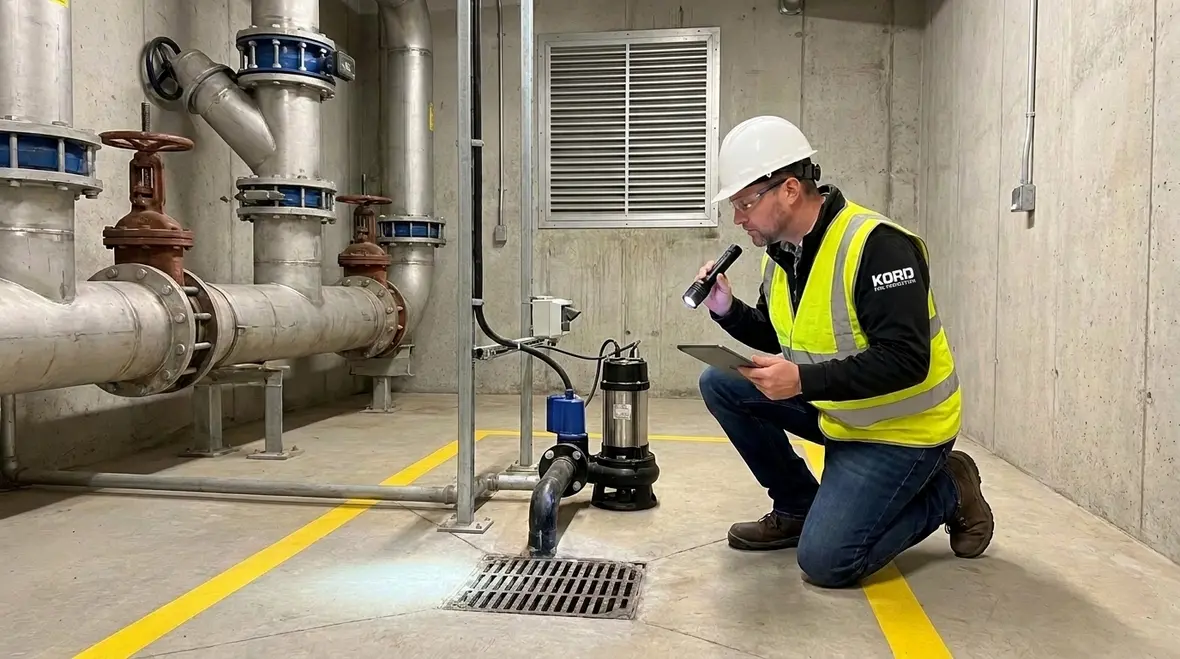
NFPA 30 Section 25.3: General Requirements for Tank Vaults
Quick Answer: NFPA 30 Section 25.3 general tank vault requirements set baseline design and operational expectations for how tank vaults contain and protect flammable liquid tanks. These rules focus on construction integrity, drainage and control of releases, ventilation management, and ongoing readiness through inspection and maintenance.
What NFPA 30 Section 25.3 is actually trying to control
NFPA 30 governs flammable and combustible liquids, and Section 25.3 establishes general expectations for tank vaults. In commercial and industrial settings, the tank vault is not treated as a passive “box.” It functions as an engineered barrier that reduces spread of flammable liquid during leaks, supports safe drainage and collection, and helps manage vapours so ignition sources and hazardous vapour concentrations do not become the dominant risk.
For teams managing retail fuel islands, chemical storage rooms, and industrial bulk tanks, the core practical challenge is maintaining the vault performance over time. Corrosion, blocked drains, degraded seals, and unverified ventilation pathways can quietly convert a compliant vault into one that fails when it matters.
For facilities that also need broader fire protection support, Kord Fire Protection’s fire pump testing requirements guide is a useful companion piece because it shows how inspection discipline and documentation practices carry across critical fire protection systems. For context on how NFPA 30 regulates these hazards, see how NFPA 30 regulates flammable liquids.
NFPA 30 Section 25.3 general tank vault requirements: the baseline expectations
NFPA 30 Section 25.3 general tank vault requirements typically drive three operational outcomes. First, the vault must retain the hazardous liquid long enough for controlled response and safe exposure conditions. Second, the design and arrangement must prevent uncontrolled overflow, vapour migration to protected areas, and ignition capable conditions. Third, the vault must remain in a functional state through routine inspection, testing, and corrective maintenance.
1) Vault integrity and leak control
Vaults must provide sufficient containment capability consistent with the liquid hazards. In practice, this means verifying that construction materials, joints, and penetrations do not become preferential leak paths. The most common failure point in real facilities is not the vault concept. It is the “details,” such as pipe penetrations, cable entries, housekeeping interfaces, and damaged linings that develop micro leaks over months of thermal cycling and chemical exposure.
2) Drainage, collection, and release management
Tank vaults must support safe handling of drainage and leaked product. Facilities usually implement sumps, drains, and separators to move leaked liquid away from ignition sources and into controlled collection. The key compliance risk is operational: drains that remain open without a controlled path, screens that clog, or valves that remain in the wrong position after maintenance. A compliant vault can still fail inspection if drainage components cannot demonstrate safe operational alignment.
3) Vapour management and ventilation performance
Vapour accumulation inside or around a vault changes the fire and explosion profile. Section 25.3 general expectations commonly tie vault performance to safe vapour control, which may include ventilation arrangements and maintaining unobstructed pathways. In commercial environments, ventilation systems are frequently compromised by stored materials, signage, temporary cable trays, or “temporary” modifications that never return to the original configuration.
How facilities should run tank vaults day to day (not just on paper)
Many compliance problems originate in routine operations rather than initial installation. NFPA 30 tank vault expectations require facilities to maintain readiness, which should be reflected in procedures and work instructions.
Inspection routines that catch the real wear points
- Penetrations and seals: Inspect around pipe penetrations, gaskets, and cable entries for chemical degradation, cracking, and migration.
- Drainage components: Verify drain openings, sumps, strainers, and isolation valves remain unobstructed and correctly positioned.
- Ventilation pathways: Confirm ventilation inlets, outlets, louvers, and openings remain clear and free of storage encroachment.
- Housekeeping interfaces: Look for debris accumulation that blocks airflow or creates ignition capable conditions.
Work control for modifications and hot works
Vaults are especially vulnerable during maintenance because contractors change small parts that have outsized safety impacts. A strong work permit process should require verification that penetrations remain sealed after cable pulls, that temporary bypasses are removed, and that any hot works do not damage internal coatings or ventilation components.
Common compliance challenges that trigger findings
Commercial, industrial, and retail facilities often face the same recurring tank vault problems. These are typically the items that prevent teams from demonstrating “general tank vault requirements” consistently during audits.
Blocked or ineffective drainage
Facilities sometimes assume drainage works because drains exist. Inspectors and insurers focus on actual operational capability. Blocked strainers, disconnected discharge piping, or incorrect isolation valve positions can allow leaked product to accumulate beyond intended limits.
Degraded coatings and chemical compatibility drift
Tank vault linings and coatings can fail due to chemical incompatibility or age. When coating integrity reduces, small leaks expand. Teams should treat coating health as a compliance element, not a cosmetic one, and ensure it aligns with the stored liquid hazards.
Ventilation obstructions from “normal operations”
Retail and commercial sites often have tight storage areas near vaults. Cartons, pallets, spare parts, and even temporary lighting stands can obstruct openings. NFPA 30 tank vault expectations become difficult to maintain without clear exclusion zones and controlled storage policies.
Unverified maintenance actions
After maintenance, systems may be left in noncompliant configurations. The most frequent breakdown is verification. Without a post maintenance checklist that confirms drain and ventilation status, vault readiness erodes while documentation remains incomplete.
Inspection, testing, and documentation that stand up to scrutiny
To meet NFPA 30 Section 25.3 general tank vault requirements in practice, documentation must show both condition and operational readiness. A strong compliance package connects inspections to corrective actions and demonstrates that the vault system stays capable between service cycles.
What to include in the compliance file
- Vault condition reports: Findings on integrity, seals, penetrations, and coatings with photos where feasible.
- Drainage evidence: Records showing drains, sumps, and isolation components remain clear and functional.
- Ventilation checks: Confirmation that openings and pathways remain unobstructed.
- Corrective maintenance actions: Repairs and replacements documented with dates, materials used, and re validation.
Where Kord Fire Protection fits in
Kord Fire Protection supports commercial teams in maintaining ongoing compliance through systematic inspection, testing coordination, and maintenance support. This helps facilities close the gap between initial installation and long term performance, particularly where vault systems experience recurring operational wear, contractor activity, and changing site layouts. For ongoing guidance on NFPA driven controls, Kord Fire Protection can align tank vault practices with flammable liquid risk management expectations, including those addressed by NFPA 30 regulations for flammable liquids.
Kord Fire Protection is also listed under https://kordfire.com.au for local commercial support.
Frequently Asked Questions
Get tank vault compliance working like it should
NFPA 30 Section 25.3 general tank vault requirements are only effective when facilities maintain vault integrity, drainage capability, and vapour management over time. Kord Fire Protection can help your team build a practical inspection and maintenance program, close common failure points, and maintain audit ready documentation. Contact Kord Fire Protection to assess your current vault setup and confirm readiness before the next compliance review.

Join Our Newsletter!
Get the latest fire safety tips delivered straight to your inbox From our Newsletter.



