
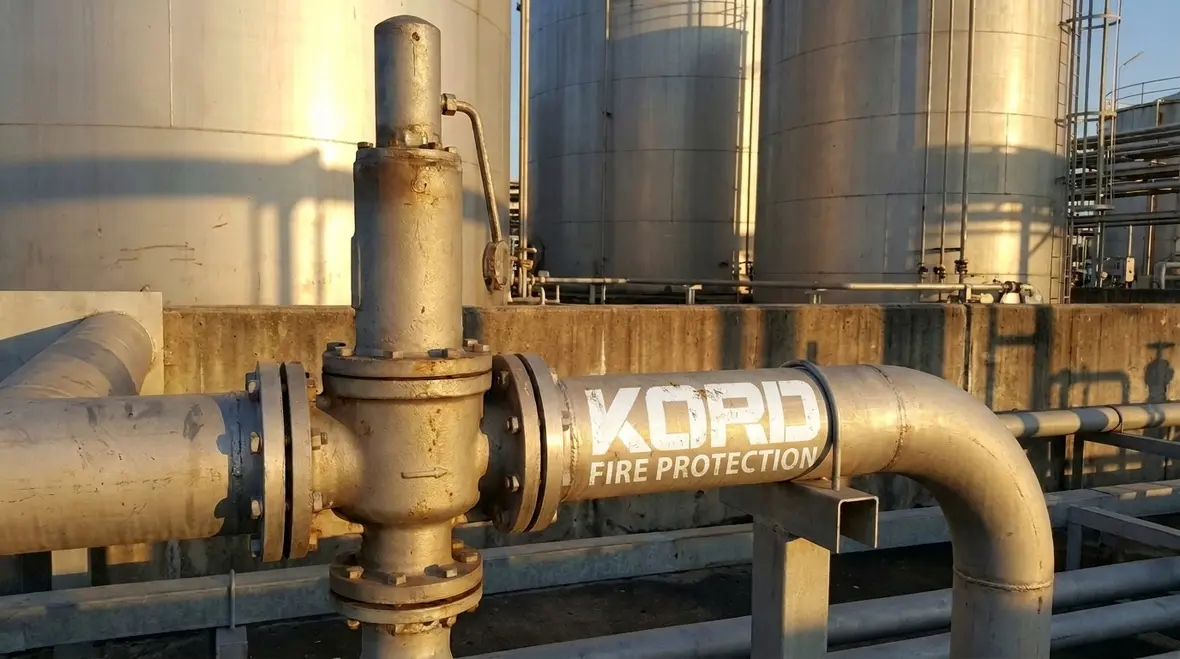
NFPA 30 Section 22.7: Emergency Relief Venting for Fire Exposure
Quick Answer
NFPA 30 Section 22.7 emergency relief venting for fire exposure governs how pressure relief systems protect flammable liquid containers and related piping during an external fire. It focuses on relieving emergency overpressure safely, maintaining venting performance, and sustaining compliance through inspection and maintenance.
NFPA 30 Section 22.7 emergency relief venting fire exposure applies to situations where an external fire can cause rapid heating, vapor generation, and dangerous pressure rise. Commercial facilities that store, handle, or process flammable liquids need relief devices and discharge arrangements that remain functional under heat exposure, not just during normal operating conditions.
Because compliance failures typically involve damaged vents, blocked discharges, inadequate installation, or unverified device capacity after modifications, NFPA 30 requires facilities to treat this as an engineered life safety system. The most reliable approach integrates design verification, documented inspections, and ongoing maintenance by qualified service providers.
For a broader compliance overview of flammable liquids under NFPA 30, see: How NFPA 30 regulates flammable liquids.
Facilities that want a stronger inspection and maintenance baseline for related systems can also review commercial fire suppression services from Kord Fire Protection, especially where flammable liquid hazards intersect with broader suppression and compliance planning. ([kordfire.com](https://kordfire.com/fire-suppression/?utm_source=openai))
What NFPA 30 Section 22.7 is trying to prevent
Section 22.7 addresses the consequence chain that follows external fire impingement on tanks, piping, and associated systems. When flames heat a container, liquid can boil and flash, driving pressure above the normal design envelope. If relief cannot vent safely, the result can include relief device failure, structural damage, tank rupture, or fire escalation through vent discharge hazards.
The emergency relief venting fire exposure requirements aim to ensure three outcomes during a fire:
- Pressure relief occurs at a rate adequate to prevent unsafe overpressure.
- Discharge is directed and handled safely to avoid igniting adjacent hazards or causing impingement onto people and structures.
- Relief remains operational even when the system components and discharge piping experience elevated temperatures.
In practice, the biggest risk drivers in commercial installations include localized overheating of valve bodies and tubing, vent discharge obstructions, and untested assumptions after expansions, re-routing, or process changes.
Key compliance concepts under Section 22.7
1) Emergency venting arrangements sized for fire conditions
Section 22.7 focuses on emergency relief venting performance during fire exposure. That means sizing and arrangement need to account for heating and vapor generation beyond typical operating scenarios. Facilities often assume that normal relief capacity data remains valid during fire exposure, but fire conditions can produce substantially different relief behavior.
Compliance teams should confirm that the relief basis, capacity calculations, and discharge routing align with the specific equipment and fire exposure scenario at the site. Changes such as new nozzle configurations, insulation additions, revised operating temperature ranges, or modified vent headers can invalidate prior assumptions.
2) Heat exposure does not cancel relief
A common operational failure point involves relief devices that lose functionality when exposed to external heat, especially when installation details concentrate thermal stress. NFPA 30 expectations require that emergency relief venting fire exposure arrangements stay capable of relieving when the system is hottest.
From a field perspective, this typically requires attention to:
- Vent valve material compatibility with elevated temperatures and the fuel chemistry.
- Insulation or shielding arrangements that do not create new heat traps or blockage hazards.
- Discharge piping and termination that tolerate thermal expansion and do not collapse, kink, or sag.
3) Discharge routing that reduces secondary ignition and impingement
Relief discharge can be hazardous even when the container stays intact. During emergency venting, the discharge stream may be flammable, may flash, and may ignite. NFPA 30 Section 22.7 expectations require a discharge arrangement designed to reduce impingement on structures, egress routes, and adjacent ignition sources.
For retail and light industrial sites, discharge termination location is frequently overlooked during renovations, tenant fit-outs, or landscaping changes. A once compliant discharge can become obstructed by new signage, cable trays, or stored materials that later migrate into the discharge zone.
How emergency relief venting systems work during a fire
During an external fire, increasing heat loads container pressure, which drives the relief system toward actuation. Depending on the design, the relief device can be spring loaded, pilot operated, or otherwise configured to open when pressure rises. Fire exposure can accelerate vaporization, which can cause sustained relieving rather than a brief release.
Operational sequence to verify in field conditions
- Heating raises internal temperature and generates vapor, causing pressure to climb.
- Relief set point is reached, and the vent device begins to open or modulate.
- Discharge flows to the vent header or termination at the rate required by the fire exposure scenario.
- Discharge continues until the fire conditions stabilize or the relief mechanism returns toward closed position.
Because relief systems can behave differently under heat, facilities benefit from scenario based inspection, including verifying valve condition, travel capability where applicable, and discharge pathway integrity.
Common mechanisms and components involved
- Relief valves and possibly associated pilot components.
- Stop valves or isolation valves that must be positioned correctly for emergency service.
- Vent piping and discharge headers that must remain unobstructed and properly supported.
- Termination devices that protect against blockage, while not impairing emergency venting performance.
When these elements are installed during construction, everything may appear correct. When modifications occur later, the system often becomes noncompliant through unintended partial closures, removed fittings, blocked drains, or incorrect reassembly.
Inspections and maintenance that prevent failure during emergency venting
Commercial facilities typically implement inspection programs focused on normal operations. Section 22.7 emergency relief venting fire exposure demands a more targeted approach because failure during a fire is irreversible. Maintenance must preserve emergency performance, not just general equipment cleanliness.
What to inspect, not just what to observe
- Vent discharge clearances: verify termination is free of obstructions and stored materials, including seasonal items and temporary installations.
- Valve accessibility: confirm technicians can access, lock, and verify device configuration without improvisations.
- Physical integrity: check piping supports, hangers, and flexible sections for sagging, thermal distortion, or corrosion that could restrict flow.
- Isolation valve position: ensure stop valves remain in the required position for emergency service and are not inadvertently changed.
- Signs of leakage or fouling: investigate residues that may indicate valve seat leakage, contamination, or improper vent discharge behavior.
Testing and documentation expectations
Many sites delay or defer relief valve maintenance until a scheduled service window, which increases risk because the valve performance can drift over time due to corrosion, sticking, or internal wear. A robust program includes documented service intervals, condition assessments, and traceable records.
Where testing is performed, facilities should ensure that the test outcomes and any adjustments remain consistent with the original engineering basis and the current configuration. If the flammable liquid system has changed, the relief device must be reverified for the updated hazard picture.
Kord Fire Protection supports commercial sites by coordinating compliance oriented testing, inspection verification, and maintenance planning. This helps facilities address not only “is it there,” but also “will it perform during emergency relief venting fire exposure” when external heating accelerates system response. ([kordfire.com](https://kordfire.com/?utm_source=openai))
Real world compliance challenges in commercial facilities
Renovations, plant expansions, and tenant changes
In retail, industrial, and mixed use commercial campuses, modifications are constant. A vent discharge termination might be moved, partially boxed in, or inadvertently routed through a new equipment enclosure. Even a minor change can alter the discharge pathway during a fire.
Effective compliance control requires a change management process that includes fire exposure venting review for:
- New piping runs connected to vent headers.
- New insulation systems that affect thermal performance.
- Relocation of drains, flare headers, or discharge terminations.
- Alterations that introduce physical barriers near discharge points.
Corrosion and contamination of relief devices
Relief valves and vent piping face chemical and environmental attack. Contamination can cause sticking, delayed opening, or reduced capacity. In some facilities, residues from normal operations become lodged in vent lines, especially where routing includes low points or traps that were not accounted for in original design.
Because NFPA 30 Section 22.7 emergency relief venting fire exposure emphasizes fire time performance, maintenance programs must consider the likelihood of sticking and impaired flow paths, not only the appearance of external surfaces.
Operational misunderstandings
When operators and maintenance teams treat relief venting as a rarely used feature, system configuration errors become more likely. Examples include isolating components during routine work without verifying they are returned correctly, or leaving protective caps in place longer than allowed.
Commercial facilities reduce error rates through clear procedures, labeling, and lockout verification steps before returning equipment to service.
Frequently Asked Questions
Conclusion and Call to Action
NFPA 30 Section 22.7 emergency relief venting fire exposure protects people, assets, and adjacent hazards by ensuring relief devices and discharge pathways perform under external fire heating. To keep compliance defensible, facilities should verify venting arrangements, discharge clearances, device condition, and configuration control through a documented maintenance program. Contact Kord Fire Protection to review your emergency venting setup, identify risk points, and build an inspection and maintenance plan aligned with your current flammable liquids infrastructure.

Join Our Newsletter!
Get the latest fire safety tips delivered straight to your inbox From our Newsletter.



