
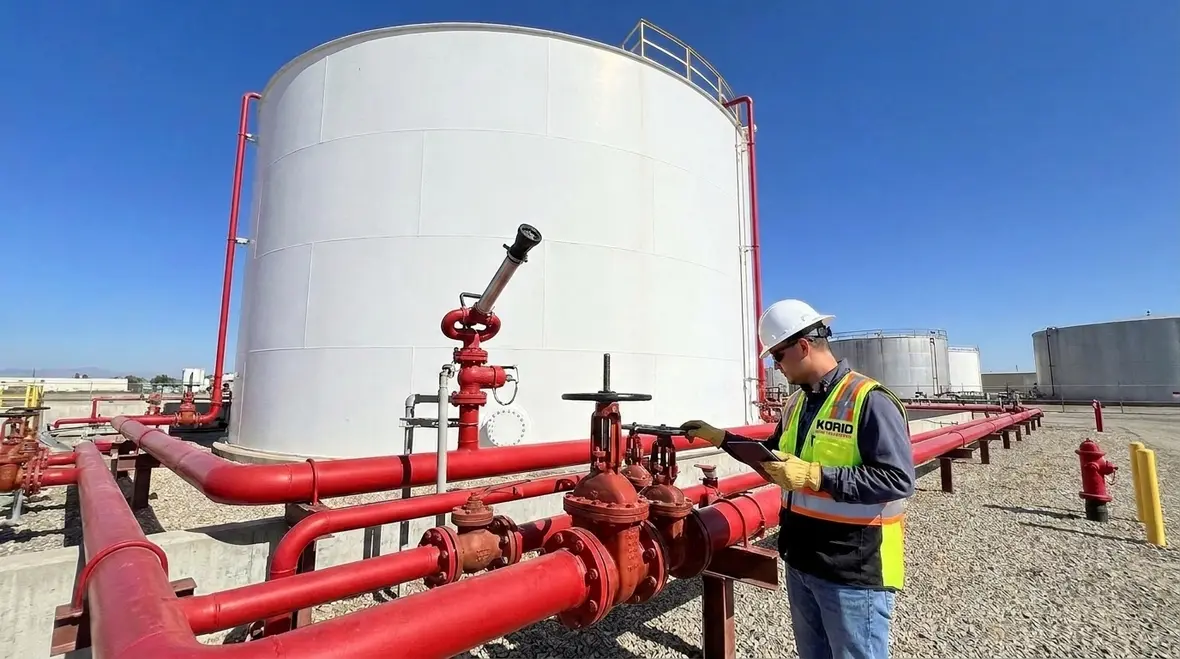
NFPA 30 Section 22.8: Fire Protection for Aboveground Tanks
Quick Answer: NFPA 30 Section 22.8 sets the fire protection requirements for aboveground tanks storing flammable and combustible liquids. It focuses on protecting tank structures and surrounding areas through approved systems, correct installation, and ongoing impairment free inspection and maintenance to sustain safe performance.
Facilities that store flammable liquids cannot treat aboveground tank fire protection as a one time install. NFPA 30 Section 22.8 fire protection aboveground tanks requirements drive a full lifecycle approach covering system selection, arrangement, inspection, operational testing, and corrective maintenance before conditions degrade. This article explains the practical compliance expectations that commercial, industrial, and retail operators must manage to avoid coverage gaps and inspection failures.
Where pump supported protection is part of the hazard strategy, it helps to understand fire pump testing requirements early, because water supply performance and verification routines often shape whether a system is actually ready when an aboveground tank incident turns real.
What NFPA 30 Section 22.8 covers for aboveground tank fire protection
NFPA 30 Section 22.8 addresses fire protection for aboveground tanks handling flammable liquids. In practice, compliance means more than having fire extinguishers onsite. Operators must ensure the facility uses the required fire protection measures and maintains them as operating systems, not static equipment.
Common operational expectations include:
- Approved fire protection arrangements: Systems must match the hazard, tank configuration, and site layout.
- Controlled impairment and readiness: Fire protection cannot be left out of service for routine work without safeguards and documentation.
- Routine inspection and functional testing: Testing verifies that components will operate as designed when actuated.
- Ongoing maintenance: Components exposed to corrosion, vibration, weathering, or process conditions must remain within acceptance criteria.
Because enforcement typically targets documentation quality and system availability, facilities should build inspection and maintenance into daily and weekly routines rather than relying on annual catch up work.
How compliance protects the tank and reduces escalation risk
The intent behind NFPA 30 Section 22.8 fire protection aboveground tanks requirements is to prevent a small incident from escalating into a tank fire or a rapidly spreading conflagration. Tank fires are high consequence events due to stored liquid availability, potential vapor release, heat radiation, and the ability of flames to expose piping, valves, and nearby combustibles.
Operationally, compliance typically aligns with four protection goals:
- Rapid detection and activation: Fire protection must activate quickly enough to control burning liquids and protect critical components.
- Effective agent or water application: Where required, systems must deliver the correct coverage and application rate to the hazard area.
- Protection of exposures and escape routes: Fire protection often needs to reduce radiant heat impacts and support occupant and responder actions.
- Maintained system reliability: A system that is present but not operable fails the compliance objective.
What systems typically apply and what they must do in an incident
NFPA 30 Section 22.8 fire protection aboveground tanks requirements interact with site hazard assessment, tank construction, and liquid properties. Depending on the installation, tank fire protection may include fixed fire protection systems, protection for piping and appurtenances, and safe activation of protective measures.
Fixed suppression and cooling functions
Where fixed systems are installed, their mechanisms must match the hazard. For example, water based arrangements, foam systems, or other approved agents must be capable of delivering the intended extinguishing or cooling function.
Key operational points that often drive field findings:
- Valve lineups and obstruction control: Valves must remain in the correct position. Even partial obstructions or incorrectly configured manual valves can stop effective discharge.
- No impairment without safeguards: If a pump, solenoid, or detection device is taken out of service, the facility must follow an impairment process that maintains equivalent safety and updates documentation.
- Water supply capacity confirmation: Pumps, power supplies, and water sources must support the design flow and pressure at the time of demand.
Detection and activation sequence reliability
Many failures do not occur during the discharge event. They occur earlier, when components fail to actuate due to calibration drift, sensor fouling, electrical problems, or blocked lines.
Facilities should confirm that:
- Detectors and controls remain within setpoint tolerances.
- Actuation logic prevents false trips from shutting down protection.
- Emergency power supplies, if relied upon, receive periodic verification and load testing per the facility’s maintenance plan.
Inspection and maintenance expectations that inspectors actually look for
NFPA 30 Section 22.8 compliance typically turns on evidence. Inspectors and insurers focus on whether the protection system remains capable of performing its duty over time.
Operational readiness: what to audit each cycle
High performing facilities implement repeatable checks that cover both hardware and the process around the hardware.
- Documentation control: Test reports, water flow or pressure test results, and impairment records must remain current and easy to retrieve.
- Tagging and access: Components should be visible, labeled, and accessible for inspection without unsafe workarounds.
- Corrective maintenance closure: Deficiencies identified during inspections must receive documented repair and verification before the system returns to service.
- Environmental impacts: Corrosion, paint buildup, leaks, and contamination from process conditions must be addressed promptly.
Common failure points in aboveground tank protection programs
Commercial and industrial facilities often see similar breakdown patterns:
- Partial discharge performance: Nozzles may clog, strainers may restrict flow, or piping may experience corrosion or scaling.
- Reduced pressure due to supply degradation: Pumps can lose performance due to mechanical wear, impeller issues, or suction line conditions.
- Electrical and control faults: Panels, wiring terminations, and solenoids can fail intermittently, which delays detection until a test cycle catches it.
- Valve mispositioning: Maintenance activity or contractors may leave valves in an incorrect position, especially after line work or process shutdowns.
Because these issues are often preventable with targeted service, facilities benefit from partnering with a qualified service provider that can coordinate impairment management and verification testing.
How commercial sites manage NFPA 30 Section 22.8 in real operations
Retail terminals, warehouse fuel areas, and commercial processing sites frequently face two competing realities: operational continuity and regulatory readiness. NFPA 30 Section 22.8 fire protection aboveground tanks requirements still apply even when production schedules tighten.
Scheduling, shutdown windows, and impairment workflows
Facilities should plan service around predictable downtime windows and ensure impairment procedures support continued safe operation. A practical program includes:
- Pre planned testing calendars aligned with production and delivery schedules.
- Written procedures that define who approves impairment, what compensatory measures apply, and how documentation updates occur.
- Post maintenance functional verification to confirm systems return to acceptance criteria.
Internal coordination and contractor controls
Aboveground tank areas often involve multiple contractors. A compliance failure can occur when contractors change piping, electrical routing, or access paths without understanding fire protection system boundaries.
To reduce that risk, facilities should require:
- Job hazard analysis that explicitly references tank fire protection interfaces.
- Permits to work and lockout coordination where system tie ins exist.
- A single point of responsibility for maintaining system configuration integrity.
For broader flammable liquid compliance context, facilities can reference how NFPA 30 regulates flammable liquids here: how NFPA 30 regulates flammable liquids.
Why ongoing service matters: preventing drift from design intent
NFPA 30 Section 22.8 fire protection aboveground tanks requirements depend on performance over time. Systems can degrade quietly through corrosion, contamination, vibration, and component aging. Without scheduled inspection and functional testing, protection can drift away from the design intent long before a regulator or insurer review occurs.
Kord Fire Protection supports commercial facilities with practical compliance execution, including system inspection planning, impairment safe workflows, corrective maintenance follow through, and verification testing that confirms readiness. This service approach helps keep fire protection assets aligned with operational risk and documented requirements.
For sites seeking a compliance partner in Australia, Kord Fire Protection information is available through fire suppression systems and the broader kordfire.com.au site.
Frequently Asked Questions
Get your aboveground tank fire protection program audit ready
Operators should not wait for a regulatory visit to learn that fire protection performance has drifted. Kord Fire Protection can help commercial and industrial sites verify readiness, manage impairment workflows safely, and close maintenance gaps with documented inspection and functional testing. Contact Kord Fire Protection through kordfire.com.au to schedule an assessment and strengthen ongoing compliance for NFPA 30 Section 22.8 fire protection aboveground tanks.

Join Our Newsletter!
Get the latest fire safety tips delivered straight to your inbox From our Newsletter.



