
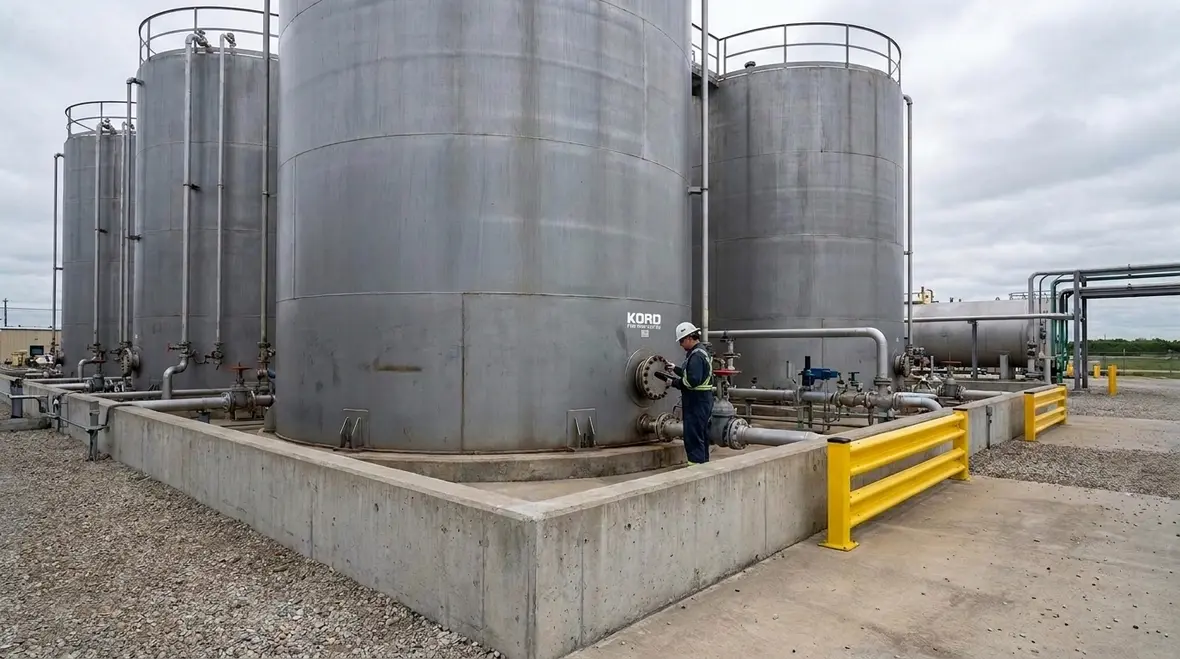
NFPA 30 Section 21.3: General Requirements for Storage Tanks
Quick Answer: NFPA 30 Section 21.3 general tank requirements set baseline rules for safe storage tank construction, placement, protection, and ongoing readiness. Compliance focuses on preventing leaks, limiting ignition sources, maintaining control of hazardous vapors, and ensuring inspections and repairs are completed promptly.
Why NFPA 30 Section 21.3 general tank requirements matter in real facilities
Commercial, industrial, and retail sites commonly store flammable and combustible liquids in fixed storage tanks, transfer containers, and associated piping systems. NFPA 30 Section 21.3 general tank requirements establish the minimum expectations that reduce catastrophic release risk, limit the likelihood of fire spread, and support reliable performance of protective systems.
Compliance does not end at installation. Facilities typically encounter operational drift over time, including corroded components, improperly maintained valves, degraded seals, or ineffective spill control. A practical approach aligns daily operations with inspection and maintenance schedules so protective systems stay functional under normal and abnormal conditions.
Facilities managing broader inspection and maintenance demands can also review fire protection services in Southern California for a practical overview of code-compliant support across system types. For broader context on how NFPA 30 regulates flammable liquids across the facility, see how NFPA 30 regulates flammable liquids.
What Section 21.3 generally expects for storage tank design and integrity
NFPA 30 Section 21.3 general tank requirements focus on maintaining tank integrity and minimizing release likelihood. In practice, this includes controlling how tanks are built, installed, supported, and protected against hazards typical in operating facilities.
1) Tank siting, support, and physical protection
Facilities need to ensure tanks are located and supported to prevent conditions that accelerate deterioration or damage critical components. Common risk drivers include mechanical impact from forklifts and yard equipment, thermal exposure, and settlement that affects piping alignment and valve seals.
Operations teams should treat “physical protection” as an active program. That means guarding against impacts, maintaining clear access for inspection, and ensuring any protective barriers do not interfere with venting, secondary containment performance, or emergency response access.
2) Connection management and leak prevention
Tank connections and appurtenances are among the most failure prone elements. Over time, vibration, thermal cycling, or improper torque during service can compromise gaskets, flanges, threaded joints, and flexible connections.
Inspection programs should track connection condition, document corrective actions, and verify that any repairs restore original sealing performance. A frequent compliance failure occurs when repairs are treated as “like for like” without confirming material compatibility, gasket rating, and proper installation technique.
3) Corrosion control and protective system readiness
Corrosion weakens tank shells, nozzles, and internal components. Facilities often underestimate the impact of soil conditions, moisture, stray current effects, and water accumulation in containment areas.
Under NFPA 30 Section 21.3 general tank requirements, corrosion mitigation activities need to be planned and executed so the tank remains serviceable for the intended lifetime. That includes coating inspection, monitoring for under-deposit corrosion, and maintaining any cathodic protection where applicable.
How containment, spill control, and release management support compliance
Tank safety depends on controlling the consequences of leakage, not only preventing leakage. Many commercial facilities rely on containment systems such as dikes, berms, or other approved methods to keep released liquids within a controlled area.
Containment performance under real operating conditions
Containment systems must retain hazardous liquids long enough for response and recovery activities. Inspections should verify that containment is not compromised by cracks, corrosion, degraded liners, or blocked drainage features.
A common failure point occurs when routine housekeeping or site modifications alter containment performance. For example, removing drains without documenting the approval basis, or allowing debris to accumulate in retention areas, can turn a compliant containment concept into an unreliable system.
Drainage control and contamination prevention
Where liquid drains are part of the containment strategy, facilities should verify they function as intended. This includes ensuring any valves, caps, or plugs required for safe operation remain in the correct position and are maintained so they do not fail during a release event.
Venting, flame control, and pressure safety expectations
Tank venting and pressure safety features manage vapor space conditions and prevent unsafe pressure and vacuum states. NFPA 30 Section 21.3 general tank requirements align tank behavior with safe operating envelopes.
Why vent devices require more than “set and forget”
Vents can become ineffective due to blockage, damaged internals, or incorrect installation of associated piping and discharge arrangements. Moisture ingress and particulate accumulation are common contributors, especially in outdoor environments.
Facilities should verify that venting and any flame arresting components remain unobstructed and correctly oriented. Inspection should include checking for evidence of operational venting, corrosion at discharge locations, and signs of improper insulation or heat tracing effects.
Common mechanical failure modes
- Blocked vent outlets from debris or insect activity
- Damaged seals or improper reassembly after servicing
- Incorrect discharge elevations that increase exposure or reduce dispersion capability
- Corrosion at vent connections leading to vapor leaks
Inspection, testing, and maintenance: staying compliant after installation
NFPA 30 Section 21.3 general tank requirements depend on an ongoing compliance discipline. Commercial facilities typically face pressure to reduce downtime, which increases the risk of deferred maintenance and delayed corrective actions.
Inspection readiness and documentation
Best practice for compliance uses a structured inspection plan aligned to tank type, operating conditions, and risk profile. The plan should define inspection intervals, acceptance criteria, and documentation requirements.
Inspections need to cover visible corrosion, coating breakdown, condition of appurtenances, grounding or bonding integrity where applicable, and overall system condition supporting safe vapor control and containment.
Maintenance procedures that do not introduce new hazards
Maintenance is often where compliance breaks down. A safe maintenance approach confirms that work permits, isolation methods, and hot work controls align with the hazardous liquid risk. Any disassembly and reassembly must restore sealing performance and correct operational alignment.
Servicing should also consider how the maintenance activity affects protective system operation. For example, adjustments to valves or piping without verifying vent pathway continuity can indirectly compromise release control.
Commercial facility challenge: coordinating multiple contractors
Retail fueling areas, industrial process units, and warehouse operations may involve multiple vendors for tank service, electrical work, and fire protection testing. This coordination gap can create inconsistent inspection records and missed follow ups.
Kord Fire Protection supports facilities with practical compliance management, including inspection coordination, documentation support, and maintenance planning to keep the tank system aligned with NFPA 30 expectations. For facilities seeking a clear pathway to sustained readiness, Kord Fire Protection can help standardize inspection routines and address recurring failure points before they escalate.
Implementation checklist for NFPA 30 Section 21.3 general tank requirements
The following checklist supports onsite execution and audit readiness. Site conditions vary, but these items represent the operational themes that most often drive compliance outcomes.
- Verify tank siting supports safe access, inspection, and protection from physical damage
- Confirm tank connections and fittings are sealed, correctly assembled, and inspected for leakage evidence
- Assess corrosion indicators across tank shell, nozzles, and appurtenances; document mitigation actions
- Inspect secondary containment or spill control areas for integrity, cleanliness, and functional readiness
- Verify venting and flame control components remain unobstructed and operationally correct
- Maintain maintenance records that show repairs restored intended performance, not just “completed work”
- Ensure inspection and testing intervals are followed and corrective actions are tracked to closure
Frequently Asked Questions
Call to action
Ensure your tank systems remain aligned with NFPA 30 Section 21.3 general tank requirements by building a disciplined inspection and maintenance program that addresses integrity, containment, venting, and documentation. Kord Fire Protection helps commercial facilities sustain compliance through practical coordination, maintenance planning, and readiness support. Contact Kord Fire Protection today to review your current tank compliance approach and identify improvement opportunities before your next inspection cycle.

Join Our Newsletter!
Get the latest fire safety tips delivered straight to your inbox From our Newsletter.



