
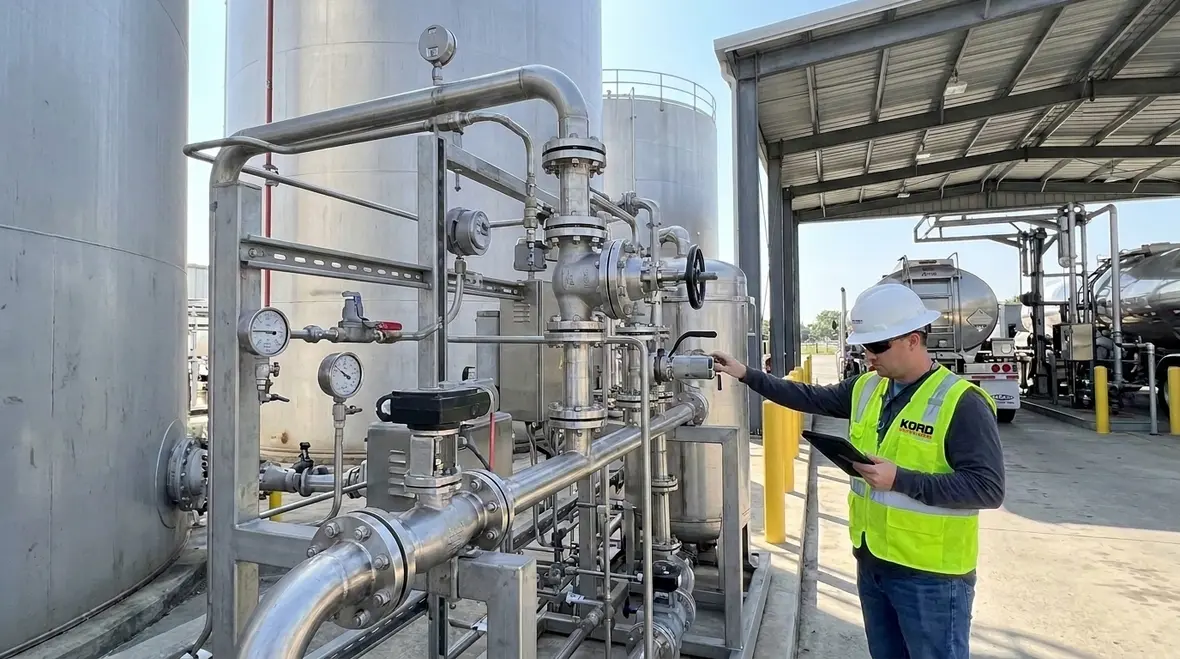
NFPA 30 Section 19.5: Vapor Recovery and Vapor Processing Systems
Quick Answer: NFPA 30 Section 19.5 establishes requirements for designing, operating, inspecting, and maintaining vapor recovery and vapor processing systems used with flammable liquid handling. The goal is to control ignition hazards, maintain safe vapor handling conditions, and verify system performance through ongoing compliance activities.
Why NFPA 30 Section 19.5 vapor recovery processing systems matter in real facilities
Vapor recovery and vapor processing systems capture flammable vapors that would otherwise vent to atmosphere. In commercial, industrial, and retail environments, these systems reduce emissions, improve product recovery, and support regulatory compliance. However, NFPA 30 Section 19.5 vapor recovery processing systems also introduce ignition control, electrical classification coordination, pressure and flow management, and routine inspection obligations that can be overlooked during commissioning.
For a broader view of how NFPA 30 controls flammable liquid risk across the facility, facilities can reference how NFPA 30 regulates flammable liquids.
Teams coordinating vapor system inspection and maintenance can also benefit from a related look at general requirements for processing facilities, especially where vapor handling equipment ties into broader flammable liquid operations.
What Section 19.5 covers: system purpose and hazard control
NFPA 30 Section 19.5 focuses on the safe handling of flammable vapors once vapors leave tanks, piping, or dispensers and enter recovery equipment. While the exact configuration varies by application, the safety intent remains consistent: prevent ignition, manage vapor concentration, control pressure extremes, and ensure the system functions as designed during normal operation and abnormal conditions.
In practice, compliance teams should evaluate each subsystem as part of a single hazard control strategy. That includes vapor collection interfaces, storage or treatment media, condensers or absorbers (when used), piping and fittings, pressure relief pathways, and any control devices that prevent unsafe operating states.
Key operational mechanisms that drive compliance
- Vapor flow routing:
Valves, check elements, and routing logic must direct vapors to the correct receiver. Misrouting can cause vapors to enter unsafe areas or overwhelm downstream equipment.
- Vapor concentration control:
Systems should avoid conditions that increase flammable vapor concentration outside intended design limits. Poor condensation performance or blocked elements can shift vapor behavior.
- Pressure and vacuum management:
Vapor processing systems must avoid excessive pressure buildup or vacuum conditions that can distort seals, stress hoses, or force vapors into unintended leak paths.
- Condensation or absorption effectiveness:
Where condensation or absorption is used, performance impacts both recovery efficiency and vapor control. Degraded heat transfer surfaces and media saturation can raise residual vapor load.
Design and installation checkpoints that inspectors look for
Many compliance failures occur during installation or retrofit rather than routine operation. When NFPA 30 Section 19.5 vapor recovery processing systems are commissioned, teams should confirm that components, materials, and interfaces align with the system design intent and the ignition hazard profile.
Common commercial facility gaps
- Unapproved component substitutions:
Using different check valves, fittings, or hoses than the original design can alter flow resistance and pressure behavior.
- Improper routing and penetrations:
Poor routing through walls, ceilings, or protected spaces can place vapors closer to ignition sources or create concealed leak risks.
- Inadequate supports and vibration management:
Excessive motion at flexible connections can degrade seals and create intermittent leaks that are difficult to detect.
- Control wiring and interlocks not verified:
Interlocks that prevent recovery during unsafe states must be proven in commissioning and maintained through lifecycle testing.
- Electrical classification mismatches:
Fans, pumps, controls, and sensors must align with the area classification strategy. A mismatch can invalidate the safety basis.
How installation details translate into fire safety outcomes
Vapor systems rely on stable operating conditions. A small increase in restriction can change pressure and flow, which can cause backflow, excessive cycling of controls, or bypass through relief elements. These failures often present as recurring nuisance trips, fluctuating recovery rates, or unusual pressure readings. Without documented corrective action, the risk to ignition control increases over time.
Operational procedures: what operators must do to stay compliant
NFPA 30 Section 19.5 compliance is not a one-time construction verification. Operators must run the system within safe operating ranges and respond quickly to abnormal indications. Clear procedures reduce the likelihood of operating a partially functioning system that still appears operational.
Day to day operating expectations
- Monitor recovery performance indicators:
Track expected vapor recovery rate, pressure and vacuum trends, and any alarm status in the control system.
- Confirm normal valve lineup before transfers:
Ensure correct valve positions and that check elements function to prevent unintended venting or backflow.
- Maintain stable transfer conditions:
Rapid changes in flow can challenge downstream condensers, absorbers, or receivers and raise residual vapor load.
- Control access to system components:
Unauthorized adjustments to control setpoints, relief settings, or bypass arrangements can undermine the safety strategy.
Abnormal condition response
Facilities should implement a trigger based response for the most common failure signals: persistent abnormal pressure readings, repeated alarms, reduced recovery performance, visible vapor odors indicating leakage, or evidence of condensate drainage failures. The response should include system shutdown steps that prevent vapors from reaching uncontrolled ignition sources, followed by inspection and documentation before restart.
Inspection, testing, and maintenance: the lifecycle compliance plan
Inspection and maintenance programs should treat vapor recovery and vapor processing systems as critical safety equipment. Over time, seals harden, fittings loosen, condensers foul, and control sensors drift. These degradation mechanisms can shift the system away from safe operating parameters.
What maintenance teams should verify
- Leak tightness:
Validate tightness at joints, gaskets, hose connections, and fittings. Small leaks can concentrate flammable vapors in localized areas.
- Condition of hoses and flexible connections:
Inspect for cracking, abrasion, swelling, and aging. Replace on schedule or upon visible degradation.
- Condenser and heat exchange surfaces:
Clean fouled surfaces and verify drainage. Poor heat transfer increases residual vapor release.
- Relief devices and discharge pathways:
Ensure relief devices are not obstructed and that discharge pathways remain functional and protected from ignition sources.
- Control valves, check elements, and interlocks:
Test actuation and fail safe behavior. Verify interlocks still reflect the as built configuration.
- Instrumentation accuracy:
Calibrate pressure, vacuum, temperature, flow, and vapor detection instruments where used.
Common failure points that drive corrective actions
- Blocked drainage routes:
Condensate that cannot drain can cause flooding or reduced condensation performance, leading to higher vapor carryover.
- Stuck valves or degraded seals:
Sticking can cause backflow or ineffective recovery. Degraded seals can create intermittent venting.
- Sensor drift:
Pressure or temperature sensor drift can delay detection of abnormal states.
- Unmaintained strainers or filters:
Restriction changes can alter pressure behavior and defeat intended control strategies.
For many facilities, the practical challenge is building a repeatable process that links maintenance tasks to verified safety outcomes. Kord Fire Protection supports ongoing compliance by coordinating inspection and maintenance activities, documenting findings, and helping facilities keep vapor recovery equipment within the operational conditions their safety basis expects.
Compliance documentation and audit readiness: avoid last minute risk
NFPA 30 Section 19.5 vapor recovery processing systems require a documentation approach that can withstand compliance scrutiny. A strong program ties each inspection and maintenance activity to the system components and hazard control objectives.
- As built and update records:
Maintain current drawings, P and ID references, and control schematics that match installed equipment.
- Inspection and test reports:
Keep dated records that include results, tolerances, calibration data, and corrective actions.
- Corrective action tracking:
Close the loop on recurring issues such as repeated alarm trips, leak recurrence, or repeated fouling events.
- Training records:
Document operator training on normal operation and abnormal condition response for vapor recovery systems.
Audit readiness improves when facilities schedule testing and maintenance in alignment with operational downtime planning. It also improves when teams verify interlocks and control behavior after any electrical, instrumentation, or process change.
Frequently Asked Questions
Next step: verify your vapor recovery compliance plan
If your facility uses vapor recovery or vapor processing equipment, Kord Fire Protection can help you evaluate real-world conditions, confirm inspection and maintenance effectiveness, and keep NFPA 30 compliance documentation audit ready. Contact Kord Fire Protection today to schedule a review of your system performance, maintenance records, and critical components before small issues become high risk events.

Join Our Newsletter!
Get the latest fire safety tips delivered straight to your inbox From our Newsletter.



