
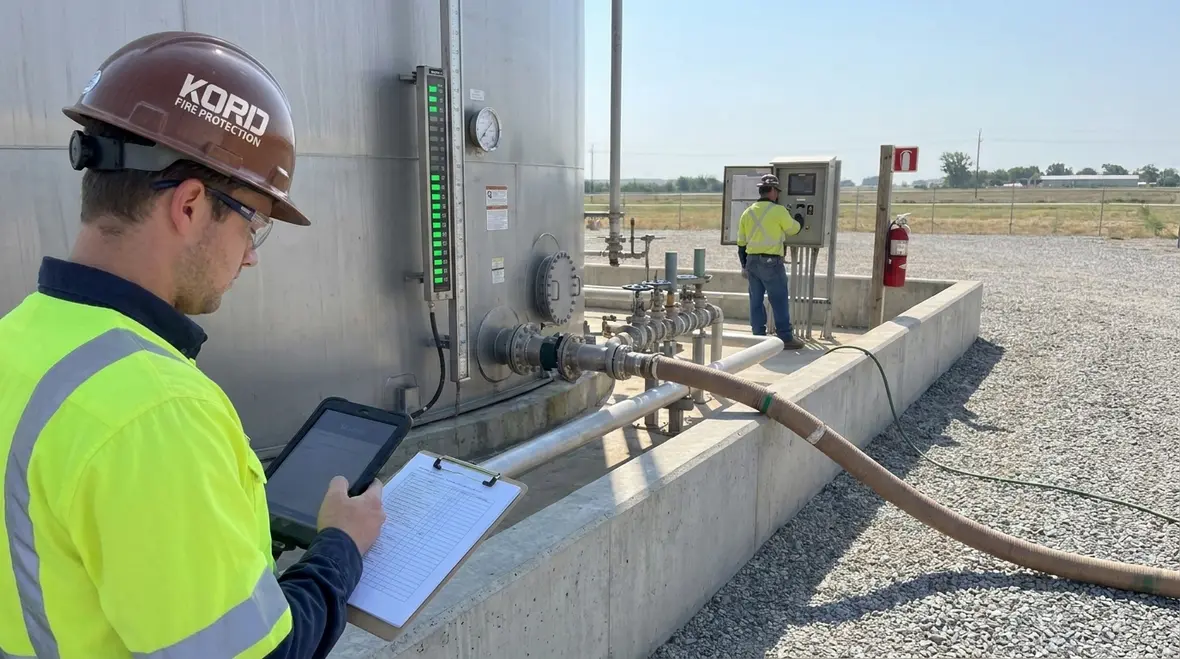
NFPA 30 Section 21.7: Operating Storage Tanks Safely
Quick Answer
NFPA 30 Section 21.7 tank operation overfill focuses on preventing dangerous overfilling during transfer, protecting tank integrity, and maintaining operating controls. It expects facilities to manage fill rates, verify alarms and shutdowns, and implement inspection and maintenance routines that keep safeguards reliable.
Why Section 21.7 matters in real tank operations
Operating storage tanks safely depends on more than tank construction. It depends on daily operating discipline: how products are transferred, how levels are monitored, how systems respond to abnormal conditions, and how quickly issues are discovered and corrected. NFPA 30 Section 21.7 tank operation overfill addresses these operational risks by requiring controls that prevent overfilling and reduce the likelihood that a release, spill, fire exposure, or vapor ignition occurs during routine operations.
For commercial, industrial, and retail facilities, the compliance gap often appears where “maintenance is due” meets “operations cannot stop.” A practical program needs documented operating procedures, tested safety instrumentation, and inspection routines aligned to the facility risk profile and the specific tank and product system design.
For facilities looking to connect tank operation discipline with broader system upkeep, water storage tank inspection and maintenance is a useful related read. For broader context on how NFPA 30 regulates flammable liquids, see how NFPA 30 regulates flammable liquids.
What NFPA 30 Section 21.7 expects from operations
Section 21.7 concentrates on operating practices that keep storage tanks within safe operating limits. The practical intent is to prevent conditions that increase the probability of a hazardous release, including:
- Overfilling during product delivery, pump transfer, or gravity feed.
- Failure of level measurement systems, high-level alarms, or automatic shutdown functions.
- Loss of containment integrity due to corrosion, damaged fittings, or poor housekeeping that accelerates degradation.
- Inadequate response to abnormal levels, equipment malfunctions, or operator errors.
Compliance typically requires operators to demonstrate that transfer and level control systems work as intended, that procedures are clear enough for consistent execution, and that safeguards are tested and maintained rather than “assumed operational.”
How facilities prevent “overfill” during tank operation
Overfill prevention is where Section 21.7 expectations become most visible. Facilities typically rely on layered controls that work together. When one layer degrades, the next layer must still reduce risk.
1) Level measurement and indication you can trust
Accurate level measurement underpins everything. Common systems include continuous level transmitters, gauge wells, and float or radar-based level measurement. Operational failure often comes from:
- Gauge drift that goes unnoticed because the system is not periodically verified.
- Obstructions in sight gauges or damaged wiring leading to intermittent signals.
- Sensor contamination from product residue or foam buildup that changes readings.
- Incorrect calibration after maintenance or component replacement.
A compliant program ensures measurement accuracy through routine verification and calibration practices that match the installation and the product characteristics.
2) High level alarms and automatic shutdown that actually actuate
Tank operation overfill prevention often depends on alarm and interlock logic tied to a high level setpoint. The alarm provides operator notification. Automatic shutdown reduces the chance that transfer continues after an unsafe condition begins.
Operational weaknesses include alarm silencing without proper authorization, bypassed interlocks during troubleshooting, and control panel logic that is changed during maintenance without updated documentation. Facilities need:
- Clear rules for alarm acknowledgement, response steps, and escalation.
- Controlled bypass procedures with return to service verification.
- Periodic functional testing to confirm the shutdown initiates the intended action.
3) Transfer procedures that control fill rate and starting conditions
Even reliable instruments can be overwhelmed by unsafe transfer practices. NFPA 30 Section 21.7 tank operation overfill controls typically align with disciplined transfer requirements such as:
- Using approved fill rates consistent with tank size, venting, and inlet design.
- Stopping or slowing transfer when approaching typical operating limits.
- Ensuring correct hose, coupling, and connection integrity before flow starts.
- Maintaining steady operational control during the final phase of filling.
In many facilities, the highest risk moment occurs near the end of delivery when time pressure increases and attention shifts from measurement to handoff. Procedures and training should explicitly address this phase, including what operators must do if readings appear inconsistent.
4) Venting and expansion considerations during fill
Overfill risk increases when tank venting cannot handle displacement and vapor conditions. Vent blockages, damaged vents, or incorrect vent configuration can elevate pressure and contribute to abnormal operating behavior during transfer. Strong compliance requires inspections that verify vent integrity and that vents remain unobstructed by physical damage, ice, debris, or storage practices.
Inspection and testing routines that support compliance
NFPA 30 Section 21.7 tank operation overfill is not only about what operators do during transfers. It also depends on whether the facility keeps safeguards working over time.
Daily and shift level checks
Operators should verify that:
- Gauges and indicators display consistent readings.
- Alarm annunciation functions are visible and understood by the shift team.
- Control systems respond appropriately to manual test functions where permitted.
Functional testing and calibration
Functional testing confirms more than that an alarm light turns on. A robust test validates the measurement pathway and the control response path. Facilities typically include:
- Calibration checks aligned to manufacturer guidance and facility risk.
- High level alarm setpoint verification and response confirmation.
- Shutdown interlock verification, including fail safe behavior where applicable.
When functional testing is skipped or treated as optional, overfill protection becomes theoretical. Kord Fire Protection supports commercial programs by coordinating practical compliance testing and maintenance that reduces downtime surprises.
Condition-based maintenance for tank appurtenances
Overfill prevention systems depend on physical components that degrade: sensors, wiring runs, junction enclosures, valves, and cabling termination points. Inspectors should look for corrosion, loose fittings, water ingress, and physical damage that can impair signal integrity or actuator performance.
Where compliance often fails and how to fix it
Commercial tank sites frequently experience the same patterns of nonconformance. Addressing these early improves both safety outcomes and inspection readiness.
1) Bypasses that never return to normal
Maintenance operations sometimes require bypassing interlocks. The risk occurs when bypasses persist due to workflow issues or incomplete handover. The fix is procedural control: lockable bypass practices, written authorization, and return to service verification with documented evidence.
2) Setpoints drifting out of specification
Over time, instrumentation can drift. If alarm and shutdown setpoints are not verified, tank operation overfill protection weakens. Facilities should set a schedule for verification and ensure that any component replacement triggers a calibration and interlock validation workflow.
3) Inconsistent transfer training across contractors
Many facilities use delivery contractors. Training gaps create variation in how the final filling phase is managed. A practical approach includes site specific transfer checklists, clear stop criteria, and a documented response plan if readings appear abnormal.
4) Housekeeping that increases hazard exposure
Spills, product residues, and damaged containment areas can increase ignition risk and obscure leaks. While housekeeping seems operationally minor, it directly affects release detection and inspection effectiveness.
Make Section 21.7 operational, not just regulatory
Facilities succeed when they treat tank operation overfill prevention as an integrated operational system: procedures, trained people, working instrumentation, and maintainable hardware. Kord Fire Protection helps commercial, industrial, and retail sites align daily operations with safety system performance through:
- Compliance focused testing and maintenance coordination for alarm and shutdown functions.
- Documentation support that strengthens audit readiness.
- Practical scheduling that reduces disruption to ongoing operations.
This approach reduces the risk of “passive compliance,” where paperwork exists but protection fails when conditions change.
Frequently Asked Questions
Next step: confirm your safeguards, then document readiness
NFPA 30 Section 21.7 tank operation overfill expectations are met when instrumentation, alarms, shutdown logic, and transfer procedures work together every day. Kord Fire Protection can help your site validate and maintain the systems that prevent overfilling and support inspection readiness. Contact Kord Fire Protection to schedule a compliance focused review, testing, and maintenance planning for your tank operation safety program.

Join Our Newsletter!
Get the latest fire safety tips delivered straight to your inbox From our Newsletter.



