
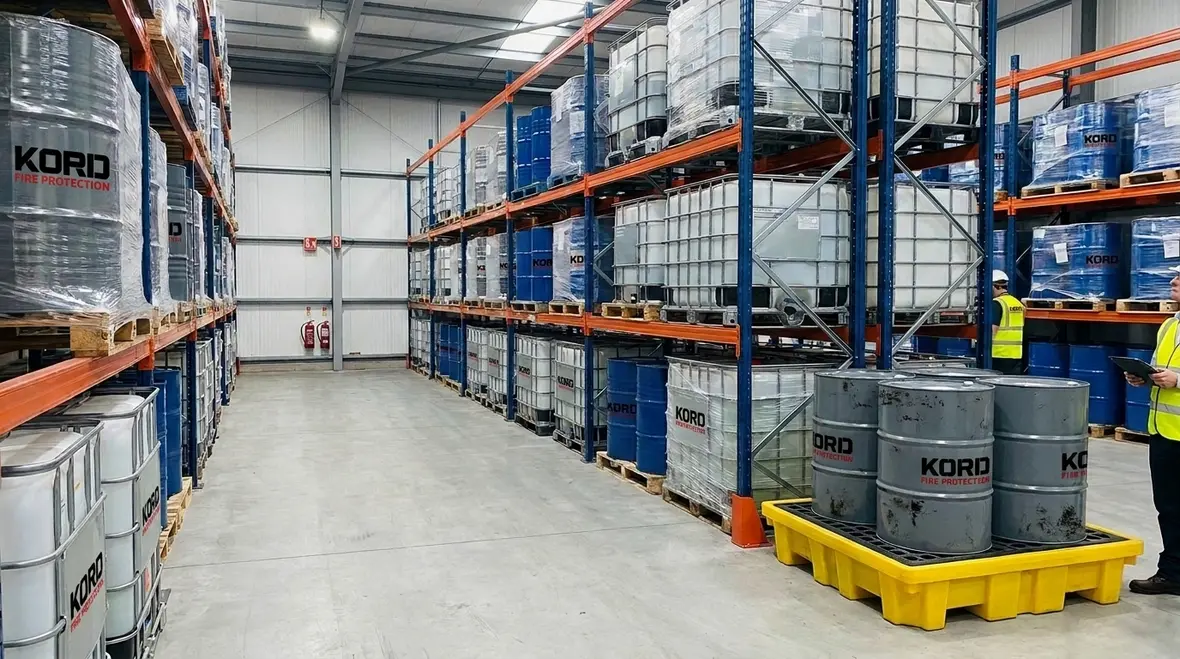
NFPA 30 Section 12.2: Applicability of Warehouse Storage Rules
Quick Answer: NFPA 30 Section 12.2 explains when warehouse storage requirements apply based on how flammable and combustible liquids are stored, grouped, and managed. Facility types, commodity packaging, and storage arrangements drive compliance. Correct classification and documentation prevent expensive enforcement gaps.
For a broader facility planning angle, take a look at warehouse fire protection strategy, which fits naturally with the way Section 12.2 turns storage layout decisions into real compliance consequences.
What does NFPA 30 Section 12.2 actually apply to?
NFPA 30 Section 12.2 applicability warehouse storage focuses on determining whether the warehouse storage rules govern a given facility space and storage configuration. In practice, this section bridges the gap between “the liquids you have” and “the way you store them.” It supports hazard control by aligning regulatory expectations with the real-world storage plan, including container types, storage heights, rack layouts, drainage and spill management considerations, and how materials are segregated and controlled.
Commercial, industrial, and retail operators often assume that NFPA requirements only “kick in” when liquids are bulk-stored. Section 12.2 shifts that mindset. If a facility’s storage arrangement meets the section’s applicability conditions, the warehouse storage rules apply, and the design and operational controls must reflect those rules.
Key factors that determine applicability in a warehouse
Inspectors and insurers typically evaluate applicability by comparing the actual storage method to the intent of the warehouse storage provisions. The most common drivers include the following.
1) Storage arrangement and how liquids are grouped
Even when the liquids are known and documented, applicability can fail when the storage arrangement does not match the rule set basis. Operators commonly change rack patterns, add new aisles, or reconfigure pallets without updating compliance documentation. Those changes can move a storage plan from one condition category to another, triggering different controls for separation, fire protection features, and spill management.
2) Container type, capacity, and packaging controls
Section 12.2 applicability warehouse storage assessments depend on whether liquids are stored in drums, totes, cans, intermediate bulk containers, or other packaging. Container integrity is also critical. Damaged drums, unsecured totes, or improvised storage practices can convert a compliant arrangement into an unacceptable one, regardless of the original hazard classification.
3) Presence of commodities that interact with storage hazards
Warehouses rarely store only one product stream. When incompatible materials are co-located, the hazard control approach must reflect that reality. Facilities that add maintenance chemicals, solvents, coatings, aerosols, or cleaning agents often inherit new compatibility and segregation expectations. If segregation practices do not align with the applicable warehouse storage rule basis, Section 12.2 applicability warehouse storage can become a recurring audit and enforcement issue.
4) Operational controls and housekeeping practices
Applicability does not end at construction. Operational controls, including spill response readiness and storage discipline, determine whether the facility behaves like a controlled storage warehouse. Persistent overflow conditions, leaking containers, blocked access, or unmanaged waste can create conditions that enforcement personnel treat as noncompliance, even if the original layout matched the drawings.
Operational and inspection items you should verify
To demonstrate compliance with NFPA 30’s warehouse storage provisions, a facility should verify practical, inspection-ready items. These commonly separate “paper compliance” from defensible compliance.
Maintain a current liquid inventory and classification file
Operators should document liquid identity, hazard class, and storage form. The file should match what is on site, not what was on site during the last compliance review. When products change, the classification documentation must update, and staff must understand what changed and why.
Confirm storage layout against the approved basis
During walkthroughs, inspectors focus on whether aisles are clear, whether storage density is within the permitted basis, and whether separation distances and storage groupings remain intact. Small rack adjustments can change clearance pathways. Storage managers should implement change control so any rack relocation triggers a compliance review.
Verify spill control readiness and drainage behavior
Warehouse storage often relies on spill containment concepts. Maintenance teams should confirm that spill control systems remain unobstructed and functional, including drainage pathways intended to keep spills from spreading into unwanted areas. If containment equipment is damaged, missing, or routinely bypassed, compliance risks increase.
Inspect container condition and securement practices
Leaking, bulging, corroded, or otherwise compromised containers can invalidate the assumptions used for safe storage. Facility teams should maintain a documented inspection rhythm that aligns with risk, including periodic checks for drum integrity, cap securement, and secondary containment where required.
Check impairment points for fire protection and emergency access
In warehouse environments, impairment points are predictable: blocked access to emergency shutoffs, unsecured barricades, damaged rack components, missing labeling, and improperly staged pallets. These failures can undermine the effectiveness of fire protection measures and emergency response.
Common compliance gaps tied to Section 12.2 applicability
Most recurring enforcement issues fall into a handful of operational patterns. Recognizing them early reduces downtime and minimizes redesign risk.
1) Reconfigured storage without a compliance update
Facilities frequently expand product lines, swap vendors, and alter pallet patterns. Without a formal process to update the compliance basis, the facility can drift into a different condition that makes the warehouse storage rules apply differently than expected.
2) Misclassification of liquids or incomplete documentation
Relying on outdated safety data sheets or incomplete inventory records can cause hazard categories to be wrong. Correct applicability requires correct underlying classification and storage form data.
3) Inadequate container management during receiving and staging
Receiving and temporary staging are where control often breaks down. Containers may be stored in ways that do not meet the required arrangement until final placement. If staging time extends or staging locations are inconsistent, risk increases and applicability assessments become harder to defend.
4) Poor housekeeping that defeats containment intent
Spills, residue buildup, and unmanaged waste can create secondary fire loads. Even if the storage arrangement initially matched the intent of NFPA 30 Section 12.2, housekeeping can erode compliance over time.
How Kord Fire Protection supports ongoing NFPA 30 compliance
Compliance does not end with an initial code review. Warehouse operations change, and documentation must keep pace. Kord Fire Protection helps commercial facilities maintain defensible NFPA alignment through practical risk-based support, including inspections, testing support, and maintenance planning.
Facilities can reduce audit friction by treating NFPA 30 requirements as a living program: verify inventory accuracy, confirm storage arrangement controls, ensure spill and emergency access remain functional, and document corrective actions. For deeper context on how NFPA 30 regulates flammable liquids, reference this resource: how NFPA 30 regulates flammable liquids.
When operators maintain this program with qualified partners like Kord Fire Protection, they improve readiness for inspections, reduce the likelihood of enforcement gaps, and support continuity of operations across facility expansions and product changes.
If your warehouse protection plan also needs a systems-level view, Kord Fire Protection’s fire suppression services connect the compliance paperwork to the equipment that actually has to perform when things get loud.
Frequently Asked Questions
Next step: confirm your warehouse storage applicability before an inspection
Schedule a compliance review focused on NFPA 30 Section 12.2 applicability warehouse storage. Kord Fire Protection can help verify inventory accuracy, confirm your storage arrangement controls, and identify operational failure points such as staging practices, container condition, and spill management gaps. Acting early protects continuity, reduces redesign exposure, and strengthens your inspection readiness. Contact Kord Fire Protection to plan your next audit, testing support, and maintenance schedule.

Join Our Newsletter!
Get the latest fire safety tips delivered straight to your inbox From our Newsletter.



