NFPA 25C Chapter 1: Units of Measurement and Code Interpretation Rules
Quick Answer: NFPA 25C Chapter 1 standardizes how inspectors interpret measurements, convert units, and apply code requirements across jurisdictions. It also clarifies how terms and referenced documents should be read during inspection, testing, and maintenance of water-based fire protection systems.
If your team is tightening up documentation discipline across valves, common components, and recurring inspections, a helpful related read near the top is NFPA 25 control valve inspections, which fits naturally with how Chapter 1 supports consistent reporting and interpretation.
Why Chapter 1 matters to real-world compliance
Commercial facilities often face inspection delays and documentation disputes when measurement units, conversions, or code interpretation rules differ between teams, vendors, or local authorities. The NFPA 25C Chapter 1 units measurement code interpretation rules support consistency by defining expectations for units and how the standard should be applied when requirements reference other sections, editions, or external criteria.
In practice, Chapter 1 helps maintenance teams translate system condition findings into correct pass or fail decisions. It also helps prevent common gaps during water-based fire protection system maintenance where inspectors capture pressure, flow, gauge readings, and timing results without using a consistent measurement basis.
Kord Fire Protection supports ongoing compliance by aligning field documentation with the standard’s interpretation approach, reducing rework during recurring inspections. This includes preventive maintenance planning and inspection readiness for commercial, industrial, and retail occupancies.
Units of measurement: what to standardize before you test
NFPA standards rely on consistent measurement practices, especially when system acceptance hinges on numerical thresholds. Chapter 1 establishes the framework for units so that pressures, flows, temperatures, timing intervals, and other quantified parameters are not misrepresented in reports.
Operational impact for sprinkler and water-based systems
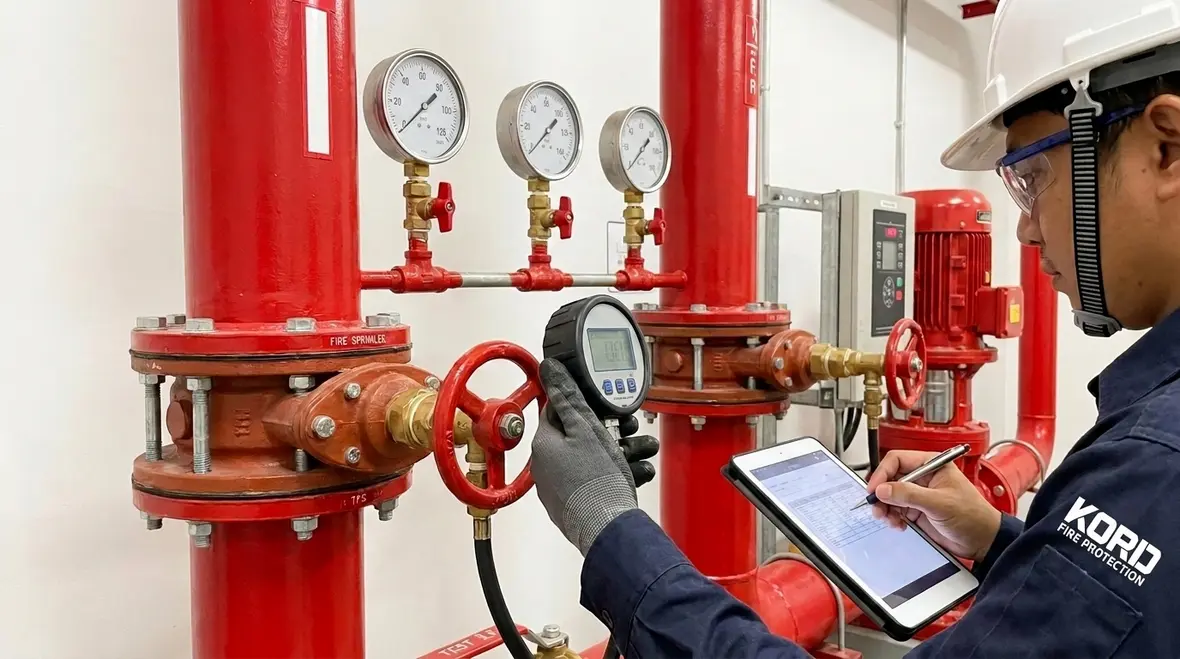
During routine maintenance, fire protection contractors measure values that directly influence system performance and hydraulic interpretation. For example, inspectors routinely record:
- Pressure gauge readings at test connections and inspector test headers
- Flow measurements during operational testing
- Time for water to reach operating devices after a valve action
- Tank levels, pump run times, and electrical monitoring points that support system availability
If teams document these results in mixed unit systems, the risk increases that later reviews or corrective action decisions are based on incorrect conversions.
Common compliance challenge: mixed documentation formats
Many facilities maintain inspection history generated by different contractors, time periods, and software platforms. Without a consistent unit approach, a facility can end up with conflicting results for the same device type, especially if conversion practices vary. Chapter 1 supports a single interpretation pathway so maintenance records remain traceable and defensible during audits and authority having jurisdiction reviews.
For teams planning water-based system maintenance, it also helps to connect unit discipline to installation fundamentals. For additional context, see NFPA 13 overview for automatic fire sprinkler system installation.
Code interpretation rules: how inspectors apply the standard
Units alone do not determine compliance outcomes. Code interpretation rules control how inspectors apply requirements across sections and how they treat referenced material. Chapter 1 provides the interpretive boundaries that prevent inconsistent readings of scope, intent, and defined terms.
How interpretation affects inspection judgments
During inspection, testing, and maintenance activities, technicians must decide how to document findings when conditions do not perfectly match the “ideal” scenario described in a requirement. Chapter 1 interpretation rules support consistent handling of:
- Defined terms and whether a device meets the code meaning of a category or type
- Referenced sections, including how to treat the standard’s internal cross references
- The practical meaning of “shall” requirements versus informational guidance where applicable
- How to describe observed conditions in a way that supports corrective action planning
Operational procedures that reduce interpretation disputes
To keep findings consistent with the standard’s intent, commercial maintenance teams typically implement field controls such as:
- Using standardized test forms that require unit fields and measurement method notes
- Capturing gauge identification and calibration status for repeatability
- Recording test sequence details that explain variability, such as valve position, system mode, or seasonal constraints
- Documenting photos and device tag references to support interpretation of device classification
This approach aligns with the broader discipline described in water-based system maintenance planning. See NFPA 25 overview for complete water-based fire protection system maintenance breakdown for how inspection and maintenance scope connects across system components.
Measurement traceability: from field readings to audit-ready records
Commercial facilities often require inspection history to support due diligence, insurance requirements, and authority review. Chapter 1’s units and interpretation rules directly influence how maintenance evidence should be recorded.
What “good” looks like in a maintenance report
A compliance-ready report for water-based fire protection typically includes:
- Clear identification of the measured parameter, unit, and test location
- Device identifiers such as tag numbers, valve identifiers, and header naming conventions
- Test conditions such as operating mode, system status, and valve configuration at the time of measurement
- Any deviations from expected results, including likely causes and recommended corrective actions
Equipment mechanisms that commonly create measurement risk
Even when technicians follow procedures, certain equipment characteristics can cause measurement variability that must be recognized and explained. For example:
- Gauges and instrumentation: calibration drift, resolution limits, and mounting position can affect readings.
- Valves and test headers: partial closure, debris, or inconsistent operating sequences can change flow and pressure outcomes.
- Pumps: control settings, suction conditions, and starter behavior can alter test results and timelines.
When reports clearly tie readings to units and interpretation rules, the facility gains stronger defensibility during inspections and reduces unnecessary retesting.
How local enforcement intersects with Chapter 1 rules
NFPA standards are widely adopted, but local amendments and enforcement practices can influence expectations. For example, local interpretations may affect documentation formatting, the level of detail required in corrective action notes, and the acceptance approach for measurement conversion practices.
Common facility problem: inconsistent enforcement language
Teams sometimes prepare reports that follow one jurisdiction’s style while using measurement conventions that another expects to see aligned. That mismatch can lead to questions during inspections even when the underlying system performance meets criteria.
Practical strategy: align contractor documentation with local review patterns
Facilities can reduce friction by coordinating how reports will be reviewed, including the units and how results are presented. This is especially important when jurisdictions emphasize certain equipment documentation formats or when multiple water-based system contractors support a single building.
To understand how enforcement can differ in certain regions, see fire sprinkler code California explained. For a systems level view of how municipalities and stakeholders often evaluate water supply and performance, fire pump context can also help. A related resource is available at firepumps.org.
Because local review patterns vary, Kord Fire Protection prioritizes documentation consistency and measurement clarity to support smoother inspections, fewer follow-up questions, and stronger compliance continuity. For broader system maintenance practices, see NFPA 25 overview complete water-based fire protection systems maintenance breakdown.
Field checklist: applying Chapter 1 units and interpretation rules
This checklist supports commercial facilities in operationalizing the Chapter 1 approach during inspection and maintenance cycles.
Before scheduling the inspection
- Confirm the measurement unit system used across the facility inspection forms and software.
- Verify the technician’s instruments support repeatable readings for the system type.
- Confirm whether the facility requires specific unit formatting for local review or internal audits.
During testing and inspection
- Record each numerical result with the correct unit and the exact test location.
- Document device identifiers so interpretation of device classification remains clear.
- Note test conditions that affect results, including system mode and valve positioning.
After the test: close the loop
- Review reports for conversion consistency and unit alignment before submission.
- Ensure corrective actions reference the observed condition with measurement context.
- Store supporting evidence such as calibration records, photos, and test setup notes.
These steps help keep maintenance outcomes consistent with the NFPA 25C Chapter 1 units measurement code interpretation rules and reduce the likelihood of administrative rework.
Frequently Asked Questions
Get inspection-ready, not just compliant on paper
Commercial compliance depends on disciplined measurement, consistent unit usage, and defensible code interpretation. Kord Fire Protection helps facilities apply the NFPA 25 framework in the field and document results in a way that withstands review. Contact Kord Fire Protection to schedule a maintenance planning session, confirm documentation standards for your jurisdiction, and align recurring testing procedures with your compliance requirements.
kordelectric.com and kordfire.com.au provide additional pathways to connect with local support where available.

Join Our Newsletter!
Get the latest fire safety tips delivered straight to your inbox From our Newsletter.