NFPA 25 Water Mist System Inspection Testing Maintenance
Quick Answer: NFPA 25 §§ 12.1–12.5 sets the expectations for water mist systems, including inspection, testing, maintenance, and training. In Australia, facility owners reduce risk and avoid costly surprises by following these steps on schedule. Kord Fire Protection can handle this as a reliable partner, not just another vendor.
When a water mist system stands ready, it should stay ready. That is exactly why NFPA 25 water mist system inspection testing matters, especially under §§ 12.1–12.5, which focus on inspection, testing, maintenance, and training. Across industrial sites, retail centers, and commercial facilities throughout Australia, these requirements help teams confirm the system will perform when conditions turn serious. And yes, nobody wants a fire system that “mostly works” like a shopping app that updates forever.
If your site needs coordinated support beyond a one-off check, Kord Fire Protection’s full fire protection services fit naturally into a broader readiness plan. For teams managing active facilities, that kind of support helps inspection, testing, repairs, and documentation stay organized instead of turning into a calendar ambush.
NFPA 25 water mist program essentials for business owners
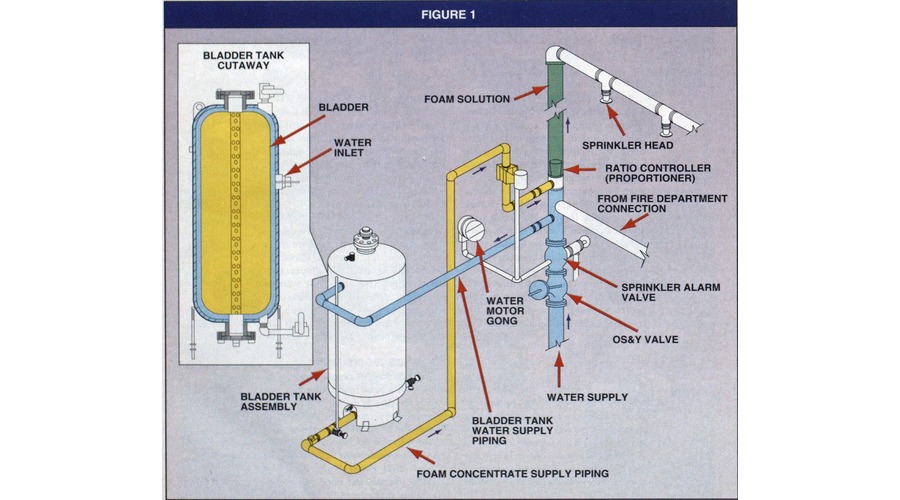
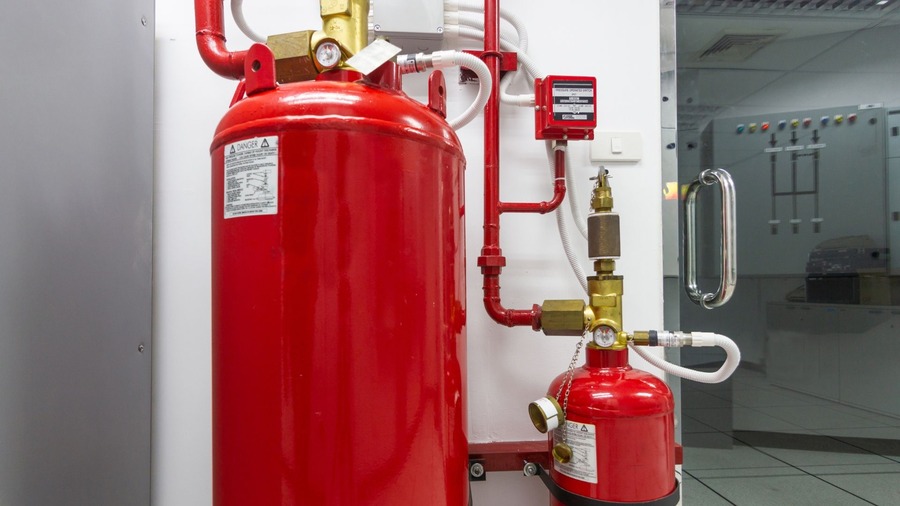
Third parties often approach compliance like it is a checklist exercise. However, NFPA 25 treats the water mist system as a living asset. Therefore, the owner’s responsibility includes ensuring the system gets the right inspections, the right tests, and the right maintenance. In practice, that means the work ties directly to system components such as detection interfaces, control valves, pressure supplies, nozzles, and any pumps and water sources that drive performance.
Importantly, the standard expects periodic actions, not one-off heroics. In other words, the system should receive documented attention over time, so deterioration does not hide behind a clean visual inspection. Kord Fire Protection can help sites in Australia treat this like a planned maintenance program that supports safety goals and keeps operations moving. It also helps to view this chapter in the context of Kord’s NFPA 25 overview and water-based fire protection maintenance breakdown, especially if your team wants the bigger picture around related system responsibilities.
Why periodic attention matters more than last-minute panic
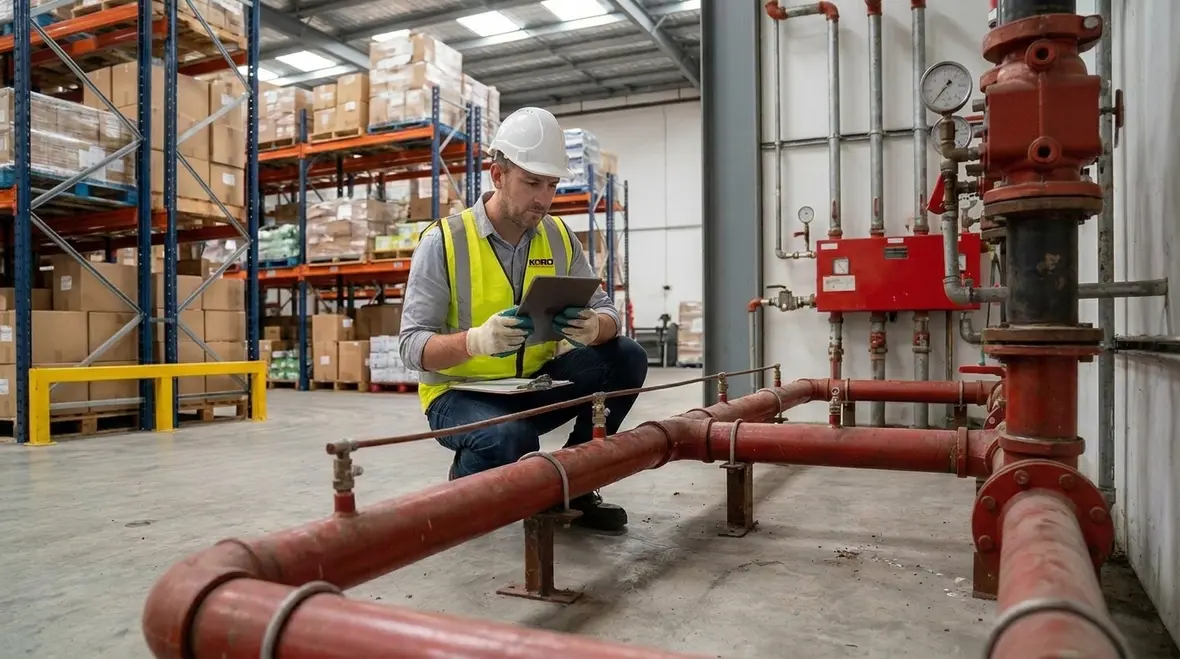
A water mist system does not care whether the site is busy, understaffed, or halfway through a renovation. It either performs correctly or it does not. That is why periodic attention matters so much. Owners and managers who rely on annual scrambling usually discover the same truth too late: small defects are much cheaper to fix before they team up and become a larger operational headache.
Inspection routines that catch problems early
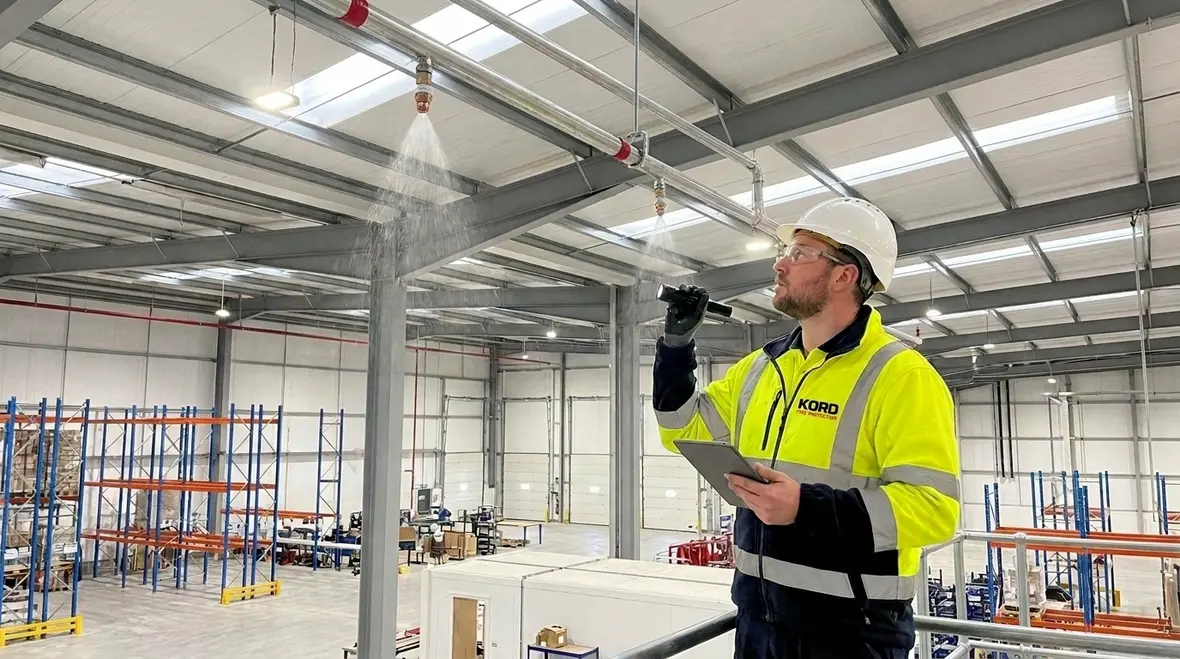
Under §§ 12.1 and 12.2, inspection activities verify that the system still matches its intended condition. Typically, trained technicians look at visible components and confirm operational status indicators. They also check for conditions that could affect water delivery, such as obstructions around nozzles, damaged pipework, leaks, and signs that controls or related equipment have been altered.
Next, they document results with enough detail to show what was observed and what actions followed. That documentation becomes vital when management asks why downtime occurred or why a test needed adjustment. Moreover, in industrial and commercial environments, minor changes happen constantly, from racking moves to construction work. If the team only inspects once a year, those small changes can quietly stack up.
Here is the calming part: good inspection is preventive. It reduces the odds that the system “passes” today but fails when real heat and smoke demand the intended response. Kord Fire Protection supports this with structured reporting and field visibility, so the facility team understands the condition of the system without needing a fire engineering degree.
A strong inspection routine also pays attention to the environment around the system. Access changes, stock creep, accidental impacts, valve position concerns, and stray contractor adjustments can all chip away at readiness. None of those issues are glamorous, but they are exactly the sort of real-world problems that inspection is supposed to catch before the system is called on to do something important.
Common inspection findings facilities should not ignore
Obstructions near nozzles or discharge areas
Leaks, corrosion, or damage on visible piping and fittings
Control valves or indicators not in their normal condition
Site modifications that quietly affect access or system operation
Testing that proves the system can deliver
NFPA 25 §§ 12.3 and 12.4 emphasize testing that goes beyond appearance and confirms functional performance. Testing aims to show that the system responds properly, control logic works, and key parameters stay within acceptable limits. For water mist systems, this can involve checking pressure performance, verifying alarm and control operation, and confirming that the delivery path supports the required discharge characteristics.
Transition matters here. Because a site’s operating environment changes, testing schedules support continued reliability. For example, a facility may add equipment, alter HVAC patterns, or expand storage areas. Even when those changes do not touch fire services, they can affect how quickly detection and response occur. Therefore, consistent testing helps confirm that the system still operates as designed.
Also, testing must be safe for the building and its occupants. Kord Fire Protection coordinates testing steps with facility teams so operations face minimal disruption. In the real world, this means fewer “unexpected surprises,” and more clarity about what will happen and when.
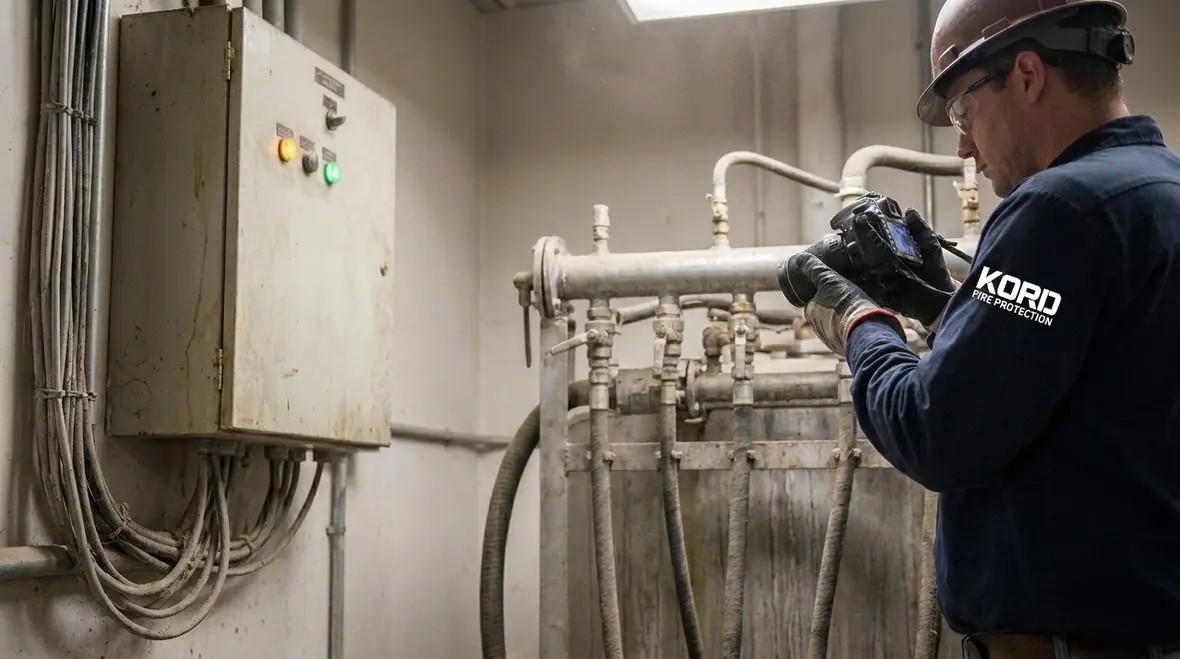
This is where many facilities separate theory from proof. A tidy-looking system can still hide response problems, pressure issues, or logic faults that only become visible once testing actually exercises the right functions. That is why testing has so much value. It is not there to create paperwork drama. It is there to show whether the system can genuinely deliver under the conditions it was meant to handle.
Testing supports confidence, not just compliance
Facility leaders often want a simple answer: is the system ready or not? Consistent testing gets them closer to that answer. It builds confidence for operations teams, supports internal planning, and gives stakeholders something much better than optimism. It gives them evidence.
Maintenance plans that keep performance steady
Sections 12.5 focuses on maintenance, which means the facility must keep components in serviceable condition. Maintenance actions can include cleaning, replacement of worn parts, adjustment of equipment, and correction of any issues found during inspection or testing. The goal stays consistent: the system must remain capable of delivering effective water mist discharge.
Maintenance should also address the usual culprits. Corrosion and scaling can occur where moisture and water quality interact with system components. Vibration and mechanical stress can affect seals and fasteners. Additionally, tampering or unauthorized adjustments can occur when multiple contractors touch an area. So, a strong maintenance plan includes not only repairs, but also checks that prevent repeat issues.
Crucially, maintenance should tie back to documented findings from prior visits. When technicians review the last inspection and test results, they can prioritize what truly matters. That is where Kord Fire Protection becomes more than a service provider, because the partnership approach helps align maintenance work with facility realities across Australia, from loading docks to busy retail footprints.
The best maintenance plans are steady, boring, and effective, which is exactly what you want from life safety work. They replace guesswork with patterns, and they keep the same issue from showing up visit after visit like an unwanted sequel nobody asked for.
Training and documentation that build dependable teams
NFPA 25 does not treat training as optional. Under the related requirements in the program scope, training supports understanding of the system, response expectations, and responsibilities. In a busy facility, teams rotate, new contractors arrive, and managers change. Therefore, training helps reduce confusion, improves decision making, and supports faster action during events.
Effective training typically covers how the system operates, what alarms mean, and how to respond without panicking like a movie character who pulls the wrong lever. It also reinforces the importance of documentation, because proper records show inspection intervals, test outcomes, and maintenance history.
For organizations across Australia, Kord Fire Protection can support this training focus by delivering clear documentation and practical guidance that facility teams can use. As a result, the system remains not only compliant on paper, but also trusted in practice.
Documentation turns service into a usable program
Records matter because memory is unreliable and facilities are busy. A documented trail shows what was inspected, what was tested, what changed, and what still needs attention. That makes it easier for managers to approve corrective work, for teams to plan shutdowns, and for future technicians to understand the actual condition of the system instead of piecing together clues from old emails and hallway conversations.
How Kord Fire Protection becomes a vital partner
Facilities often compare service providers like they are choosing the cheapest airline. But fire protection is not a flight to Bali. It is risk management. Kord Fire Protection can become a vital partner by bringing structured scheduling, consistent reporting, and a practical understanding of how work impacts day to day operations.
Instead of treating NFPA 25 water mist system inspection testing as a last minute scramble, the partnership approach supports planned visits, clear scope, and follow up actions that make sense. That matters in industrial, retail, and commercial environments where shutdowns, access, and safety permits must all align.
What Kord delivers
Inspection, testing, maintenance coordination aligned to NFPA 25 expectations
Field findings tied to specific system components and practical fixes
Clear documentation for facility managers and compliance records
Support that fits industrial and commercial workflows across Australia
Why it helps the facility
Early detection of issues before they become downtime or rework
Proof that controls and delivery performance stay within limits
Maintenance that follows evidence, not guesswork
Training and information that strengthens response readiness
Staying ready when the environment won’t sit still
Industrial and commercial facilities change. Storage expands, tenants modify spaces, contractors work in plant rooms, and weather patterns influence water supply conditions. Yet fire systems must stay dependable through all of that.
Therefore, a robust NFPA 25 program should include coordination with site activities. When work affects pipe routes, mechanical rooms, or detection areas, teams should confirm no changes interfere with system performance. Even if the change seems unrelated, the fire protection system operates as a connected chain. Break one link and the chain gets shorter. And nobody wants a shorter chain when smoke appears.
By treating maintenance and NFPA 25 water mist system inspection testing as an ongoing program, facilities reduce reactive work and keep leadership informed. Kord Fire Protection can support that stability with consistent service delivery and clear next steps.
FAQ
Conclusion
NFPA 25 §§ 12.1–12.5 sets a clear path for keeping water mist systems reliable through inspection, testing, maintenance, and training. When facilities in Australia follow that path with consistency, they reduce risk and limit operational disruption.
Kord Fire Protection can help turn compliance into a steady program, with clear reporting and practical fixes. Reach out to Kord Fire Protection to review your current service schedule and confirm your system stays ready when it matters most.

Join Our Newsletter!
Get the latest fire safety tips delivered straight to your inbox From our Newsletter.