Water Mist Fire Protection System Training NFPA 25
Quick Answer: NFPA 25 § 12.5 calls for training tied to water mist system operation and maintenance. The goal is simple: fewer mistakes, faster response, and safer facilities. With water mist fire protection system training NFPA 25, Kord Fire Protection helps facilities in Australia build consistent competence across both maintenance and facility teams.
When a water mist system sits in a building, it feels calm. It just waits. However, NFPA 25 § 12.5 reminds facility leaders that calm is only safe when people know what to do. That is why water mist fire protection system training NFPA 25 must reach both facility teams and maintenance teams. And yes, training matters even when the last alarm “turned out to be nothing,” because “nothing” still uses time, money, and nerves. In this article, third person guidance explains how teams prepare, what training should cover, and how Kord Fire Protection becomes a vital partner for ongoing service, audits, and practical jobsite support across industrial, retail, and commercial sites throughout Australia.
For facilities that also need broader support beyond training, Kord Fire Protection offers full fire protection services that help connect inspections, maintenance, testing, and site readiness into one cleaner operating plan.
What NFPA 25 § 12.5 expects from trained teams
NFPA 25 § 12.5 focuses on ensuring the right people can operate, inspect, test, and maintain water mist systems. It is not a one-time lecture. Instead, it becomes an ongoing competence plan, so teams behave correctly during normal operations and during unusual events.
For most facilities, the biggest risk comes from gaps between “who thinks they handle it” and “who actually handles it.” Therefore, training must clearly assign roles for initiating response actions, reporting issues, and supporting maintenance work. Moreover, teams should understand what system behavior means so they can avoid guesswork during inspections, fault conditions, or after any water mist event.
Why role clarity matters more than confidence
Confidence is nice. Competence is better. A facility can have three people who all feel absolutely certain they know the next step, and still somehow end up with five different answers. That is exactly why training under NFPA 25 works best when it defines roles in plain language. Who calls. Who verifies. Who documents. Who supports restoration. Once those answers are clear, the system is not relying on memory, habit, or whoever speaks first during a stressful moment.
Why water mist needs practical instruction, not just paperwork
Facilities often treat fire protection documentation as the finish line. Yet training turns documents into actions. Water mist systems involve components that behave differently across layouts and hazards. As a result, staff need to learn how the system reacts to control signals, how maintenance tasks affect performance, and how to recognize abnormal conditions.
In industrial settings, that means people learn to connect their daily routines to system reliability. In retail and commercial settings, it means staff learn how to keep operations steady while still supporting safe procedures. Additionally, when teams train correctly, they reduce downtime caused by avoidable errors, wrong access steps, or delayed reporting. Think of it like a fire drill: no one wants constant drills, but everyone wants the day it matters to go smoothly.
That practical focus also lines up well with Kord Fire Protection’s NFPA 25 overview for complete water-based fire protection systems maintenance, which helps teams see where water mist systems fit within the larger maintenance picture.
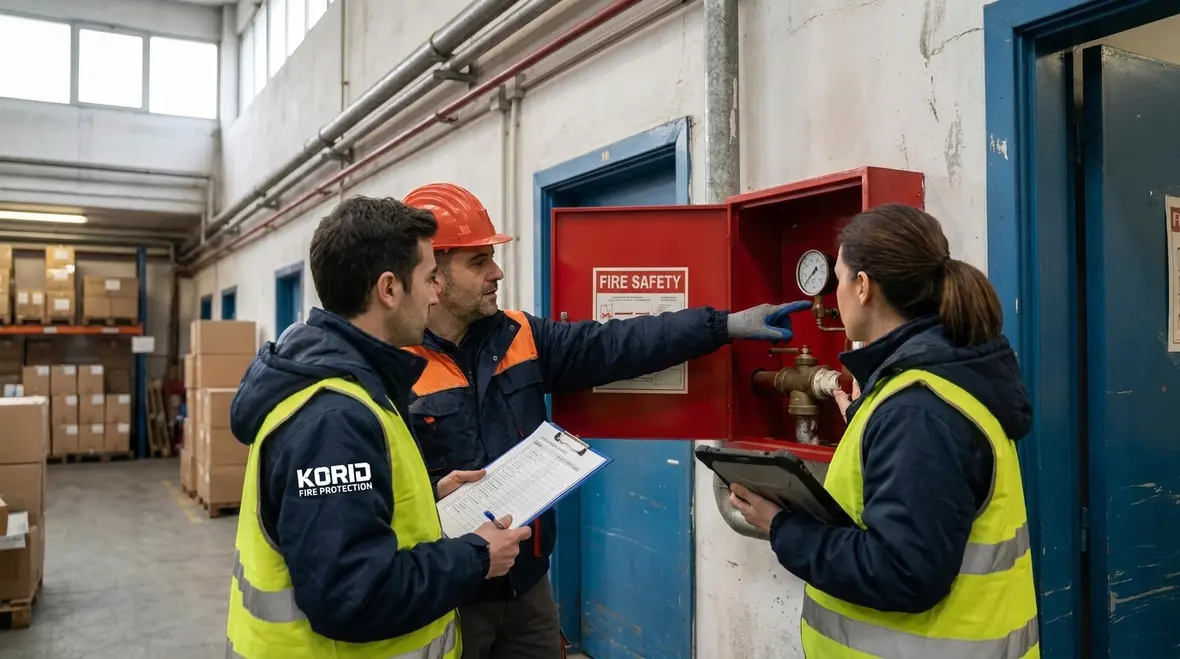
Facility teams versus maintenance teams: the clear split
It helps when training divides responsibilities while keeping shared awareness. Facility teams usually manage the operational picture. Maintenance teams manage technical tasks and verification work. Still, both groups must understand how their part connects to overall system performance.
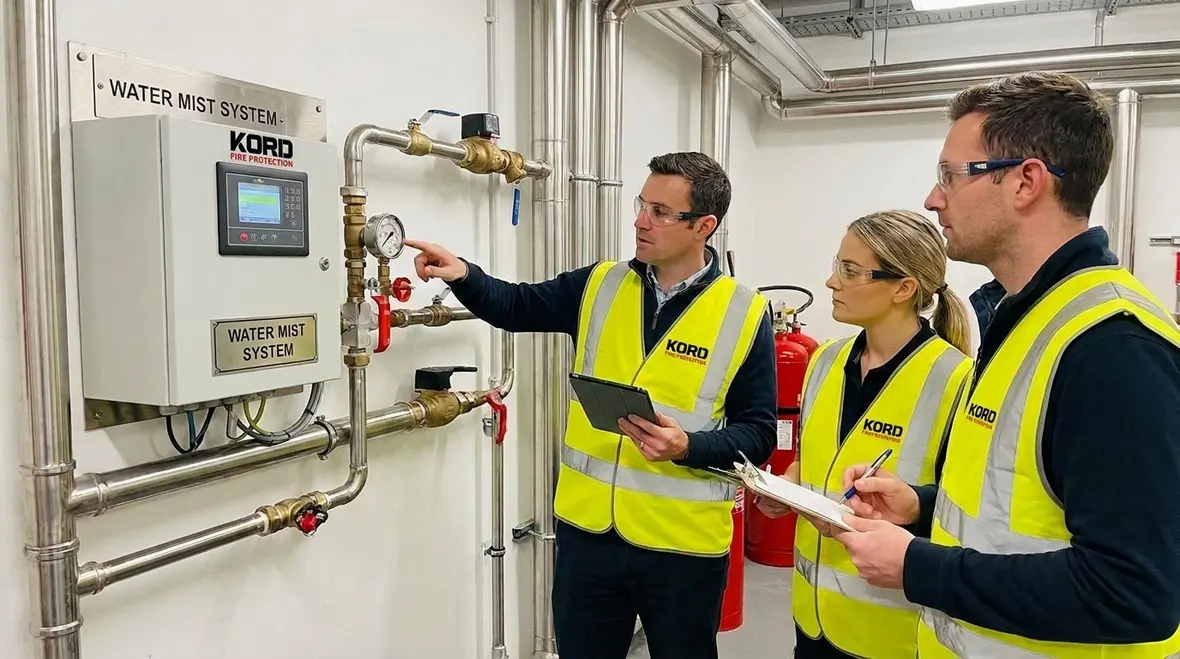
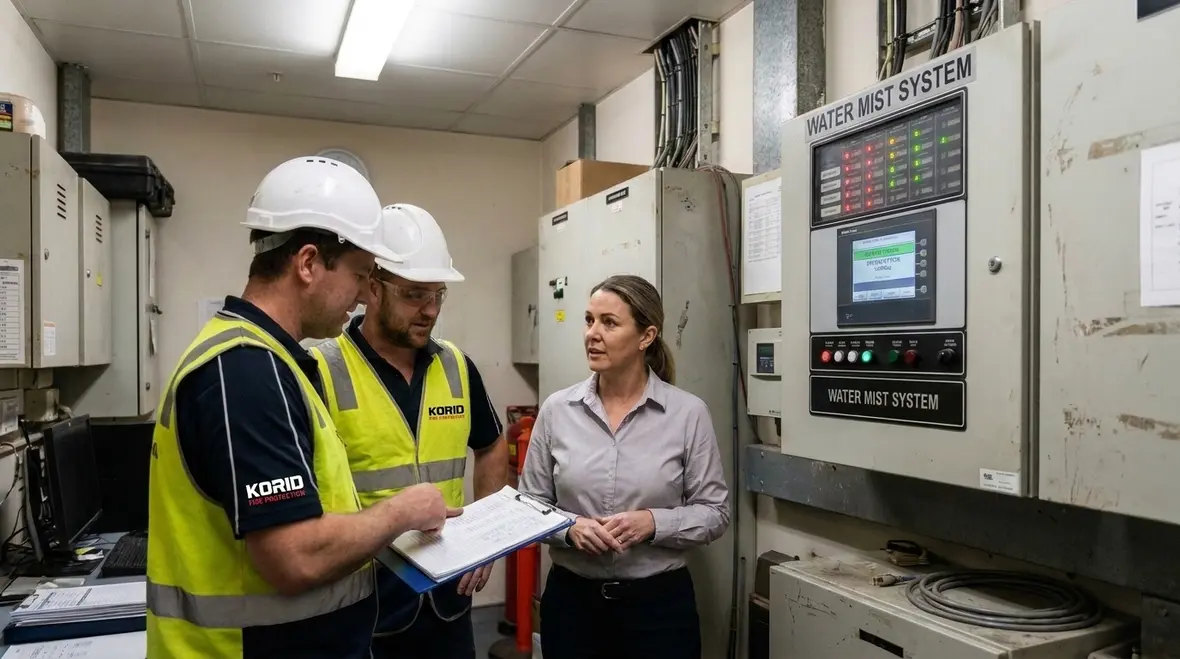
Facility teams typically need to know how to respond, how to communicate, and how to preserve conditions for safe investigation. Maintenance teams need deeper instruction in inspection intervals, component checks, system integrity steps, and how to record results accurately.
When Kord Fire Protection partners with a facility, it helps align these groups so training does not live in two separate worlds. Consequently, the facility gains a single, shared understanding of what “proper system condition” looks like across shifts, contractors, and seasonal staff changes.
Shared awareness prevents handoff problems
The split between teams should be clear, but not isolated. Facility personnel do not need to become technicians, and maintenance personnel do not need to run the whole operational response. However, both sides should understand enough to avoid handoff failures. A fault noted on one shift should not turn into a mystery on the next. A maintenance activity should not surprise operations. Good training closes those awkward gaps before they become expensive ones.
Key topics to include in water mist fire protection system training NFPA 25
Good training stays grounded in what people will actually face on-site. Below are the topics that typically deliver real value for facilities across Australia.
- System basics and hazard coverage: Teams learn what water mist systems protect and how design intent influences safe operation.
- Control and alarm understanding: Staff learn what signals mean, how to verify status, and how to escalate faults without delay.
- Inspection and readiness practices: People understand routine checks, what to look for, and how to document findings clearly.
- Maintenance impact on performance: Maintenance teams learn which tasks improve reliability and which tasks risk changing system behavior.
- Record keeping and evidence: Teams learn how to maintain traceable records so compliance stays defendable.
- After an event response: Staff learn how to secure the area, preserve system evidence, and support a correct restoration path.
- Coordination and reporting: Everyone learns how to communicate between shifts, site leadership, and technical responders.
Moreover, training should include jobsite scenarios. For example, a valve access door can look “fine” until someone reports a minor obstruction. And in retail environments, that obstruction might be a stack of stock pallets that arrived for the morning rush. With training, staff notice early and report properly instead of pretending the problem will vanish on its own. Spoiler: problems do not vanish. They multiply like holiday decorations after the first cabinet search.
Scenario based practice makes training stick
People remember situations better than slides. If teams walk through a blocked access point, a control panel trouble signal, a post-activation handoff, or a maintenance isolation procedure, they build useful memory instead of just polite nodding. This is especially important for sites where alarms are rare. The rarer the event, the more training needs to make the response feel familiar before it happens for real.
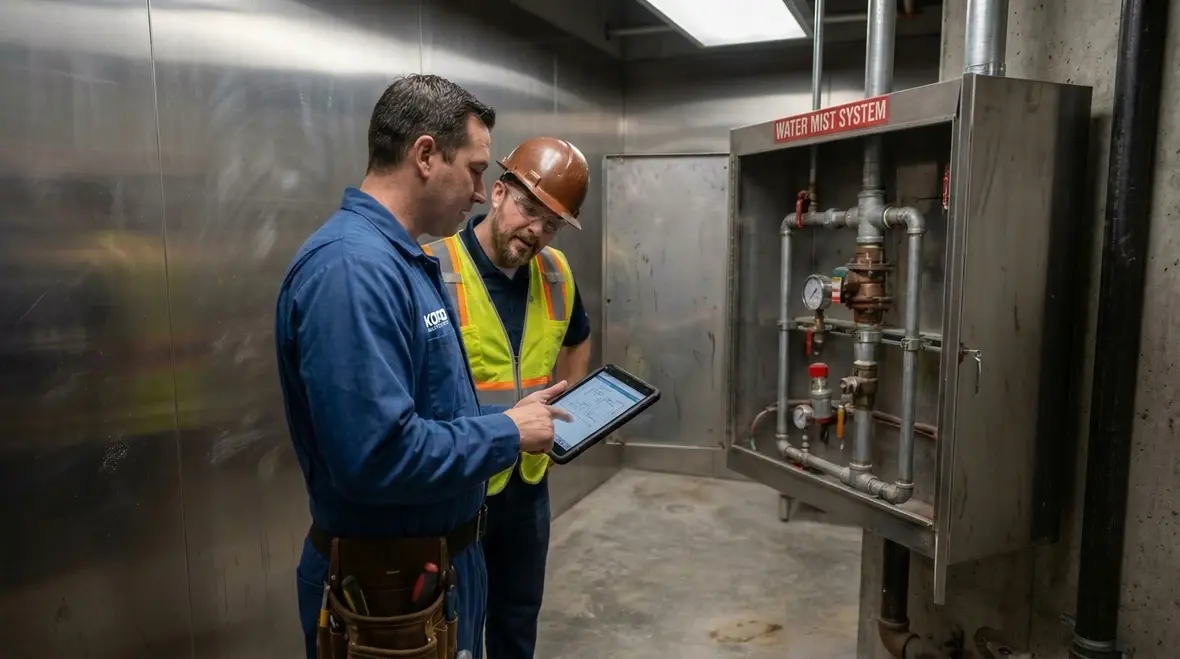
How training supports faster response and fewer shutdowns
When teams understand water mist system behavior, response becomes calmer and more consistent. Therefore, facilities reduce the time spent arguing about what to do next. Instead, staff follow a known flow: identify, report, verify, and coordinate.
Additionally, maintenance teams benefit from training that matches real system conditions. They learn how to interpret observations, how to avoid misdiagnosis, and how to prevent repeat issues. As a result, facilities see fewer repeat callouts and less disruption to production, trading, or client operations.
Kord Fire Protection improves this outcome by treating training as part of service delivery. It does not just provide a checklist. It supports facilities with structured guidance, practical coaching, and alignment with service schedules and compliance expectations. This partnership helps industrial, retail, and commercial sites in Australia keep systems reliable while maintaining business continuity.
Australia site realities: training that fits shifts and contractors
Across Australia, many facilities run on rotating rosters. Some also rely on contractor support during planned maintenance windows. Thus, training must account for handover realities, language differences, and variable levels of prior knowledge.
One effective approach includes brief refresher modules for facility teams and more detailed technical modules for maintenance teams. Then, Kord Fire Protection supports the process with service documentation, on-site guidance, and practical instruction that matches the facility layout. Consequently, training stays relevant, even as staff change or sites expand.
In retail and commercial environments, teams also need to maintain customer-facing calm. They learn how to support emergency procedures without creating panic. In industrial facilities, teams need to maintain safety around plant and equipment, because fire protection is not separate from daily hazards. It sits inside them. Training ensures people can protect life and property while still doing their jobs.
Refreshers matter when staff and conditions change
A team that trained well last year may not be the same team today. New hires arrive. Contractors rotate in. Layouts change. Storage creeps into places it should not. Even strong sites drift unless training is reinforced. Short refreshers, practical walkthroughs, and documented expectations help keep the system from becoming one more thing everyone assumes someone else understands.
Getting started with Kord Fire Protection as a vital partner
Facilities that want strong outcomes do not wait for the next incident. Instead, they set training goals aligned to NFPA expectations and site needs. Then they build a schedule that fits operations, including onboarding for new staff and refreshers for existing teams.
Kord Fire Protection can help facilities in Australia with water mist fire protection system training NFPA 25 support through coordinated service, practical coaching, and compliance focused documentation. If a facility wants reliability, faster response, and smoother maintenance cycles, partnering early is the smart move. After all, no one plans for system failures. However, good training plans for the moment you need performance.
FAQ
Conclusion: schedule training and strengthen readiness
Training under NFPA 25 § 12.5 turns a water mist system from equipment into capability. It gives facility teams clarity and gives maintenance teams confidence, so your response stays fast and your maintenance stays accurate. Kord Fire Protection helps facilities across Australia align training with real operations, service schedules, and compliance needs.
Reach out to Kord Fire Protection to review your team readiness and set up practical water mist fire protection system training NFPA 25 support for your site. Calm systems are good. Calm systems with trained people behind them are much better.

Join Our Newsletter!
Get the latest fire safety tips delivered straight to your inbox From our Newsletter.