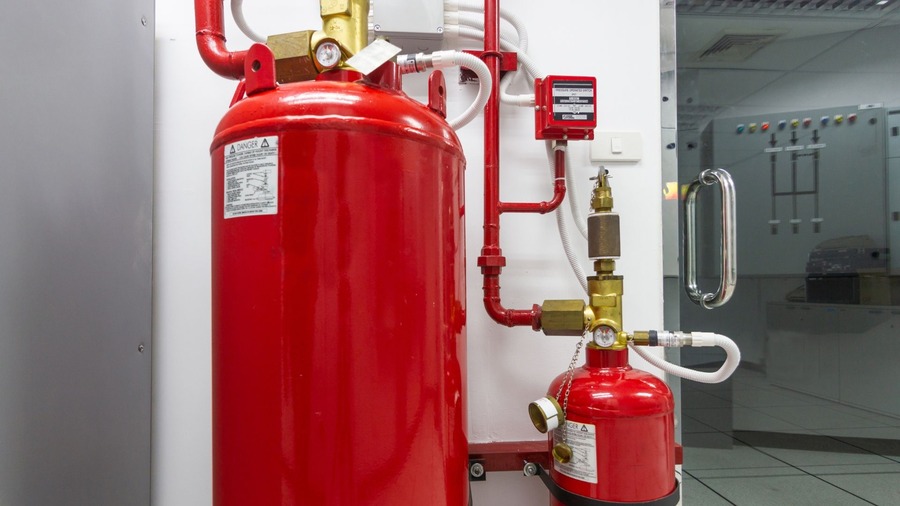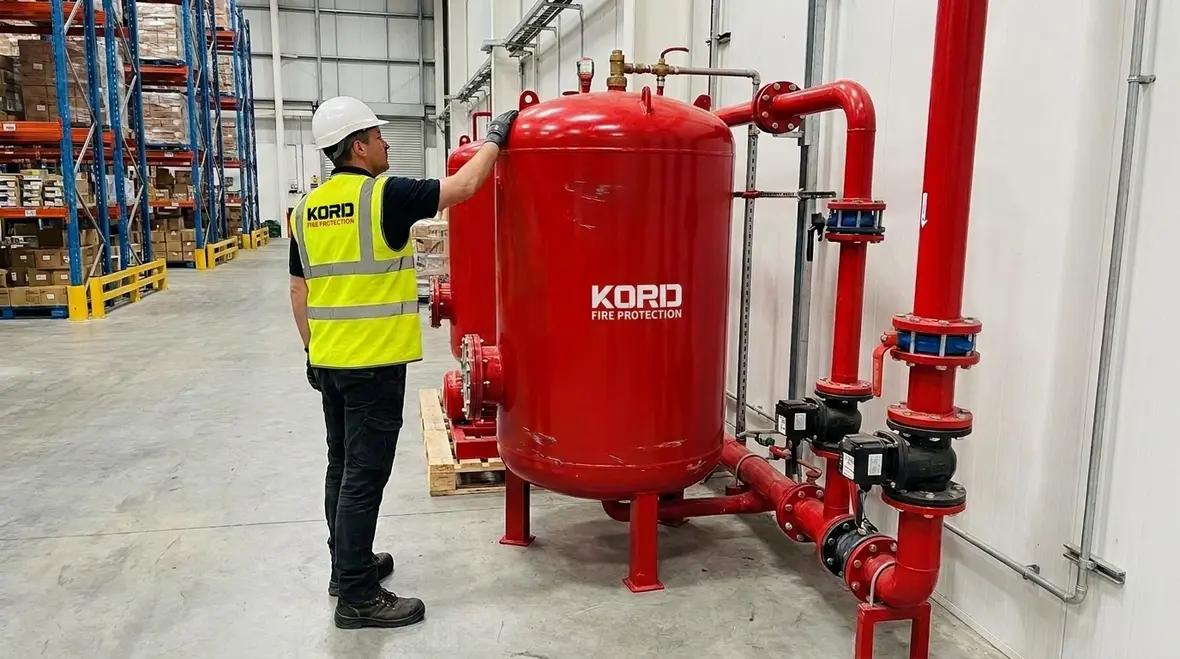
Foam Fire Suppression System Testing NFPA 25 Section 11.3
Quick Answer: NFPA 25 § 11.3 outlines how facilities with foam systems should test their equipment to keep special hazards protected. For Australian industrial and commercial sites, foam fire suppression system testing NFPA 25 helps reduce failures, maintain compliance, and protect people, assets, and downtime schedules. Kord Fire Protection can run the program and stay ahead of surprises.
In Australia, facilities that rely on a foam system do not get to “hope” the protection works. They need proof. That is where foam fire suppression system testing NFPA 25 comes in, especially under NFPA 25 § 11.3: Foam System Testing for Special Hazard Facilities. This section focuses on testing methods and expectations that keep foam systems ready when risk turns from “possible” into “happening.”
Now, testing is not glamorous. It is closer to the paperwork aisle at the hardware store. However, done correctly, it is the difference between a fast response and a slow, expensive lesson. And because fire protection does not care about excuses, facilities benefit from a partner who can plan, test, document, and close out the job with confidence. Kord Fire Protection does exactly that, and it can become a vital partner when the facility needs dependable service, clear results, and a calm, professional process. Facilities that need broader support can also explore foam fire suppression systems service as part of a practical lifecycle approach to suppression readiness.
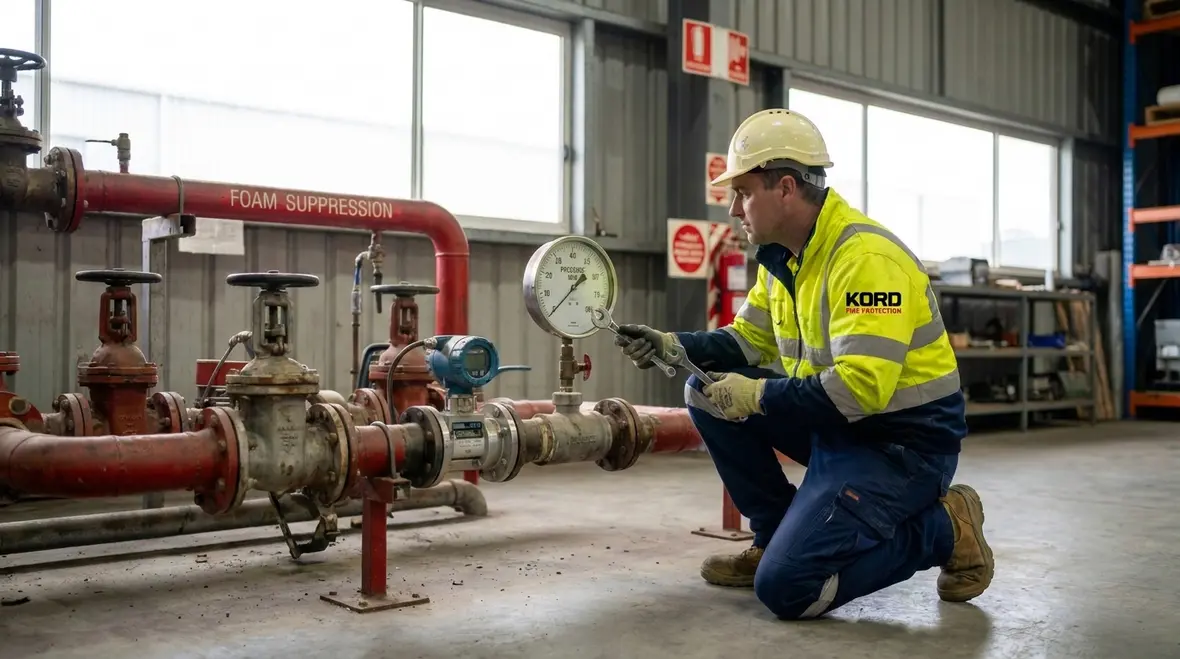
Why NFPA 25 § 11.3 matters for special hazard facilities
NFPA 25 exists for one reason: to help maintain fire protection systems so they perform during emergencies. In addition, NFPA 25 § 11.3 targets foam systems in special hazard settings, where foam may be the primary barrier between a fire and everything around it.
Many facilities think their system is “fine” because it looks fine. Yet foam performance depends on more than appearance. It depends on correct water flow, foam concentrate ratios, discharge quality, and the ability to operate within required timeframes. Therefore, proper foam fire suppression system testing NFPA 25 does not just check components. It verifies that the system delivers foam the way it must.
In practice, that means testing can uncover issues before they become emergency conditions. For example, a wrong concentrate batch, a stuck valve, a partially blocked discharge, or a drift in system pressure can quietly reduce effectiveness. Meanwhile, the downtime cost of fixing these issues during an incident is much higher than correcting them during scheduled testing.
Testing is the proof, not the assumption
That distinction matters because special hazard facilities usually do not have the luxury of trial and error. When foam is the chosen strategy, managers need evidence that the system can proportion correctly, discharge correctly, and support the hazard it was intended to protect. A nice-looking valve room is not a performance report. It is just a room with decent posture.
What foam systems actually need to prove during testing
Foam systems can look straightforward, but they demand precision. First, the system must blend concentrate with water at the correct proportion. Next, it must deliver foam to the correct locations with stable flow and the right discharge characteristics.
During foam fire suppression system testing NFPA 25, technicians typically focus on several performance drivers:
- Correct concentrate proportion and proper foam solution generation
- Availability of water supply and stable system pressure during flow
- Valve operation and alignment, so the system behaves as designed
- Discharge performance, including distribution patterns and outlet condition
- System readiness, such as control status and operational sequencing
- Documentation that supports compliance and auditable records
Then there is the “real world” part. Systems may sit idle for long periods, exposed to vibration, corrosion, temperature changes, and normal facility wear. Consequently, testing checks whether the equipment still functions under the conditions it will face during an emergency.
And yes, sometimes the issue is as simple as a valve that moved a little over time. Fire safety should not feel like a scavenger hunt, but if no one tests, that is exactly what it becomes.
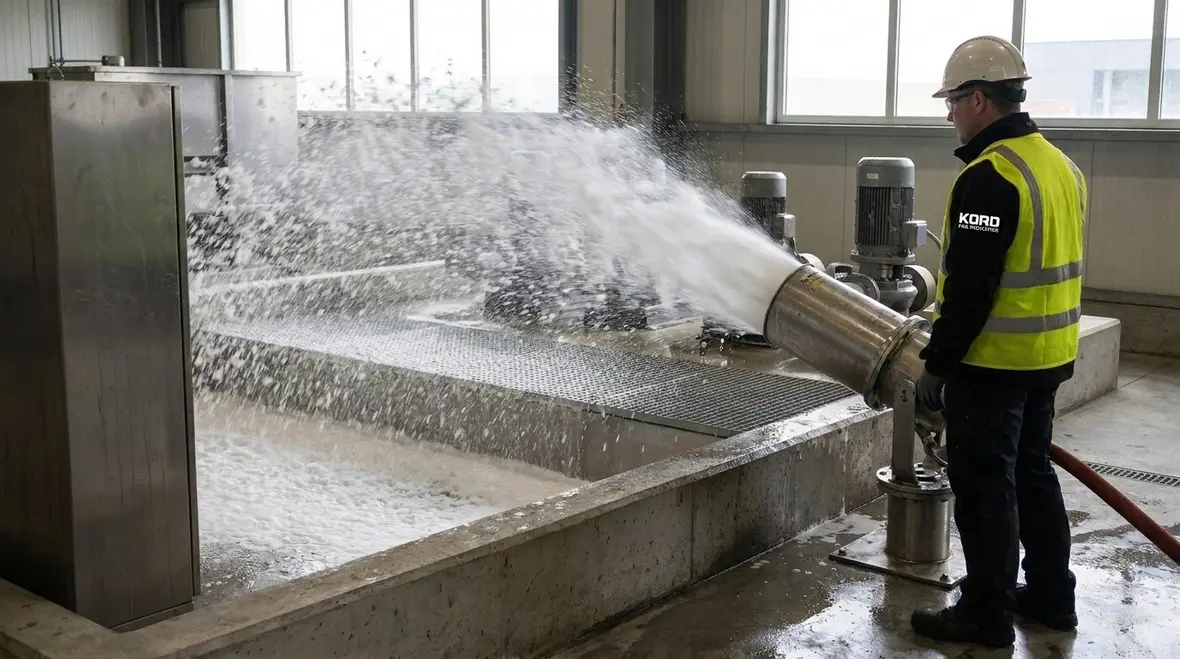
How testing keeps special hazard risk under control
Special hazard facilities often handle fuels, chemicals, or operations where fire growth and spread can be rapid. Foam systems provide a type of coverage that can help suppress and prevent ignition spread, depending on the hazard classification and system design.
When foam fire suppression system testing NFPA 25 aligns with NFPA 25 expectations, facilities gain three major benefits. First, they reduce the chance of system underperformance. Second, they build operational confidence for site teams and contractors. Third, they improve response readiness by confirming that detection, actuation, and foam discharge operate as intended.
Also, testing supports consistent training and procedures. Teams can practice response knowing the system is confirmed. That matters in industrial and retail facilities where multiple vendors and shifts rotate. Without testing, confidence becomes guesswork, and guesswork is great for trivia nights, not for fire protection.
Readiness improves more than compliance
A site that understands its foam system condition can plan maintenance better, budget repairs earlier, and avoid the chaos of discovering a weakness at exactly the wrong moment. That is why many facilities pair section-specific testing with broader maintenance literacy, often by reviewing Kord’s NFPA 25 overview for complete water-based fire protection systems maintenance to connect foam requirements with the larger compliance picture.
Step by step: how professionals plan a testing visit
A strong testing program starts long before any valve gets turned. Kord Fire Protection approaches testing as a coordinated job that respects operations, safety, and documentation needs. Therefore, planning typically includes a site review, system layout verification, and confirmation of expected test outcomes.
During scheduling, professionals often account for production cycles, traffic flow, and any shutdown constraints. Then they prepare the right test equipment and ensure the crew can operate safely. After that, they carry out testing in a sequence that confirms system integrity without creating unnecessary disruption.
Common planning and execution elements include:
- Review of latest records, prior test results, and maintenance history
- Verification of system configuration, including components and labels
- Isolation and safety measures to protect staff and equipment
- Conducting tests using the approved approach for the hazard type
- Capturing measurements that support compliance and traceability
- Reporting results in clear, facility-ready language
Once the testing completes, the work does not end with a handshake. If results show performance gaps, a competent service team follows through with corrective actions and retesting where needed. In the end, that closure is what turns a checklist into real protection.
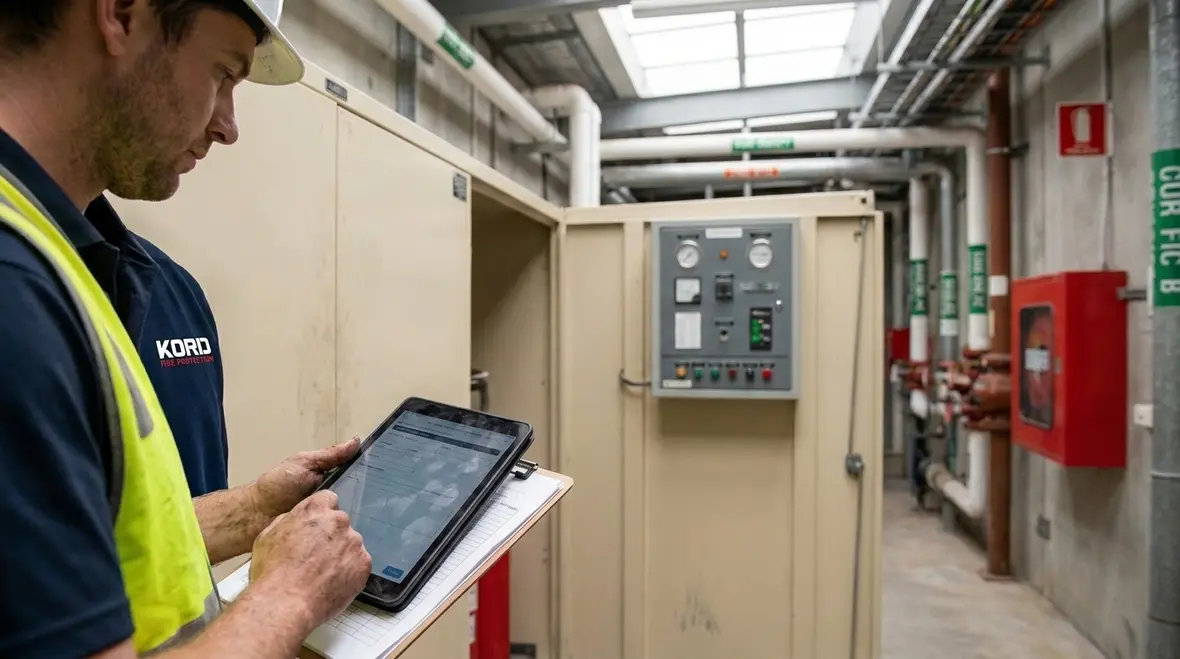
Common issues found during foam system checks
Foam systems can fail quietly, so testing must look beyond the obvious. For example, supply pressures can drift due to changes in the facility’s water network. Similarly, discharge units can accumulate debris, or valves can show early signs of sticking.
In addition, concentrate handling can create problems. If concentrate is outdated, mismatched, or stored poorly, foam quality may suffer. Meanwhile, pipe work can develop restrictions over time, and even small blockages can change performance.
Facilities in Australia often deal with unique environmental factors as well. Humidity, coastal corrosion, and temperature swings can affect hardware longevity. Therefore, professional foam fire suppression system testing NFPA 25 often uncovers trends, not just isolated defects.
Here is what crews frequently look for:
- Pressure or flow deviations that affect foam proportioning
- Valve operation concerns, including sluggish movement or misalignment
- Blocked or damaged discharge components
- Signs of corrosion, leakage, or wear in key connections
- Documentation gaps that make audits harder than they need to be
And sometimes, the issue is a documentation issue. That sounds boring, but it can slow approvals and create compliance headaches. Good service teams prevent that by maintaining clean records from the start.
Small faults have a talent for becoming expensive
That is especially true in special hazard environments, where one weak link can affect proportioning, discharge coverage, or response timing. A blocked outlet does not care that everyone meant well. Neither does a mislabeled valve. Testing catches the quiet problems before they audition for a disaster.
How Kord Fire Protection supports compliance across Australia
When a facility schedules foam testing, it needs more than a technician with a tool bag. It needs consistency, communication, and accountability. That is where Kord Fire Protection can become a vital partner with this service job.
Kord helps facilities manage testing demands across industrial, retail, and commercial environments. In many cases, sites need testing that fits real operations, not ideal conditions. Therefore, Kord’s approach supports planning, execution, and clear reporting so facilities can act quickly when results show gaps.
To keep things simple for facility managers, Kord can deliver a structured testing workflow, which typically includes:
- Pre visit coordination and system familiarisation
- Testing aligned with the foam system requirements under NFPA 25
- Measurement and verification for dependable documentation
- Follow up recommendations and corrective action support
- Close out reports for audits and internal governance
Additionally, Kord can help facilities reduce repeat problems by identifying root causes, not just symptoms. Think of it like getting the right treatment for an issue instead of putting a bandage on it and hoping it behaves. Fire protection deserves better than “hope-based engineering.”
Dual column: what facilities typically gain from proper testing
Facility benefit
What it looks like day to day
- More reliable protection readiness
- Fewer surprise shutdowns
- Better audit confidence
- Clear records for decision making
Operational outcome
Why it matters during risk events
- Improved system performance verification
- Reduced risk of underperformance
- Faster corrective actions when needed
- Lower downtime from early detection
FAQ about foam system testing under NFPA 25
Conclusion and call to action
Foam systems are not “set and forget.” Under NFPA 25 § 11.3, facilities need testing that proves the system can deliver foam when it matters. The real value of foam fire suppression system testing NFPA 25 is not just that it checks a box. It confirms readiness, identifies weak points early, and supports a more controlled response when special hazards create very little room for delay.
Kord Fire Protection can partner with your team to plan the job, run verification work, and deliver clear reports that support compliance across your sites. Reach out to Kord Fire Protection today to schedule foam fire suppression system testing NFPA 25 and keep your special hazard protection truly ready.

Join Our Newsletter!
Get the latest fire safety tips delivered straight to your inbox From our Newsletter.