NFPA 25 Foam System Inspection Testing Maintenance Plan
Quick Answer: NFPA 25 guides how teams inspect, test, and plan maintenance for foam fire protection systems. These steps help ensure the foam concentrate, proportioning equipment, and piping deliver the right mix when seconds matter. Kord Fire Protection can support the full program with skilled service, practical scheduling, and clear documentation.
NFPA 25 foam system inspection testing maintenance sits at the center of responsible fire protection in industrial, retail, and commercial facilities across Australia. In the real world, that means NFPA 25 §§ 11.1 through 11.4 shape how facilities check foam systems, run the right tests, and plan upkeep before a problem turns into a headline. And yes, it can feel like paperwork with a smoke alarm theme, but done correctly, it keeps equipment reliable when the call comes in.
For facilities that need hands-on foam suppression support beyond the paperwork, Kord Fire Protection’s foam fire suppression system service fits naturally into the bigger compliance picture by helping teams coordinate inspection, testing, maintenance, and documentation without turning the week into a scheduling hostage situation.
NFPA 25 §§ 11.1–11.4 foam system inspection testing and planning
NFPA 25 defines a structured approach so facilities do not “guess” how a foam system will perform. Instead, they verify the system’s condition and readiness using inspection, testing, and maintenance planning. Accordingly, the goal stays consistent: deliver foam that performs as intended, within the time and concentration designed. Meanwhile, teams reduce risk by catching drift, contamination, or component wear early, before it affects foam quality.
In practice, the process begins with a clear inspection plan. Then, testing confirms performance. Finally, maintenance planning keeps the system aligned with the site’s hazards and operating realities. Kord Fire Protection becomes a vital partner here because it helps coordinate technical work, schedules, and compliance deliverables, without turning the facility’s calendar into a chaotic improv show. That bigger maintenance mindset also connects well with Kord Fire Protection’s NFPA 25 overview for complete water-based fire protection systems maintenance breakdown, which helps place foam system responsibilities in the broader fire protection framework.

How inspection supports foam system reliability day to day
Under NFPA 25, inspection focuses on visual checks, operational observations, and verifying system readiness. For foam systems, that includes confirming the components that influence foam generation and delivery. Even when a system “looks fine,” inspection catches things that do not show up until foam needs to flow.
Facilities often overlook subtle indicators such as damaged labels, missing protective covers, signs of corrosion, or valves that do not move smoothly. Consequently, the inspection should also consider the environment. For example, dust, humidity, and chemical exposure can affect control components and valves. Furthermore, inspections should verify that the foam concentrate remains in acceptable condition and that the system stays configured as designed.
At this stage, teams benefit from a service partner that understands how foam systems differ from sprinklers or hydrants. Kord Fire Protection supports the job by aligning inspection activity with site operations, which helps reduce downtime and keeps safety teams confident. This is especially useful in facilities where access windows are tight, hazard areas are active, and nobody wants to explain later why a simple readiness check got postponed three times.
Inspection details that matter more than people expect
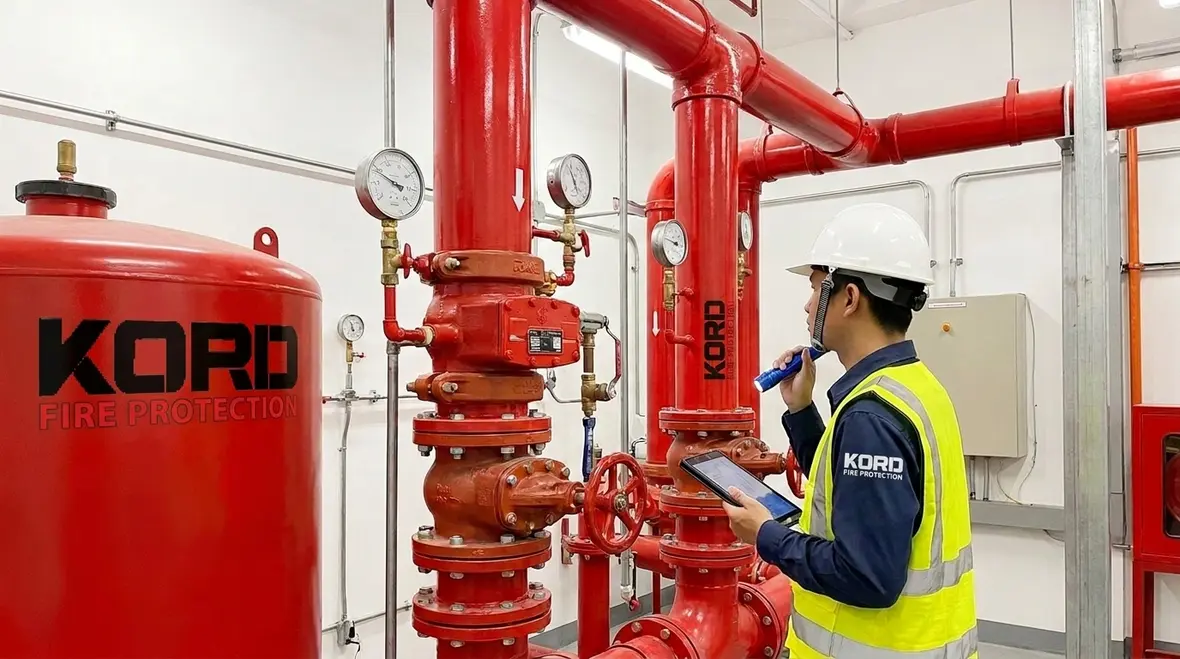
The best inspections are rarely dramatic. They are methodical. Teams review valve positions, tank condition, visible piping integrity, discharge hardware, gauges, and any evidence of leakage or tampering. They also confirm that signage and identification remain legible, because confusion during an incident is a terrible time to discover that a label faded into modern art. Small findings often reveal larger maintenance needs, which is exactly why routine inspection earns its keep.
Testing verifies performance, not just appearance
Inspection checks condition. Testing confirms performance. Therefore, NFPA 25 requires testing that evaluates whether the system actually produces foam at the required quality. This matters because foam performance relies on the proportion of foam concentrate and water, plus the functioning of pumps, proportioning devices, valves, and discharge components.
When testing occurs, it often includes checks tied to foam concentrate proportioning, system pressure, and flow conditions. Even small changes can affect expansion characteristics and drainage behavior, and that can change how the foam blanket behaves on the hazard surface. In other words, the foam must do more than “reach the area.” It must behave correctly once it lands.
Now, a quick joke that still respects safety: if foam systems were like sneakers, everyone would just “wear them once and see.” Fire protection does not work that way. Testing gives proof, not hope.

Why performance testing tells the truth
A clean-looking component can still underperform. That is why testing matters so much in foam applications. Proportioning can drift. Flow can change. Pressure can wander. And concentrate that appears fine in storage may not support the foam quality the hazard demands. Testing turns assumptions into evidence, which gives facility leaders something much better than optimism when they review system readiness.
Maintenance planning keeps the system consistent over time
NFPA 25 emphasizes that maintenance planning must be proactive. Accordingly, maintenance should address deterioration, part wear, and operational changes that accumulate between scheduled inspections and tests. This includes planning for component replacement, cleaning, calibration, and any corrective actions found during inspection or testing.
Good planning also accounts for the realities of Australian facilities. If production schedules shift, if warehouses expand, or if new fire hazards get introduced, the foam system may need adjustments in the configuration and practical coverage strategy. Meanwhile, facilities may also upgrade pumps, move piping, or change power sources, and each change can influence system behavior.
Kord Fire Protection can act as a vital partner by helping facilities build a maintenance plan that fits the site, not a generic template. That means clearer priorities, better coordination with shutdown windows, and documentation that supports compliance audits. A practical plan also helps budget decisions land earlier, which is a lot nicer than discovering an overdue replacement item when everyone is already under pressure.
Typical components and checks teams should not ignore
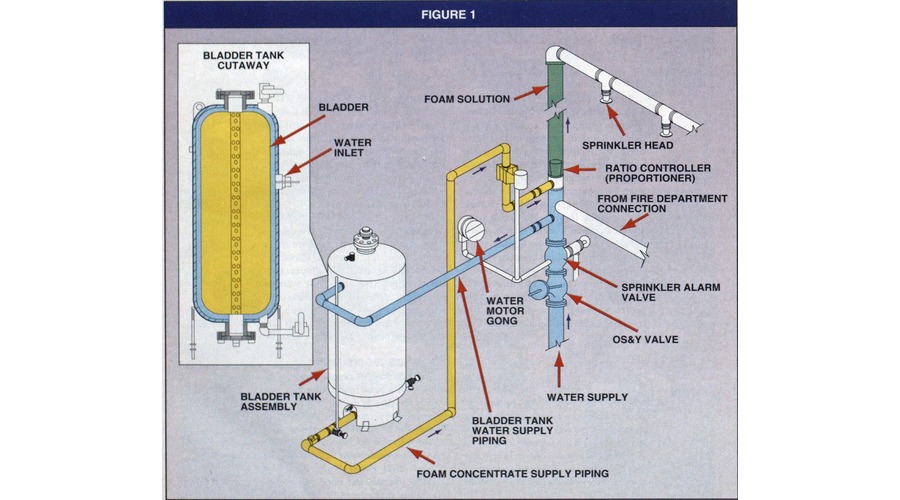
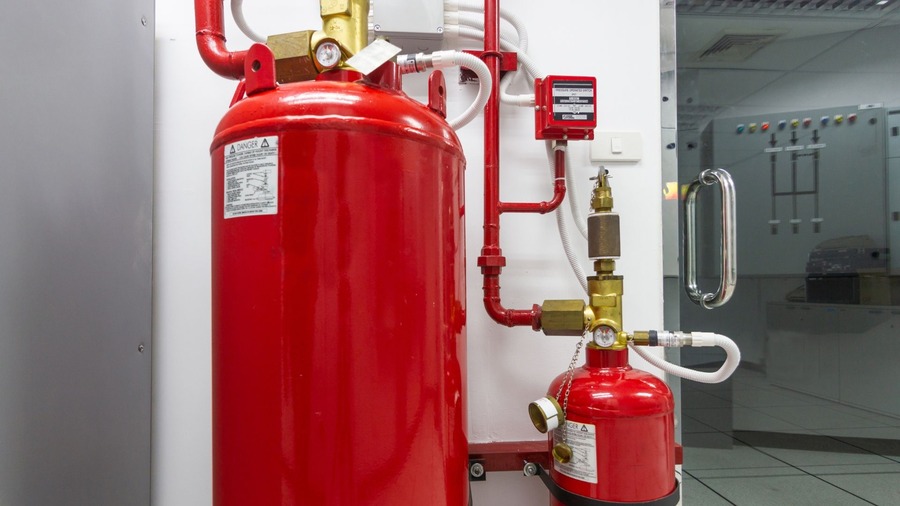
Foam systems involve multiple parts that must work together. As a result, crews should avoid “component-by-component thinking” and instead verify the whole chain from concentrate to discharge. Common areas include proportioning equipment, valves, pumps, and any control devices that influence foam delivery. Additionally, discharge devices and related piping need attention for blockage risk, corrosion, or damage.
Teams also should consider how the system stores and handles foam concentrate. Concentrate condition matters because it affects the foam’s ability to form and maintain a blanket. Over time, temperature swings and contamination can change concentrate performance. Therefore, maintenance planning should include steps to prevent and detect issues tied to concentrate quality.
When Kord Fire Protection supports the service job, it brings structured field experience that helps teams prioritize the checks most likely to affect performance, which keeps the facility focused on outcomes rather than long lists of low-value activity.
A whole-system mindset beats isolated checklists
Foam suppression performance depends on interaction. Tanks, concentrate, valves, piping, controls, and discharge devices all influence the result. If teams only confirm that each part exists, they miss the bigger question: will the full sequence perform correctly when the hazard appears? That is why integrated maintenance planning matters. It keeps the system from becoming a collection of individually acceptable parts that do not work together when the pressure is real.
Documentation, compliance, and the audit-ready approach
In Australia, facilities operate under strong compliance expectations. Consequently, NFPA 25 foam system inspection testing maintenance should produce documentation that is clear, traceable, and easy to review. Proper records show what technicians inspected, what tests they performed, the results, and what corrective actions occurred.
Additionally, recordkeeping helps facilities spot trends. If a component repeatedly fails a parameter, the facility can plan replacement earlier rather than reacting during emergencies. Also, good documentation supports coordination across stakeholders, such as operations teams, safety managers, and fire system contractors.
For example, Kord Fire Protection can help ensure documentation aligns with the service activity so the facility does not scramble after the fact. That is the difference between being ready for an audit and being ready for an explanation. And trust me, explanations are rarely anyone’s favorite pastime.
Scheduling and coordination across industrial, retail, and commercial sites
Different facility types face different constraints. Industrial sites may need shutdown planning around production peaks. Retail sites may prefer work during off hours to avoid disruption. Commercial facilities may juggle multi-tenant coordination. Therefore, successful NFPA 25 foam system inspection testing maintenance relies on scheduling that respects the site’s workflow and risk profile.
A practical approach includes confirming access needs, isolations or operational impacts, and any required equipment. Then, the service partner coordinates with facility leadership to align testing windows with minimal disruption. Furthermore, the plan should include follow-up actions, such as repairs, calibration updates, and retesting when required.
To make it easy to visualize how this coordination plays out, facilities can track a simple dual-column plan like this:
| Activity | Site Focus |
|---|---|
| Inspection | Readiness checks, visual condition, valve movement, environment factors |
| Testing | Foam proportioning, performance verification, pressure and flow conditions |
| Maintenance | Repairs, cleaning, calibration, parts replacement, concentrate considerations |
| Documentation | Audit-ready records, corrective actions, trend tracking |
Choosing a partner like Kord Fire Protection
Foam systems demand both technical skill and careful coordination. When facilities need NFPA 25 foam system inspection testing and maintenance support, Kord Fire Protection helps teams move from “we should” to “we proved it.” They support inspection, testing, and maintenance planning with service that fits real schedules, realistic access requirements, and audit-ready documentation. In short, they help facilities stay ready, not lucky.
FAQ
Conclusion
NFPA 25 §§ 11.1–11.4 gives a disciplined method for foam system inspection, testing, and maintenance planning. When facilities follow it, they protect people, assets, and operations with proof, not guesswork.
Kord Fire Protection can guide the process, align scheduling, and deliver clear documentation so your team stays audit-ready. If foam fire protection is on your compliance list, act now and book an assessment with Kord Fire Protection.

Join Our Newsletter!
Get the latest fire safety tips delivered straight to your inbox From our Newsletter.