
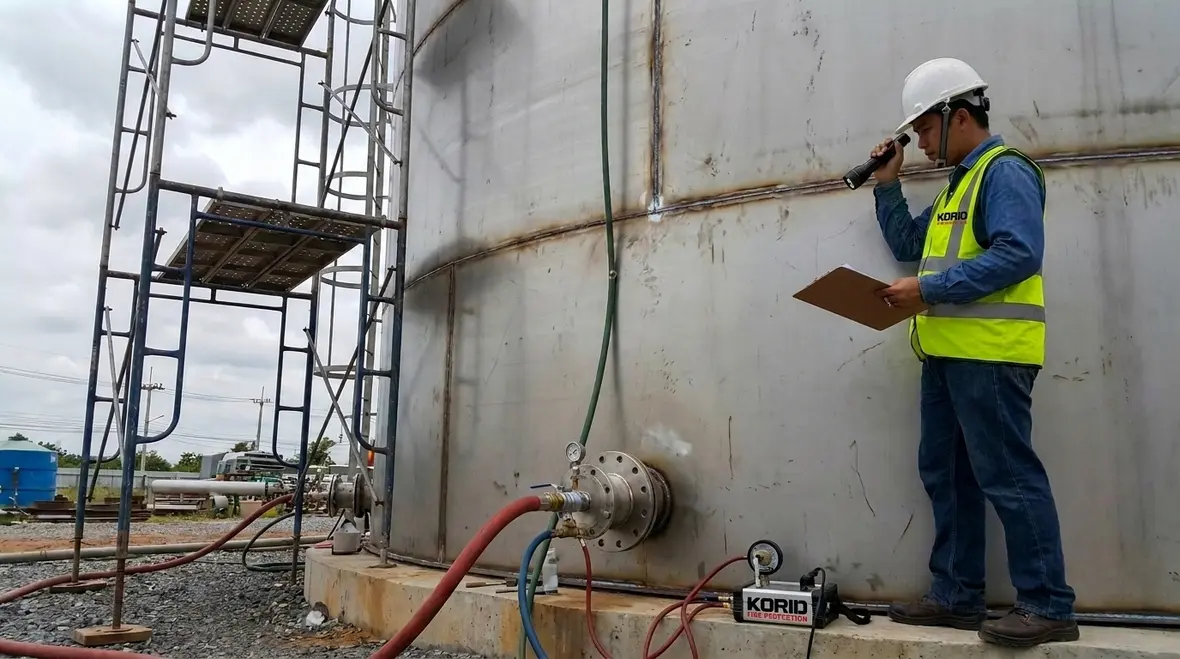
NFPA 22 Section 17.3: Acceptance Testing for Welded Steel Water Tanks
Quick Answer
NFPA 22 Section 17.3 establishes how welded steel water tanks get tested before being placed in service. The process verifies weld quality, structural integrity, leakage control, coating and lining readiness, and operational readiness of appurtenances. Proper documentation supports compliance, inspection, and long term reliability.
What welded steel water tank acceptance testing actually verifies
Welded steel water tank acceptance testing is not a single “pass or fail” event. NFPA 22 Section 17.3 drives a sequence of checks that confirm the tank can safely store water for fire protection service. In commercial and industrial facilities, this acceptance phase also protects operations by reducing the likelihood of delayed repairs after installation, occupancy, or system turnover. The process typically focuses on structural soundness, workmanship, watertightness, and the correct setup of associated components so the fire protection system can perform as designed.
From a practical compliance standpoint, many acceptance failures trace back to preventable field conditions: incomplete welding and improper heat treatment, poor fit up leading to lack of fusion, inadequate surface preparation before coating, or installation errors that compromise valves, vents, overflows, and level instrumentation.
For facilities planning post-turnover reliability, it also helps to connect tank acceptance with water storage tank inspection priorities so the system does not wait until the first maintenance cycle to discover what acceptance should have caught.
Scope and responsibilities under Section 17.3
NFPA 22 Section 17.3 addresses acceptance testing for welded steel water tanks used in fire protection applications. While installers often manage fabrication and initial installation checks, the acceptance testing requirements typically require a coordinated approach among the tank manufacturer, the installer, and the qualified inspection or testing organization selected by the owner.
Key responsibility themes include:
- Workmanship verification to confirm welding meets code and design requirements.
- Leakage and pressure integrity verification using procedures that match tank configuration and service conditions.
- Verification of appurtenances such as fill lines, drains, vents, level indicators, strainers, and manways.
- Documentation readiness so the owner can demonstrate compliance during AHJ review and internal audit.
For many commercial facilities, the compliance challenge is timing. Tanks often arrive on the project critical path, but acceptance testing requires access, controlled water supply, controlled cleaning and coating cure timelines, and clear authority for sign off. A structured plan prevents rework and helps keep turnover schedules intact.
Inspection and workmanship checks: where acceptance starts
Acceptance testing begins with confirming that the tank meets fabrication and construction quality expectations before any functional testing occurs. This stage reduces the risk of running a pressure or leakage test on a tank with hidden defects.
Weld condition, fit up, and visual acceptance
Before any water tightness verification, qualified personnel verify weld geometry and workmanship. Common problem areas include:
- Lack of fusion or incomplete penetration at joint transitions.
- Excessive undercutting that weakens the weld toe.
- Undetected surface porosity or slag inclusions.
- Incorrect joint alignment that forces stress during bolting or anchoring.
Even when weld inspection tests exist in fabrication, field acceptance typically includes a verification step that accounts for transport damage and installation impacts. If a tank has been moved, stacked, or jostled, small changes can affect seals and interfaces around manways and flanges.
Surface preparation and protective coating readiness
Steel tanks used for fire protection water often depend on coating systems and internal linings to control corrosion. Acceptance testing planning must include verification that:
- Surface preparation achieved the required cleanliness and profile.
- Coating or lining cured within the manufacturer specified window.
- Coated surfaces have no holidays, blisters, or damage from handling.
- Repairs follow approved procedures and are not improvised in the field.
For commercial and retail occupancies, coating defects often show up after water exposure. That makes early acceptance checks critical. If coating readiness fails, leakage or corrosion risk can escalate quickly because fire protection water tanks typically remain idle between inspections.
Functional acceptance testing: leakage and integrity verification
After workmanship and readiness checks, the tank undergoes acceptance testing methods intended to confirm integrity. The intent is to ensure the tank holds water and maintains safe operation under expected service conditions.
Leakage control and watertightness
Welded steel water tank acceptance testing typically includes procedures for verifying there are no unacceptable leaks at weld seams, seams, connections, and penetrations. Personnel focus on points most likely to leak:
- Longitudinal and circumferential weld joints.
- Manway closures and gasket seating surfaces.
- Pipe penetrations, nozzles, and welded couplings.
- Drain and overflow connections, including threaded or flanged joints.
A common operational issue occurs when penetrations are installed with misalignment. Even minor misalignment can stress a welded nozzle or distort a gasket seat. Acceptance testing detects the problem, but early controls prevent it.
Testing configuration and safe operation of appurtenances
Acceptance testing also verifies correct setup of tank appurtenances that influence performance during fire events. These often include:
- Fill and make up arrangements that maintain designed water level.
- Vents and air release mechanisms that prevent air binding or improper fill.
- Overflow, drain, and inspection provisions that keep the tank operationally manageable.
- Level indicators and controls that support system monitoring and refill strategies.
In practice, some facilities pass tank integrity checks but still fail acceptance due to incorrect venting, improperly piped overflow routing, or miscalibrated level devices. The owner experiences this during commissioning because the overall water supply strategy does not behave as designed.
Documentation, labeling, and turnover: the compliance multiplier
NFPA 22 acceptance requirements depend on documented evidence, not memory. A best practice is to compile a project specific acceptance packet that ties fabrication records and field verification results together for the AHJ and facility records.
A strong acceptance package generally includes:
- Tank fabrication and welding quality documentation, including inspection results.
- Coating and lining verification records, including cure and repair documentation.
- Acceptance test reports that clearly describe procedures, conditions, and results.
- As built drawings and revision history for penetrations and appurtenances.
- Operational check documentation for valves, vents, drains, and level monitoring.
Commercial facility teams benefit because the same documentation supports recurring maintenance and inspection cycles. It also reduces downtime when repairs become necessary. When maintenance personnel can trace exact weld locations and component configurations, they can isolate root cause faster and avoid repeated failures.
For an additional compliance and operational perspective on how NFPA 22 regulates water tanks and their fire protection role, review: how NFPA 22 regulates fire protection water tanks.
If your team is also tightening recordkeeping, it is worth reviewing test reports you must document for a water tank so acceptance paperwork does not start freelancing after turnover.
Common acceptance testing failure points in real projects
Many acceptance issues stem from repeatable causes. Facility owners, installers, and maintenance teams reduce risk when they anticipate these items before testing day.
1) Welding related defects that survive visual review
Weld issues such as lack of fusion or localized porosity may not always be obvious on sight. Acceptance testing detects leakage or integrity problems, but remediation costs rise sharply once the tank is installed and connected.
2) Coating damage and holiday defects after handling
Coating failures frequently come from transport and onsite movement. Even small coating breaks around edges, flanges, and penetrations can accelerate corrosion. This becomes an operational reliability issue, not just a cosmetic concern.
3) Appurtenance installation errors
Misrouted overflow lines, missing vent path continuity, or improperly seated manway components can cause abnormal fill and drain behavior. These issues can affect system readiness during demand.
4) Incomplete turnover for maintenance
When acceptance documentation, access paths, and maintenance requirements are not properly communicated, facilities may struggle during future inspections. That increases risk of noncompliant operation or delayed corrective actions.
Kord Fire Protection supports commercial, industrial, and retail owners by helping teams plan acceptance testing, validate compliance documentation, and establish maintenance workflows that align with ongoing NFPA 25 and operational readiness expectations. This reduces both project turnover risk and future corrosion or performance issues.
Frequently Asked Questions
Next step for owners and facility managers
Plan welded steel water tank acceptance testing as a compliance and operational risk control activity, not a paperwork exercise. Kord Fire Protection can help coordinate requirements, verify documentation readiness, and support ongoing maintenance planning so the tank performs when the fire system needs it most. Contact Kord Fire Protection to review your project scope, acceptance test schedule, and turnover package before testing begins.

Join Our Newsletter!
Get the latest fire safety tips delivered straight to your inbox From our Newsletter.



