
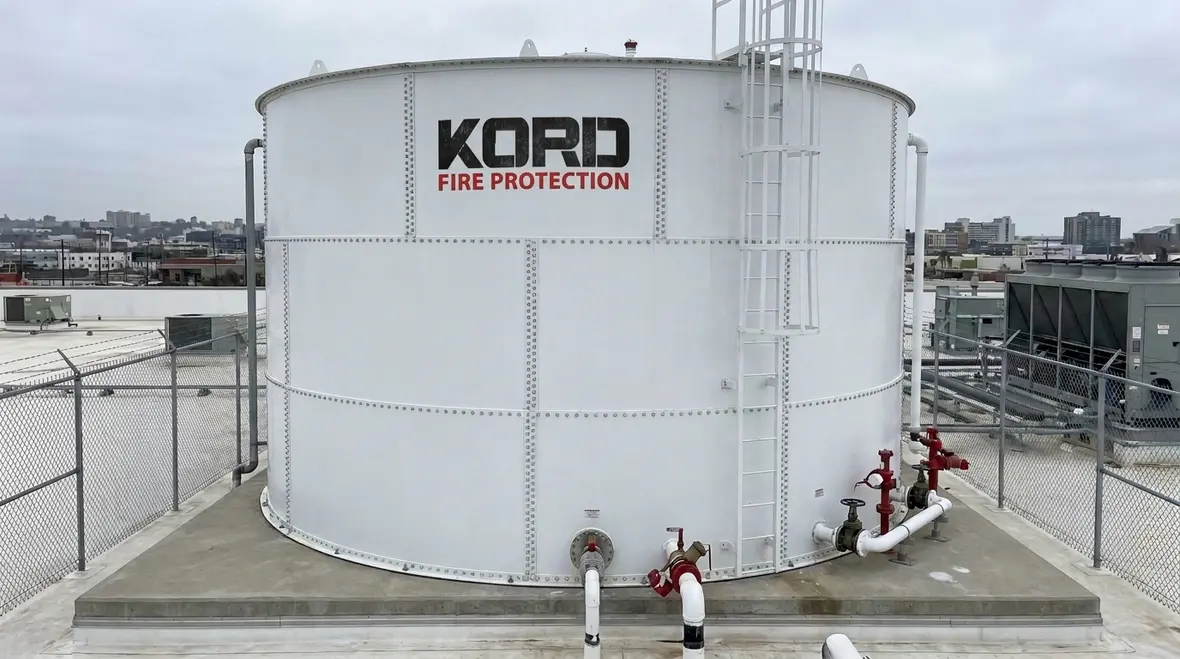
NFPA 22 Section 6.1: General Rules for Factory-Coated Bolted Carbon Steel Tanks
Quick Answer
NFPA 22 Section 6.1 sets baseline compliance expectations for factory-coated bolted carbon steel tanks used in fire protection water supply systems. It addresses coating integrity, tank assembly, installation practices, protection of the tank and fittings, and inspection readiness to prevent corrosion and performance loss.
For facilities that need a broader compliance framework around tank condition and recurring inspections, Kord Fire Protection also breaks down water storage tank inspection requirements and procedures in a related guide.
What NFPA 22 Section 6.1 actually controls for factory-coated bolted carbon steel tanks
NFPA 22 Section 6.1 provides the general rules that govern how factory-coated bolted carbon steel tanks must be installed, maintained, and kept in service so they can reliably store water for fire protection applications. These factory-coated bolted carbon steel tank requirements focus on ensuring the tank does not degrade in ways that reduce water availability, water quality, or operational reliability.
In commercial facilities, this section matters because tank failures often appear gradually. Corrosion at seams, coating damage from handling, loose or misaligned bolting, and internal coating breakdown can all turn a “pass on initial inspection” installation into a high-risk asset over time.
How the factory coating requirement shapes installation and inspection
Why coating integrity is treated as a safety-critical attribute
The coating on a factory-coated tank acts as the primary corrosion barrier in most environments. Section 6.1 general rules assume the tank coating remains continuous and properly bonded to the steel surface through transport, assembly, and installation. Operationally, the coating prevents pitting, seam creep corrosion, and corrosion under mechanical damage.
Common compliance challenges that trigger recurring findings
- Handling damage: Drops, dragging, or point impacts can chip coating at edges and near bolt holes, then corrosion begins at the smallest exposed steel area.
- Improper field touch-up: Coating repairs that use the wrong material, incorrect surface prep, or inadequate cure time can fail prematurely and undermine the factory coating system.
- Inadequate protection during assembly: Unprotected contact points during bolted joint alignment can create coating abrasion at seams.
- Drip and splash exposure: Water from roof equipment, washdown operations, or condensate can concentrate corrosion in predictable zones.
For commercial owners, these issues are often amplified by schedule pressure. Kord Fire Protection helps facilities plan acceptance testing, documentation packages, and inspection schedules so tank condition can be verified early and monitored consistently after turnover.
Bolted tank assembly rules that reduce leak and corrosion pathways
Bolting, joints, and gasket performance
Bolted carbon steel tanks depend on correct joint assembly to control leakage and to prevent moisture migration to steel surfaces at seams. Under the general rules of Section 6.1, attention to how the tank sections connect matters because seam corrosion can accelerate even when the tank appears intact externally.
In practice, the highest risk areas include:
- Joint lines and bolt holes: Coating damage and gasket compression loss can create microchannels for corrosive exposure.
- Flange or nozzle interfaces: Misalignment can load gaskets unevenly and cause premature weeping.
- Access cover interfaces: Improper seating can allow contamination and water stagnation that contributes to internal coating problems.
Field verification that supports ongoing compliance
Facilities should verify that bolted connections meet manufacturer requirements and that installation supports long-term stability. Kord Fire Protection typically coordinates compliance-ready documentation for tank acceptance, periodic inspections, and performance verification aligned with NFPA 22 expectations.
Protection of the tank, fittings, and appurtenances in the real world
External environment controls corrosion risk
Section 6.1 general rules operate with the understanding that the installed environment can defeat even a good coating system. Commercial, industrial, and retail properties often have factors that accelerate deterioration, including frequent washdown, salt air, rooftop condensate, chemical exposure, and vibration from adjacent equipment.
Common mitigation practices include:
- Physical shielding of vulnerable coating zones from vehicle contact and equipment impacts
- Drainage planning that prevents standing water around tank supports and joint areas
- Protection of exposed fittings from splash and direct weathering
Coordination with water supply system design
A tank does not operate in isolation. Its fittings and appurtenances connect to the fire protection water supply arrangement. If piping loads or installation geometry cause strain at nozzles or welded attachments, coating breakdown at interfaces can follow.
To strengthen facility-wide water supply compliance understanding, Kord Fire Protection recommends reviewing how NFPA 22 regulates fire protection water tanks: how NFPA 22 regulates fire protection water tanks.
Maintenance and inspection readiness: how to stay compliant after installation
Inspection focus areas tied to real failure points
NFPA 22 Section 6.1 general rules establish baseline expectations that support later inspection cycles. Maintenance performance depends on targeting the known failure points that show up in field service:
- Coating condition at seams: Look for blistering, cracking, or renewed discoloration near joint lines.
- Bolt joint stability: Monitor for signs of movement, loss of compression, or weeping patterns.
- Nozzle and fitting leakage: Address weeps quickly because leakage drives corrosion at the interface.
- Internal coating degradation indicators: Identify symptoms such as sediment accumulation, coating loss, or abnormal water appearance.
Documentation and operational records matter
For commercial facility standards, proof of due diligence matters as much as the corrective work itself. Kord Fire Protection helps facilities keep inspection and maintenance records organized, including condition observations, repairs, and verification outcomes that support NFPA 22 compliance and reduce inspection-day friction.
Frequently asked questions about factory-coated bolted carbon steel tank requirements
Conclusion and next step
NFPA 22 Section 6.1 focuses on practical, repeatable controls that keep factory-coated bolted carbon steel tanks dependable for fire protection water storage. If you want fewer corrective surprises and stronger inspection readiness, schedule a compliance-focused tank assessment with Kord Fire Protection. Kord Fire Protection supports acceptance documentation, condition verification, maintenance planning, and recurring inspection support tailored to your facility’s risk profile and operating environment.

Join Our Newsletter!
Get the latest fire safety tips delivered straight to your inbox From our Newsletter.



