
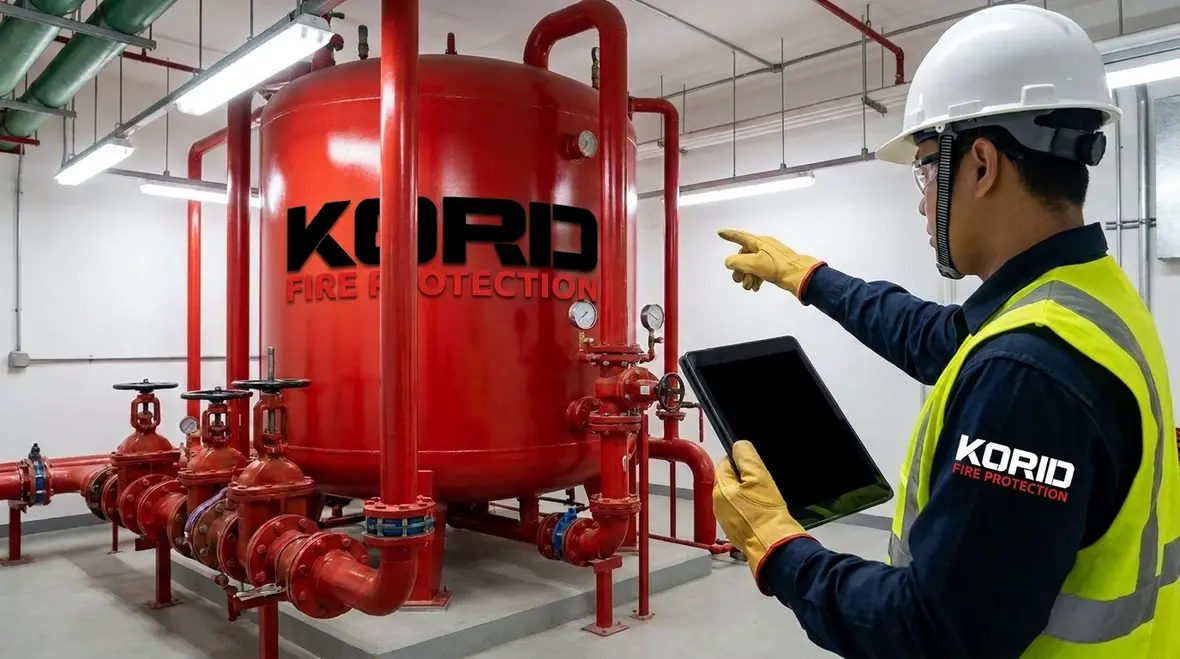
NFPA 22 Section 2.2: The NFPA Standards the Water Tank Code Relies On
Quick Answer: NFPA 22 Section 2.2 points to specific NFPA standards that govern how fire protection water tank systems must be designed, protected, installed, inspected, and maintained. These references shape engineering decisions and drive practical compliance requirements for commercial facilities.
Facilities that need a broader inspection, testing, and maintenance framework can also review Kord Fire Protection’s inspection, testing, and maintenance approach to see how ongoing readiness is managed across connected fire protection systems.
Why Section 2.2 Matters for Water Tank Compliance
NFPA 22 does not exist in isolation. Section 2.2 clarifies the external NFPA standards that the water tank system code relies on to define required performance, construction details, and ongoing readiness. For commercial, industrial, and retail facilities, this reference structure directly impacts compliance outcomes during plan review, acceptance testing, and annual or periodic inspections.
In practice, NFPA 22 Section 2.2 becomes a “crosswalk” between the water tank installation code and other NFPA documents. The result is a system-level approach: the tank, fire pumps or water supplies, valves, alarms, venting, corrosion protection, maintenance access, and functional testing do not stand alone. They must align with the referenced NFPA standards cited in NFPA 22.
What NFPA standards cited in NFPA 22 typically govern
Section 2.2 requires users to apply referenced NFPA standards that cover critical life safety and system reliability topics. While the exact cited documents depend on the edition and the configuration of the system, facility teams should expect these standards to address key technical areas.
1) System design criteria and reliability requirements
Referenced standards commonly influence design method decisions that affect how the water tank will perform during a fire event. This includes minimum water supply behavior, delivery expectations, and the conditions that must be assumed during system operation.
2) Components and protection of the water tank system
Tank systems require more than storage volume. The referenced standards typically define requirements for accessories such as level indicators, fill arrangements, alarm interfaces, venting provisions, and protection against operational failure modes that can compromise water availability.
3) Installation quality, acceptance, and labeling
Compliance failures often trace back to installation gaps: incorrect component selection, improper placement of devices, missing identification, or installation practices that prevent effective inspection and testing. The NFPA standards cited in NFPA 22 often establish expectations that support acceptance testing and documentation requirements.
4) Inspection, testing, and maintenance readiness
The most common commercial compliance challenge does not occur during first commissioning. It occurs during ongoing maintenance. Section 2.2 makes it harder to argue that “the system looks fine.” Referenced NFPA requirements drive scheduled inspection tasks, functional testing frequencies, and recordkeeping expectations.
How the referenced standards affect daily operations and maintenance
Commercial facilities often treat water tank systems as passive assets. NFPA 22 Section 2.2 reverses that assumption by requiring that multiple NFPA-linked requirements be met for the system to remain “ready.” Operations, maintenance, and fire protection personnel need to treat this as an integrated program.
Maintenance access and operational testing
Many compliance gaps surface when technicians cannot safely access the system components required by the code and its referenced standards. If access is obstructed by ceilings, storage, or unsafe work platforms, periodic inspection and functional testing become inconsistent. Kord Fire Protection commonly helps facilities map the required access points and coordinate testing routes to reduce downtime during scheduled activities.
Water quality, corrosion control, and contamination risk
Water tanks can develop corrosion, sediment accumulation, and bio growth that impact reliability. While NFPA 22 focuses on the fire protection water tank arrangement, Section 2.2’s referenced standards further support maintenance expectations that reduce the likelihood of failures such as valve sticking, clogged strainers, or impaired flow conditions.
Valve positions, alarms, and system interfaces
Another real-world failure point involves system interfaces and the human factors around them. Valves may be moved during construction, tenant fit-outs, or utility work. Alarm sensors, level monitoring, and supervisory signals must remain properly connected and operational. Referenced NFPA standards help define what “operational” means for these interfaces and how testing verifies functionality.
Common compliance failure points during inspections
Field experience shows that inspection outcomes often hinge on a handful of recurring issues. Facilities can reduce risk by targeting these before the next authority having jurisdiction review.
Documentation gaps
Even when the physical system is installed correctly, incomplete records create compliance friction. Facilities frequently miss test reports, maintenance logs, or component change documentation required to show continued adherence to the referenced NFPA requirements within NFPA 22.
Component substitutions and “equivalent” confusion
Contractors sometimes replace components during maintenance with items that appear similar but do not match the referenced NFPA expectations. That can affect reliability, inspection access, or compatibility with supervisory and alarm functions. A controlled replacement process that aligns with NFPA standards cited in NFPA 22 helps avoid repeat findings.
Delayed correction of minor defects
Small defects can become operational failures. A minor leak can lead to loss of tank water availability. A partially blocked vent can affect tank performance. A neglected indicator can delay detection. Section 2.2 encourages system readiness, so facilities should correct defects promptly and verify through follow-up testing.
Best-practice compliance workflow for commercial facilities
A compliant program aligns design intent, inspection evidence, and maintenance execution. The workflow below supports facilities that must satisfy plan review, inspection cycles, and tenant turnover in industrial and retail environments.
-
Confirm the applicable edition and configuration. NFPA 22 edition alignment matters because referenced documents can change. The system configuration, including whether the tank supports specific fire protection needs, influences the referenced requirements.
-
Build a maintenance task map tied to Section 2.2 references. Maintenance technicians need a task list that references what must be inspected, tested, and recorded, not just what “looks fine.”
-
Validate access and safety for inspections. Ensure that required components can be inspected and tested without unsafe workarounds that reduce frequency or thoroughness.
-
Coordinate acceptance or periodic tests with operational constraints. Commercial operations require scheduling that minimizes disruption while still completing required functional verification.
-
Maintain traceable records. Store reports, calibration or verification documentation, and any configuration changes so compliance reviewers see a consistent history tied to NFPA standards cited in NFPA 22.
For additional context on how NFPA 22 regulates these systems and what facilities should plan for, refer to: how NFPA 22 regulates fire protection water tanks.
How Kord Fire Protection supports Section 2.2 readiness
Kord Fire Protection helps commercial facilities translate code intent into repeatable field execution. Because Section 2.2 ties NFPA 22 to additional NFPA standards, compliance requires more than a basic inspection. It requires a structured approach to verification, maintenance planning, and documentation that survives scrutiny during authority having jurisdiction reviews.
Kord Fire Protection supports facilities with ongoing testing and maintenance programs designed to verify tank system readiness, identify deterioration early, and document corrective actions and retesting. This reduces the risk of recurring findings and protects continuity across maintenance cycles, renovations, and operational changes.
Frequently Asked Questions
Take action now
Commercial facilities should not wait for a surprise inspection to understand how NFPA 22 Section 2.2 and the NFPA standards cited in NFPA 22 apply to their exact tank configuration. Kord Fire Protection can help confirm readiness, strengthen maintenance workflows, and produce clear test and maintenance documentation. Contact Kord Fire Protection to review your system, prioritize gap closures, and schedule verification before your next compliance cycle.

Join Our Newsletter!
Get the latest fire safety tips delivered straight to your inbox From our Newsletter.



