
NFPA 22 Section 12.4: Anchorage Requirements for Water Tanks and Towers
Quick Answer
NFPA 22 Section 12.4 requires water tank and tower anchorage systems that resist uplift, lateral movement, and load transfer failures under fire protection service conditions. Compliance focuses on structural attachment, stability, corrosion protection, and documented installation and inspection practices.
Facilities managing broader inspection and maintenance demands can also explore fire protection services in Southern California for support that fits naturally alongside water supply system inspections, corrective actions, and compliance scheduling.
Why anchorage in NFPA 22 matters for real facilities
Anchorage is not a “set it and forget it” detail. For commercial, industrial, and retail facilities that rely on water supply tanks and towers for fire protection, anchorage determines whether the system maintains alignment, pressure stability, and safe water delivery during both normal operations and abnormal events. In practice, water tank and tower anchorage requirements NFPA 22 are enforced through installation design intent, verification of attachment performance, and ongoing inspection and maintenance of anchoring components exposed to corrosion, vibration, and movement over time.
When anchorage weakens, the first signs often appear as foundation cracking, abnormal settlement, misaligned piping connections, or changes in tower plumb and fill line behavior. These issues can compromise sprinkler and standpipe performance even when pumps are correctly sized.
What Section 12.4 requires: anchorage performance, not just attachment
NFPA 22 Section 12.4 addresses anchorage methods that prevent harmful displacement of water tanks and towers. The intent is straightforward: anchor the tank or tower to a support system so it remains stable under relevant loads and does not create unsafe conditions for firefighters or building occupants. “Stable” includes resisting uplift, lateral forces, and dynamic effects associated with construction tolerances, water movement, and operational cycling.
From a compliance standpoint, the anchorage system must be engineered and installed so that load transfer occurs through intended structural members, not through thin shells, brittle embeds, or improvised field repairs. A common failure point is reliance on mechanical friction or minimal bearing without verifying how loads flow into the structural foundation.
Load cases anchorage systems must address
Anchorage design is typically expected to account for forces that can drive movement. In the field, those forces often come from:
- Uplift forces from buoyancy or water tank pressure fluctuations where applicable, especially when the supporting structure is impacted by seasonal conditions.
- Lateral forces from wind exposure and any incidental vibration from nearby equipment.
- Settlement and differential movement between the tank base, tower structure, and the foundation system.
- Operational cycling effects that can loosen connections over time if installation tolerances are not controlled.
Common compliance challenges during installation and acceptance
Section 12.4 compliance problems usually show up at handoff between the installer, the engineer of record, and the fire protection team responsible for the system’s ongoing performance. Commercial facilities often face schedule pressure, and that increases the risk of missed anchorage verification steps.
1) Inadequate foundation interface and embed verification
The anchors must be placed and secured with correct embed depth, spacing, and edge distance. In real projects, anchors can shift due to rebar congestion, formwork movement, or last minute layout changes. If verification documentation is incomplete, the facility can inherit a latent nonconformance that becomes visible only after settlement or corrosion.
2) Improper connection details at the tank or tower base
Anchorage failures frequently originate at the interface between the tank shell or tower base and the anchoring hardware. Examples include missing washers, incorrect torque application, wrong material pairing, or gasket compression issues that reduce the effectiveness of the mechanical interface.
3) Corrosion and water exposure at anchorage points
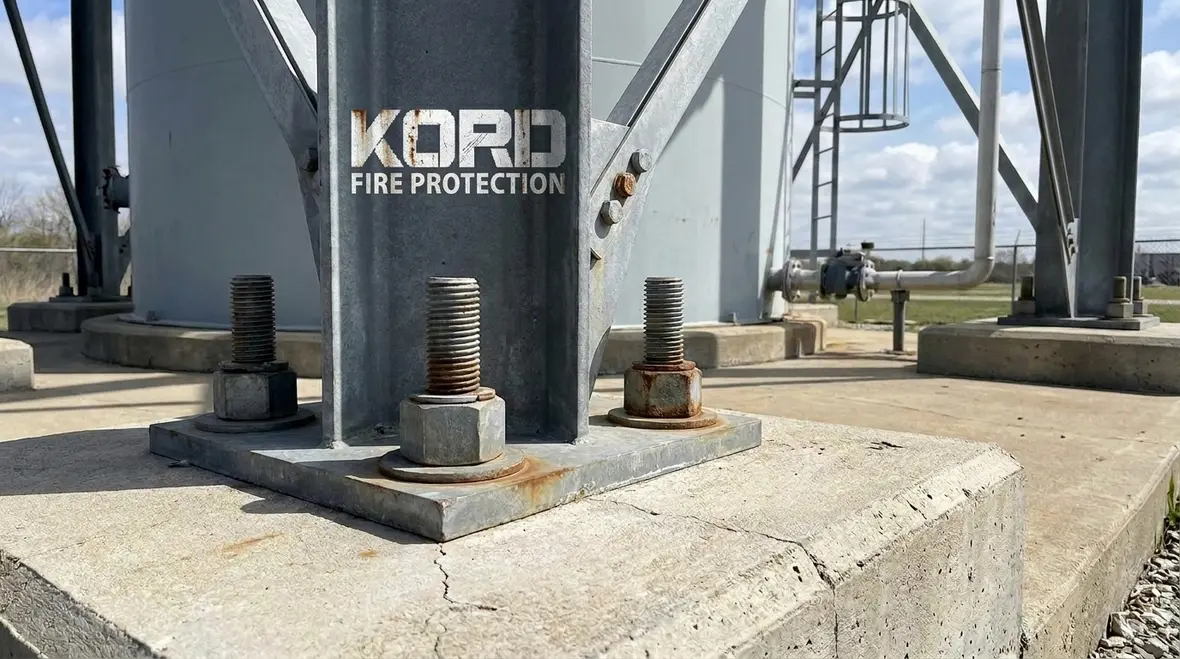
Anchorage components can be exposed to splash, humidity, and water seepage. Corrosion undermines both strength and stiffness. Even when corrosion does not cause immediate failure, it can loosen fasteners and degrade protective coatings.
Practical maintenance programs focus on coating integrity, drainage pathways, and visual assessment of anchor hardware. Kord Fire Protection supports commercial sites by building recurring inspection routes that specifically target anchorage and base interface conditions for early detection.
Inspection and maintenance: how facilities verify ongoing anchorage integrity
Meeting NFPA 22 Section 12.4 is not limited to installation. Commercial facilities should treat anchorage integrity as a documented, recurring condition that ties into broader water supply reliability.
What inspectors typically look for during walkdowns
Anchorage inspections should focus on evidence of movement, deterioration, and connection distress. Facilities commonly confirm:
- Visible cracking or spalling around anchor bases and foundation interfaces.
- Changes in plumb or alignment at towers and supporting structures.
- Loosening indicators at accessible fasteners, including loss of protective covers.
- Corrosion at anchor hardware, welds, and metal-to-metal interfaces.
- Signs of water leakage or persistent moisture that accelerates coating failure.
Operational handoffs and documentation that prevent repeat findings
Many facilities struggle because anchorage issues get addressed with temporary fixes that do not restore engineered performance. A robust compliance process requires:
- Field verification notes that match the design intent and as built conditions.
- Photographic documentation of base interfaces, anchor hardware, and protective coatings.
- Corrective action tracking with closure criteria tied to stability and corrosion mitigation.
Kord Fire Protection helps commercial and industrial clients standardize these workflows so that recurring inspections support real corrective actions, not just administrative completion.
Working with NFPA 22 across the broader water supply system
Anchorage performance influences the operation of the entire fire protection water supply system. Facilities should connect anchorage maintenance to system-level reliability, including water tank function, piping alignment, and pump performance. For deeper context on how NFPA 22 regulates fire protection water tanks, refer to how NFPA 22 regulates fire protection water tanks.
When anchorage conditions change, they can alter the way tanks sit, how inlet and outlet piping connects, and how water delivery stabilizes during system demand. That makes anchorage an early warning indicator for broader maintenance needs.
Frequently Asked Questions
Get anchorage compliance support before it becomes a shutdown issue
For commercial sites, anchorage problems often start quietly and become expensive when stability is compromised. Kord Fire Protection can help you review installation documentation, schedule targeted inspections, and coordinate corrective actions that align with NFPA 22 expectations and your facility standards. Contact Kord Fire Protection today to strengthen water tank and tower anchorage integrity and reduce compliance risk.

Join Our Newsletter!
Get the latest fire safety tips delivered straight to your inbox From our Newsletter.



