
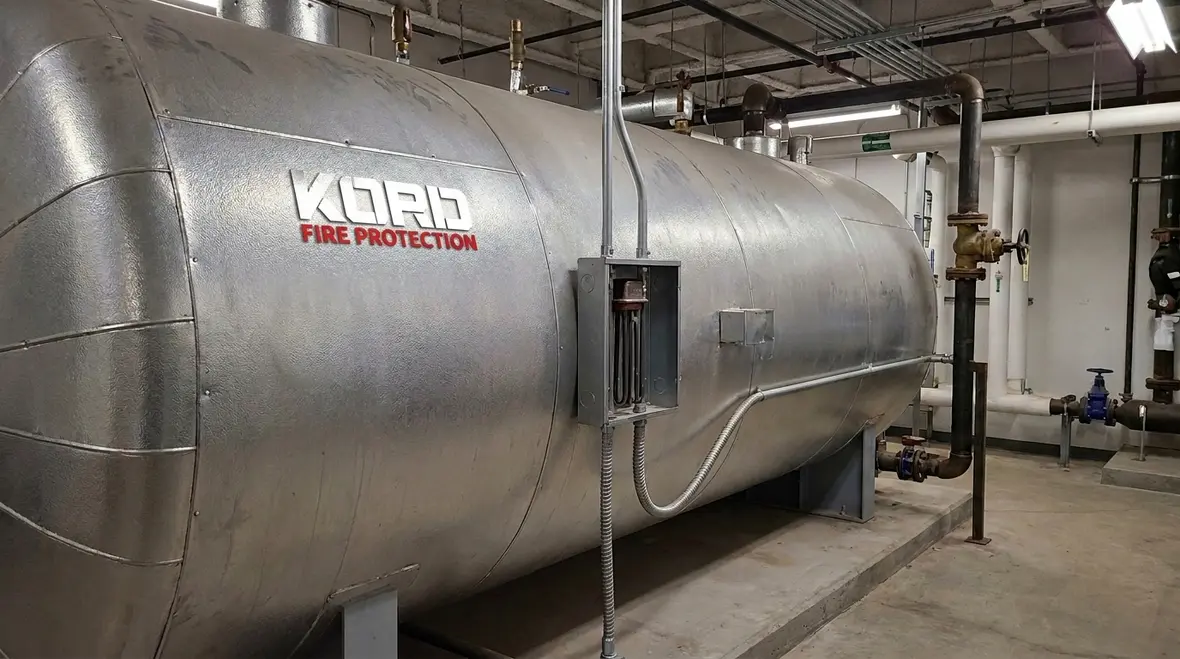
NFPA 22 Section 16.4: Insulation Requirements for Heated Water Tanks
Quick Answer
NFPA 22 Section 16.4 focuses on how heated water tanks must be insulated to support safe operation, control fire risk, and maintain performance. The section addresses material selection, installation practices, and inspection readiness for commercial systems subject to recurring service and code enforcement.
NFPA 22 is a primary reference for fire protection water tank systems used across commercial, industrial, and retail facilities. Within that standard, the topic of water tank insulation requirements NFPA 22 becomes critical when tanks must remain reliable in cold conditions or maintain temperature for operational intent. Section 16.4 ties insulation practices to safety, inspectability, and long term integrity.
Facilities reviewing broader code aligned maintenance planning can also explore NFPA compliant fire sprinkler services for commercial properties as part of a more complete fire protection readiness strategy.
Why NFPA 22 Insulation Requirements Matter in Real Facilities
Heated water tanks introduce unique risks compared to non heated storage. Heat sources, insulation layers, penetrations, and maintenance activities create more opportunities for hidden defects. Facilities also face frequent operational pressure: insulation is added to protect temperature retention, but poor installation or mismatched materials can create elevated heating surfaces, concealed deterioration, or difficulty verifying system condition during inspections.
For compliance teams, the goal is not just “insulation installed.” NFPA 22 expectations support consistent performance, controlled combustibility risk, and the ability for inspectors and technicians to access and evaluate components during routine maintenance. This is where commercial service workflows must align with code language and the installed system configuration.
What NFPA 22 Section 16.4 Covers for Heated Water Tanks
NFPA 22 Section 16.4 addresses insulation for heated water tanks as part of the broader design and installation rules that protect system reliability. In practice, the section influences four compliance checkpoints:
- Insulation selection: Materials must be appropriate for the service conditions and installed arrangement.
- Installation method: Insulation systems must be installed in a controlled manner that preserves safe spacing, coverage, and thermal effectiveness.
- Heat source integration: Insulation must not interfere with heating elements, controls, or required clearances around components.
- Ongoing inspectability: Insulation must not prevent detection of deterioration, leaks, or overheating hazards during routine inspection and testing.
Because heated tanks typically include electrical immersion heaters, heat tracing, or similar components, insulation interfaces require careful detailing. A frequent compliance problem in facilities comes from “finish work” decisions made after original commissioning, including wrapping changes, replacement insulation that differs from the original material specification, or adding cladding without documenting original clearances and service access points.
Key Technical Considerations During Design and Installation
1) Material compatibility and thermal performance
Insulation for heated tanks must maintain stable thermal performance over time. Materials degrade when exposed to heat cycling, moisture intrusion, and mechanical disturbances. When insulation loses integrity, facilities may see temperature control problems that lead to more frequent heating cycles. Those cycles can increase surface temperatures at exposed components and elevate the likelihood of unsafe conditions.
From an inspection perspective, degraded insulation often reveals itself through:
- Localized discoloration or scorching near heater interfaces
- Moisture related swelling, sagging, or insulation detachment
- Gaps created by settlement, vibration, or rework
2) Heat source interface management
Heated water tanks require insulation detailing that respects heating element placement and control components. NFPA 22 expectations translate into practical requirements such as maintaining the integrity of heater terminations, avoiding insulation contact that blocks required airflow or increases operating temperatures, and ensuring that control sensors remain functional and accessible.
In commercial environments, maintenance crews sometimes rewrap or replace jacket sections without understanding how temperature sensors or heater leads were routed. That approach can create failure points that are difficult to detect because the underlying issue remains concealed inside the insulation system.
3) Penetrations, closures, and water tightness
Any penetration through insulation, including access panels, piping connections, drain points, and sensor conduits, increases the risk of concealed leak pathways. Moisture intrusion can compromise insulation performance and accelerate corrosion. It also makes it harder to confirm that the tank and associated components remain in safe operating condition.
Strong compliance practice requires documented sealing methods and inspection access plans. Insulation that cannot be evaluated around penetrations typically delays detection of deterioration and increases the chance of repeat repairs.
How Insulation Failures Create Fire Safety Risks
Even when insulation improves thermal retention, failure modes can create hazards. Insulation systems around heated tanks can indirectly influence ignition potential, heat transfer to surrounding surfaces, and maintenance readiness. The most common failure points in the field include:
- Improper material choice or undocumented substitutions during repairs that alter combustibility characteristics.
- Incomplete coverage that leaves heat sources partially exposed or creates hotspots.
- Moisture and condensation buildup that degrades insulation and supports corrosion in concealed areas.
- Blocked service access that prevents timely evaluation of heater connections, temperature controls, and tank condition.
- Air gaps and voids that change heat flow and lead to unexpected surface temperatures.
Commercial fire safety teams typically address these risks through structured inspection routines, documented maintenance, and corrective actions that restore the insulation system to its intended configuration.
Inspection, Testing, and Maintenance: What to Expect
Facilities that manage heated water tanks must plan insulation compliance activities alongside operational testing. Insulation is not a one time “install and forget” component. Kord Fire Protection supports ongoing compliance by coordinating inspection and maintenance workflows that reflect how these systems operate in real service.
In practical terms, inspection and maintenance programs often include:
- Verification of insulation integrity at heater interfaces, access panels, and penetration points.
- Documentation of any insulation repairs to ensure replacements match original design intent.
- Thermal and control checks to confirm the heating system maintains setpoints without abnormal cycling.
- Condition assessment of jacketing and supports to identify sagging, separation, or mechanical damage.
For teams tasked with broader NFPA 22 compliance, it also helps to understand how the standard regulates fire protection water tanks overall. See how NFPA 22 regulates fire protection water tanks for context on system level compliance considerations that influence insulation decisions.
Common Compliance Challenges in Commercial and Industrial Settings
Insulation compliance for heated tanks regularly fails not because teams ignore NFPA 22, but because the installed system evolves. Changes occur through tenant turnover, retrofit scope, contractor overlap, and deferred maintenance. The following challenges show up repeatedly:
- Renovation induced insulation replacement using materials not documented during original commissioning.
- Access conflicts where jackets are rebuilt to look continuous, but heater and control serviceability is reduced.
- Omitted maintenance records that prevent verification of what insulation was installed, when, and under what specification.
- Moisture intrusion due to imperfect sealing at penetrations that are difficult to inspect without partial removal.
Kord Fire Protection helps facilities reduce these gaps by supporting code aligned inspection and maintenance execution, helping teams maintain serviceable insulation configurations and sustain ongoing compliance readiness.
Frequently Asked Questions
Call to Action
Review your heated water tank insulation details now, including heater interfaces, penetrations, and access panels, and confirm repair materials match the original system intent. For commercial facilities preparing for inspections or responding to recurring temperature control issues, enlist Kord Fire Protection to support ongoing NFPA 22 compliance through inspection, documentation, and corrective maintenance. Schedule a compliance focused service visit to prevent hidden deterioration from becoming a recurring failure point.

Join Our Newsletter!
Get the latest fire safety tips delivered straight to your inbox From our Newsletter.



