NFPA 10 Sections 2.2 2.3 nfpa on fire extinguishers Guide
Quick Answer
NFPA 10 Section 2.2 and 2.3 point readers to the standards and outside documents that support safe fire extinguisher work. For industrial, retail, and commercial sites, this means better compliance, safer upkeep, and fewer surprises during inspections. Kord Fire Protection can help turn those rules into simple, reliable action with its fire extinguisher service and certification support, while their related guide on NFPA 10 portable fire extinguisher guidelines adds useful context for teams that want the bigger picture.
For many teams, nfpa on fire extinguishers sounds like one more thick stack of rules on an already crowded desk. Still, NFPA 10 is the backbone for portable extinguisher care, and Sections 2.2 and 2.3 show which documents matter when the job moves from theory to real site work. That matters in warehouses, shopping centres, factories, and office towers, where small gaps in fire safety can become big headaches fast. And yes, fire safety paperwork may not have Hollywood drama, but it does have consequences.
These sections do more than list names. They help users find the right guidance for installation, inspection, testing, labeling, and service. As a result, facility teams can align local practices with widely recognized fire safety direction, while keeping operations smooth and audits less painful. When the referenced documents are understood properly, teams spend less time guessing and more time applying a process that actually holds up when an inspector starts asking questions.

What NFPA 10 Sections 2.2 and 2.3 cover
Section 2.2 points to referenced NFPA publications. Section 2.3 points to outside documents that support the standard. In plain language, both sections tell the user what other material helps explain, support, or complete the extinguisher work.
This matters because nfpa on fire extinguishers does not live in a vacuum. A site does not just hang a unit on the wall and hope for the best, like a movie prop that magically solves the plot. Instead, teams need matched guidance for extinguisher types, servicing methods, hazard level, and inspection records. Therefore, these references help reduce guesswork and support more consistent service.
Why referenced documents matter more than they first appear
A lot of people treat referenced documents like fine print. That is a mistake. In practice, these references act like the support beams behind the visible wall. The main standard sets expectations, but the linked publications often explain methods, definitions, tests, and related conditions that make the work defensible. If a maintenance program looks tidy on paper but does not line up with the referenced guidance, it can unravel quickly during review.
That is especially true when a facility has more than one hazard type. A clean office floor, a storage mezzanine, an electrical room, and a loading bay can each call for slightly different extinguisher thinking. The references behind Sections 2.2 and 2.3 help teams avoid a lazy copy and paste approach. Fire safety has little patience for copy and paste.
Key NFPA publications that support extinguisher compliance
Section 2.2 often directs users to NFPA documents that connect closely with portable fire protection. These may include standards tied to fire hazards, suppression systems, and maintenance practices that affect how extinguisher programs run.
- selection of the correct extinguisher for the risk
- placement based on hazard and travel distance
- service records and inspection frequency
- coordination with broader fire protection systems
- training needs for staff who use or inspect extinguishers
Because different sites carry different risks, these publications help set a stronger base. A retail store, a food plant, and a logistics hub do not face the same fire load, so one size fits all would be a poor plan, and fire safety rarely applauds poor planning.
How these publications support day to day decisions
The value of referenced NFPA material is not limited to annual reviews or formal audits. It shows up in daily decisions. A technician may need to confirm whether a particular extinguisher is suitable for the hazard. A manager may need to decide whether mounting, visibility, or spacing needs to change after a floor reconfiguration. A contractor may need to document service in a way that is easy to trace later. Referenced NFPA guidance makes those calls less subjective and far easier to defend.
It also helps different people work from the same playbook. That matters because extinguisher compliance often touches operations staff, safety leads, technicians, contractors, and outside inspectors. When each person is using a common framework, the result is a program that feels less improvised and more controlled.

How non NFPA publications support real site work
Section 2.3 is important because it brings in non NFPA publications that may affect how extinguishers are selected, serviced, or documented. These documents can come from other standards bodies, technical guides, testing methods, or safety rules used in the field.
For businesses trying to balance national guidance with local enforcement, this is where the standard becomes much more practical. Real facilities do not operate inside a neat little bubble where only one document matters. They deal with authority requirements, insurer expectations, internal policies, site conditions, and equipment specific instructions. Therefore, a strong extinguisher program often relies on both NFPA direction and other applicable documents that shape real world compliance.
Where outside references help the most
Outside references become especially useful when a site has unusual risks, specialized equipment, or documentation requirements that go beyond the obvious basics. Think high value electrical equipment, workshop processes, storage layouts with awkward access, or operations that require very specific staff procedures. In those situations, outside publications can fill in practical details that the main standard alone may not spell out line by line.
They also help teams justify why a certain choice was made. That could mean the selection of a unit, a testing method, the way service records are organized, or how a maintenance action is documented after a discharge or fault. When there is a paper trail anchored to recognized references, the site is in a much stronger position than one that relies on memory, habit, or the famous industry phrase, “that is how we have always done it.”
| Section 2.2 NFPA references | Section 2.3 non NFPA references |
| Support core extinguisher requirements | Support outside standards and test methods |
| Help guide equipment choice and service | Help with local codes, manuals, and technical data |
| Strengthen consistency across sites | Support field decisions and compliance records |
| Link extinguisher work to broader fire safety systems | Help teams apply practical, site based guidance |
Why this matters for industrial and commercial sites
Facility managers deal with mixed buildings, mixed hazards, and mixed expectations. A warehouse may need fast access and clear spacing. Meanwhile, a retail centre may need strong public area coverage and clean documentation. In addition, a manufacturing site may need tighter control over service intervals and risk zones.
That is where nfpa on fire extinguishers becomes useful beyond the page. It gives teams a clear structure for managing risk, training people, and proving service history. As a result, inspections become more predictable, and safety teams spend less time chasing paperwork and more time preventing trouble.
The operational payoff of getting it right
A strong extinguisher program does more than satisfy a standard. It removes friction. Staff know what is expected. Service records are easier to find. Equipment is easier to verify. Audits become less dramatic. Even small improvements in consistency can have a big effect across a large site or multi site portfolio. Instead of scrambling every time an inspection comes up, teams can work from a routine that already makes sense.
There is also a risk reduction benefit that does not always show up in a spreadsheet. When extinguishers are properly selected, visible, maintained, and documented, the odds of confusion during an incident go down. In an emergency, people do not want mystery equipment and vague records. They want confidence, clarity, and gear that works.

How Kord Fire Protection adds value to the service job
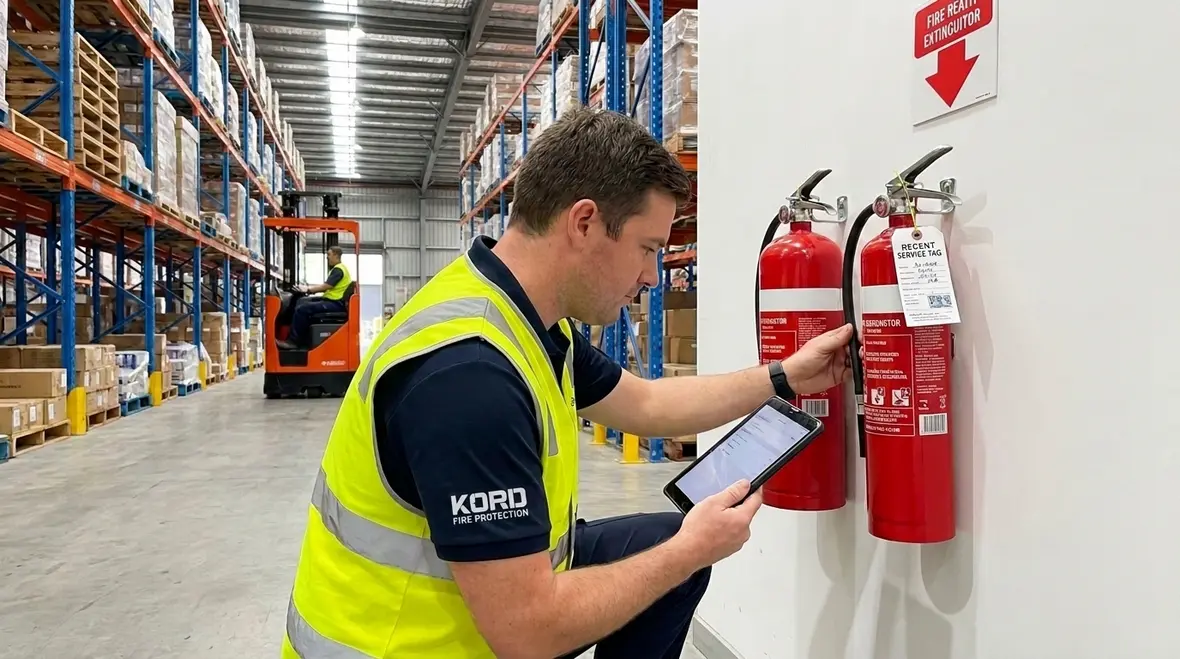
Kord Fire Protection can become a vital partner by turning standards into practical action. Instead of leaving teams to sort through dense references, Kord Fire Protection can help with inspection, testing, maintenance, tagging, and compliance support tailored to industrial, retail, and commercial settings.
More importantly, Kord Fire Protection can help sites bridge the gap between standard language and real world needs. That includes checking extinguisher placement, confirming the right unit for the risk, supporting record keeping, and helping teams stay ready for audits. In short, they do the hard work while the business keeps moving. Not bad for a job that often gets noticed only when something goes wrong.
That value grows when the site wants one provider that can connect routine extinguisher work with broader protection planning. Kord Fire’s service pages and related resources show a practical focus on inspection timing, maintenance tasks, replacements, and coordinated support, which is exactly the kind of grounded help busy facilities usually need. The standard may define the framework, but reliable execution is what keeps the whole thing from turning into a folder full of nice intentions.
What a strong extinguisher program should include
A solid program should do more than meet a minimum requirement. It should protect people, reduce downtime, and support smooth compliance. Therefore, sites should look for:
- clear inspection schedules
- correct extinguisher type for each hazard
- visible and reachable placement
- updated service tags and records
- staff awareness and basic use training
- coordination with broader fire safety plans
When these pieces work together, the site gains a safer, cleaner, and more defensible fire protection system. It also becomes easier to scale good practice across multiple buildings, departments, or tenancy areas without losing consistency. That is often the difference between a program that barely survives audits and one that quietly performs well year after year.
Signs your current program may need attention
If service tags are outdated, placement feels random, hazard changes have not been reviewed, or records are scattered across emails and filing cabinets, the program may already be drifting. The good news is that extinguisher compliance problems are often fixable before they become expensive ones. A structured review, supported by the right references and the right service partner, can bring order back fast.
Conclusion
NFPA 10 Sections 2.2 and 2.3 give businesses a smarter path to safer fire extinguisher programs. They show that compliance is not just about the extinguisher on the wall, but also about the network of guidance behind installation, maintenance, testing, records, and training. When those references are understood and applied properly, sites gain better consistency, stronger audit readiness, and fewer weak points in everyday fire safety management.
For industrial, retail, and commercial facilities, that means cleaner records, steadier service, and less last minute scrambling when compliance questions surface. Kord Fire Protection can help make that path simple, steady, and audit ready. If the site needs reliable extinguisher support, now is the time to bring in a partner that knows the job and can turn dense standards into practical action without making the whole process feel like a punishment.

Join Our Newsletter!
Get the latest fire safety tips delivered straight to your inbox From our Newsletter.