NFPA 2001 Section 7.6 Clean Agent Post Discharge Steps
Quick Answer
NFPA 2001 Section 7.6 sets the post discharge steps after a clean agent release. It covers safe re entry, system checks, alarm reset, room cleanup, and a full return to service. For sites that need professional support with clean agent fire suppression services, Kord Fire Protection can help manage these steps fast, safely, and with less downtime.
NFPA 2001 Post Discharge Requirements Clean Agent Fire Suppression: What happens after activation?
When a clean agent system activates, the fire may be out, but the job is not done. The NFPA 2001 post discharge requirements clean agent fire suppression process guides what must happen next to protect people, equipment, and business continuity. In the first 100 to 150 words, it is worth saying this plainly: post discharge care matters as much as the discharge itself. Without a proper response, a facility can face unsafe air, damaged operations, and repeat downtime. The system may have done the dramatic part, but recovery is where facilities either stay sharp or accidentally step on their own shoelaces.
Understand the recovery steps after agent release
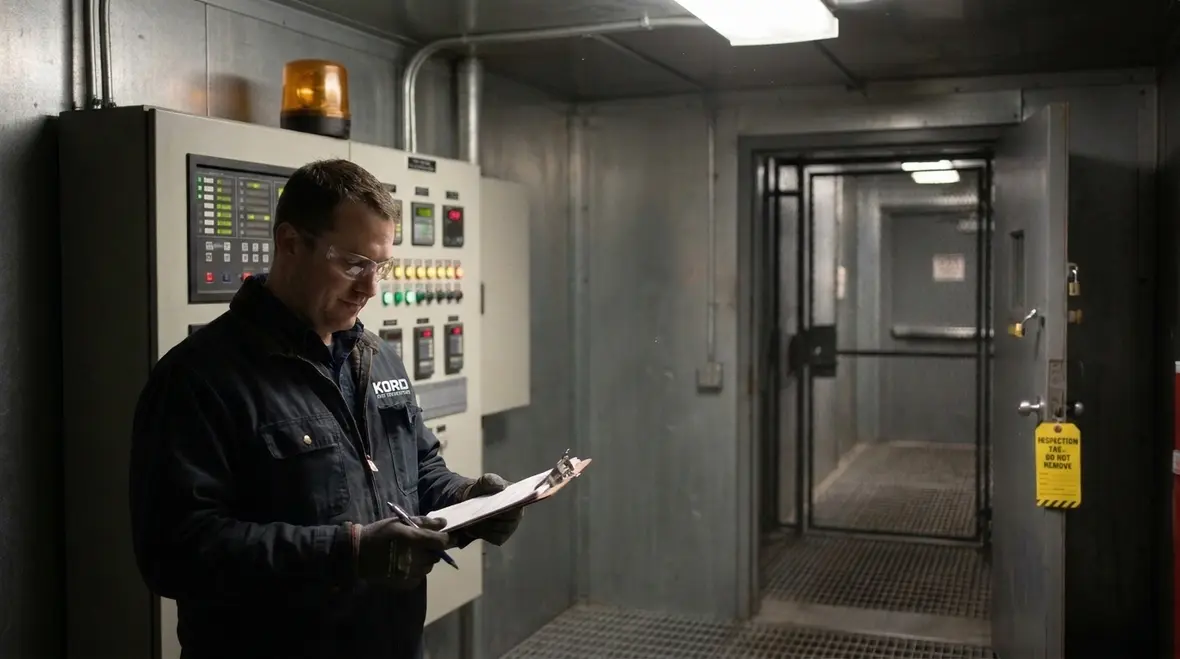
NFPA 2001 Section 7.6 focuses on what happens after the system fires off. First, the area stays secured until trained staff verify it is safe. Then, the cause of the event must be checked before anyone restores the system. This is not the moment for guesswork. It is the moment for facts, logs, inspection, and a clear plan. Also, the clean agent may leave little residue, but the room still needs care. Sensors, panels, nozzles, alarms, and discharge piping all need review. A fire event can feel like a dramatic movie scene, yet the cleanup is not Hollywood. It is paperwork, testing, and a steady hand.
Why post discharge work matters more than people expect
A lot of teams understandably focus on the actual release because that is the part with the noise, the alarms, and the sudden change in everyone’s stress level. But the period immediately after discharge decides whether the facility returns to normal quickly or drifts into a slow, expensive mess. A room can appear calm while still needing atmospheric review, equipment checks, and system confirmation. If those steps are rushed, the next activation may not perform as intended, and that is not a sequel anyone wants.
This is also the point where related system performance becomes important. Kord Fire Protection’s resource on NFPA 2001 guidelines for clean agent fire suppression systems helps reinforce the broader compliance framework behind inspection, testing, and system readiness. Post discharge steps make more sense when they are viewed as part of the full life cycle, not a random pile of chores after the excitement ends.
How the site should respond right away
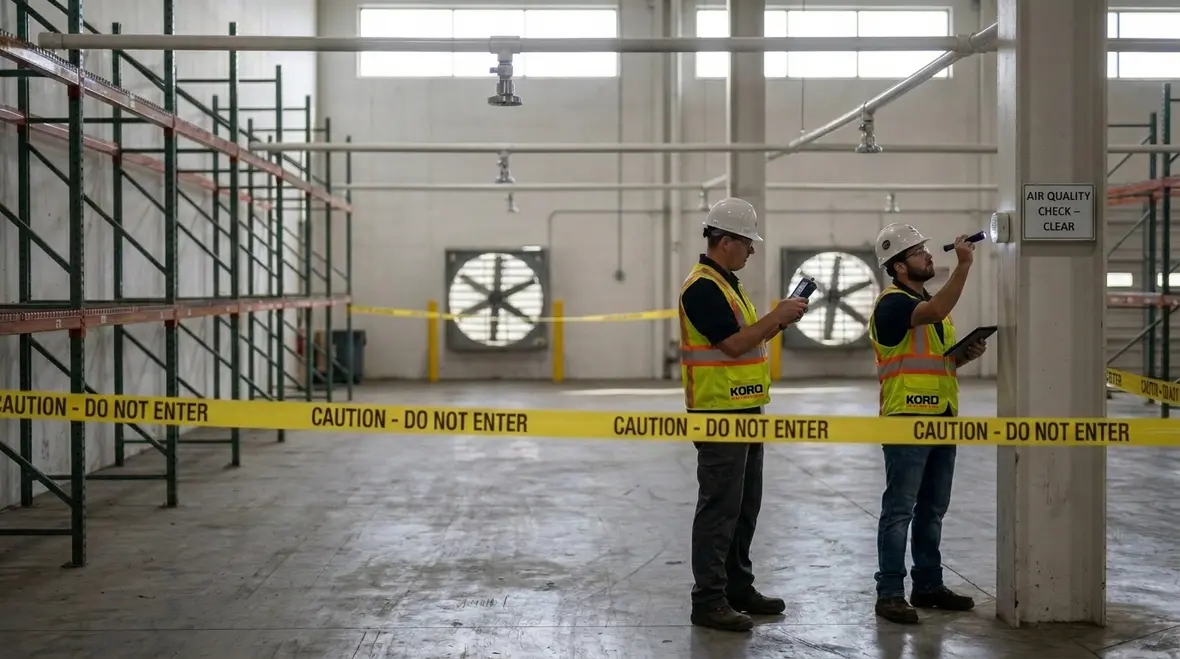
The immediate response should protect people first and equipment second. The area must remain evacuated until hazards are cleared. Ventilation may need to run, but only in line with the site plan. In addition, the fire alarm and suppression panel must be checked for status. If the fire was real, staff should treat every detail as evidence. If the discharge was accidental, the trigger source should be identified before reset. That may mean investigating heat sensors, smoke detection, control faults, or human error. Even the best systems can have a bad day, much like a Monday morning meeting that should have been an email.
First response priorities in plain language
Right after activation, the best response is orderly, boring, and disciplined. That is actually a compliment. People should be accounted for, access should be restricted, and the affected enclosure should be evaluated by trained personnel before normal traffic resumes. Control panels should be reviewed for discharge signals, detector inputs, abort activity if any, and fault indicators. Staff should avoid the temptation to jump straight to resetting the system just because the room looks fine. Looking fine and being ready are very different things.
The site team should also think beyond the room itself. What equipment shut down automatically. What business processes were interrupted. What inventory or electronics may need inspection. What contractors or internal departments need to be notified. Fast recovery starts with clear communication, not hallway guesswork and someone saying, “I think it’s probably okay,” which is rarely the most comforting sentence in a fire event.
Dual column guide for post discharge tasks and why they matter
Task
Secure the affected area
Inspect the control panel
Check for fire cause
Review room conditions
Test system parts
Document the incident
Why it matters
Keeps people safe and prevents unplanned entry
Confirms the system status and records the event
Helps stop the same problem from happening again
Supports safe re entry and protects stored assets
Verifies that the clean agent system is ready for reuse
Supports compliance, insurance, and future service work
That checklist looks simple on paper, and that is exactly why it works. Each step has a job. Skip one, and the entire recovery process gets shakier. Secure the room too loosely and unauthorized entry becomes a risk. Fail to inspect the panel and critical event data can be missed. Ignore documentation and future troubleshooting turns into detective work with fewer clues and more frustration.
Why documentation and testing come next
After the area is safe, the facility needs a clear record of what happened. This includes the discharge time, alarm data, detector input, agent release details, and any visible damage. Next, technicians should test the system before placing it back online. That can include checking cylinders, pressure, valves, detection devices, and control logic. Furthermore, the site should confirm that room integrity remains intact. If the enclosure no longer holds the agent properly, the system may not perform as designed in the next event. In a business setting, that is not a small issue. That is the kind of detail that keeps operations from turning into an expensive rerun.
What should be documented after discharge
Good records support more than compliance. They support smarter decisions. A proper incident file should capture when the event happened, what initiated it, what devices responded, whether the release was confirmed or accidental, what was found in the room, what corrective actions were taken, and who signed off on restoration. Insurance questions, internal reviews, and future maintenance visits all get easier when the paperwork does not read like half a memory and a sticky note.
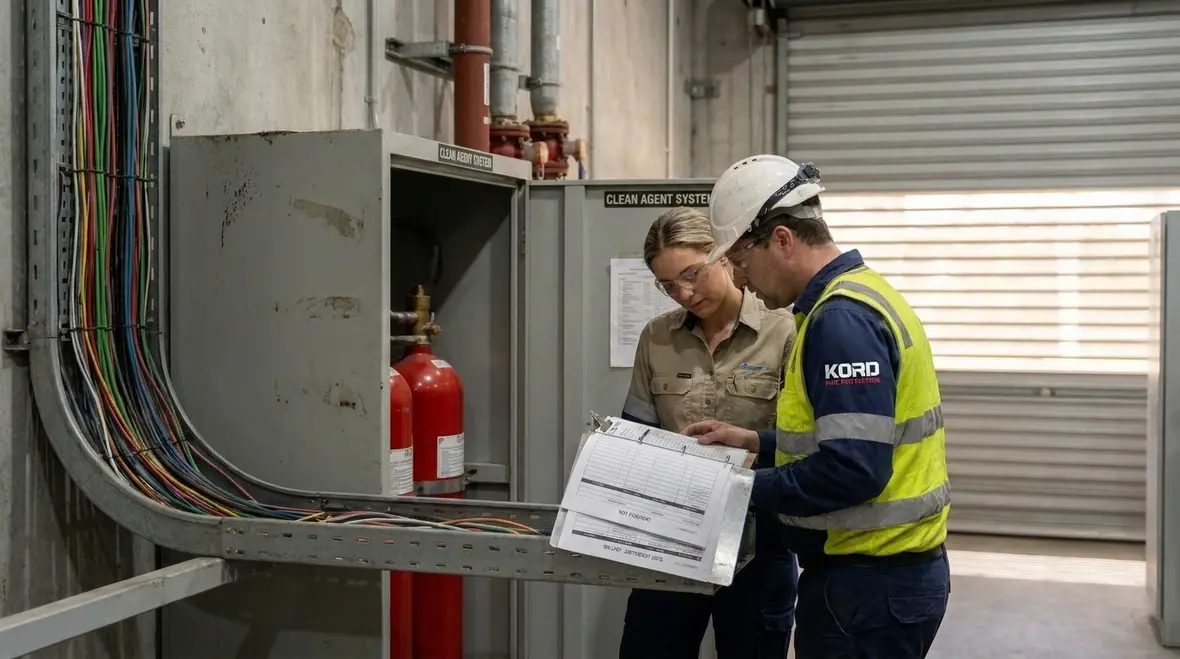
Testing is just as important. A clean agent system is not truly back just because the alarms are quiet again. Components should be inspected and verified so the next incident does not reveal an overlooked fault. This is also where enclosure performance becomes especially relevant, which is why Kord Fire Protection’s information on room integrity testing for clean agent suppression systems fits naturally into the post discharge conversation. If the room cannot maintain agent concentration, the rest of the system has to work harder than it should.
What facilities should expect during restoration
Industrial and commercial sites often want one thing after discharge: fast recovery. However, speed must never outrun safety. The restoration process should include cleanup, parts replacement if needed, system reset, and final sign off. Moreover, the right service team can help reduce shutdown time, protect stock, and limit disruption to staff and customers. For retail spaces, that may mean getting electrical rooms or back of house systems back online. For factories, it may mean protecting production schedules. For data and control rooms, it may mean restoring critical uptime before anyone starts panicking like the Wi Fi died during a finals match.
A practical restoration sequence
In practice, restoration usually follows a steady sequence. Confirm the area is safe. Investigate the cause. Review event history. Inspect affected components. Replace or recharge what is required. Verify detector and panel logic. Confirm enclosure condition. Reset the system. Then document everything and hand the site back with confidence. That sequence may not win any awards for excitement, but it does win points for keeping buildings protected and teams sane.
Facilities also benefit when the service partner understands the broader environment, not just the cylinder bank and panel. A post discharge event can touch operations, inventory, tenant relations, security procedures, and uptime commitments. The faster those issues are coordinated, the less likely the incident becomes an all week headache.
How Kord Fire Protection supports post discharge service
Kord Fire Protection can become a vital partner when a clean agent system activates. The team can help assess the discharge event, inspect the system, and guide the return to service process. In addition, Kord Fire Protection can support maintenance, fault finding, re commissioning, and compliance checks so the site does not face the same problem twice. That matters because time, safety, and asset protection all sit at the same table. And they do not like waiting.
Kord Fire Protection’s broader fire suppression service support is also useful when a site needs to look beyond one event and strengthen its overall protection strategy. Post discharge recovery is often the moment when owners and facility managers realize they need not just repair help, but a long term service partner who can keep systems reliable before the next emergency tries to make an entrance.
Why Kord Fire Protection matters after the event
Post discharge work is not just a technical task. It is a business continuity task. Kord Fire Protection can help facilities reduce downtime, keep records in order, and stay aligned with fire safety needs. Also, the team can work with facility managers, maintenance leads, and site owners to create a clear path back to normal operations. That means fewer delays, fewer surprises, and a better outcome when the pressure is high. In short, the right partner can turn a stressful incident into a managed recovery.
FAQ
Conclusion
NFPA 2001 Section 7.6 gives facilities a clear path after clean agent release, and that path protects people, assets, and uptime. The discharge may end the fire threat, but it starts a different kind of work, one built on verification, documentation, testing, and careful restoration. When those steps are handled properly, recovery becomes controlled instead of chaotic.
For industrial, retail, and commercial sites, Kord Fire Protection can help manage that recovery with calm, speed, and skill. When the system has done its job, Kord Fire Protection helps the building do the rest. That is the difference between simply reacting to discharge and actually recovering from it like professionals.

Join Our Newsletter!
Get the latest fire safety tips delivered straight to your inbox From our Newsletter.