
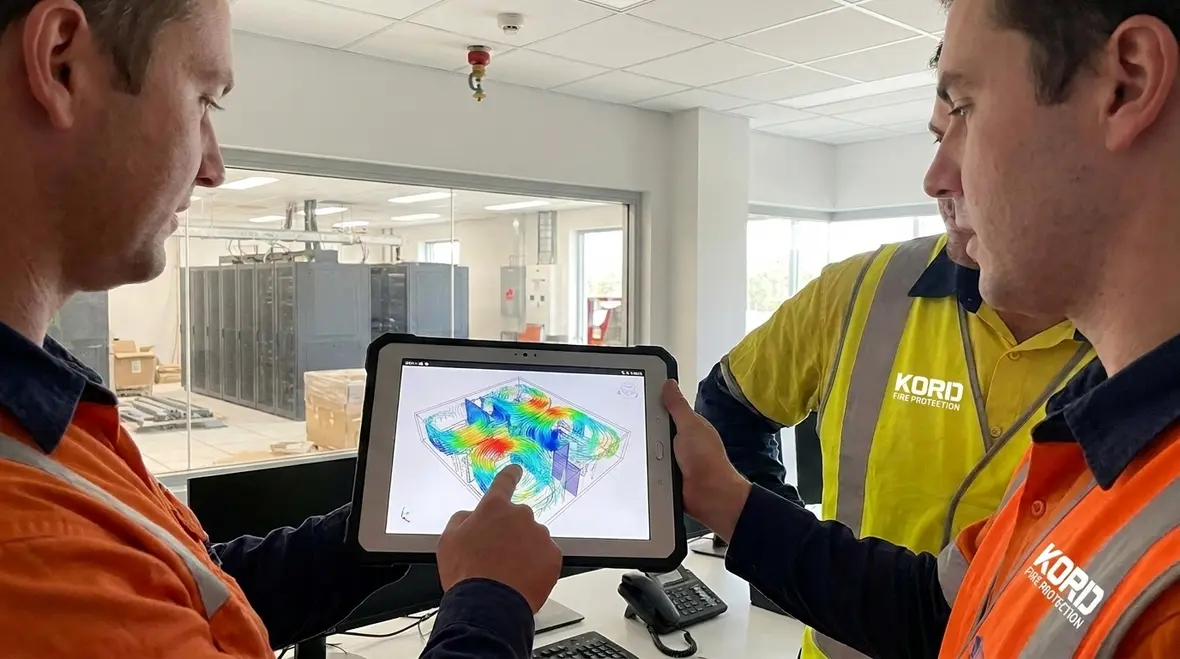
NFPA 2001 Section 6.9 CFD Design for Clean Agent Systems
Quick Answer: NFPA 2001 Section 6.9 guides how CFD modeling helps designers predict clean agent flow, concentration, and safety before installation. In plain terms, it turns guesswork into proof. For industrial, commercial, and facility projects across Australia, Kord Fire Protection can help shape a smarter, safer, code aligned system from design through delivery.
In modern fire protection, good design does not rely on hope and a prayer. It relies on data. That is where NFPA 2001 computer aided design clean agent fire systems come into play, especially when Section 6.9 asks for a serious look at how gas moves through a protected space. In practice, CFD modeling gives engineers a way to see airflow, pressure, and agent spread before a system ever discharges. For industrial plants, retail hubs, commercial towers, and critical facilities across Australia, that insight matters because downtime costs money, and fire damage costs even more.
When Kord Fire Protection supports this work, the process becomes more than a code exercise. It becomes a practical, defensible design path that helps match protection with the real shape of the room, the real equipment inside it, and the real risks around it. No drama. Just a better plan.
For teams planning a protected room, it also helps to review Kord Fire Protection’s clean agent fire suppression services early in the process, because design decisions tend to age badly when they get separated from installation, testing, and long term maintenance reality. That page fits naturally here because Section 6.9 is not only about calculations on a screen. It is about whether the finished system can actually protect the room it is meant to protect. ([kordfire.com](https://kordfire.com/clean-agent-fire-suppression/?utm_source=openai))
What NFPA 2001 Section 6.9 asks for
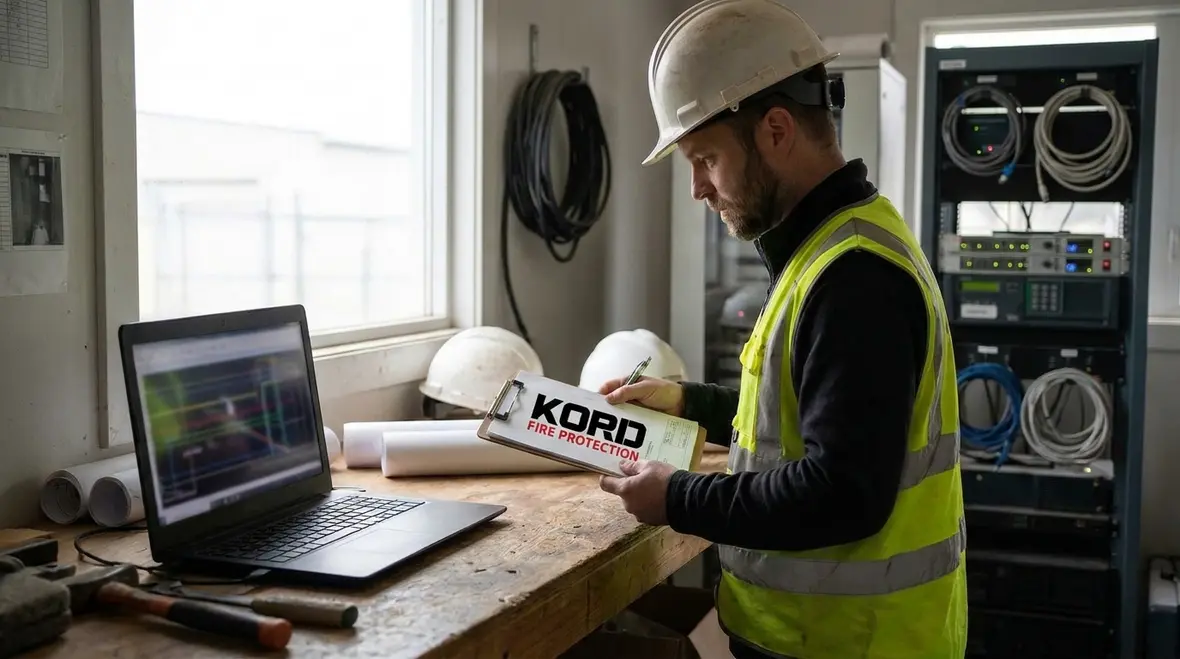
Section 6.9 focuses on agent concentration and how designers verify that the clean agent will reach and stay at the right level. That means the system must do more than simply discharge. It must work with the room, the openings, the ventilation paths, and the pressure behavior that can make or break performance.
Traditionally, designers used standard rules and tabulated methods. However, some spaces are far from standard. A data hall, control room, switch room, archive, or process area may have complex layouts, high heat loads, or tricky leakage paths. Therefore, CFD modeling helps show whether the system can truly perform under those real conditions.
Why that matters in the real world
This is where design stops being theoretical and starts behaving like a grown up. If the clean agent fails to distribute properly, the system can miss the concentration target, lose hold time, or create pressure effects that nobody enjoys discussing after commissioning day. Section 6.9 pushes the team to evaluate performance in the actual enclosure, not in an imaginary perfect box that exists only in marketing brochures and optimistic assumptions.
That practical approach lines up well with related guidance on NFPA 2001 guidelines for clean agent fire suppression systems, especially for project teams that need a broader picture of how code intent connects to installation quality, room conditions, and final system performance.
How CFD modeling improves clean agent design
CFD, or computational fluid dynamics, simulates how air and gas move inside a space. It helps answer key design questions before installation begins. Will the agent spread evenly? Will hot air rise and push the agent away? Will fans, vents, or doors reduce the hold time? These are the kinds of questions that keep engineers honest.
With NFPA 2001 computer aided design clean agent fire systems, CFD gives a deeper view of:
- Agent distribution
It shows whether the agent reaches all protected zones in time. - Room leakage effects
It tests how gaps, doors, and vents affect concentration. - Pressure changes
It helps manage overpressure or underpressure during discharge. - Ventilation influence
It reveals how HVAC systems can help or hurt performance. - Occupancy and equipment safety
It supports safe design for people and sensitive assets.
That is the beauty of CFD. It is not there to make the design sound impressive in a meeting. It is there to expose what happens when gas meets geometry, heat, leakage, and airflow. If the model shows weak spots, that is useful news, not an insult. It is far cheaper to fix a digital problem than a built one.
Questions CFD can answer before the room ever discharges
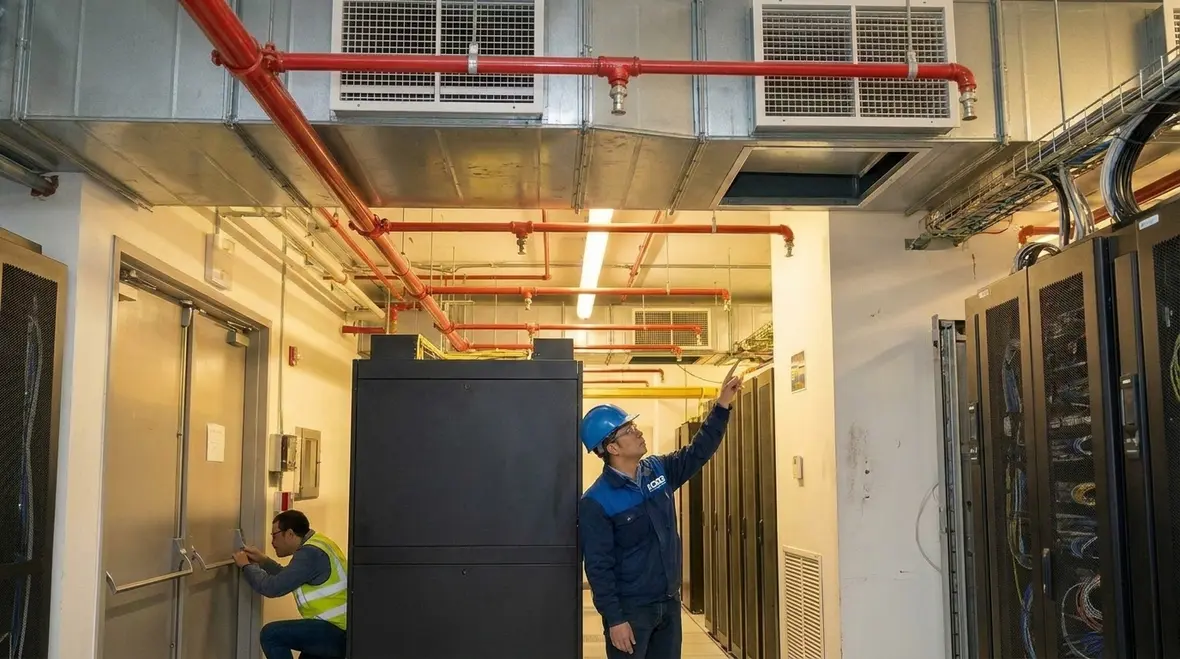
A strong simulation can help the team understand whether nozzle placement is actually logical, whether return air paths are stealing concentration, whether discharge timing needs refinement, and whether enclosure sealing is good enough to support the intended hold time. It can also highlight how a room with cable penetrations, raised floors, suspended ceilings, or active mechanical systems may behave very differently from the neat sketch everyone started with.
Where CFD adds real value in Australian facilities
Across Australia, facilities vary widely. A metro retail centre in Sydney does not behave like a mining support building in Western Australia, and neither behaves like a high value control room in Melbourne. That is why one size does not fit all. CFD modeling helps adjust the design to the building, not the other way around.
This is especially useful when the space has:
- High ceilings or unusual shapes
- Multiple service penetrations
- Mechanical ventilation that cannot simply be turned off
- Mission critical equipment with tight uptime needs
- Limited tolerance for false assumptions
In these cases, the model becomes the quiet truth teller. It does not flatter the design. It shows the design.
That same logic appears across Kord Fire Protection’s related clean agent content for mission critical rooms and data driven suppression planning, where the common theme is simple: the more valuable the space, the less appetite there should be for guesses wearing a hard hat. ([kordfire.com](https://kordfire.com/mission-critical-fire-suppression-with-clean-agent-systems/?utm_source=openai))
What a strong design process looks like
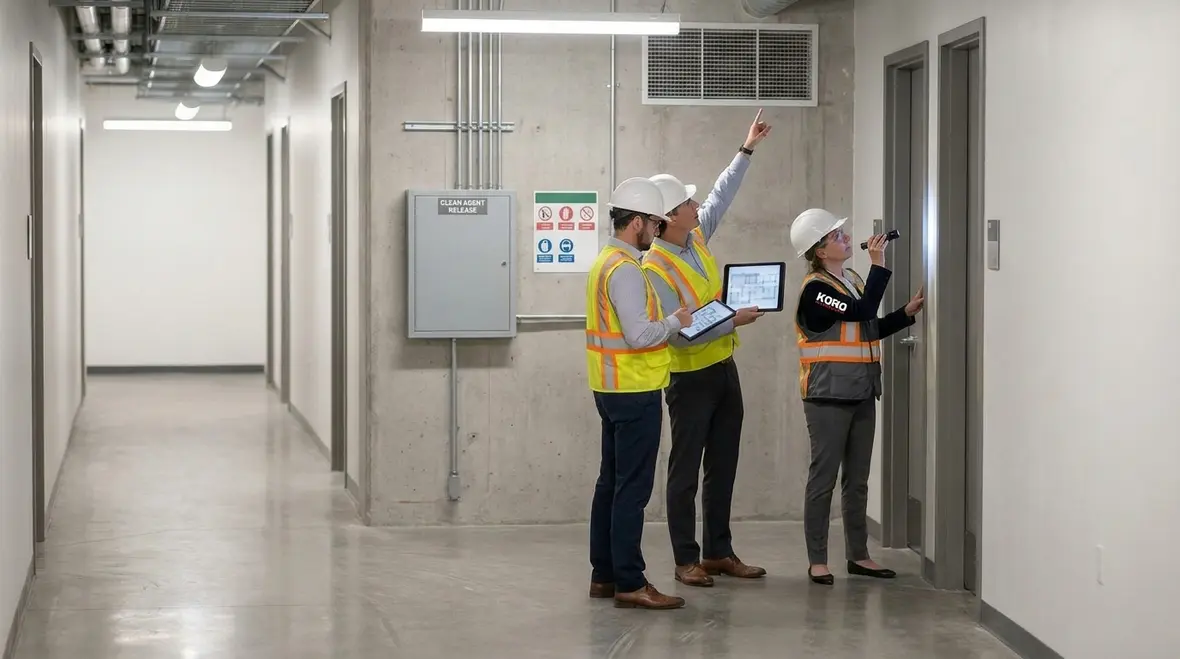
A proper design process starts with accurate site data. Then the engineer reviews room dimensions, openings, airflow patterns, equipment load, and required agent concentration. After that, CFD modeling tests the discharge and hold conditions. If the results show weak spots, the design team can refine nozzle placement, discharge timing, vent control, or room sealing before installation begins.
| Design Step | Why It Matters |
| Site survey | Captures real room conditions and risk points |
| CFD model setup | Builds a digital view of airflow and agent movement |
| Simulation review | Tests whether concentration and hold time meet design needs |
| Design adjustment | Improves nozzle layout, venting, or enclosure sealing |
| Final verification | Supports a code aligned and practical system outcome |
Why the process is worth the effort
A disciplined workflow saves time even when it feels slower at first. By identifying issues before procurement or installation, the team can avoid awkward surprises like relocating nozzles after ceilings are closed, discovering unsealed penetrations during final testing, or finding out the HVAC sequence was working against the system the whole time. Those moments are memorable, but not in the way anyone wants.
Why Kord Fire Protection becomes a vital partner
Kord Fire Protection can play a vital role because CFD modeling is only as strong as the team behind it. A model needs accurate site inputs, clean design thinking, and a practical view of how the system will be built and maintained. Kord Fire Protection can bring that mix together.
They can support clients by helping translate code needs into real world design decisions. They can also work with project teams to reduce costly rework, improve coordination with builders and facility managers, and keep the fire protection plan aligned with site goals. In other words, they help make sure the system is not just smart on paper. It is smart in the field. And yes, that is where the plot thickens, without becoming a bad thriller.
Kord Fire Protection’s clean agent service page emphasizes system design, installation, servicing, repairs, and maintenance support for critical environments, which makes it a sensible partner page for a Section 6.9 discussion centered on performance, verification, and long term reliability. ([kordfire.com](https://kordfire.com/clean-agent-fire-suppression/?utm_source=openai))
How CFD supports compliance and confidence
Compliance matters, but confidence matters too. A system that only “seems fine” may become a problem during an audit, a handover, or a real event. CFD modeling gives a documented way to support design decisions, especially where the room is complex or the risk is high.
For facility owners and operators, that means better planning, clearer communication with stakeholders, and fewer surprises. It also helps teams explain why certain vents stay closed, why some leaks need sealing, or why a nozzle must sit in one place instead of another. Nobody likes extra steps, but nobody likes fire damage more.
The result is not only a cleaner paper trail. It is a more defensible design story from early concept through handover and ongoing support. When a project involves sensitive electronics, business continuity pressure, or unusual airflow conditions, that kind of evidence backed approach can spare everyone from relying on crossed fingers and polite optimism.
FAQ
Conclusion
Kord Fire Protection can help facilities turn NFPA 2001 Section 6.9 from a code note into a working design advantage. For Australian industrial, retail, and commercial sites, that means better protection, fewer surprises, and a cleaner path to compliance.
When the project demands accuracy, Kord Fire Protection can help lead the way. And when a clean agent system has to perform in a space that refuses to behave like a simple box, CFD modeling gives the design team something much better than hope. It gives them evidence.

Join Our Newsletter!
Get the latest fire safety tips delivered straight to your inbox From our Newsletter.



