
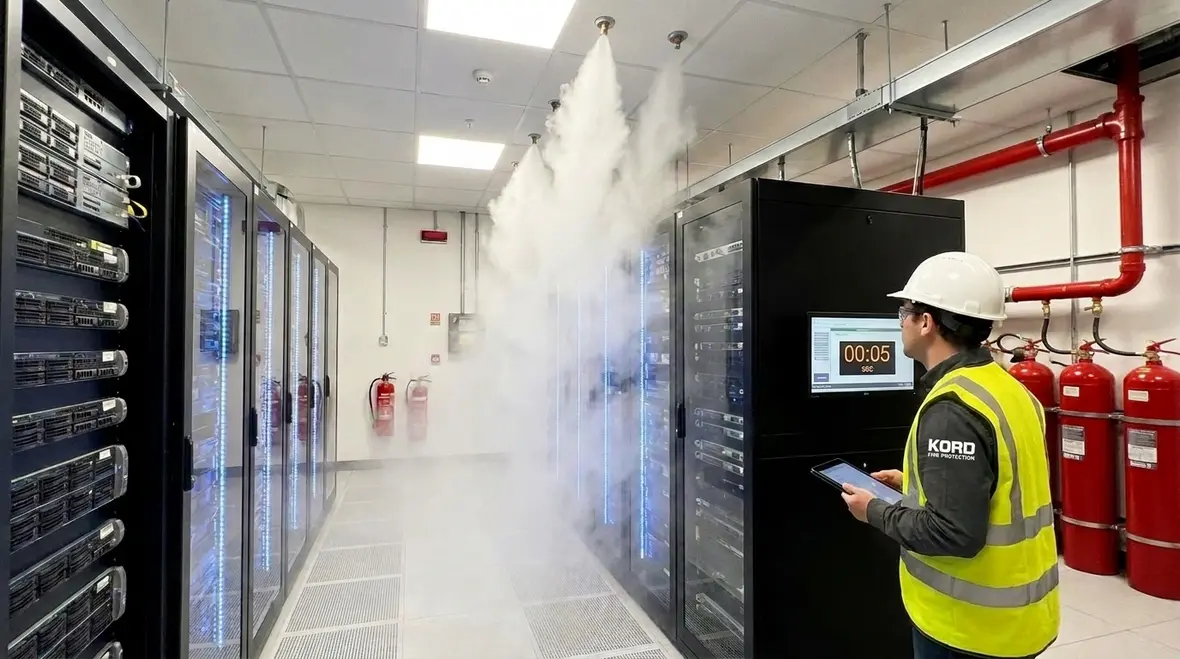
NFPA 2001 Section 6.7 Discharge Time Clean Agent Systems
Quick Answer: NFPA 2001 Section 6.7 requires clean agent systems to discharge fast enough to reach the design concentration before a fire can grow. In plain terms, the system must act like a sharp first responder, not a late guest at the party. For industrial, retail, and commercial sites, that timing can protect people, assets, and uptime.
NFPA 2001 discharge time clean agent fire suppression systems matter because speed is the whole point. In the first few minutes of a project discussion, many owners ask what separates a solid system from a risky one. The answer often starts with discharge time, agent design, and room conditions. When a facility uses NFPA 2001 discharge time clean agent fire suppression systems, it must meet strict performance goals so the agent reaches the hazard area fast enough to do its job before the fire turns into a full blown scene worthy of a disaster movie sequel no one asked for.
For industrial plants, retail centres, data rooms, switch rooms, and commercial facilities, that timing is not just paperwork. It protects critical equipment, business continuity, and staff safety. And when a business needs proper design, testing, and maintenance, clean agent fire suppression for server rooms and broader support from Kord Fire Protection can become a vital part of keeping the system ready, compliant, and effective. Facilities looking at wider system planning can also review Kord Fire’s fire suppression services for design, installation, inspections, and maintenance across critical spaces. ([kordfire.com](https://kordfire.com/clean-agent-fire-suppression-for-server-rooms-by-kord/?utm_source=openai))
What NFPA 2001 Section 6.7 Means in Simple Terms
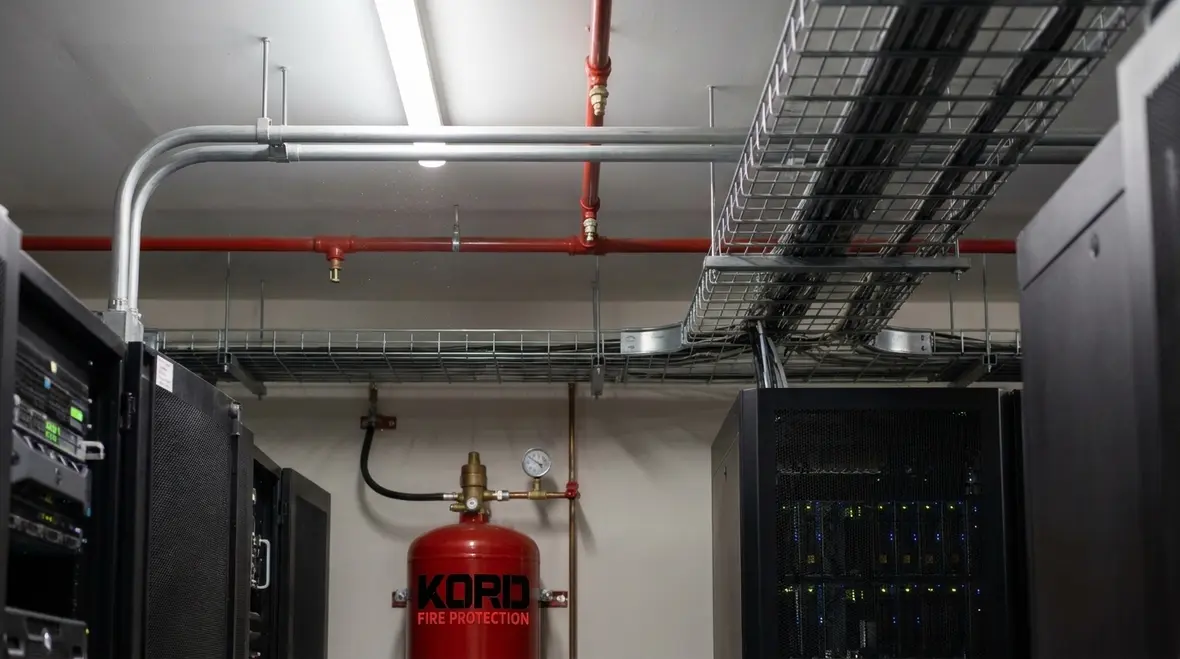
Section 6.7 sets the discharge time requirement for clean agent systems. In simple terms, the system must release the agent quickly enough to reach the target concentration within the required time window. That window depends on the agent and the hazard, but the core idea stays the same. The room must fill fast, and the fire must lose its advantage.
Because clean agents protect sensitive spaces, the system cannot take its sweet time. If it does, heat builds, flames spread, and the protection plan starts looking like a bad plot twist. Therefore, designers must calculate nozzle layout, pipe size, agent quantity, and enclosure tightness with care. Kord Fire’s clean agent standard overview explains that these systems must discharge at precise concentrations, distribute evenly, and stay in the protected space long enough to prevent reignition. ([kordfire.com](https://kordfire.com/clean-agent-standard-for-fire-suppression-systems/?utm_source=openai))
Why concentration and timing work together
Discharge time is not just about dumping agent into a room quickly. The system still has to achieve the right concentration in the right area under real room conditions. That means timing, distribution, and enclosure integrity all work together. If one piece is off, the whole strategy starts wobbling.
How Fast Must Clean Agents Deploy?
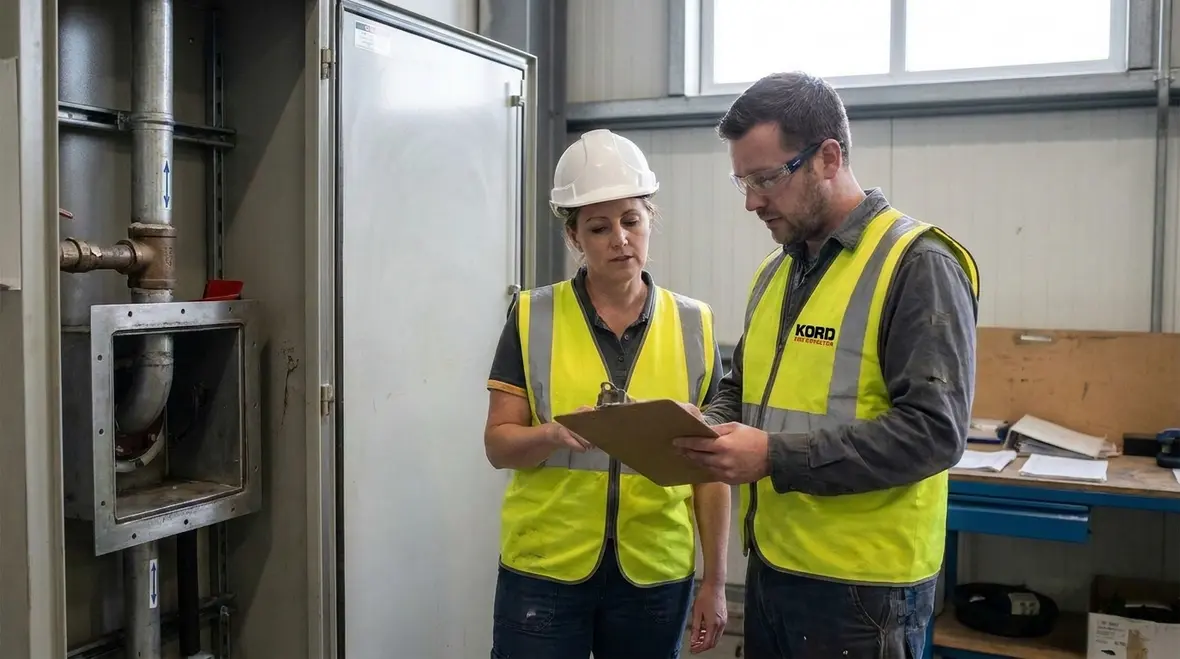
The discharge time is not a guess. It is a measured performance target based on the system design. Most clean agent systems must deliver agent within a short period, often seconds rather than minutes, so the hazard reaches the required concentration before re ignition or fire growth can take hold.
Several things affect that speed. First, the agent type matters. Second, the size and shape of the protected room matters. Third, air leaks matter a lot. A room with poor sealing can let the agent escape like a crowded pub at closing time. Therefore, the discharge time and the enclosure integrity must work together.
For electrical rooms, control rooms, battery spaces, archives, and high value equipment areas, this becomes especially important. These spaces often cannot afford water damage, so clean agents offer a strong answer when designed the right way. Kord Fire’s mission critical clean agent guidance also notes that critical environments need systems that respond fast, clean, and reliably without long cleanup windows. ([kordfire.com](https://kordfire.com/mission-critical-fire-suppression-with-clean-agent-systems/?utm_source=openai))
Where teams usually get tripped up
The usual trouble spots are not glamorous. They are the tiny details everyone wants to ignore until they become expensive. A pipe run that looked fine on paper may slow delivery. A room renovation may introduce leakage paths. HVAC changes can alter airflow. That is why discharge performance has to be treated like an engineering outcome, not a hopeful vibe.
What Controls the Discharge Time?
Several design factors shape discharge speed and system success, and none of them deserve the old she’ll be right treatment:
- Agent selection: Different agents have different flow needs and release behavior.
- Pipe network design: Long runs, too many bends, or poor sizing can slow delivery.
- Nozzle placement: Bad placement can create weak coverage and uneven fill.
- Room tightness: Gaps around doors, cable trays, and ceilings can reduce concentration.
- Storage conditions: Cylinder pressure and room temperature affect performance.
As a result, a design team must look beyond the cylinder room. It must study the entire protected space. That is where real fire protection work starts, and where shortcuts tend to come back like a sequel nobody wanted. Kord Fire’s room integrity material stresses that walls, ceilings, cable penetrations, and door gaps all become part of whether the agent stays where it should long enough to work properly. ([kordfire.com](https://kordfire.com/room-integrity-testing-for-clean-agent-systems/?utm_source=openai))
Why Fast Discharge Matters for Critical Sites
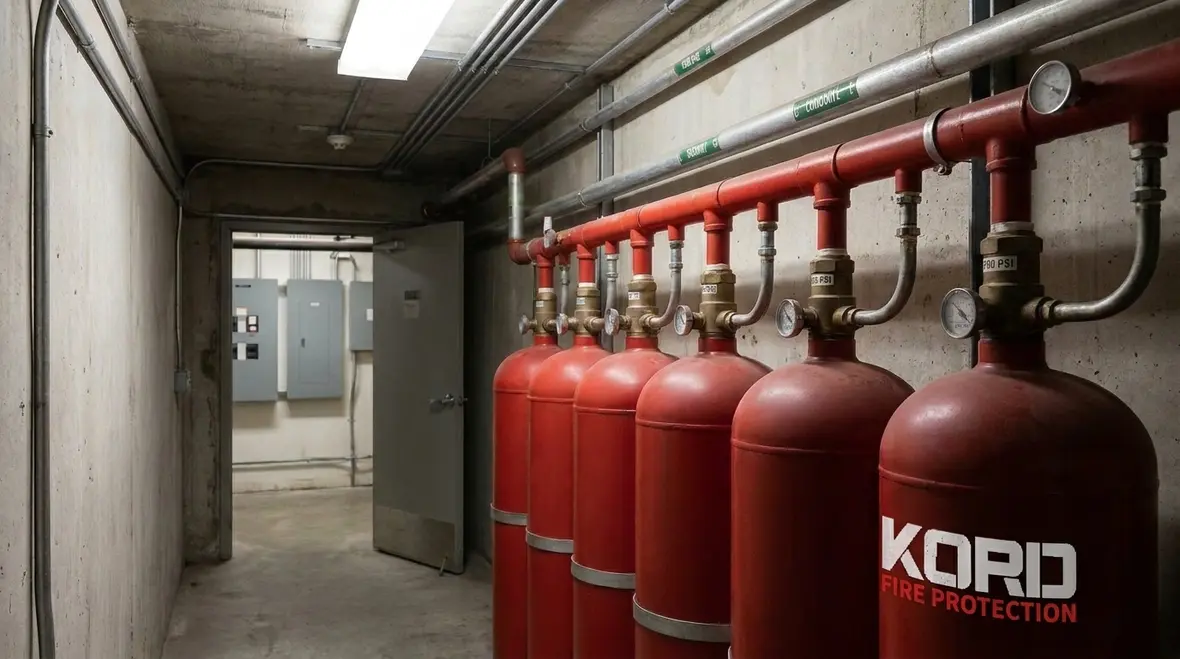
Fast discharge protects more than equipment. It protects operations, stock, compliance, and reputation. A clean agent system can stop a fire before it harms servers, production controls, retail tills, or essential switchgear. Therefore, quick action can reduce shutdown time and save a business from major losses.
It also supports safety planning in areas where water or foam would cause more damage than the fire itself. In a server room, for example, water can create as much pain as flames. That is why NFPA 2001 discharge time clean agent fire suppression systems remain a practical choice for many critical facilities. Kord Fire’s clean agent server room page and data center compliance article both emphasize fast suppression with minimal harm to electronics and less collateral damage in sensitive IT environments. ([kordfire.com](https://kordfire.com/clean-agent-fire-suppression-for-server-rooms-by-kord/?utm_source=openai))
| Facility Type | Why Fast Discharge Matters |
|---|---|
| Data and server rooms | Protects electronics and keeps downtime low |
| Switch rooms and control rooms | Helps stop fire before power loss spreads |
| Retail back of house areas | Protects stock and business continuity |
| Industrial plants | Supports safety in critical process zones |
A fast system also helps recovery
A fire event is bad enough without adding weeks of cleanup and a long list of damaged electronics. One reason clean agent systems remain attractive is that they can suppress the fire without turning the room into a demolition project. When the discharge is timely and the room holds concentration, facilities often stand a far better chance of getting back to business with less chaos.
How Kord Fire Protection Supports Compliance and Performance
Kord Fire Protection can become a vital partner because clean agent systems need more than equipment. They need proper design, expert installation, testing, and ongoing care. A system may look ready on the wall, but if the room leaks or the discharge time misses the target, the system is only pretending to work. Fire protection does not enjoy that kind of drama.
Kord Fire Protection can help with system assessment, hazard review, agent selection, room integrity checks, and maintenance planning. In addition, the company offers broader suppression support and dedicated clean agent expertise for facilities that need a solution aligned with NFPA 2001 style performance goals. Its service pages describe installation and maintenance across commercial and industrial locations, including clean agent systems and room integrity testing support. ([kordfire.com](https://kordfire.com/fire-suppression/?utm_source=openai))
What Facility Teams Should Check Before Installation
Before installation, facility teams should ask a few direct questions. Is the enclosure sealed well enough? Does the pipe design support the required discharge time? Has the hazard been classified properly? Is the system suitable for the room height and layout? These are not small details. They are the whole show.
Teams should also review how future changes might affect performance. New cable penetrations, altered doors, changed HVAC settings, and shifted room layouts can all undercut a once solid design. If a room evolves, the suppression plan needs to evolve with it rather than pretending last year’s assumptions still fit this year’s reality.
Also, teams should plan for maintenance from day one. A clean agent system can only protect a building if it stays ready. Therefore, inspections, cylinder checks, and room testing should remain part of the long term plan, not a once and done affair. For teams wanting a broader technical overview, Kord Fire’s article on NFPA 2001 guidelines for clean agent fire suppression systems ties together design, maintenance, and testing expectations. ([kordfire.com](https://kordfire.com/room-integrity-testing-for-clean-agent-systems/?utm_source=openai))
FAQ
Conclusion
NFPA 2001 discharge time clean agent fire suppression systems demand speed, accuracy, and strong upkeep. The right design has to move fast, reach the intended concentration, and stay effective under real enclosure conditions. If the system is slow, patchy, or leaking out of the room, it is not being protective. It is being optimistic, and optimism is not a recognized suppression method.
For industrial, retail, and commercial sites, the right partner matters. Kord Fire Protection can help keep the system compliant, effective, and ready when seconds count through clean agent expertise, room integrity support, and wider fire suppression services. For facilities that need serious protection without the water damage drama, that support is worth a proper conversation. ([kordfire.com](https://kordfire.com/fire-suppression/?utm_source=openai))

Join Our Newsletter!
Get the latest fire safety tips delivered straight to your inbox From our Newsletter.



