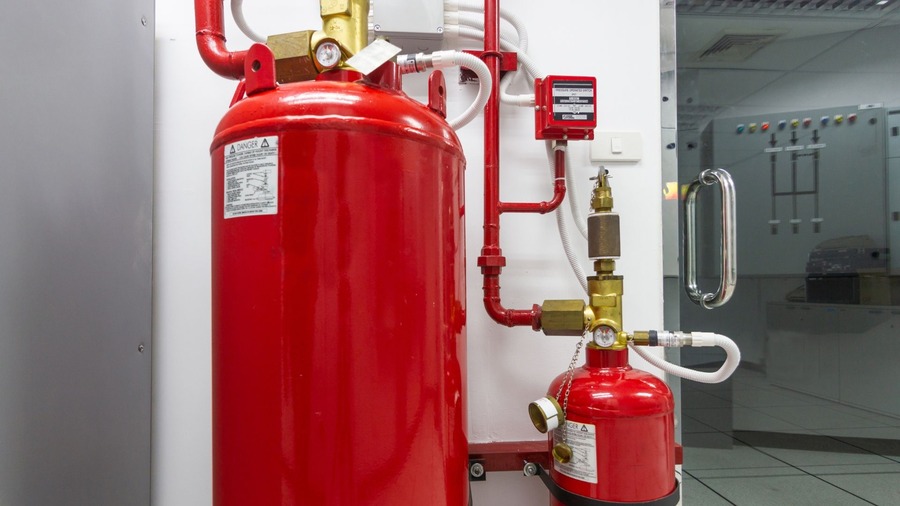
NFPA 2001 Section 5.4 Nozzle Selection for Clean Agent Systems
Quick Answer: NFPA 2001 Section 5.4 guides how to select nozzles for clean agent systems so the agent reaches the right areas fast and evenly. Good nozzle choice helps protect equipment, reduce waste, and improve discharge results. For facilities that need a full system partner, clean agent fire suppression services can help support design, supply, installation, and long-term system care. In Australian industrial, retail, and commercial settings, getting the nozzle right is less about theory and more about making sure the system actually performs when everyone would strongly prefer not to test fate the hard way.
In NFPA 2001 nozzles clean agent fire extinguishing systems, nozzle selection is not a side note. It is the part that helps the whole system do its job with calm, speed, and precision. In places where downtime hurts and equipment matters, such as warehouses, data rooms, retail back of house areas, and plant rooms across Australia, the wrong nozzle can turn a smart system into a very expensive decoration. And nobody needs that kind of drama.
Section 5.4 of NFPA 2001 focuses on how nozzles must suit the system layout, discharge needs, and protected space. That makes it a practical guide, not just a rule book. When the nozzle matches the design, the clean agent spreads as intended and supports fast fire control without leaving a mess behind. For a broader code context, Kord Fire also covers this in NFPA 2001 guidelines for clean agent fire suppression systems, which fits naturally alongside the nozzle discussion because no nozzle works in a vacuum, even if the room feels suspiciously close to one.
What NFPA 2001 Section 5.4 Means for Clean Agent Design
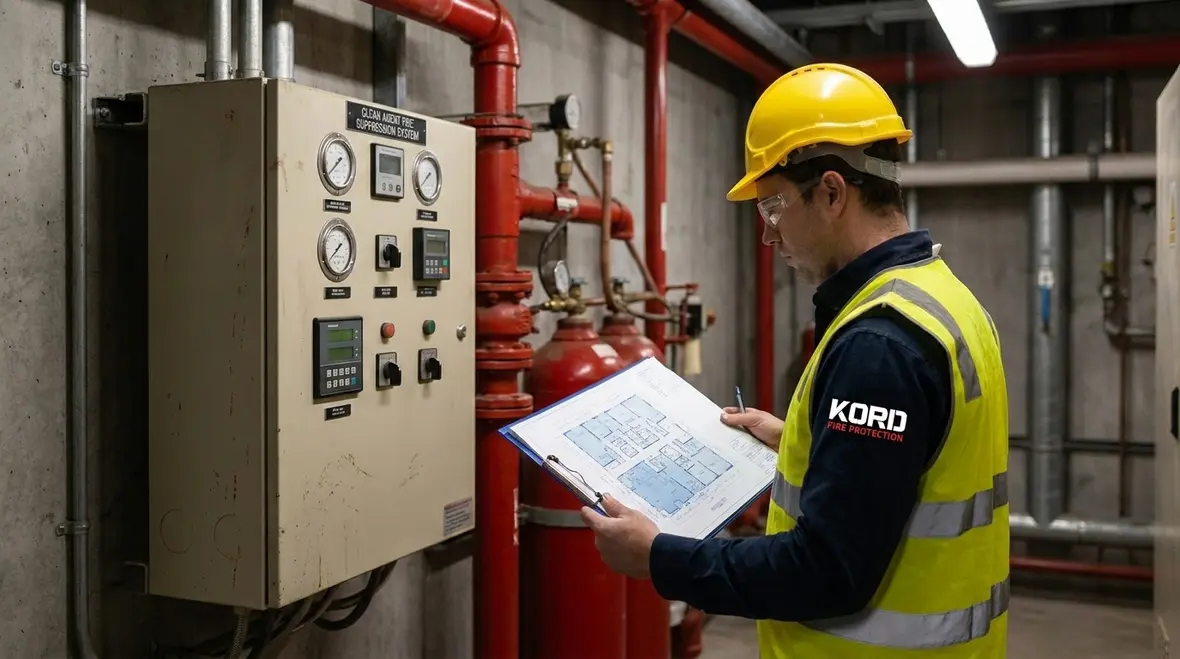
Section 5.4 sets the standard for nozzle use in clean agent systems. It helps designers control where the agent goes, how quickly it reaches the hazard, and how evenly it fills the room. In simple terms, the nozzle is the delivery point, and the delivery must be clean, accurate, and reliable. That sounds wonderfully straightforward until a real room introduces beams, cabinets, ducts, racking, cable trays, and one awkward corner that seems determined to resist every tidy engineering assumption.
For Australian businesses, this matters because many sites protect mixed spaces with tight layouts, racks, cable runs, and equipment cabinets. Therefore, a nozzle must fit the room, not fight it. The rule aims to support proper flow, proper spread, and proper fire response. That is the kind of order every facility manager can appreciate, even before the coffee kicks in.
Why the nozzle is doing more work than it gets credit for
A lot of attention in clean agent design goes to cylinders, detection, controls, and concentration targets. Fair enough. Those pieces matter. But the nozzle is where the plan becomes reality. If the nozzle pattern, orifice arrangement, or placement is wrong, the system may struggle to distribute agent uniformly, and that weakens the overall result. Even a well-selected agent can underperform when the discharge hardware does not match the enclosure. Fire protection, sadly, does not hand out participation trophies.
How to Choose the Right Nozzle for the Hazard
Nozzle selection starts with the hazard type. Different spaces need different discharge patterns, pressure ratings, and coverage. A server room does not behave like a switch room, and a retail stock area does not act like a process control area. So, the nozzle must match the fire risk and room shape. Kord Fire makes a similar point in its discussion of mission critical fire suppression with clean agent systems, where sensitive spaces depend on fast, clean, and dependable performance.
Designers usually review these points:
- Room size and ceiling height
- Obstacle location, including beams, ducts, and cable runs
- Agent type and required discharge rate
- Pressure drop across the piping network
- Need for uniform coverage at all points in the space
Because the agent must reach every protected corner, nozzle placement matters just as much as nozzle type. A poor setup can leave dead zones, and dead zones are the fire protection version of a bad haircut. Everyone notices, and nobody is pleased.
Hazard type changes the design conversation
The hazard drives the design logic. Spaces with dense equipment, high airflow, unusual ceiling geometry, or enclosed cabinets may need different nozzle arrangements than open rectangular rooms. That is why one nozzle type cannot simply be copied from one project to the next and expected to behave politely. A nozzle that works beautifully in one enclosure may be completely wrong in another. The system has to be designed for the room that exists, not the room everyone wishes existed on the blueprint.

Why Discharge Pattern and Coverage Matter
A nozzle does more than spray agent. It shapes the flow. Some nozzles create wider coverage, while others suit focused discharge. The goal is always the same: deliver the agent fast enough to reach the design concentration before the fire grows.
This is where clean agent systems stand out. They protect sensitive assets without water damage, so they work well for electronics, documents, control panels, and business critical equipment. However, that benefit only holds when the discharge pattern matches the protected area. If the pattern is uneven, the system may waste agent or miss critical spots. That is not a plot twist anyone wants.
Coverage also matters because room features affect how the agent moves after release. Airflow, obstructions, ceiling height, and even equipment arrangement can influence the final distribution. If the nozzle pattern is too narrow, some areas may not receive the designed concentration quickly enough. If it is too broad for the space, the system may sacrifice control for reach. Good design balances both. It is a bit like aiming a torch in a cluttered storeroom. Too little direction and you miss the corner. Too much and you forget the rest of the room exists.
Dual Column View: Key Factors and Practical Effects
Design Factor
Agent flow rate, pipe size, room volume, and nozzle type all shape discharge performance.
Design Factor
Obstacle location and ceiling layout change how the agent moves after release.
Design Factor
Pressure and piping length affect how much agent reaches each nozzle.
Practical Effect
The system reaches the target concentration faster and with better balance across the space.
Practical Effect
The nozzle must direct flow so the clean agent does not get trapped, blocked, or weakened.
Practical Effect
Proper selection supports consistent discharge from start to finish.
When teams slow down long enough to compare these factors side by side, nozzle selection becomes less mysterious and far more practical. The best choice is the one that supports even distribution, predictable performance, and easier compliance across the real protected space, not the imaginary perfect room where nothing blocks anything and every pipe run behaves like a textbook example.
How Kord Fire Protection Supports the Job
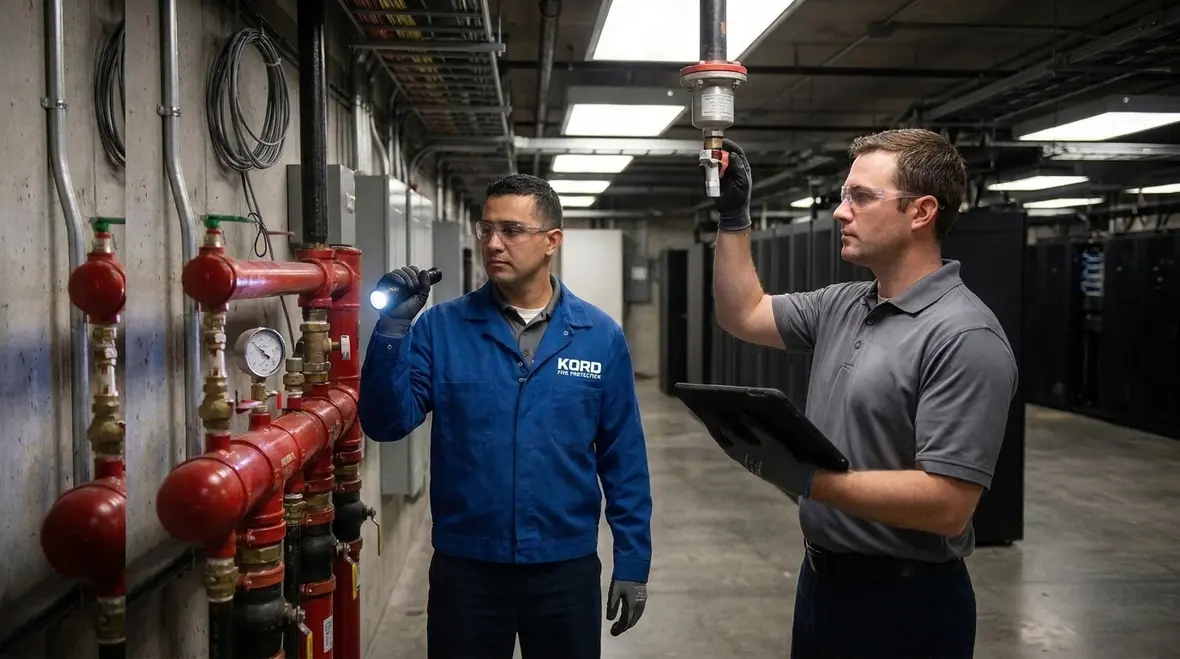
Kord Fire Protection can become a vital partner in this service because nozzle selection is not guesswork. It takes design skill, product knowledge, and a clear view of site needs. A strong partner helps assess the hazard, review the room layout, and align the system with NFPA 2001 Section 5.4 requirements. Kord Fire’s clean agent fire suppression system guide also reinforces how planning, inspection, and ongoing service all connect back to whether the system will perform with confidence.
That support can include system planning, nozzle selection, installation guidance, compliance checks, and ongoing service. More importantly, it helps site operators avoid errors that cause poor discharge or costly redesigns. In a world where fire systems must work the first time, trusted support matters. Kord Fire Protection can help turn a complex standard into a practical, working solution.
Why service support matters after design is done
A clean agent system is not finished just because the drawings are approved and the cylinders are in place. Rooms change. Equipment moves. New cable trays appear. Tenants modify layouts. Every one of those changes can affect discharge performance. Ongoing inspection and service help catch those issues before they become expensive surprises. That is especially useful in sites where uptime matters and nobody wants to discover a coverage problem during the least convenient moment imaginable.
What Facilities Should Ask Before Installation
Before any clean agent system goes in, facility teams should ask a few direct questions. First, does the nozzle suit the hazard and the room shape? Second, will the discharge reach all protected areas without obstruction? Third, does the piping design support the correct pressure and flow?
They should also ask if the system can be maintained without trouble later. After all, a system that looks fine on paper but fails in service is about as useful as a lifeguard who cannot swim. This is why careful design and local support matter for industrial, retail, and commercial sites.
It also helps to ask whether the protected enclosure may need related verification work, especially if concentration hold time is part of the broader performance goal. Kord Fire touches that wider issue in articles about clean agent systems and mission critical spaces, and it all points to the same practical truth: nozzle selection works best when it is part of a complete design conversation rather than a last-minute component choice.
FAQ
Final Word
NFPA 2001 Section 5.4 gives facilities a clear path to better clean agent performance. When the nozzle is selected with care, the system can protect critical assets with speed and confidence. The standard may sound technical, but its purpose is practical: make sure the agent goes where it needs to go, in the way it needs to go there, before a manageable fire decides it has bigger career ambitions.
For businesses planning upgrades, new installations, or a better strategy for sensitive spaces, Kord Fire Protection can help make that process smooth, compliant, and effective. If the goal is reliable protection, the next step is simple: speak with a specialist and get the design right the first time, because fire protection is one of those fields where do-overs are an objectively terrible plan.

Join Our Newsletter!
Get the latest fire safety tips delivered straight to your inbox From our Newsletter.