NFPA 2001 Section 5.1 Approved Clean Agents Fire Suppression
Quick Answer
NFPA 2001 Section 5.1 sets the rules for approved clean agents used in special hazard fire protection. FM 200, Novec 1230, FE 36, and similar agents protect valuable equipment without water damage, making them ideal for industrial, retail, commercial, and facility use across Australia. Kord Fire Protection can help design, install, and maintain these systems with confidence.
When a fire starts in a place packed with servers, switchboards, stock, or machinery, time becomes the villain. That is where NFPA 2001 approved clean agents fire suppression steps in. This standard helps guide the use of gases that stop fire fast while protecting assets that water would happily ruin, like a dramatic side character in a disaster movie. For Australian industrial, retail, and commercial facilities, the right clean agent system can mean less downtime, less damage, and far less drama.
If your facility is reviewing protection options for sensitive spaces, clean agent fire suppression services are a natural place to start. Kord Fire Protection highlights these systems for high value rooms where water based protection could damage electronics, documents, and other critical assets, which makes the service page a fitting resource near the top of this discussion.
What NFPA 2001 Section 5.1 Means for Clean Agents
NFPA 2001 Section 5.1 identifies which clean agents are approved for use in total flooding fire suppression systems. In simple terms, it sets a safety and performance line in the sand. These agents must work fast, leave no residue, and stay safe for occupied spaces when designed correctly. Because of that, they serve critical sites where business continuity matters just as much as fire control.
Approved clean agents are not a one size fits all answer. Instead, each agent brings its own strengths, deployment profile, and fit for different hazards. That is why design matters. A warehouse full of electrical gear needs a different approach than a retail server room or a plant control area. The standard gives the framework, but the site conditions decide the best choice.
That point gets missed more often than it should. People hear the phrase clean agent and imagine one magic gas in a silver cylinder that solves every problem with cinematic timing. Real life is less glamorous and far more technical. The agent, enclosure, nozzle layout, detection method, storage arrangement, and hazard profile all need to work together. Otherwise, the system ends up being about as helpful as a smoke alarm in a thunderstorm.
Why the approved list matters so much
Section 5.1 matters because it separates proven agents from wishful thinking. Fire protection is not the place for improvisation, mystery chemistry, or someone saying, trust me bro, it should be fine. By limiting systems to approved agents, the standard supports predictable performance, safer occupied use, and more consistent engineering outcomes. That is exactly what facility managers want when the stakes include people, operations, and expensive equipment.
Approved Clean Agents in the Real World
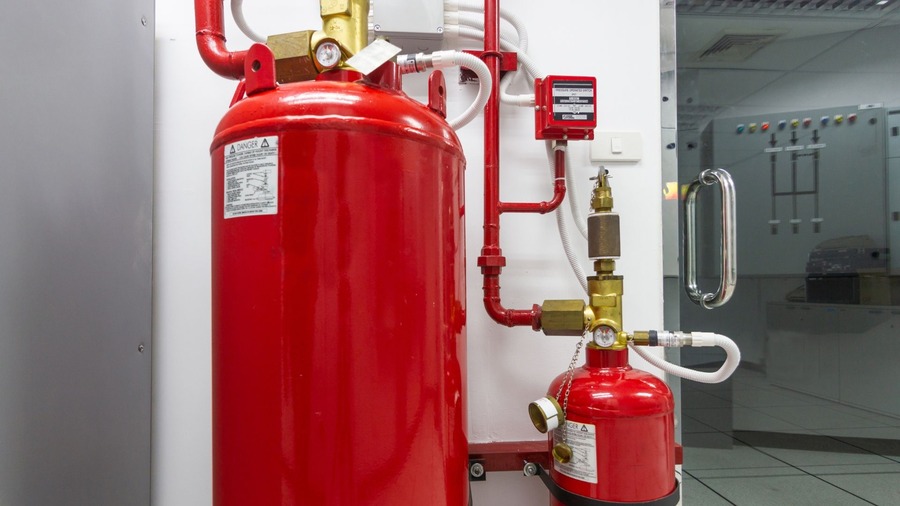
Several agents appear often in NFPA 2001 compliant systems. FM 200, Novec 1230, and FE 36 remain well known because they act fast and avoid the mess that comes with traditional suppression. As a result, they help reduce downtime and cleanup after discharge.
FM 200 works quickly and has long been used in data rooms, switchrooms, and control spaces. It has a strong track record, which is one reason many facilities still trust it.
Novec 1230 offers a popular option where low environmental impact matters. It also suits protected spaces that need a balance of performance, safety, and sustainability. In many boardrooms, that balance sounds a lot better than a sprinkler shower at 3 a.m.
FE 36 is another approved clean agent often used where a compact system and effective fire knockdown matter. It fits many electronic and mission critical applications.
Other approved clean agents may also be used depending on design goals, space conditions, and compliance needs. Therefore, a proper engineering review matters before any decision goes live.
Choosing between performance, footprint, and facility needs
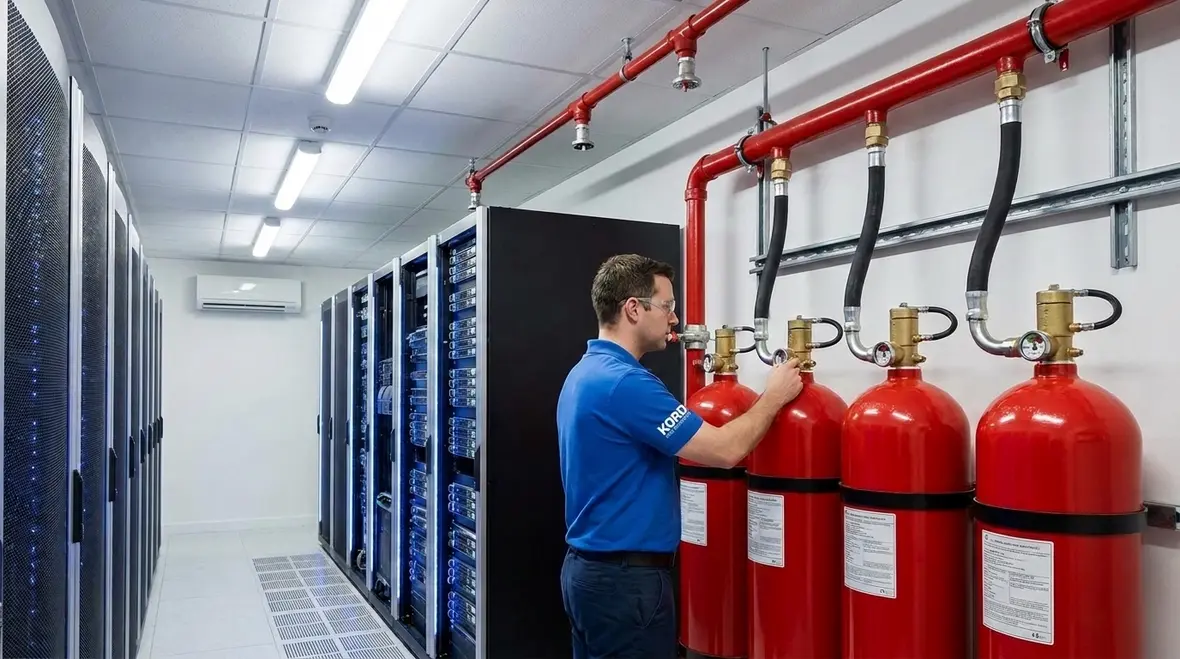
In practice, the right selection usually comes down to what the room needs to protect, how quickly discharge must occur, what environmental priorities apply, and how much space is available for cylinders and hardware. Some sites want a familiar option with a long service history. Others want an agent that supports sustainability goals without sacrificing response speed. Neither approach is wrong. The key is making the choice with proper technical guidance instead of a dartboard and blindfold.
Common clean agents
- FM 200
- Novec 1230
- FE 36
- Other approved agents
Best fit
- Server rooms, switchrooms, control panels
- Critical assets, occupied spaces, lower environmental impact goals
- Compact systems, electrical and special hazard areas
- Sites with specific performance or compliance needs
Why Australian Facilities Choose Clean Agent Suppression
Across Australia, many businesses protect assets that cannot afford water damage or long shutdowns. For that reason, clean agent systems support industries such as logistics, retail, manufacturing, telecommunications, and commercial property. They protect sensitive equipment, preserve stock, and help teams get back to work faster.
Clean agent systems also support safety planning in occupied spaces. Because they leave no residue, teams can often return to normal operations more quickly after an incident, once the area has been checked and cleared. That makes them a practical choice for facilities that run on uptime, not wishful thinking.
This is especially true in spaces where a standard water based response could solve one problem and create three new ones. A server room may survive the fire event only to lose operations because electronics, cabling, or storage media were drenched. Control rooms, archives, communications hubs, and specialty production areas face the same ugly math. Clean agents help avoid that domino effect by suppressing the fire without soaking the room like someone confused protection with revenge.
Facilities also value the speed of recovery. Less residue means less cleanup. Less cleanup often means shorter downtime. And shorter downtime usually means fewer meetings where everyone stares at spreadsheets and asks how this became so expensive. In operational terms, that makes clean agent suppression more than a technical choice. It becomes a business continuity strategy.
Uptime matters more than ever
For commercial and industrial operators, uptime is not some abstract boardroom buzzword. It is payroll, production, customer service, inventory access, communications, and reputation. A suppression system that protects the room while helping the site recover quickly can deliver value far beyond the discharge event itself.
How NFPA 2001 Approved Clean Agents Fire Suppression Works
These systems detect heat, smoke, or flame fast. Then, they release the agent into the protected space and reduce the fire’s ability to keep burning. The system works by removing heat, interrupting combustion, or both, depending on the agent type. Since clean agents are gaseous, they spread throughout the room and reach hidden spaces better than many other methods.
However, performance depends on the room being properly sealed, the design being correctly sized, and the nozzles and storage cylinders being placed with care. In other words, the system is only as smart as the people who design it. That is where expert support becomes priceless.
A clean agent system usually works as part of a larger protection sequence. Detection initiates alarms, warning periods may allow evacuation, control equipment confirms release logic, and then the agent discharges into the enclosure at a calculated concentration. After that, the room has to hold the agent long enough to suppress the fire and prevent re-ignition. If the enclosure leaks badly, the whole event can turn into an expensive lesson in why details matter.
That is also why room integrity testing deserves attention. Kord Fire Protection has a related resource on clean agent suppression system and room integrity testing, which fits naturally here because enclosure performance directly affects whether the approved agent can stay in place long enough to do its job.

Why enclosure integrity is not optional
Even the best agent cannot perform properly in a room that leaks like gossip in a small office. Doors, cable penetrations, ductwork, voids, and other openings can reduce hold time and weaken system performance. That is why good clean agent design treats the room itself as part of the suppression system, not just the backdrop.
Why Kord Fire Protection Becomes a Vital Partner
Kord Fire Protection can play a vital role from start to finish. First, it can help identify the right agent for the site and the risk profile. Then, it can design a compliant system that meets the requirements of NFPA 2001 and the needs of the facility. After that, it can manage installation, testing, and ongoing maintenance to keep the system ready when it matters most.
For industrial, retail, and commercial sites across Australia, that kind of support reduces mistakes and supports compliance. It also helps facility managers avoid costly guesswork. Clean agent systems are not a box ticking exercise. They are a serious protection tool, and Kord Fire Protection can help make sure the system performs as intended.
That full lifecycle support matters because clean agent protection does not end when the cylinders are mounted and the paperwork is filed. Systems need inspections, testing, maintenance, and informed review when the protected room changes. Add new equipment, alter airflow, reroute cabling, or modify walls, and the original design assumptions can change with it. Fire protection has a long memory for shortcuts.
For readers who want a deeper standards focused resource, Kord Fire Protection also has a related article on NFPA 2001 guidelines for clean agent fire suppression systems. It makes a strong internal reference here because it expands on the broader framework that supports compliant design, testing, and long term system performance.
FAQs About NFPA 2001 Approved Clean Agents
Conclusion
NFPA 2001 approved clean agents fire suppression gives Australian businesses a smart way to protect critical assets without the chaos of water damage. For facilities that depend on uptime, Kord Fire Protection can provide the guidance, design, and support needed to choose the right agent and keep it ready. When fire risk is real, the right partner makes all the difference.
From FM 200 and Novec 1230 to FE 36 and other approved options, the real win is not just choosing an agent from a list. It is choosing a system that fits the room, the hazard, and the operational reality of the site. That is how businesses trade panic for preparation and drama for a much better ending.

Join Our Newsletter!
Get the latest fire safety tips delivered straight to your inbox From our Newsletter.