
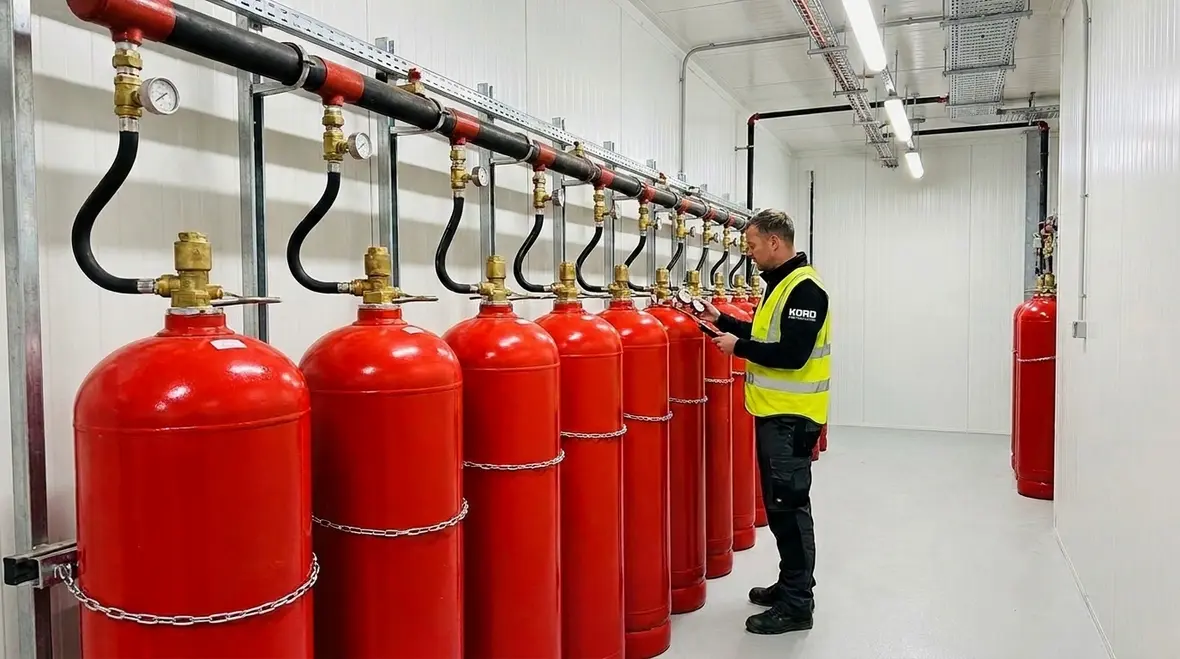
NFPA 2001 Section 5.2 Storage Container Specs for Clean Agents
Quick Answer: NFPA 2001 Section 5.2 sets the storage container rules for clean agent fire systems so the agent stays safe, stable, and ready to discharge when needed. For industrial, retail, and commercial sites, correct container selection, placement, and maintenance support reliable fire protection and smoother compliance.
In NFPA 2001 storage containers clean agent fire protection, the storage container is not just a metal vessel sitting in a plant room like a quiet extra in a safety drama. It is the heart of the system. Section 5.2 focuses on how those containers must be built, labeled, stored, and protected so the clean agent performs as designed. For facilities protecting critical spaces, this matters because uptime, asset safety, and compliance often depend on the smallest details. A missed spec can turn a solid fire plan into an expensive lesson, and nobody wants that plot twist.
If your team is reviewing upgrades or planning a protected room, Kord Fire’s clean agent fire suppression services are a natural next step for matching equipment, layout, and maintenance support to the real hazard.
What Section 5.2 Means for Storage Containers
NFPA 2001 Section 5.2 defines the basic expectations for containers used to hold clean agents such as inert gases and chemical agents. These containers must keep the agent under the right pressure and in the right condition until release. Therefore, the container is not chosen by guesswork or by whatever looks tough enough in the corner.
The section covers container design, materials, pressure rating, and compatibility with the agent inside. It also shapes how the container must be identified and how it should work with the full system. In practice, this helps prevent leaks, damage, or poor discharge performance. As a result, the system can do its job fast, which is the whole point when fire is moving like it has somewhere else to be.
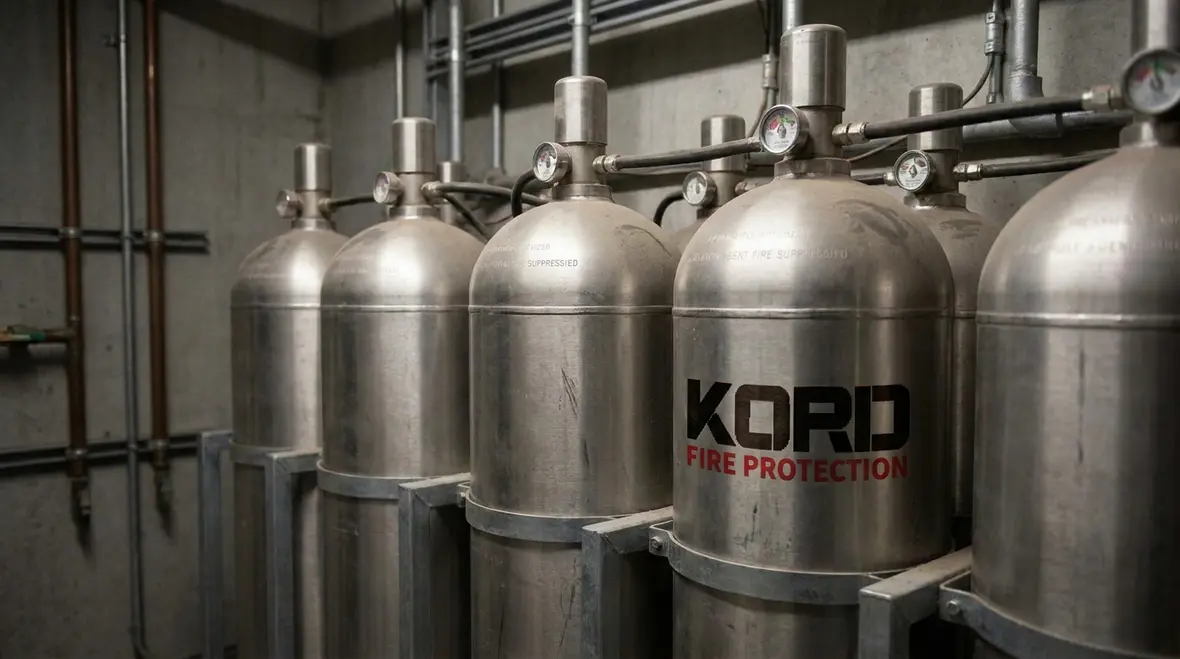
Why the container is more than a metal cylinder
A clean agent system only performs as well as the hardware holding the agent in reserve. The container has to manage pressure, maintain the correct fill, withstand service conditions, and stay compatible with valves, actuators, piping, and the extinguishing agent itself. That means the vessel is not some supporting character with two lines and a clipboard. It is doing heavy lifting every day, just very quietly.
How Storage Container Specs Affect System Performance
When a clean agent system activates, the container must release the agent at the correct pressure and flow rate. If the container does not meet the required spec, the system may not deliver enough agent to suppress the fire. That can mean more heat, more smoke, and more damage to equipment, records, stock, or production space.
For facilities, this issue goes beyond compliance. It affects business continuity. In data rooms, control rooms, warehouses, and retail back of house spaces, a weak container spec can create a big weak point. Therefore, the correct container choice supports fast discharge, stable agent storage, and dependable performance during an emergency.
That is also why it helps to understand the bigger framework behind the cylinder bank. Kord Fire’s resource on NFPA 2001 guidelines for clean agent fire suppression systems connects container requirements with system design, discharge goals, and maintenance planning.
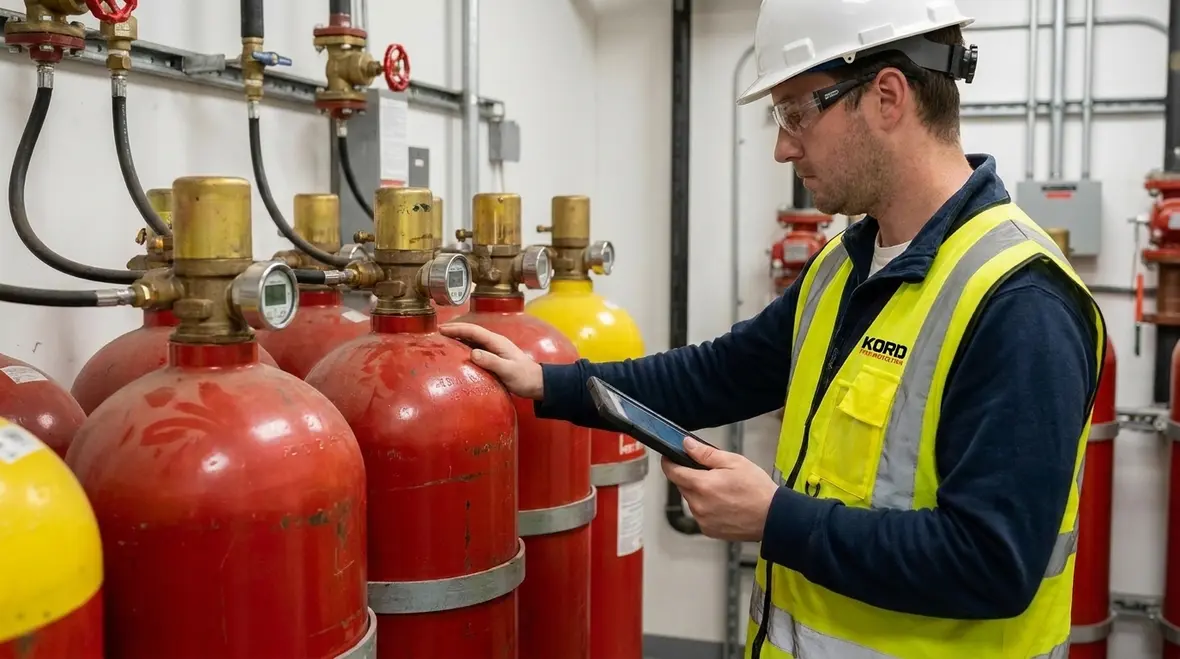
Pressure, discharge, and no room for improvisation
Once detection triggers release, the system does not get a rehearsal. The stored agent must move with the expected force and timing through the distribution network and into the protected enclosure. If the container pressure is off, if the wrong vessel was selected, or if deterioration has crept in unnoticed, suppression performance can suffer in the exact moment no one can afford it. Fire has enough confidence already. It does not need help from bad hardware choices.
What a Facility Must Check Before Installation
Before installation, a site should review the container type, fill level, pressure range, and agent compatibility. In addition, the team should confirm the storage area conditions, including temperature and exposure to damage. Clean agent systems often depend on controlled conditions, so a hot, crowded, or rough service area can create risk.
A simple dual view of what matters most
Also, the site should make sure access is clear. After all, a container hidden behind stock pallets and spare trolleys is not exactly a hero waiting for a close up. Clear access supports inspections, emergency response, and routine service without turning every visit into an obstacle course.
Teams should also think beyond the vessel itself. Bracing, seismic or impact considerations where relevant, room conditions, nearby equipment, and access for replacement all affect whether the installed setup stays workable over time. A technically correct selection can still become a practical headache if no one can safely inspect or service it later.
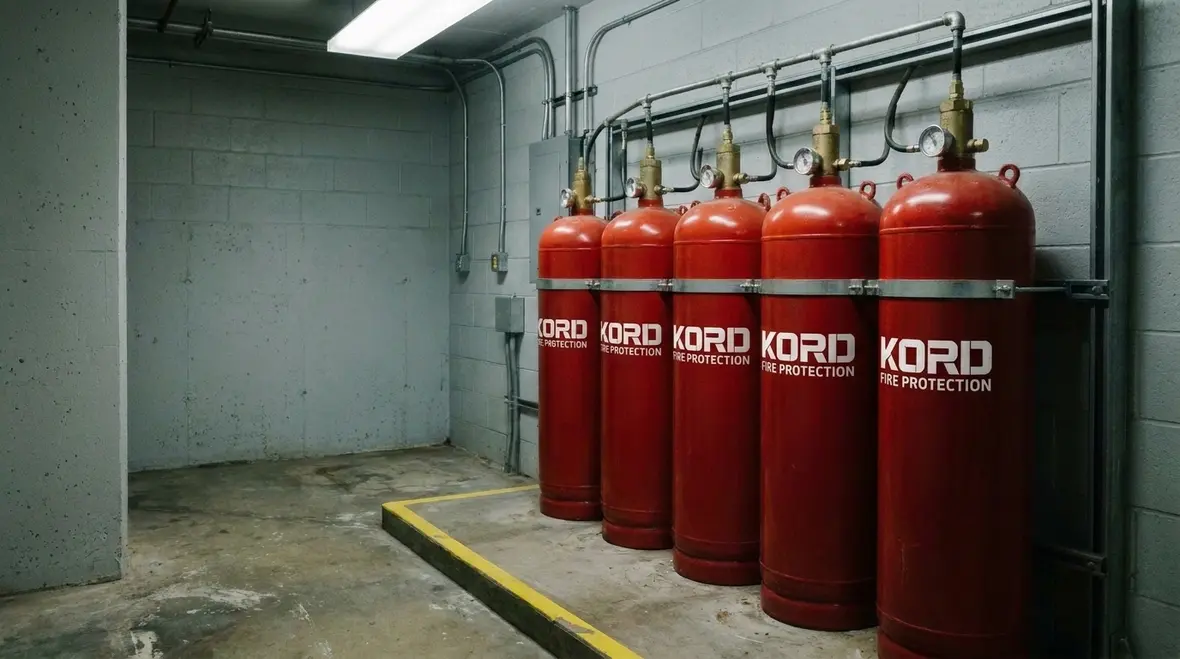
Why Industrial and Commercial Sites Should Care
Industrial plants, shopping centres, logistics hubs, office facilities, and mission critical rooms face different fire risks, but they share one need: systems that work when called upon. Clean agent systems are often chosen where water would damage assets or shut down operations. Therefore, the storage container spec becomes part of the wider risk plan.
For example, a retail distribution centre may need a clean agent system to protect a critical electrical or control room. Meanwhile, a commercial tower may use it to protect IT and communications gear. In both cases, NFPA 2001 storage containers clean agent fire protection supports fast suppression without the water cleanup that can feel like a second disaster. That is why the storage vessel must match the system design exactly.
High value spaces do not forgive weak details
In spaces filled with electronics, records, controls, or specialized production equipment, tiny mistakes can become very expensive stories. One overlooked spec on a cylinder bank can undercut a protection strategy that otherwise looked excellent on paper. That is why Section 5.2 deserves more than a quick skim and a confident nod from across the room.
How Kord Fire Protection Can Support the Job
Kord Fire Protection can become a vital partner in this work because container compliance is only one part of the job. A strong partner helps with system review, installation support, testing, and ongoing service. In addition, they can help sites make sense of the standard without turning it into a paperwork jungle.
For facilities teams, that support matters. Kord Fire Protection can help identify the right storage container setup, check installation details, and support maintenance planning. As a result, businesses can keep their systems aligned with NFPA 2001 requirements and reduce the chance of costly faults later. That kind of partnership is practical, steady, and very welcome when a site needs fire protection without drama.
How Ongoing Inspection Keeps the Container Ready
Storage containers need regular checks because pressure, seals, labels, and mounting hardware can all change over time. In addition, the room conditions can drift, especially in busy facilities where equipment gets moved and service zones become crowded. Routine inspection helps catch issues before they become failures.
During maintenance, technicians should look for damage, corrosion, loose fittings, and signs of leakage. They should also confirm the container remains properly identified and accessible. This is not busywork. Rather, it is the difference between a system that looks ready and one that actually is ready. And in fire protection, “looks fine” is about as comforting as a dramatic soundtrack in an empty hallway.
Inspection is where theory meets reality
Design documents can say all the right things, but field conditions always get a vote. Labels fade. Service areas fill up. Valves get bumped. Corrosion starts small and then quietly auditions for a bigger role. Regular inspection keeps the system grounded in reality and gives site teams a chance to fix small issues before they become emergency-sized problems.
FAQ for NFPA 2001 Container Specs
Final Takeaway and Next Step
NFPA 2001 Section 5.2 gives the storage container its proper role in clean agent fire protection. When the container meets spec, the whole system has a better chance of doing its job under pressure. For industrial, retail, and commercial sites, that is a serious advantage.
Kord Fire Protection can help turn those requirements into a working, compliant, and dependable fire safety solution. The next step is simple: review the system, confirm the container specs, and act before trouble shows up uninvited.

Join Our Newsletter!
Get the latest fire safety tips delivered straight to your inbox From our Newsletter.



