NFPA 2001 Section 1.6 Equivalency Clean Agent Fire Suppression
Quick Answer
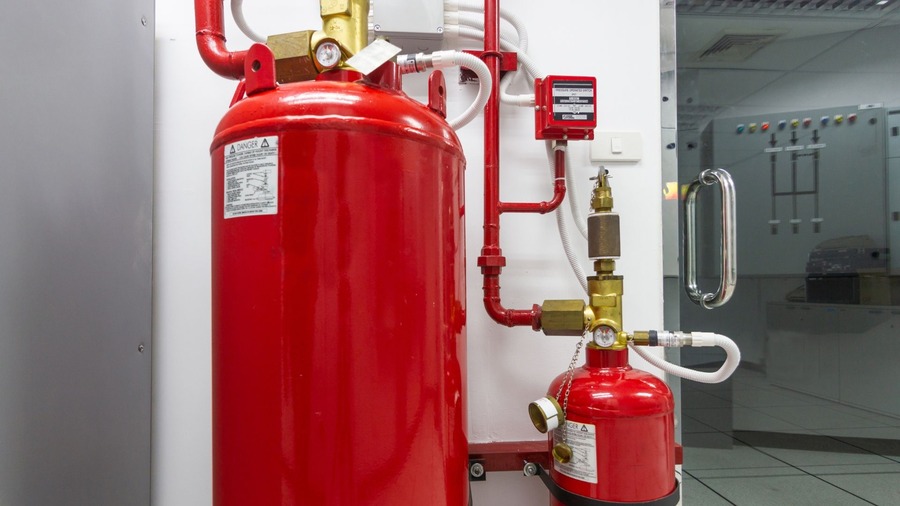
NFPA 2001 Section 1.6 does allow alternative clean agent designs when the system can prove equivalent performance, safety, and code compliance. In plain terms, the design must protect the hazard just as well as the prescriptive method. That is where expert fire protection support, including clean agent fire suppression services from Kord Fire Protection, becomes highly valuable.
NFPA 2001 Equivalency Clean Agent Fire Suppression in Plain English
NFPA 2001 equivalency clean agent fire suppression gives industrial, commercial, and retail facilities a path to use a different system design when it still meets the same protection goals. In the first 100 to 150 words, one thing matters most: the standard does not force one single design in every case. Instead, Section 1.6 allows an alternative approach if the design delivers equal safety, equal performance, and equal code intent. That matters across Australia, where facilities often face unique layouts, mixed assets, and tight operational demands. So, yes, equivalency can exist. However, it must be proven, documented, and accepted by the right authorities. Easy on paper, not always easy in the real world. Fire protection rarely enjoys simple answers, which is rude, but true.
What Section 1.6 Actually Allows
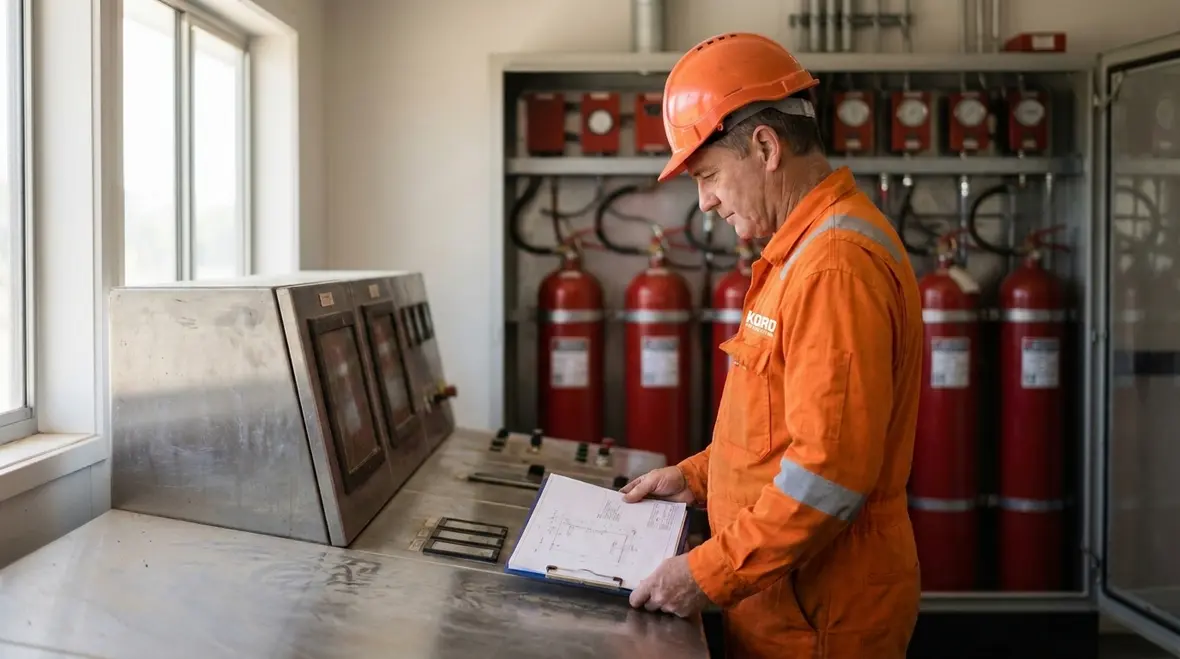
Section 1.6 serves as the door for alternate methods. It lets a designer move beyond strict prescriptive details when the outcome still matches the standard’s purpose. In practice, that means a clean agent system may use a different layout, piping method, nozzle arrangement, or engineering approach if the final result protects the same hazard to the same level.
However, equivalency does not mean “close enough.” It means the design must show that it performs as well as the stated method. Therefore, the design team must support the proposal with calculations, product data, hazard analysis, and testing evidence where needed. This is the part where the paperwork stops being decorative and starts earning its keep. Facilities working through these questions often benefit from reviewing NFPA 2001 guidelines for clean agent fire suppression systems alongside the project design so the alternate approach still lines up with the broader intent of the standard.
Why the standard leaves room for alternatives
Standards are written to create dependable outcomes, not to punish unusual rooms for having the audacity to be unusual. Some hazards fit textbook conditions. Others absolutely do not. Equipment rooms, control spaces, telecom closets, and mixed-use industrial areas can present odd ceiling heights, structural beams, partial obstructions, cable trays, or operating limits that make a by-the-book layout awkward or inefficient. Section 1.6 exists because performance matters more than ritual. If the alternate design does the same job with the same level of safety, the standard gives that idea a chance.
When Equivalency Makes Sense for Facilities
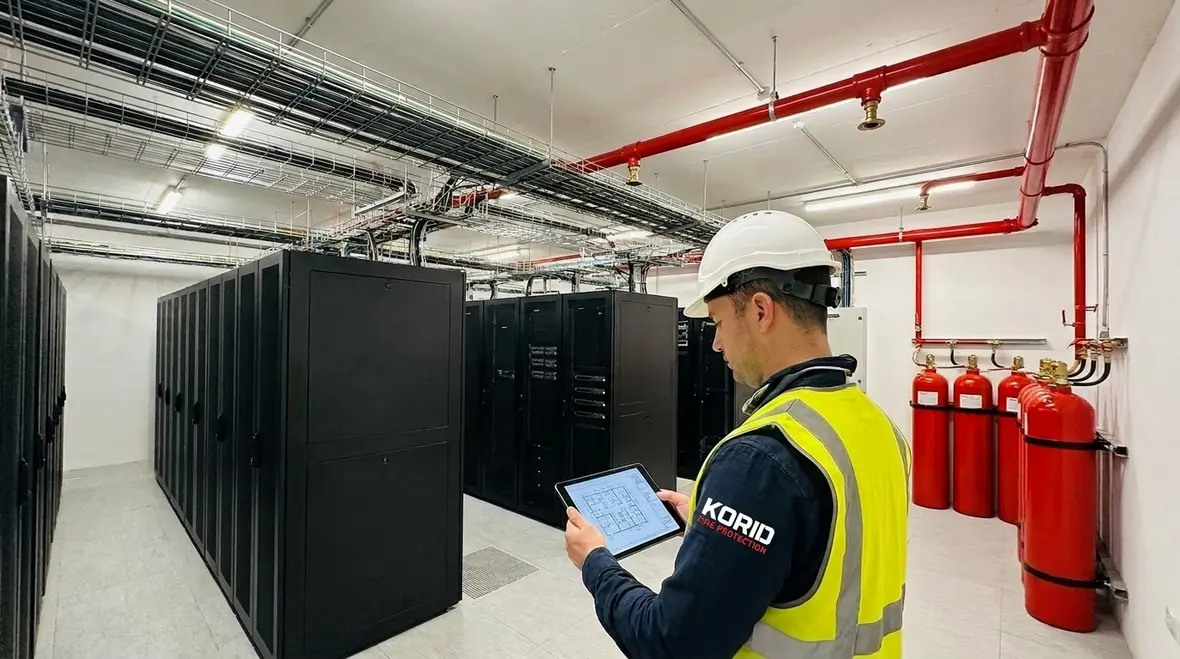
Many industrial and commercial sites need flexibility. For example, a data room may have limited ceiling space. Likewise, a plant room may contain odd-shaped equipment, open cable trays, or obstacles that make a standard layout difficult. In these cases, NFPA 2001 equivalency clean agent fire suppression can help the owner keep operations moving without forcing a major building redesign.
It often makes sense when a site needs:
- Protection of high value electrical or control assets
- Minimal downtime during installation
- A solution for tight or complex spaces
- A design that fits local building limits or site rules
- A cleaner option than water based suppression in sensitive areas
Equivalency also becomes practical when operations cannot tolerate messy suppression methods or long recovery periods. Sensitive electronics, control panels, archives, communication hubs, and specialized machinery all tend to prefer a solution that stops fire without soaking the room or leaving a cleanup project that feels like its own natural disaster. That does not mean every facility should automatically choose an alternate design. It means the option deserves a serious look when the room, the assets, and the operational demands are all pointing in the same direction.
How a Clean Agent Design Proves Equivalency
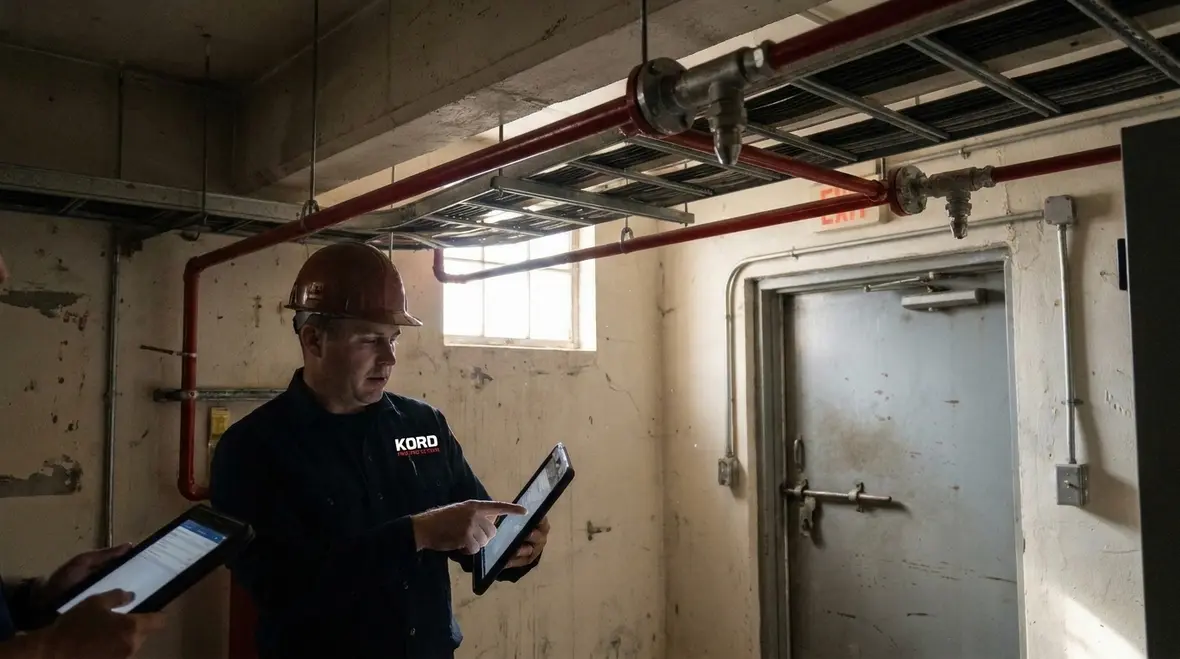
The real test comes down to evidence. A design team must show that the alternative arrangement meets the same fire suppression goal as the accepted baseline. That usually includes hazard review, agent concentration needs, enclosure integrity, discharge time, and component compatibility. In other words, the system must do the job, not just look impressive in a drawing set.
| Design Area | What Needs to Match |
| Agent performance | Must suppress the same fire risk effectively |
| Room protection | Must maintain the required concentration |
| Discharge pattern | Must reach the hazard within the right time |
| System safety | Must protect people, equipment, and operations |
| Code intent | Must satisfy the purpose of NFPA 2001 |
What good proof usually looks like
A solid equivalency package is rarely one document and a confident shrug. It usually combines system calculations, manufacturer data, room volume analysis, discharge modeling, component listings, and supporting notes that explain exactly why the proposed design still achieves the intended result. Depending on the hazard, that may also involve test information, sequence of operation details, and evidence that the room can hold the agent concentration long enough for suppression to work. Translation: if the design is unusual, the proof needs to be unusually clear.
The authority reviewing the submission is not there to admire creativity for creativity’s sake. They want to see that the alternate method delivers equal reliability, equal occupant safety, and equal protection of the hazard. If any one of those pieces feels vague, the approval path gets longer, bumpier, and much less fun for everyone involved.
Why Kord Fire Protection Becomes a Vital Partner
This is where Kord Fire Protection can become a vital partner. Alternative clean agent designs demand more than basic installation. They call for practical fire engineering, careful documentation, and a clear path through approvals. Kord Fire Protection can help facilities assess the hazard, compare design options, and shape a solution that fits the site instead of forcing the site to fit the system. That saves time, reduces risk, and keeps the project from turning into a very expensive guessing game.
For Australian businesses, that support matters even more because facilities often deal with varied compliance needs, operational pressure, and limited shutdown windows. Kord Fire Protection can assist with concept development, design review, compliance support, and installation planning. As a result, owners and managers get a system that is not only built for performance, but also built for approval.
That support also pairs naturally with related work such as room integrity testing for clean agent suppression systems, because even the smartest alternate design can struggle if the enclosure leaks like it has a personal grudge against retention time. In practical terms, expert help closes the gap between a technically interesting idea and a system that can actually survive review, commissioning, and real-world operation.
Common Mistakes to Avoid with Equivalency Claims
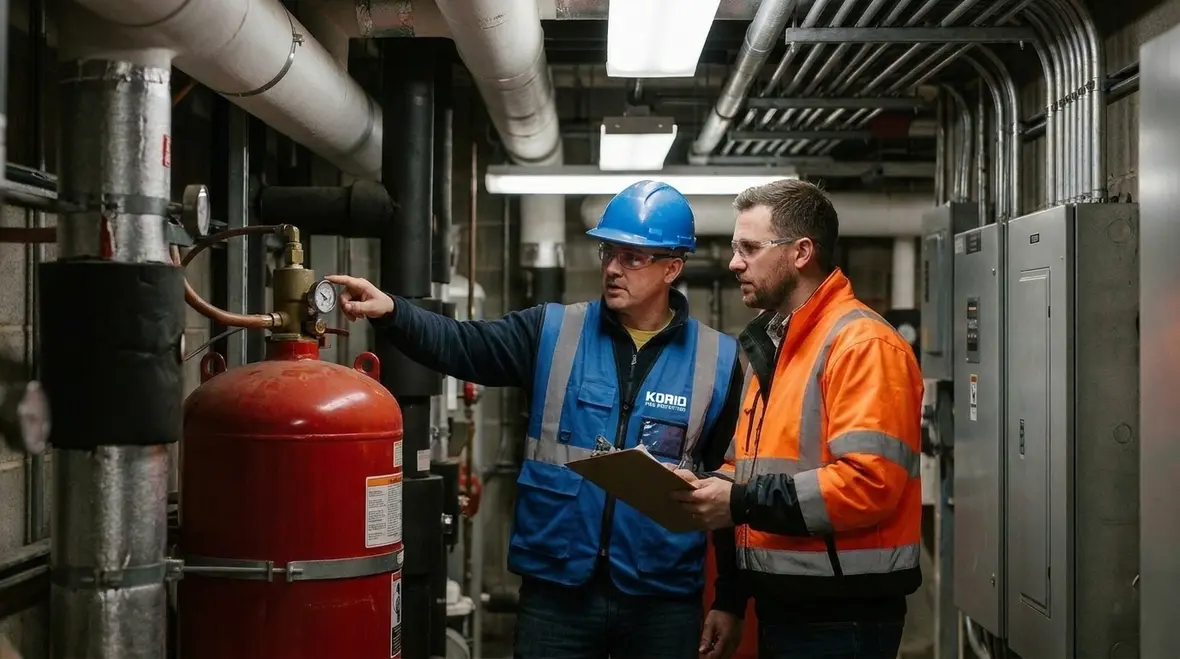
Some teams assume that any alternate layout automatically counts as equivalent. It does not. Others focus only on equipment and ignore enclosure integrity. That can sink the design faster than a bad sequel. A clean agent system depends on the room holding concentration long enough to work, so leaks matter a great deal.
Key mistakes include:
- Using a design that lacks proof of performance
- Skipping enclosure testing or door fan checks where needed
- Ignoring maintenance access and future servicing
- Assuming the authority will approve a concept without evidence
- Choosing speed over proper engineering review
Why these mistakes keep happening
Most equivalency problems start with good intentions and bad shortcuts. A team is under schedule pressure, the room is awkward, the budget is watching from the corner like a hawk, and suddenly “we will document that later” starts sounding reasonable. It usually is not. Clean agent systems are unforgiving about details. If nozzle coverage is off, if enclosure performance is weak, or if the hazard analysis is half-baked, the entire claim of equivalency starts wobbling. Once that happens, delays and redesigns tend to arrive right on cue.
What Australian Sites Should Ask Before Approval
Before moving ahead, facility teams should ask simple but sharp questions. Does the proposed design protect the same hazard? Can the enclosure hold the agent concentration? Has the design team documented the equivalency clearly? Will the system remain serviceable after installation? And most importantly, will the authority accept it?
These questions help industrial plants, retail properties, and commercial facilities avoid delays. They also help owners decide whether a prescriptive design works best or whether NFPA 2001 equivalency clean agent fire suppression offers a smarter path. The goal is not to be clever for the sake of clever. The goal is to protect assets, people, and uptime with as little drama as possible. Fire systems should never become the office soap opera.
It also helps to ask who will maintain the system after the approval is won and the installers have packed up. A technically valid design still needs inspection, testing, service access, and long-term support. If the system is hard to maintain, awkward to test, or dependent on assumptions nobody documented, today’s elegant workaround can become tomorrow’s recurring headache. Nobody wants a fire protection strategy that ages like milk.
FAQ
Conclusion
NFPA 2001 Section 1.6 gives facilities room to solve real protection problems with smart, equivalent clean agent designs. However, success depends on proof, compliance, and good engineering. The standard creates flexibility, but it does not hand out free passes. Every alternate approach still has to protect the hazard, support occupant safety, and satisfy the real intent behind the rules.
For Australian industrial, retail, and commercial sites, Kord Fire Protection can help turn that complexity into a practical, approved solution. When the stakes are high, the right partner makes all the difference. And in fire protection, “mostly right” is rarely the compliment anyone wants on the final design.

Join Our Newsletter!
Get the latest fire safety tips delivered straight to your inbox From our Newsletter.