
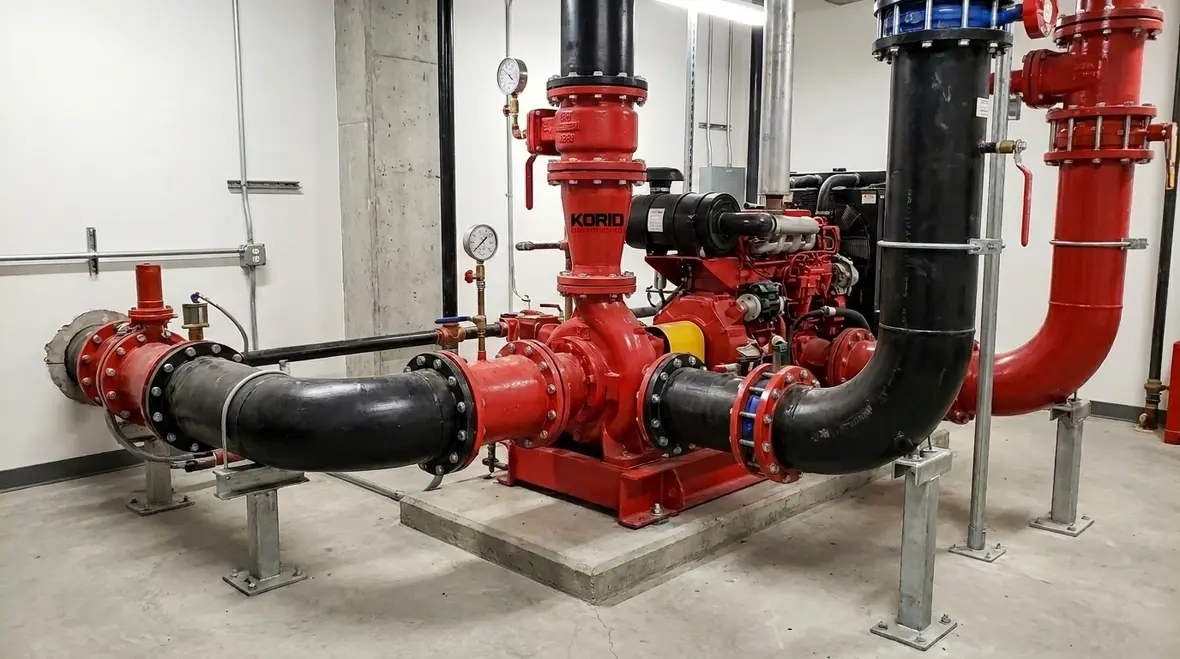
NFPA 20 Fire Pump Suction and Discharge Piping Requirements
Quick Answer (40-60 words)
NFPA 20 Sections 4.13 to 4.15 set clear rules for designing fire pump suction and discharge piping. They address pipe routing, sizing, support, fittings, and installation details that keep flow reliable. Following these standards helps prevent cavitation, loss of pressure, and unsafe operation. Kord Fire Protection can guide and verify compliance.
In facilities across Australia, fire pump performance starts long before the pump turns on. Within the first steps of fire pump suction and discharge piping requirements, NFPA 20 Sections 4.13 to 4.15 focus on how piping connects, how it supports water flow, and how it avoids the common traps that turn a fire system into a “hope and pray” system. That is not a plan anyone should bet their building on.
Now, this article walks through the intent behind those sections and what designers, contractors, and facilities teams should expect in real life. And yes, piping can be boring, but only the way a seatbelt is boring: it works, until it does not. For teams planning broader compliance support, full fire protection services can help connect design review, installation quality, and test readiness in one coordinated path. Kord Fire Protection can become a vital partner on these jobs, helping projects move from design intent to site-ready execution.
Why NFPA 20 Sections 4.13-4.15 Matter in the Real World
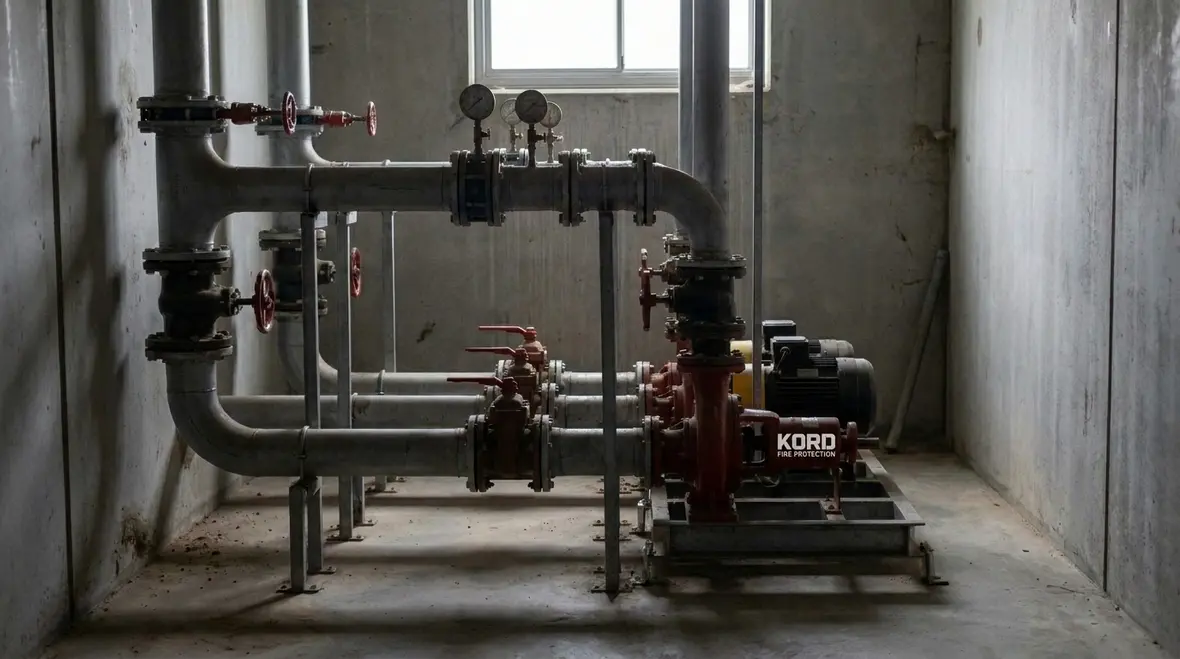
NFPA 20 Sections 4.13 to 4.15 exist because fire pumps must deliver predictable flow when seconds count. Therefore, the suction and discharge piping does not just “carry water.” Instead, it shapes pressure, protects the pump from damage, and supports correct hydraulic performance.
Even small deviations can show up later as air pockets, unstable suction pressure, vibration, or insufficient discharge pressure. Consequently, fire pump suction and discharge piping requirements drive design choices like pipe diameter transitions, elbow orientation, valve placement, and support systems.
In industrial, retail, and commercial facilities, those details also affect maintenance access and long term reliability. Plus, where upgrades happen in active sites, careful piping rules help the crew avoid costly rework that management definitely does not enjoy. Nobody wants a shutdown for “just one fitting.”
What These Sections Really Protect
At a practical level, these sections protect both hydraulic performance and mechanical stability. They help make sure the pump receives water cleanly, pushes it out efficiently, and does not get punished by piping decisions that looked harmless on a drawing but act very differently once pressure, velocity, and vibration show up on site.
Suction Piping Basics: How the System Stays Stable
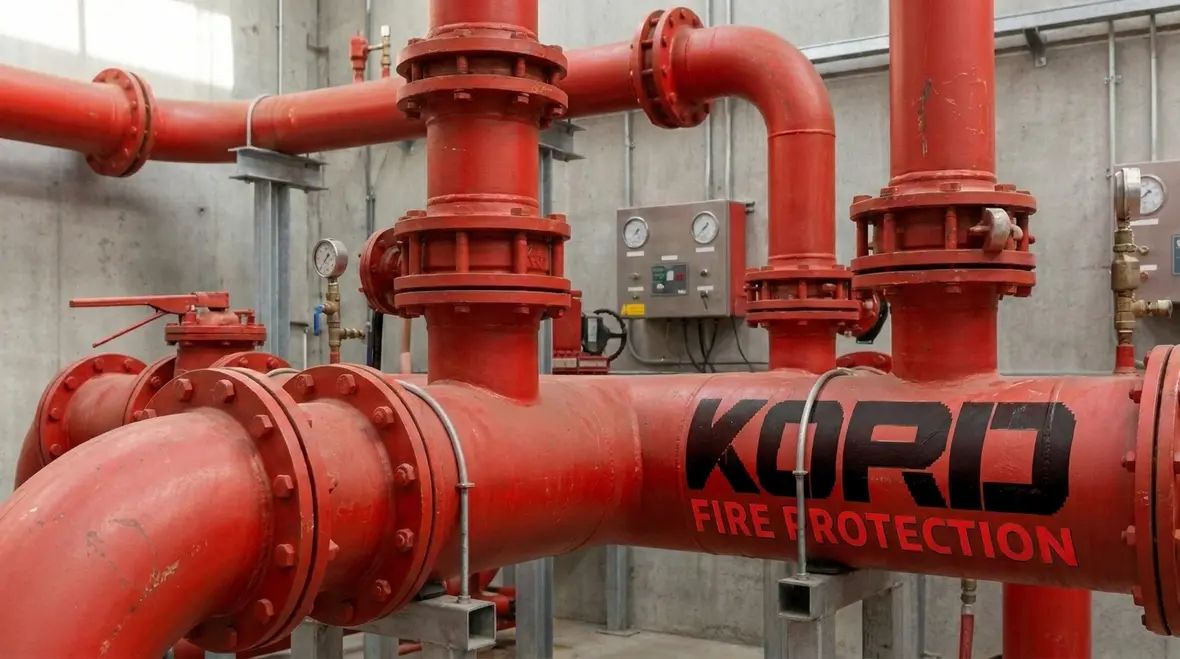
Suction piping must feed water to the pump smoothly. To meet that goal, NFPA 20 focuses on preventing conditions that reduce suction pressure or create flow problems.
Key design intent usually includes the following:
- Keep suction arrangements simple and direct so the pump sees stable flow.
- Avoid arrangements that trap air, because air reduces effective flow and can damage performance.
- Control pipe slopes so water does not sit where it should not.
- Use proper fittings and transitions to reduce turbulence and sudden changes.
- Size the suction piping correctly, because undersizing can raise friction losses and lower suction pressure.
As a practical point, designers often focus on the pump curve and forget the rest of the route. However, the suction line contributes friction loss and velocity effects. As a result, the pump may operate, but not in the part of the curve the calculations assumed.
When Kord Fire Protection supports the project early, it helps teams review the suction layout with a compliance and performance mindset. That collaboration reduces surprises during commissioning and improves clarity for trades installing the piping.
Suction Mistakes That Cause Trouble Later
The most expensive piping issues are often the quiet ones. A route that is technically buildable but hydraulically clumsy can create hidden friction, inconsistent suction conditions, and performance drift that only shows up during acceptance testing. By then, everyone is staring at the gauges and pretending they are not already thinking about change orders.
Discharge Piping Basics: Maintaining Pressure Where It Counts
Discharge piping must deliver the designed pressure to the system outlets. Therefore, NFPA 20 emphasizes controlling friction losses, managing flow characteristics, and preventing harmful conditions on the discharge side.
In most installations, the discharge piping approach aims to:
- Limit unnecessary bends and restrictions so discharge pressure stays near the target.
- Maintain correct alignment to reduce turbulence and strain on the pump and valves.
- Plan valve and fitting selection so they match hydraulic expectations.
- Support the piping properly to prevent misalignment that can affect pump operation.
Once again, the design cannot stop at “the pump outlet.” Instead, it must consider the full discharge run, including how the system connects to hydrants, sprinklers, monitors, or other devices. If the discharge piping requirements receive rushed treatment, the system may not perform at the flow rate the fire scenario demands.
And yes, sometimes teams install a shiny valve because it looks good in a photo. Yet during a flow test, that choice can create extra losses. A building is not a showroom. It is a responsibility.
Pressure Loss Is Not Just a Math Problem
Pressure loss becomes a field problem fast when routing decisions pile up. One extra bend may not look dramatic, but a few added fittings, awkward transitions, or poorly chosen valves can slowly chip away at the discharge performance that the design team thought was safely in hand.
What About Pipe Supports, Restraints, and Alignment
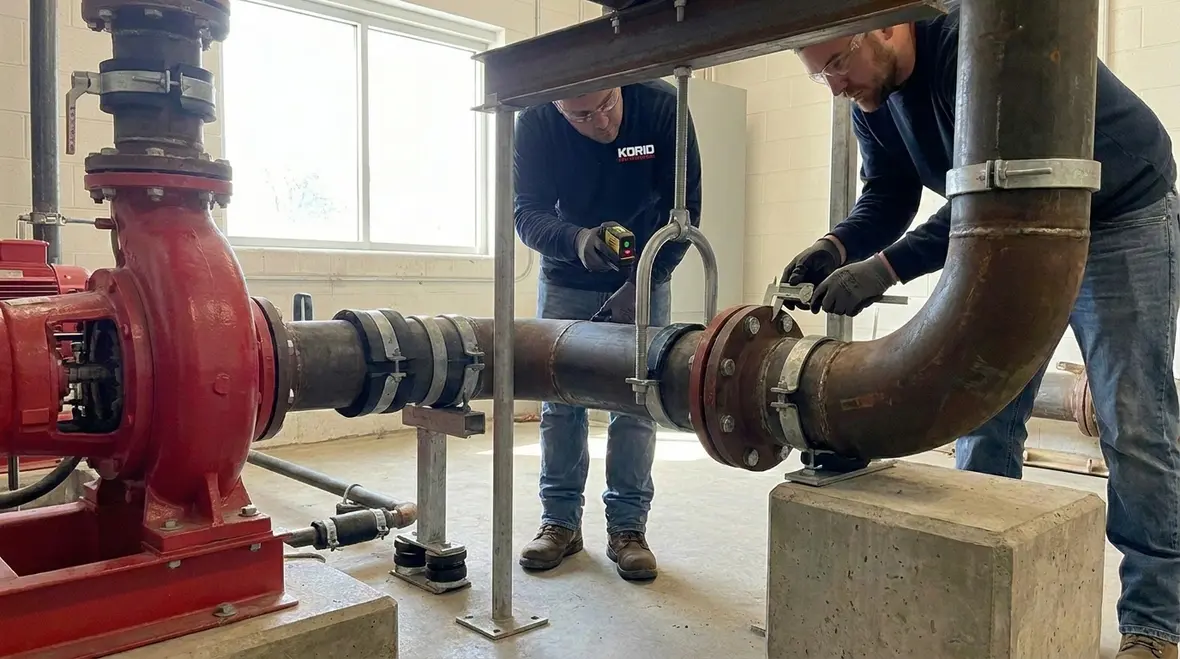
NFPA 20 expects the piping to stay in the right place and hold up under operating conditions. Therefore, supports, anchors, and restraints matter because the pump generates force through piping movement, vibration, and thermal changes.
The main idea is straightforward: if the piping shifts, the pump can suffer added stress. Consequently, misalignment can increase wear and create leaks. Proper support also helps crews avoid “field fixes” that become permanent shortcuts.
Design teams should coordinate supports with the pump skid, maintain correct alignment, and account for pipe weight and load. Additionally, restraint strategy should consider thrust forces and any reactions at valves and elbows.
Here is where Kord Fire Protection often becomes valuable. Kord can work with project teams to review installation intent, confirm that supports match the design, and help ensure that what gets installed lines up with what the calculations assumed. When that check happens early, contractors can correct issues before they become expensive change orders.
Alignment Is a Reliability Issue, Not a Cosmetic One
A pipe that looks close enough may still push stress into the pump casing, joints, or valve bodies. Over time, that can mean leaks, vibration, or wear that feels mysterious until someone traces it back to installation tolerance and support placement. Suddenly, “close enough” is not nearly as charming.
Installation Details That Protect Performance During Tests
After drawings come out, the job shifts to installation quality. Fire pump suction and discharge piping requirements depend on real field conditions: how piping joints get finished, how fittings get oriented, and how air gets managed.
During installation, teams should focus on:
- Correct orientation of elbows and tees so flow patterns stay predictable.
- Proper joint preparation and installation so pressure losses do not spike later.
- Air management so the pump does not fight trapped air during start.
- Clear documentation so commissioning teams can verify compliance fast.
Transitioning from construction to commissioning requires discipline. For example, if a suction line ends up lower than expected, air might collect. On the other hand, if a discharge line gets routed in a way that increases friction losses, the pump may still start, but it may not deliver the expected pressure at flow.
In Australia’s mixed asset landscape, where facilities range from logistics hubs to retail precincts and multi-tenant sites, the “as built” conditions often differ from early assumptions. Kord Fire Protection can support documentation review, site observations, and test readiness, so the team spends less time guessing and more time proving performance.
For readers who want the broader code picture, Kord also covers this in How NFPA 20 Regulates Fire Pump Systems, which pairs naturally with suction and discharge piping planning.
Using a Partner Approach: How Kord Fire Protection Fits the Project
NFPA 20 compliance does not happen by accident. It needs coordination between design, installation, and testing. Kord Fire Protection can become a vital partner with the service and job because it supports the whole chain, not just the final checklist.
In practical terms, that partnership can include:
- Design review support to align piping intent with code expectations.
- Site verification to reduce gaps between drawings and installation.
- Commissioning readiness so fire pump suction and discharge piping requirements stay on track.
- Clear reporting for facility teams that need confidence, not confusion.
In other words, Kord helps the project move like a team, not like a relay race where everyone trips at the baton exchange. And when the system finally runs during testing, the crew can focus on performance rather than paperwork surprises.
Common Pitfalls Teams See During Projects
Even experienced contractors can get caught by predictable issues. Therefore, teams should watch for these typical pitfalls:
- Assuming the pump can “make up for” poor piping when the suction and discharge hydraulics do not match the calculations.
- Routing changes during construction that add fittings, increase friction losses, or alter slope and air behavior.
- Support mistakes that allow stress and misalignment under load.
- Valve and fitting selection that does not match the intended hydraulic impact.
- Loose documentation that slows commissioning and creates avoidable rework.
To prevent these problems, project teams should coordinate early, verify during installation, and confirm during testing. That flow of responsibility protects the facility and respects the time of the people building the system.
FAQ
Final Call to Action
When fire pump piping gets planned, installed, and verified with care, the system performs when it must. Kord Fire Protection can help project teams across industrial, retail, and commercial facilities in Australia move from NFPA intent to site-ready execution.
If this job is underway, reach out to discuss your suction and discharge piping plan and commissioning readiness. Get clarity now, so testing day feels like a win, not a surprise.

Join Our Newsletter!
Get the latest fire safety tips delivered straight to your inbox From our Newsletter.



