
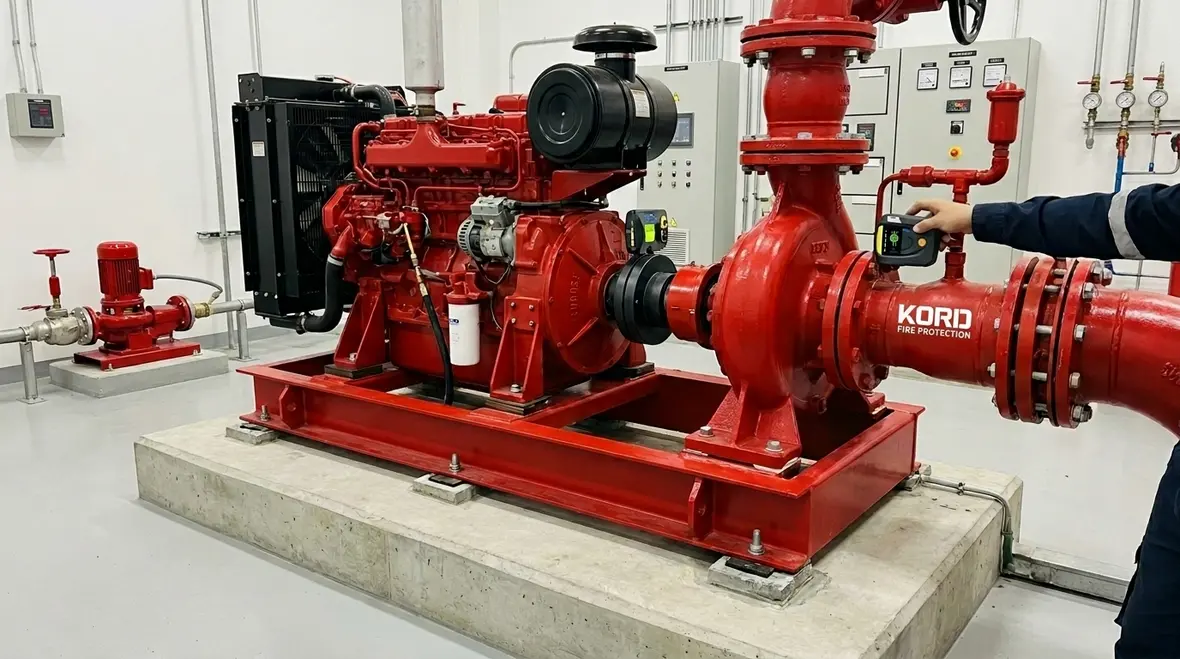
NFPA 20 Fire Pump Foundation and Alignment Compliance
Quick Answer: NFPA 20 Sections 6.4–6.6 require that fire pump foundations support the pump correctly, alignment stays within limits, and operation and maintenance follow clear, repeatable steps. When these rules are handled well, systems perform when they must. Kord Fire Protection can partner with facilities teams to keep compliance practical and reliability high.
In Australia, facilities teams often treat the fire pump like a “set it and forget it” machine. That is a heroic fantasy, like thinking the smoke alarm will stop yelling on its own. Early on, however, the fire pump foundation and alignment requirements set the stage for everything that follows. NFPA 20 Sections 6.4–6.6 focus on how the pump sits, how it stays aligned, and how it operates and gets maintained over time. When those basics are built right, the pump delivers the right pressure and flow, with fewer surprises. And when they are built wrong, the system still works, technically, in the same way a car “technically runs” after the wheel falls off.
Facilities that want a broader compliance strategy can also connect this work with full fire protection services, especially when the pump room is only one part of a larger life safety program. It also helps to review how NFPA 20 regulates fire pump systems so the foundation, alignment, controls, and testing logic all stay connected instead of acting like separate projects that only meet during an inspection.
Fire pump foundations that stay stable under pressure
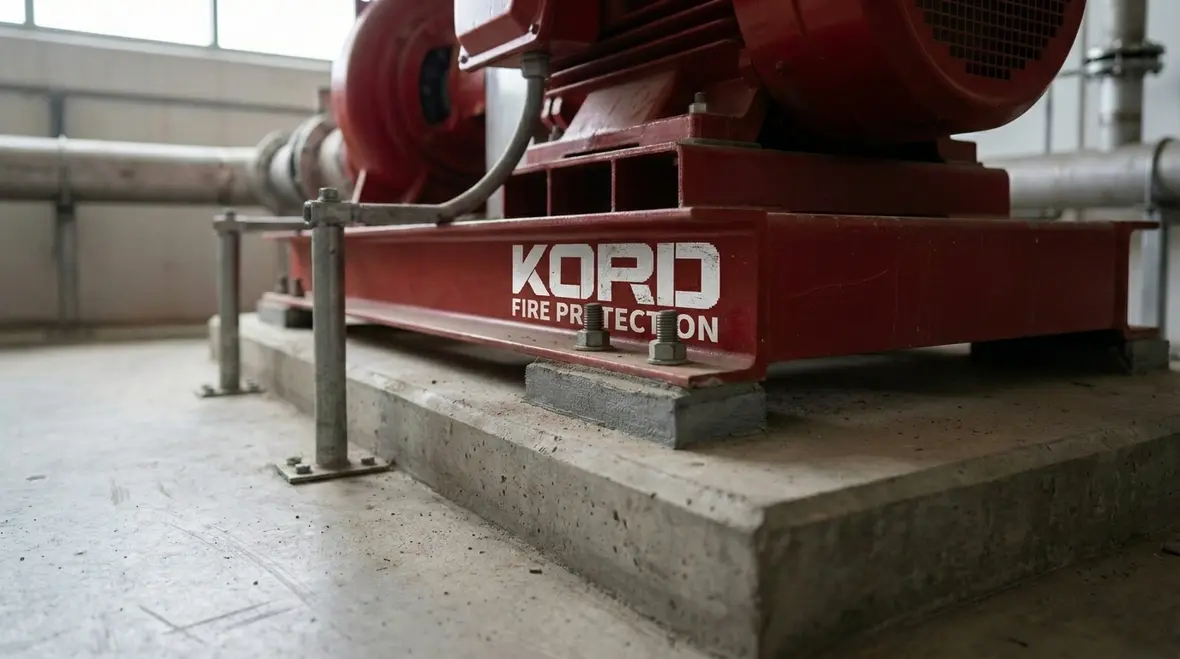
NFPA 20 calls for foundations that can handle pump loads without shifting, settling, or twisting. In practice, that means the foundation must support the pump base, piping loads, and dynamic forces during starts and operation. Even a well built pump can struggle if the foundation rocks, cracks, or changes shape. So, facilities managers should treat foundation work like the quiet backbone of the whole fire pump system.
To meet the intent of NFPA 20 Section 6.4, teams should verify and document key items during installation. First, the foundation must align with the equipment layout and allow proper pipe support. Next, the baseplate must seat firmly, with correct grouting and curing. Then, technicians should confirm that the pump and driver remain supported through the full operating cycle. If the foundation is poured poorly, alignment may drift and vibration can rise, which makes performance unreliable.
For industrial sites and retail facilities across Australia, this matters because foundations often interact with other trades. For example, concrete work, steel supports, pipe racks, and anchor bolt locations might change during construction. Therefore, the best approach is to coordinate early, capture measurements, and avoid “we will fix it later” decisions that tend to arrive late and cost more than planned.
What a stable foundation usually includes
- Enough structural capacity for static and dynamic pump loads
- Anchor bolt placement that matches the approved equipment layout
- Baseplate support that allows proper grouting and even contact
- Pipe supports arranged so the pump does not carry unintended stress
- Clear documentation showing what was installed and verified
How alignment affects performance and reliability
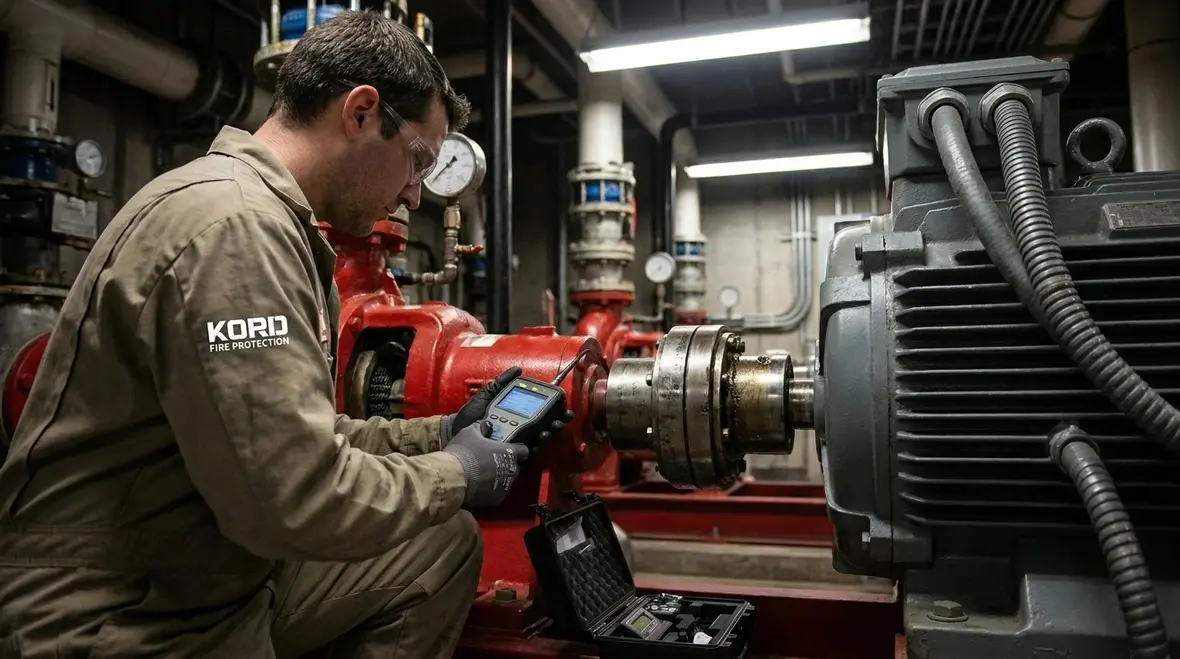
NFPA 20 Section 6.5 centers on alignment. It requires that pump alignment and coupling alignment be set and maintained within acceptable limits. Alignment impacts flow control, bearing life, and vibration levels. In other words, it affects whether the pump runs smoothly or runs like it is trying to win a talent show with dramatic shaking.
Alignment is not just a one time event. As a facility changes, alignment can shift. Consider common causes: foundation settling, pipe stress, thermal expansion, rework around valve assemblies, and equipment access that causes minor contact or strain on piping supports. Therefore, alignment work should include both initial setup and verification after any related changes.
Good alignment practices typically include using proper tools, measuring coupling alignment in correct positions, and adjusting with controlled methods. After that, technicians should recheck alignment after tightening anchor bolts and after grout sets, because the base can move slightly during cure. Then, they should confirm that rotation direction and coupling engagement match the pump design.
Finally, alignment checks should pair with vibration review. If vibration stays high or trends upward, it may point to alignment drift, imbalance, or piping stress. When teams ignore this, the pump can still move water, but it does so less efficiently and more expensively.
Alignment checks that actually help
The useful version of alignment work is boring in the best possible way. It is measured, repeated, documented, and checked again after anything shifts. Teams should not rely on visual confidence alone, because “that looks close enough” has ended many otherwise respectable maintenance days. A repeatable alignment process gives the facility a baseline and makes future troubleshooting much faster.
Operating requirements and what NFPA 20 expects in the field
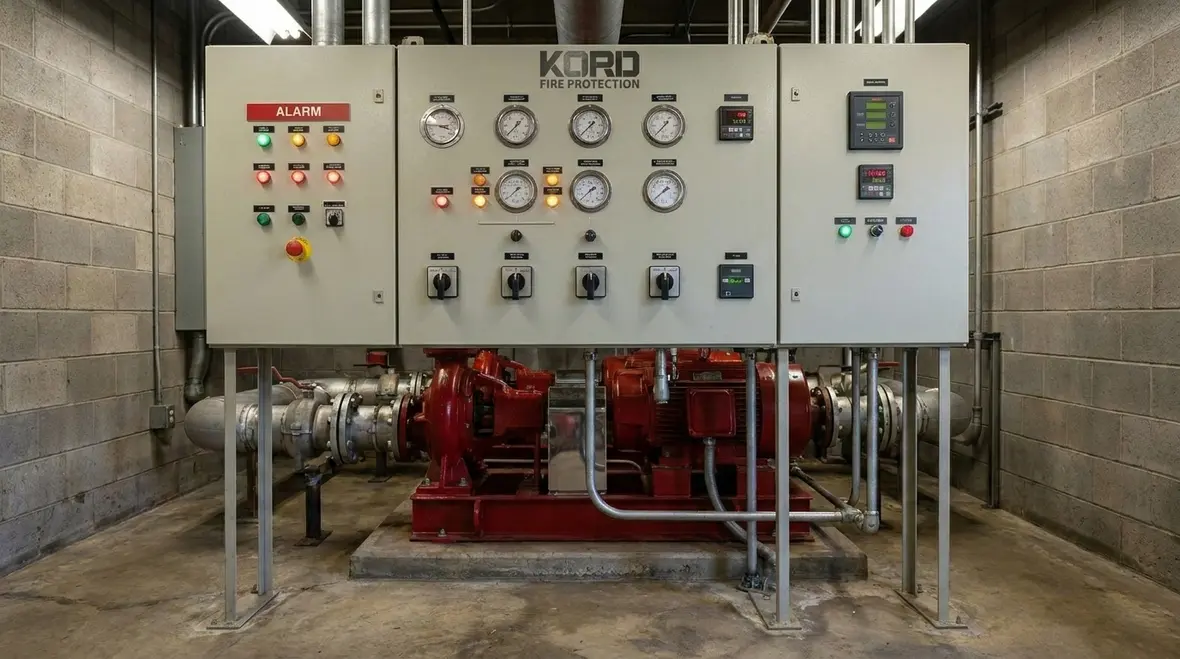
NFPA 20 Section 6.6 addresses operation, including how the pump functions and how the system should respond to fire conditions. Facilities do not want “it worked once” evidence. They want predictable response, with a clear method for testing and verifying that controls operate as designed.
Operational readiness starts with understanding the pump type and driver: electric, diesel, or other setups. Then, teams should verify control sequences, start logic, and transfer of power or controls. For example, a system might require that the jockey pump maintains pressure and that the fire pump takes over quickly when demand rises. If controls delay or misinterpret signals, the pump may not deliver the required response time.
Just as important, the site must ensure that the pump room environment supports safe operation. That includes ventilation for diesel drivers, clear access for maintenance, protection from flooding risk where relevant, and functional alarms for shutdown or fault conditions. In Australia, facilities sometimes face dust and heat issues in pump rooms. So, teams should manage those conditions rather than assuming “the pump will handle it.”
Some facilities also run into the “maintenance sticker problem.” You know it: everything gets a sticker, but nobody reads it. Operational compliance, however, needs actual checks tied to the NFPA 20 framework, not just paperwork.
Field habits that keep operation predictable
- Verify controller sequences under normal and simulated demand conditions
- Confirm alarms, shutdown indicators, and fault notifications behave correctly
- Review room access, housekeeping, ventilation, and drainage conditions
- Coordinate testing windows so the system remains protected during service work
Maintenance that prevents alignment drift and keeps duty cycles calm
NFPA 20 expects maintenance practices that keep the system dependable over time. That includes routine inspections, functional testing, and replacement or adjustment where needed. Maintenance should not be random. It should follow a plan that matches the facility’s pump duty cycle, operational history, and local conditions.
For foundation and alignment concerns, preventive maintenance helps prevent the slow, silent decline that leads to vibration and performance loss. Technicians should monitor base and anchor areas for cracking, grout integrity issues, and signs of movement. They should also check coupling alignment periodically and verify that piping supports remain intact. If pipe supports loosen, the pump can experience added stress. Over time, that stress pushes alignment out of spec.
Maintenance also includes pump internals. That means checking seals, bearing condition, impeller wear patterns, and suction and discharge condition indicators. If a pump runs dry briefly during a test or if air enters the suction line, wear accelerates. Therefore, teams should verify suction conditions and ensure the system stays configured as designed.
On the control side, technicians should inspect sensors, switches, and wiring integrity. Then they should confirm the system can initiate a fire pump start without delay. If controls fail, the mechanical portion might still be healthy, but the system still fails at the most important moment.
As a quick joke, think of it like this: maintenance is the difference between “the pump likes to exercise” and “the pump survives a workout.” Nobody wants the second one.
What documentation and testing should look like
Compliance in NFPA 20 often relies on proof that the system works, not hope that it might work. Therefore, documentation and testing should be clear and traceable. Facilities should maintain records that show foundation and alignment checks, operational tests, inspection dates, and corrective actions. When a facility upgrades piping, replaces valves, or changes supports, documentation should show what was checked afterward.
Testing should also include functional runs and verification of control sequences. This is where facilities can feel the difference between a quick “tick the box” approach and a thorough one. A thorough approach evaluates trends: pressure readings, start behavior, fault events, and any unusual vibration signatures. When teams track trends, they can catch problems early, before a small issue becomes a costly repair.
Also, when facilities plan outages, they should coordinate with test windows and ensure the system remains safe and compliant. In multi site retail environments across Australia, one site’s schedule can affect another. Therefore, the best practice includes a coordinated maintenance calendar that considers both compliance and business operations.
Why records matter more than people think
Good documentation gives teams continuity when contractors change, staff rotate, or the facility expands. It shows what the pump looked like when it was healthy, what changed during upgrades, and what trends deserve attention next. That kind of paper trail is not glamorous, but it is usually the difference between solving a problem in one visit and spending three visits asking the pump room to reveal its secrets.
Why Kord Fire Protection can be a vital partner on these jobs
Fire pump work moves fast, and it has many moving parts, literally and figuratively. Kord Fire Protection can become a vital partner by helping facilities manage the full chain from installation quality to ongoing reliability. Instead of treating foundation and alignment tasks as isolated steps, Kord supports the job with practical coordination, testing discipline, and compliance minded service.
For industrial, retail, and commercial facilities across Australia, that partnership matters because the real world introduces changes. New pipe routing. Equipment access constraints. Construction delays that shift schedules. And yes, the occasional “we changed the layout, but the pump stays the same” moment. Kord helps teams respond to those realities by verifying key conditions after work occurs, keeping the fire pump foundation and alignment requirements on track.
When crews work together from the start, the pump room becomes less chaotic and more dependable. The goal is simple: the system should run when it must, and it should stay ready between tests.
FAQ: NFPA 20 fire pump foundation, alignment, operation, and maintenance
Call Kord Fire Protection for a dependable fire pump program
Facilities across Australia deserve fire pump systems that perform with confidence, not chaos. Kord Fire Protection helps teams apply NFPA 20 Sections 6.4–6.6 with real-world discipline: stable foundations, verified alignment, solid operation, and maintenance that prevents decline.
If your project needs reliable commissioning support or an ongoing plan that stands up to scrutiny, reach out to Kord Fire Protection today and keep your pump ready for the moment that matters most.

Join Our Newsletter!
Get the latest fire safety tips delivered straight to your inbox From our Newsletter.



