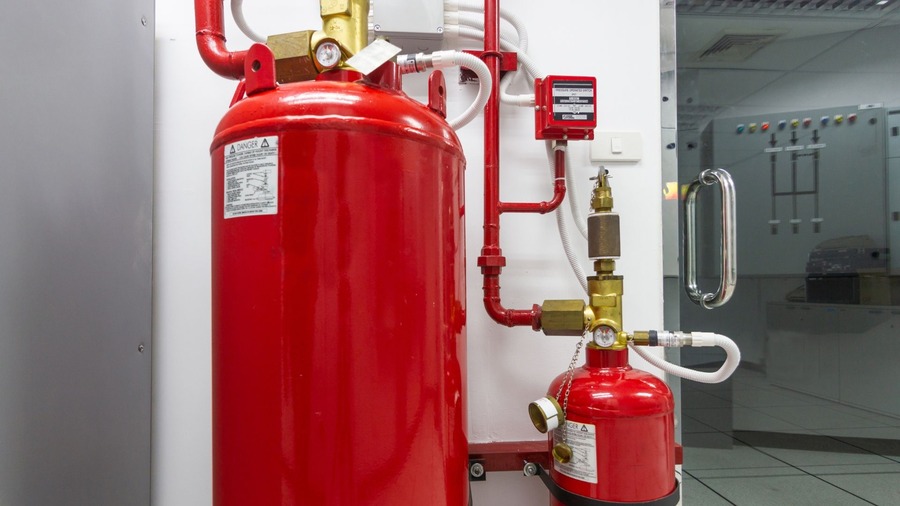
NFPA 20 6.1 6.2 6.3 Centrifugal Fire Pump Selection and Fittings
Quick Answer
NFPA 20 Sections 6.1 to 6.3 guide how professionals pick a centrifugal fire pump, verify its performance, and select the right fittings. In Australia, kord fire protection can streamline this work, reduce installation risk, and help teams meet NFPA 20 expectations with fewer surprises than a flat-screen TV on a first try.
NFPA 20 Sections 6.1 to 6.3 lays out the rules that keep water delivery reliable when it matters most. In the field, that starts with centrifugal fire pump selection and fittings, where the pump is matched to the system demand, the suction and discharge piping is planned with intent, and the performance curve is confirmed before a single pipe is permanently welded. From industrial plants to busy retail and multi-tenant facilities across Australia, kord fire protection can become a vital partner by coordinating pump data, fittings, testing expectations, and installation details so the system performs as designed, not as “close enough.”
Teams that want a broader foundation can also review how NFPA 20 regulates fire pump systems. For hands-on help near the start of a project, Kord Fire Protection’s fire pump system monitoring support fits naturally into the conversation because visibility, performance, and documentation tend to behave better when they are introduced early, not after the room is already full of pipe.
Centrifugal pump choice under NFPA 20 6.1
NFPA 20 Section 6.1 focuses on selecting the pump so it fits the hydraulic requirements of the fire protection system. First, the design team determines the required flow and pressure at the most demanding operating point. Then, they choose a pump model that can deliver that demand without drifting into unsafe performance territory.
At this stage, professionals also consider the pump’s rated speed, the impeller design, and how the pump behaves across the expected operating range. However, pump selection does not happen in isolation. The suction conditions, discharge layout, and the need for proper fittings influence real-world performance. And yes, fittings matter, because water does not care about intentions. It only follows physics.
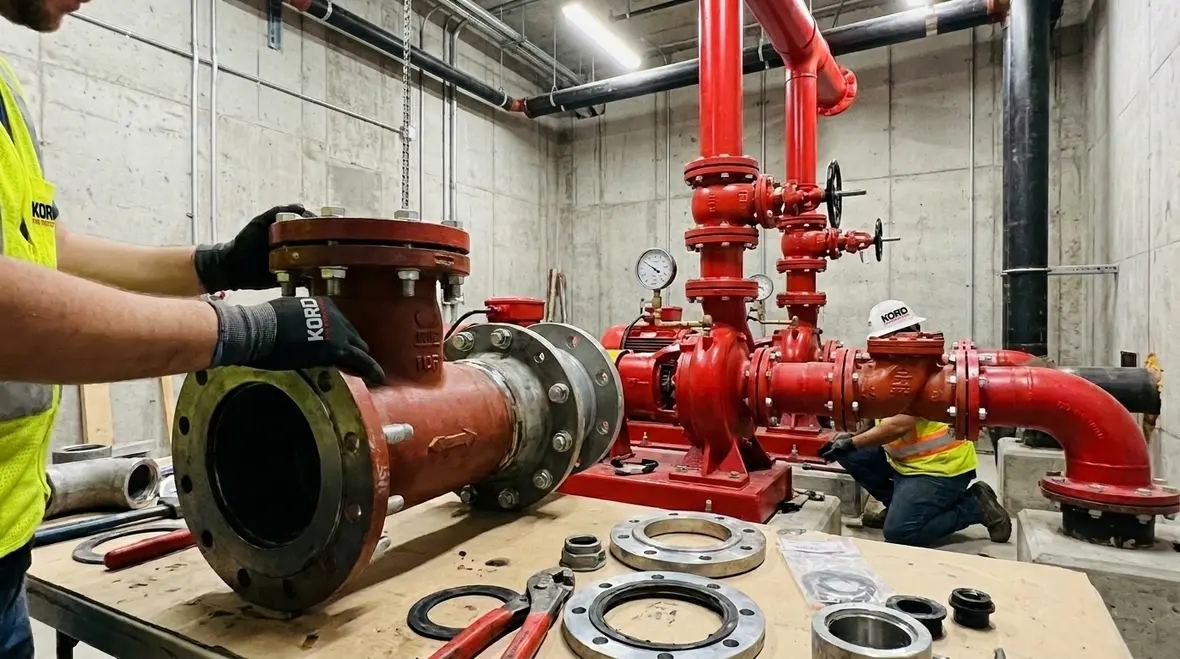
For example, a pump that looks perfect on paper can underperform if suction piping creates excessive friction losses or if fittings create flow turbulence. Therefore, teams pair the pump with the right centrifugal fire pump selection and fittings plan, including pipe sizes, bends, strainers, check valves, and isolation devices that match the system’s design.
kord fire protection supports this by reviewing project intent early, aligning pump data with system requirements, and helping teams avoid common selection traps that show up late, usually after someone has already scheduled welding.
Why early coordination changes everything
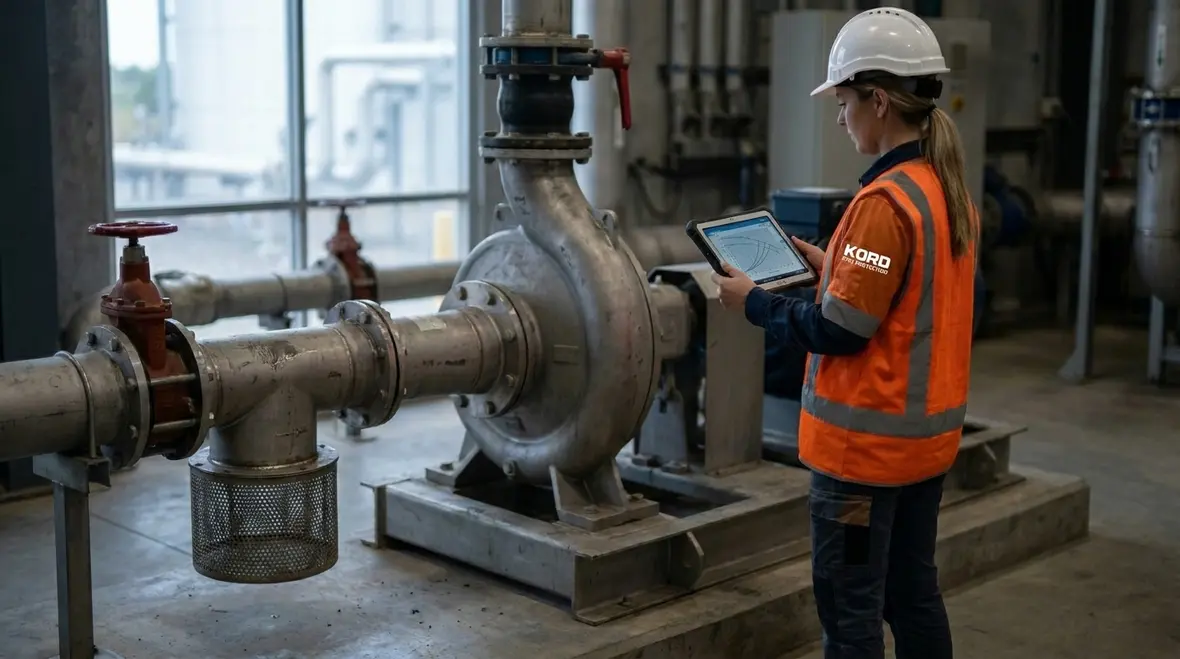
Selection mistakes rarely announce themselves with fireworks. More often, they hide in assumptions. One team member uses one flow point, another applies a different allowance for losses, and somebody else assumes a fitting substitution is “basically the same.” Suddenly the pump room becomes a group project with suspense. Early coordination reduces that risk because it keeps the hydraulic target, the physical layout, and the chosen fittings moving together instead of wandering off in different directions like distracted shoppers in a hardware store.
How NFPA 20 6.2 shapes performance expectations
NFPA 20 Section 6.2 moves from selecting the pump to confirming that it performs. In practical terms, this means verifying that the pump will deliver the required pressure and flow at the specified points on its performance curve. The curve becomes the decision map, and the team checks whether the pump stays within the acceptable band when the system operates under actual resistance.
To do that well, the engineer accounts for the system’s friction losses and any additional losses caused by components. Consequently, the design must include the fittings that will be used, because elbows, reducers, valve bodies, and strainers all affect head loss.
In commercial and industrial settings across Australia, fire pump systems often interact with other site realities, like existing pipe routes, limited space, and the need to coordinate with electrical rooms. Therefore, teams benefit from a methodical performance review that connects the pump curve to the system piping plan.
kord fire protection helps teams treat performance as an end-to-end outcome. Instead of handling pump data and piping design as separate tasks, the service or job stays connected, so performance verification reflects what gets installed, not what was imagined during design meetings.
Reading the curve like it actually matters
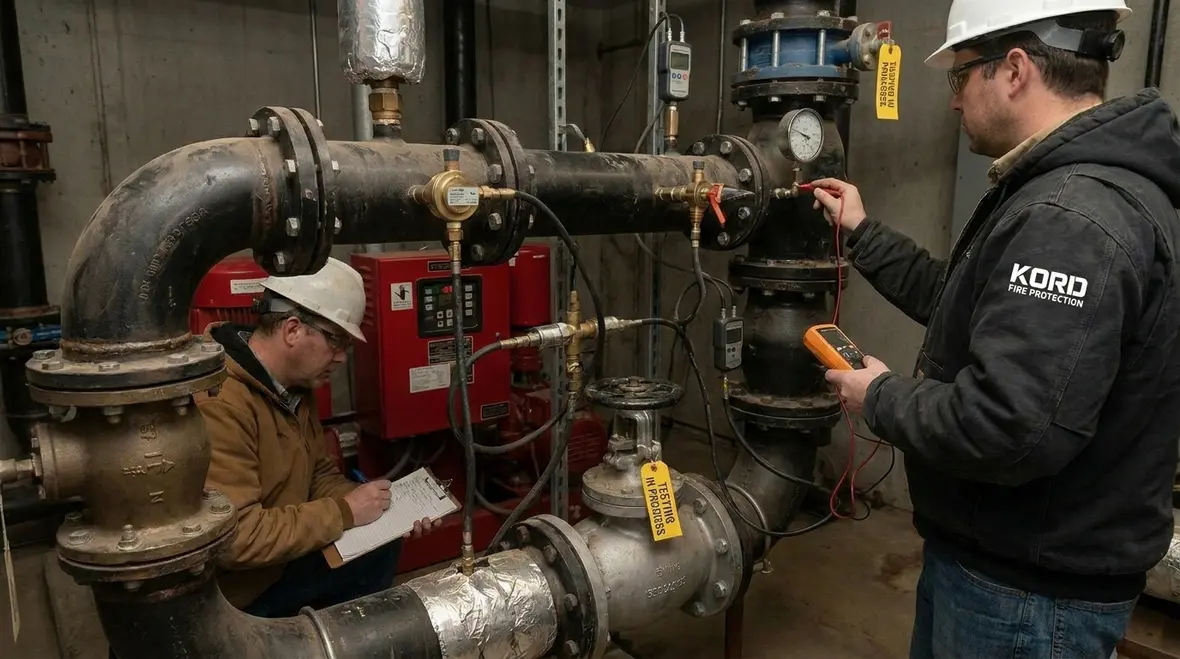
A pump curve is not decorative paperwork. It is the reality check that tells the team whether the selected pump will still behave once piping losses, valves, and real operating resistance enter the picture. If the curve and the installed conditions disagree, the system does not politely average the two. It simply performs where physics pushes it. That is why performance review has to stay anchored to actual layout choices, not idealized sketches that never survive first contact with a crowded plant room.
Fittings, valves, and layout choices in NFPA 20 6.3
NFPA 20 Section 6.3 addresses pump fittings and related components that influence safe operation and reliability. This includes items on the suction and discharge sides, where proper selection supports stable flow, prevents backflow, and maintains safe operating conditions.
On the suction side, teams pay close attention to suction piping arrangement and fittings that can affect pressure availability at the pump inlet. For the discharge side, they select fittings and valves that control flow, protect the system from unwanted reversal, and support proper pressure management.
Just as importantly, the fittings must support maintenance and testing. Fire pump systems in industrial and retail facilities are not one-and-done. They need inspections, planned checks, and routine maintenance access, especially in high-occupancy areas where downtime becomes a risk.
When professionals choose centrifugal fire pump selection and fittings that match the pump’s operating needs, they reduce the chance of mismatched components. In other words, they avoid a situation where the pump is strong, but the fittings quietly sabotage performance.
kord fire protection brings practical field awareness to these decisions. It helps teams translate NFPA 20 expectations into installable parts, correct orientations, and logical routing, so the system can pass the real-world tests without a dramatic plot twist.
The small parts that cause large headaches
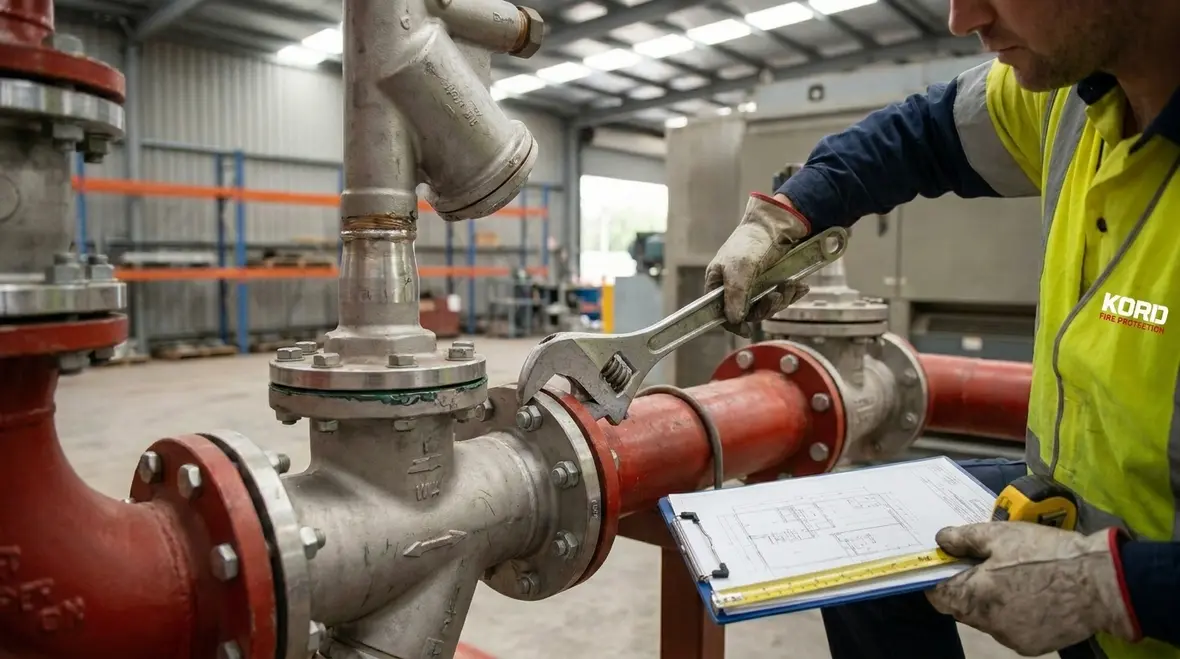
Many system problems are not caused by a bad pump. They come from fittings that looked harmless during procurement and became expensive during testing. A poorly considered elbow, an awkward reducer, a valve with more loss than expected, or a field change that nobody recalculated can all nudge the system away from the intended operating point. That is why fittings deserve attention far beyond “make it connect somehow.”
Meeting flow and pressure goals without guesswork
Fire pump systems run on calculations, not hope. So, teams start by establishing design demand points that reflect hazard classification and system design. Then, they map that demand to pump performance and piping losses.
Next, professionals validate that the pump can operate within its intended range during typical and peak conditions. If the system demand shifts due to changes in sprinklers, standpipes, hose connections, or valve positions, the pump’s ability to hit the required curve can change too.
That is why effective job coordination matters. The pump selection, the piping plan, and the centrifugal fire pump selection and fittings choices must move together as one package. When teams work in silos, one person updates a flow requirement while another person finalizes fittings, and the system ends up with mismatched assumptions. It is like ordering a pizza and then being shocked that it tastes like pizza.
kord fire protection can help reduce that kind of friction by supporting consistent review cycles and keeping the pump and fittings aligned from design through installation and commissioning support.
Common pitfalls in Australian installations and how to avoid them
Even when the design team understands the standards, project pressures can create avoidable problems. First, some projects underestimate the impact of suction conditions. For example, poor suction piping layout or incompatible fittings can influence inlet pressure, which can reduce pump stability.
Second, teams sometimes treat friction losses as a minor detail. However, friction loss from valves, check devices, and elbows can shift the operating point enough to matter.
Third, installation delays can lead to substitutions. If a contractor swaps a fitting type without confirming the head loss impact and compatibility with the pump plan, the performance curve match can break.
To avoid these issues, teams should use a clear checklist approach that connects NFPA 20 requirements to the actual materials on site. In practice, kord fire protection supports this by pairing technical review with service or job coordination, helping project teams keep the system’s intent intact from procurement to commissioning.
A practical checklist mindset beats heroic fixes
Most avoidable commissioning drama starts long before commissioning. It starts when assumptions go unverified, substitutions go undocumented, or layout constraints are treated like somebody else’s future problem. A checklist mindset forces the right questions earlier: Does this fitting match the intended loss profile? Has the suction route stayed as designed? Did any field change affect the curve match? It is less glamorous than heroic troubleshooting, but also much cheaper and much better for everyone’s blood pressure.
Commissioning support that protects uptime
After installation, professionals must ensure the pump and system behave as expected. Commissioning does not merely confirm that the pump runs. It confirms that the pump achieves the required flow and pressure at the specified points, and that the fittings, valves, and discharge routing support proper operation.
During commissioning, the team verifies that the system reflects the designed hydraulic profile. Therefore, the selected centrifugal fire pump selection and fittings must match what is installed, including any final changes that happen when access constraints require field adjustments.
Here, kord fire protection can act as a vital partner by bringing structured support to the commissioning process. It helps teams coordinate documentation, verify that components align with design intent, and keep the system ready for ongoing operational confidence.
FAQ
Final word: partner early, protect the system
NFPA 20 Sections 6.1 to 6.3 demand careful centrifugal pump selection, verified performance, and correct fittings. When these pieces align, the system delivers water when it counts. When they do not, the problems show up during testing.
kord fire protection helps teams across industrial, retail, and facilities across Australia coordinate the entire job with fewer surprises. Reach out early and keep your fire pump system on solid ground.

Join Our Newsletter!
Get the latest fire safety tips delivered straight to your inbox From our Newsletter.