
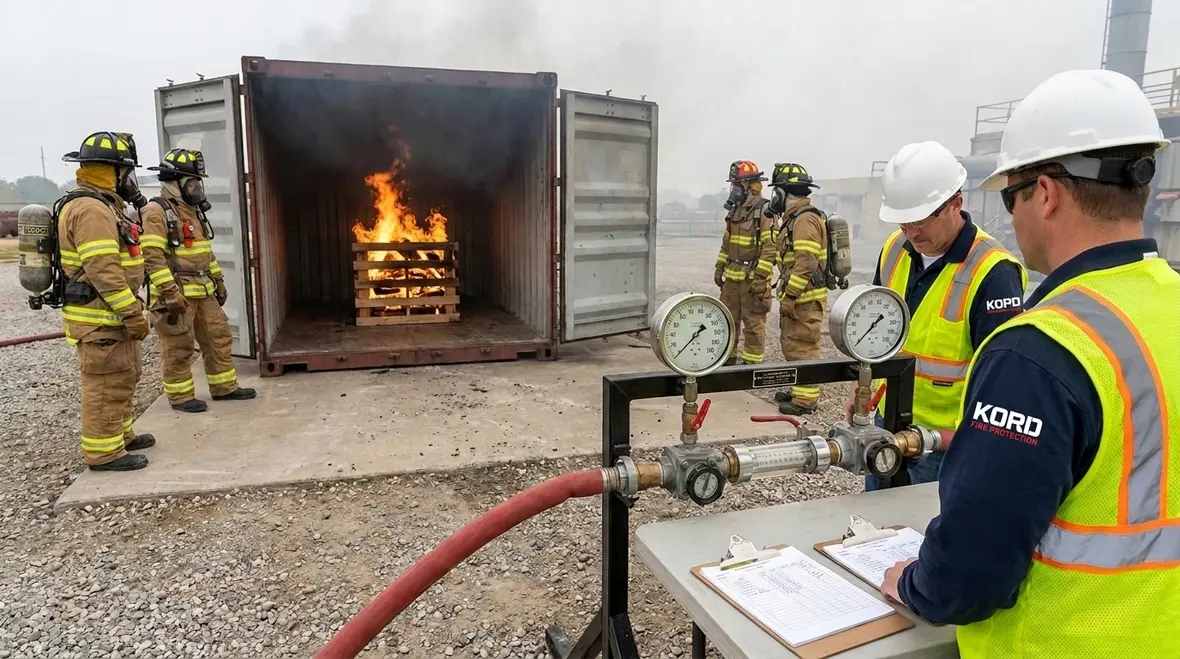
NFPA 18 Section 6.1: General Provisions for Class A Fire Extinguishment Tests
Quick Answer: NFPA 18 section 6.1 class A fire extinguishment test general provisions define baseline expectations for how Class A fire extinguishment performance tests must be conducted. The provisions focus on consistent test conditions, properly configured equipment, credible measurements, and repeatability to support defensible acceptance outcomes.
What NFPA 18 section 6.1 class A fire extinguishment test general provisions actually control
NFPA 18 provides a structured approach to wetting agent and foam related fire extinguishment performance testing. Section 6.1 sets the “rules of the road” for test validity. For commercial, industrial, and retail facilities, these general provisions matter because they influence whether results can support design decisions, product approvals, acceptance criteria, and ongoing compliance documentation.
In practical terms, section 6.1 does not replace detailed hazard or application requirements. Instead, it governs the test fundamentals that enable later sections to meaningfully interpret extinguishment performance. When facilities operate extinguishment systems or rely on mobile equipment and agents, consistent test methods reduce uncertainty and prevent compliance gaps that can lead to failed acceptance checks during commissioning or periodic verification.
Before any flame meets the fuel: test configuration requirements
Effective extinguishment testing depends on controlling variables. NFPA 18 section 6.1 class A fire extinguishment test general provisions emphasize baseline configuration so the test measures extinguishment performance, not uncontrolled setup differences. Common configuration controls include:
- Agent and application system setup: Properly assembled delivery hardware, correct flow paths, and verified operating conditions before ignition.
- Equipment calibration and readiness: Instrumentation for flow rate, pressure, and timing must be verified to prevent false pass or fail outcomes.
- Test substrate and fire load consistency: Class A testing relies on representative fuel arrangements. Variability can distort extinguishment time and residue behavior.
- Environmental conditions: Wind, ambient temperature, and airflow patterns can change flame shape and spread rate, affecting extinguishment outcomes.
Commercial facilities often face a recurring challenge here. Testing gets scheduled around operational downtime, but the equipment configuration and measuring instruments may not be maintained to the same standard as design acceptance. Kord Fire Protection supports compliance readiness by coordinating practical preparation steps that help preserve test integrity across commercial and industrial sites. Near the start of that process, many teams also benefit from a broader look at commercial fire sprinkler systems in Australia so testing, design expectations, and long-term compliance do not drift into separate conversations.
Why timing, flow, and measurement integrity decide compliance outcomes
Extinguishment performance depends on how accurately a test records delivery and response. The general provisions in NFPA 18 section 6.1 class A fire extinguishment test general provisions reinforce credibility by requiring measurement approaches that can withstand scrutiny. Key operational areas include:
1) Delivery consistency
The extinguishing agent must reach the test area with stable flow and correct application characteristics. Variations in pump performance, valve position, or hose and piping configuration can change discharge pattern and wetting coverage, especially when Class A performance depends on penetration and surface wetting.
2) Proper start and stop timing
Timing controls prevent disputes about when extinguishment begins and ends. Facilities that document training, service records, and inspection logs benefit from standardized test timing definitions, because periodic verification often compares results to earlier baselines.
3) Accurate instrumentation and data handling
Instrumentation for flow rate, pressure, duration, and safety interlocks should be functioning and documented. Poor data capture can undermine acceptance even when the agent applied effectively.
For deeper context on wetting agent performance and related system considerations, facilities can reference: NFPA 18 overview: wetting agents and performance implications.
Common failure points during Class A testing and how facilities prevent them
Even when test personnel follow procedures, practical failure points frequently arise in commercial operations. NFPA 18 section 6.1 class A fire extinguishment test general provisions indirectly protect against these issues by requiring dependable baseline conditions. Common problems include:
Inconsistent wetting and coverage
Class A extinguishment depends on wetting agent behavior. If concentration, mixing ratios, or delivery conditions vary, the agent can fail to wet and penetrate fuel surfaces consistently. This can extend extinguishment time or allow re-ignition.
Pressure and flow drift across test runs
During multiple tests, pumps and hoses can heat, valves can partially reposition, and filters can clog. Drift changes discharge characteristics, especially in systems that rely on precise proportioning.
Fuel loading variability
Uniformity of the Class A fuel arrangement affects flame behavior and heat feedback to the extinguishing agent. Small changes can shift performance outcomes.
Environmental effects at the test site
Air movement can tilt discharge, change evaporation rates, and influence how quickly the agent forms a boundary film on the fuel.
To address these practical risks, Kord Fire Protection focuses on repeatability through structured inspection, testing readiness, and maintenance discipline. For Australian facility operators and service coordinators, additional context is available here: Australian fire sprinkler services and ongoing compliance support.
How commercial facilities should apply section 6.1 principles after the test
NFPA 18 section 6.1 class A fire extinguishment test general provisions guide test validity, but the compliance work does not end when the fire goes out. Facilities must translate test discipline into maintenance and verification practices:
- Documented maintenance intervals: Tie proportioning components, pumps, and delivery hardware checks to documented schedules that preserve test-like conditions.
- Change control for hardware and agents: New hoses, altered piping, replaced metering components, or agent substitutions can change performance and should trigger verification review.
- Inspection and readiness checks: Regular verification of pressure, flow paths, and mixing integrity prevents test drift between acceptance and routine operations.
- Training aligned with test expectations: Staff actions during response and verification should preserve the same baseline conditions used in acceptance testing.
Where facilities also operate pumps or pump supported systems, aligning fire pump readiness with test discipline strengthens reliability. For general background on pump fundamentals and operational considerations, see: EN 12845 fire pump maintenance guide for buildings.
Frequently Asked Questions
Conclusion and call to action
NFPA 18 section 6.1 class A fire extinguishment test general provisions set the credibility foundation for Class A testing through consistent setup, reliable measurement, and repeatable conditions. Commercial facilities that treat section 6.1 as a test-only requirement often struggle during acceptance or periodic verification. Kord Fire Protection helps facilities maintain test-ready performance by supporting inspection, commissioning support, and ongoing maintenance discipline. Contact Kord Fire Protection to align your system readiness with NFPA expectations and reduce compliance risk.

Join Our Newsletter!
Get the latest fire safety tips delivered straight to your inbox From our Newsletter.



