
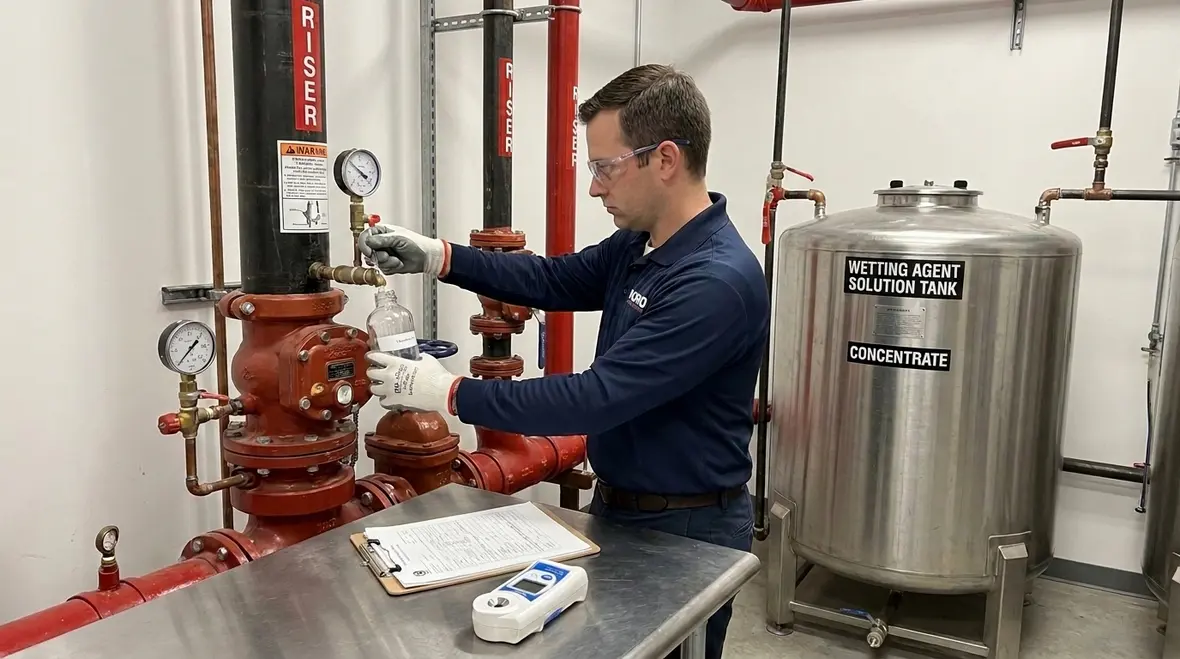
NFPA 18 Section 5.3: Wetting Agent Solution Requirements and Acceptance Criteria
Quick Answer: NFPA 18 section 5.3 sets the minimum wetting agent solution composition, preparation controls, and acceptance testing needed to ensure reliable performance. The requirements focus on correct concentration, consistent mixing, water quality considerations, and field acceptance criteria before systems return to service.
Why NFPA 18 section 5.3 wetting agent controls matter in real operations
In many commercial and industrial hazards, the wetting agent solution directly affects how quickly extinguishing media penetrates and saturates burning Class A fuels. If concentration drifts, mixing becomes inconsistent, or testing is omitted, the system can underperform at the exact time occupants need it most. That is why NFPA 18 section 5.3 wetting agent solution requirements acceptance criteria exist: they translate design intent into verifiable, repeatable field outcomes.
For facilities such as warehouses, manufacturing plants, retail back-of-house storage, and aircraft or vehicle maintenance areas, the operational risk is not theoretical. Wetting agent solutions can degrade through improper storage, temperature cycling, water chemistry variation, or partial refills that do not follow controlled mixing procedures. Ongoing compliance also depends on how the facility documents preparation and acceptance, not just on how the solution is initially installed.
If your facility also relies on integrated suppression infrastructure, it helps to understand how adjacent system support fits into the bigger maintenance picture. A useful companion resource is this NFPA 20 fire pump acceptance testing guide, especially for sites that want cleaner commissioning records and fewer ugly surprises on test day.
For background on the broader wetting agent role, refer to NFPA 18 wetting agents overview.
What section 5.3 typically requires: concentration, preparation, and documentation
1) Wetting agent solution concentration control
Section 5.3 focuses on the wetting agent solution being prepared to the correct concentration using the specified proportioning method. Practically, facilities must ensure that the product used matches the approved formulation and that the dilution process produces the required concentration range every time the solution is produced, replaced, or topped up.
Commercial sites often face a recurring problem: technicians top up using an assumed ratio instead of re-establishing the solution as a controlled batch or using a calibrated proportioning method. That shortcut may pass a visual check yet fail performance expectations due to concentration variation.
2) Water quality and mixing procedure
Wetting agent performance depends on the interaction between the agent and the water used to dilute it. While many facilities treat water as “always the same,” hardness, temperature, and water treatment practices can vary between sources and over time. Section 5.3 expectations typically drive facilities to control the dilution water source or follow the required water handling approach stated in the applicable standard and project documentation.
Operationally, mixing procedure matters just as much as the target ratio. Inconsistent agitation can cause incomplete blending, localized concentration pockets, and results that only show up during acceptance testing.
3) Approved product use and storage conditions
Acceptance is undermined if the solution is prepared from outdated or contaminated product. Facilities need a controlled procurement and storage process that prevents improper substitutions, cross contamination, or storage in conditions that accelerate degradation.
Common failure points include:
- Unlabeled containers or transfer from drums without traceable batch records
- Partial containers stored beyond intended shelf life
- Using “equivalent” products without confirming compatibility and acceptance alignment
NFPA 18 section 5.3 wetting agent solution acceptance criteria: how compliance is verified
Acceptance criteria typically center on demonstrating that the prepared wetting agent solution meets concentration and performance-related expectations at the time of commissioning and after any change that could affect solution quality. Field acceptance then becomes a repeatable inspection and testing process rather than a one-time checkbox.
What acceptance testing must prove
In most practical compliance programs, the acceptance phase confirms three outcomes:
- Correct concentration: testing confirms the solution matches the required dilution ratio within the permitted tolerance.
- Uniformity and proper mixing: procedures ensure the solution is blended to eliminate stratification and concentration pockets.
- Traceability and documentation: records link solution batches to product certificates, dilution method, mixing steps, and test results.
Where facilities commonly fail acceptance
- Calibration gaps: uncalibrated proportioning equipment or measuring devices that drift over time.
- Improper sampling: samples taken immediately after partial mixing or without following the required sampling method.
- Batch mixing shortcuts: mixing only the tank level visually, then topping off without re establishing concentration.
- Delayed testing: solutions tested days later rather than at acceptance, missing issues that could have been caught earlier.
To manage these risks, commercial facilities benefit from documented operating procedures and scheduled verification. Kord Fire Protection supports ongoing compliance by aligning solution preparation, acceptance testing, and maintenance recordkeeping to reduce repeat failures during inspections.
How facilities should prepare, test, and maintain wetting agent solutions day to day
Step by step: solution preparation that supports acceptance
- Confirm approved agent: verify product identity, lot traceability, and compatibility with the system design.
- Verify equipment readiness: confirm proportioning tools and measuring devices are functional and within calibration intervals.
- Control dilution water source: use the approved water source or documented approach to address water quality variability.
- Mix to uniformity: follow mixing duration and agitation method to avoid stratification.
- Sample using the correct method: collect samples after adequate mixing and using a consistent procedure.
- Record batch details: document volumes, times, operator, product lot, and test results immediately.
Inspection and maintenance routines that protect acceptance status
Acceptance is not the finish line. Facilities should plan maintenance actions around the realities of storage and system operations. For example, wetting agent solutions can be affected by refilling events, seasonal changes, and system testing cycles that draw down and replenish portions of solution.
A practical maintenance approach includes:
- Scheduled verification testing aligned with facility risk and regulatory expectations
- Tank and container inspections for contamination, sediment, corrosion impacts, and labeling integrity
- Updated records whenever solution composition changes due to refill or replacement
- Training for technicians on the difference between topping off and full batch preparation
For broader context on service delivery across wetting agent systems and sprinkler related compliance, see Australian fire sprinkler services.
Commercial compliance challenges by occupancy type
The acceptance process becomes harder in facilities that experience frequent internal movements, maintenance shutdown cycles, or multi-source water variations.
Warehouses and distribution centers
These sites often have high storage turnover and may require periodic system tests. The primary risk is incomplete documentation during refills, especially when multiple contractors are on site. Standardize batch records and ensure every refill action is treated as a potential concentration event.
Manufacturing and industrial plants
Industrial environments can introduce contamination risks from transfer pathways and storage handling. Label control, segregated storage, and controlled sampling reduce acceptance failures caused by diluted or contaminated batches.
Retail back-of-house storage and mixed-use facilities
Retail facilities often outsource maintenance. Acceptance compliance depends on clear communication of who is responsible for calibration, sampling, and recordkeeping. Kord Fire Protection helps coordinate compliance activities so commercial service providers do not create gaps that only surface at inspection time.
For information on fire pump systems that commonly interconnect with extinguishing system operations, visit firepumps.org.
Frequently Asked Questions
Next step: secure acceptance outcomes, not just installation dates
To keep NFPA 18 section 5.3 wetting agent solution requirements acceptance criteria compliant over time, facilities need controlled preparation, calibrated measurement, correct sampling, and complete documentation after every change. Kord Fire Protection can support commissioning verification, routine acceptance testing, and maintenance recordkeeping so inspections do not become reactive. Contact Kord Fire Protection today to review your current wetting agent solution program and close the gaps that typically cause acceptance failures.

Join Our Newsletter!
Get the latest fire safety tips delivered straight to your inbox From our Newsletter.



