
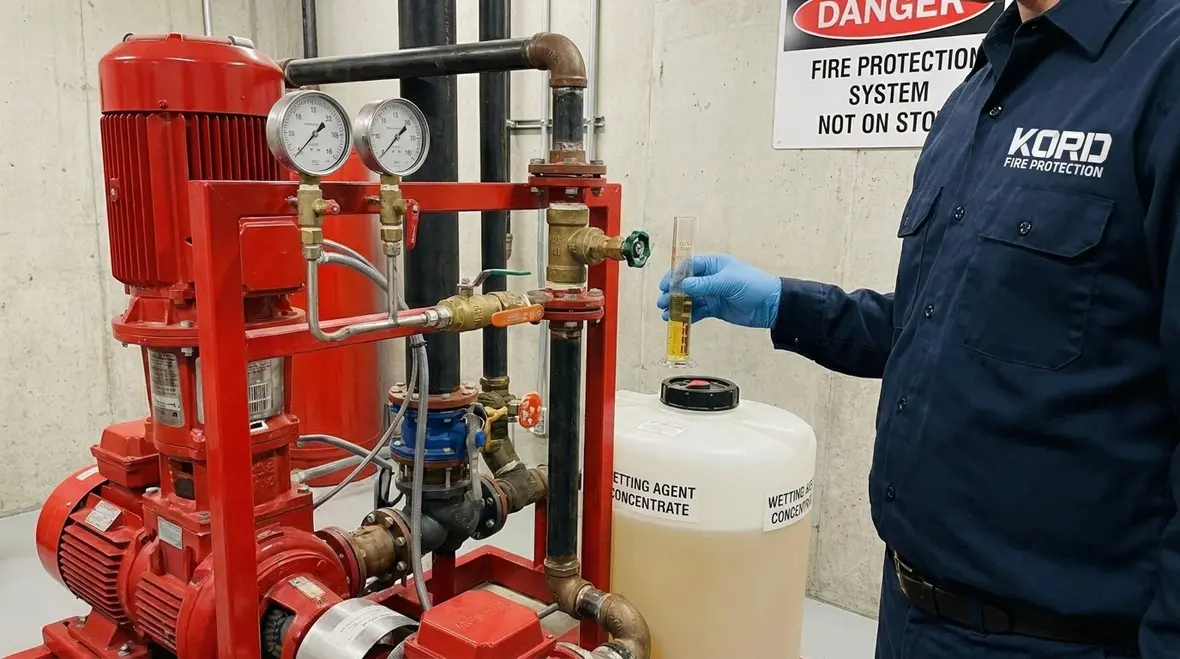
NFPA 18 Section 4.4: Correct Wetting Agent Dilution Concentration Requirements
Quick Answer
NFPA 18 section 4.4 sets wetting agent dilution expectations to support dependable foam performance and suppression effectiveness. In practical terms, facilities commonly target the required concentration range of 0.5% to 1.0%. Correct mixing, verification, and recordkeeping prevent under dosing and over dosing.
If you are reviewing broader system reliability and documentation practices, it also helps to understand fire pump testing requirements under NFPA 25, since consistent records and maintenance discipline tend to make every compliance conversation less awkward. ([firepumps.org](https://firepumps.org/blog/nfpa-25-fire-pump-testing-requirements-guide/?utm_source=openai))
What NFPA 18 section 4.4 requires for wetting agent dilution
The intent behind NFPA 18 section 4.4 wetting agent dilution concentration requirements is straightforward: ensure the wetting agent delivers consistent wetting performance at the nozzle and through the discharge time window. If the dilution is too low, water tends to bead off fuels and surfaces rather than spreading. If dilution is too high, excess surfactant can destabilize foam qualities in systems that rely on specific application chemistry, and it can increase residue and equipment exposure.
For compliant foam and suppression operations, the practical concentration target commonly referenced for section 4.4 operational use is within 0.5% to 1.0%. Kord Fire Protection uses this range as a working compliance control point, then verifies against the wetting agent manufacturer instructions and the facility’s documented procedures.
Why concentration accuracy is a real-world compliance issue
Commercial, industrial, and retail fire protection teams rarely fail due to “wrong equipment.” Failures typically happen in the handling chain. The wetting agent sits in bulk storage, gets measured by staff, mixed in a tank, transferred into a system, and then relied on during the discharge scenario. Every step introduces drift potential.
Common causes of dilution drift
- Incorrect pump calibration and dosing settings on proportioning systems, especially after maintenance or parts replacement.
- Inaccurate measurement of concentrates by volume during mixing, including container scale errors and inconsistent fill practices.
- Water quality variability that affects surfactant behavior and creates performance inconsistency.
- Tank settlement and incomplete mixing, where concentration gradients form before discharge.
- Transfer line retention, leaving prior concentration water in hoses or manifolds that alters the effective first discharge.
Equipment and maintenance effects
Wetting agents can impact gaskets, strainers, filters, and internal wetted surfaces. Concentration errors can accelerate residue formation, which can clog strainers and alter flow profiles. Over time, that changes discharge behavior and complicates inspection verification. Facilities that do not maintain dosing skids, check valves, and suction strainers often find that “the system works,” but performance during operational testing becomes inconsistent.
Operational best practices to meet NFPA 18 section 4.4 wetting agent dilution concentration requirements
Meeting the intent of NFPA 18 section 4.4 wetting agent dilution concentration requirements requires process control, not guesswork. The following procedures align with typical commercial facility operating standards and support audit ready documentation.
1) Use a controlled dilution method
- Measure concentrate and make up water using calibrated equipment.
- Document batch size, date, operator, and calculated concentration target within the 0.5% to 1.0% operational range.
- Confirm mixing time and method before system transfer, especially after tank refilling or line cleaning.
2) Verify concentration using an approved test approach
Concentration verification should not rely solely on calculated mixing. Use a repeatable measurement method suited to the wetting agent type and facility policy, then record results. If the test indicates concentration drift outside the target band, stop operational use and correct the dilution before returning the system to service.
3) Control dosing equipment and discharge transitions
- Verify proportioning pump settings after any servicing or filter changes.
- Confirm suction strainer condition and clean it before mixing cycles.
- Address line retention by following a defined purge or first draw practice, documented in the procedure.
4) Maintain inspection and records that withstand scrutiny
Compliance is easier when records tell the story. Keep records of dilution calculations, concentration verification results, equipment checks, and any corrective actions. For wetting agent systems, these documents often matter as much as the test itself when regulators and internal auditors review performance history.
For additional context on how wetting agents function within fire protection operations, review Kord Fire Protection’s overview: NFPA 18 overview of wetting agents.
Commercial facility standards: how facilities typically implement compliance
In commercial and industrial environments, wetting agents often support specialized suppression needs where water application must spread and wet surfaces effectively. Successful implementations typically combine NFPA alignment, manufacturer documentation, and internal operating procedures.
Operational roles and responsibilities
- Fire protection technicians handle mixing verification, dosing equipment maintenance, and functional testing.
- Facility maintenance teams support tank access, labeling, and routine condition checks.
- Site leadership ensures staffing and training for accurate mixing and timely replacements.
Training and handling discipline
Concentration compliance depends on trained, repeatable practices. Staff should understand why the dilution target matters and how to respond if tests show the solution falls outside the expected 0.5% to 1.0% operational band. Training should also cover the impacts of residue, filter loading, and line retention that can affect effective concentration during early discharge.
If the facility operates in Australia or uses Australian service arrangements, Kord Fire Protection also supports sprinkler and fire service compliance workflows through Australian fire sprinkler services.
For sites that need related support on the Australian side, Kord Fire Protection also covers practical repair workflows in fire sprinkler repair Australia, which fits naturally with inspection, testing, and maintenance planning. ([kordfire.com.au](https://kordfire.com.au/fire-protection-blog/fire-sprinkler-repair-australia-by-kord-fire-protection/?utm_source=openai))
How Kord Fire Protection supports ongoing NFPA 18 compliance
Many facilities treat wetting agent dilution as a periodic task, but the compliance reality is continuous. Kord Fire Protection helps commercial customers maintain concentration control across storage, mixing, transfer, and operational readiness. This includes maintenance and inspection activities that reduce concentration drift risks and support consistent discharge performance.
When facilities need pump and fire protection system expertise tied to reliable operations, teams also benefit from coordinating with established fire industry resources such as firepumps.org. Kord Fire Protection applies that practical knowledge to onsite procedures, verification practices, and documentation discipline.
Frequently Asked Questions
Call to action
Ensure your wetting agent dilution process stays within 0.5% to 1.0% and remains defensible during inspections. Contact Kord Fire Protection to review your mixing procedure, dosing equipment controls, and concentration verification records, then schedule ongoing testing and maintenance to support continuous compliance with NFPA 18 section 4.4 wetting agent dilution concentration requirements.

Join Our Newsletter!
Get the latest fire safety tips delivered straight to your inbox From our Newsletter.



