
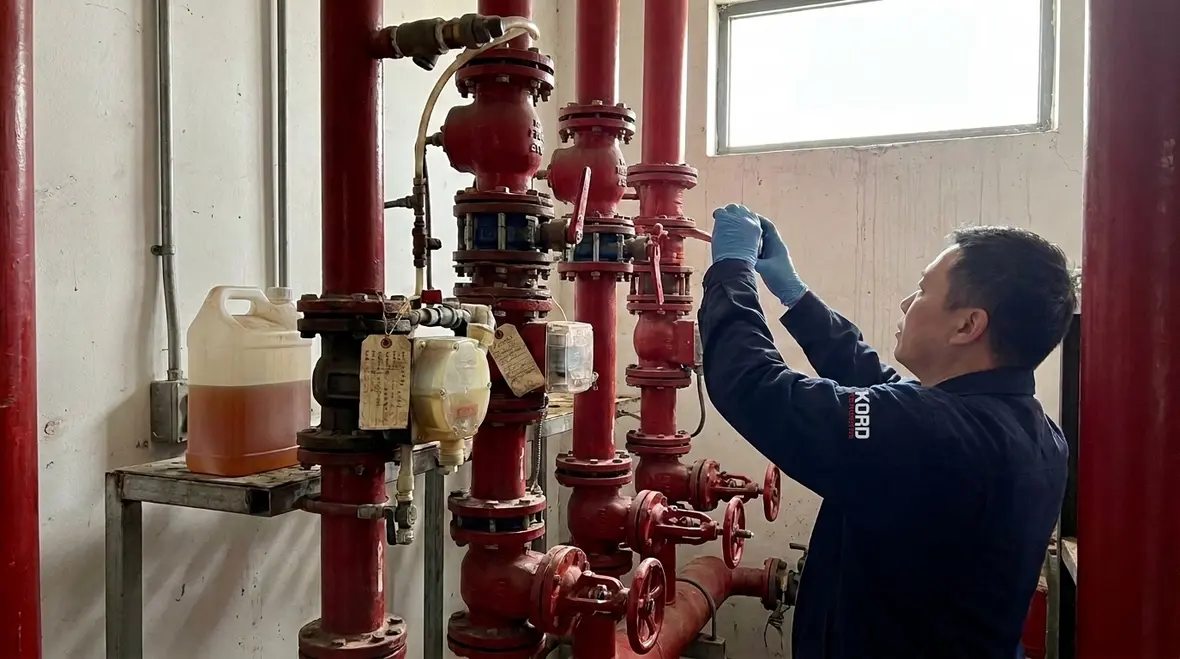
NFPA 18 Section 6.3: Deep-Seated Fire Test Requirements for Wetting Agents
Quick Answer: NFPA 18 section 6.3 deep-seated fire test wetting agent requirements focus on how wetting agents are applied and verified for deep-seated fire performance. Compliance depends on correct concentration, consistent delivery, protected storage, and documented maintenance plus inspection of related foam and sprinkler systems.
Facilities also benefit from tying wetting agent readiness into broader Australian fire sprinkler services, especially where inspection, testing, and maintenance need to work together instead of drifting into separate silos.
Why NFPA 18 section 6.3 wetting agent rules matter in real facilities
Commercial, industrial, and retail facilities rely on dependable fire suppression performance where heat, ignition, and suppression demand can expose equipment to adverse conditions. In deep-seated fire scenarios, wetting agents influence how suppressant solutions penetrate fuels and suppress combustion effectively. NFPA 18 section 6.3 deep-seated fire test wetting agent requirements therefore drive both test methodology and ongoing operational confidence.
Compliance is not only about having the right product. It is also about controlling variability that impacts results, including concentrate strength, water quality, injection performance, container condition, and maintenance discipline. Facilities frequently encounter delays and operational risk when wetting agents are treated as “set and forget” inventory rather than as a controlled chemical component tied to system performance and test outcomes.
What “deep-seated fire test” performance depends on
Deep-seated fire testing evaluates suppression behavior where fuel or packaging conditions create heat retention and reduced accessibility to extinguishing agents. Wetting agents help solutions spread and penetrate, reducing surface tension and improving wet-out of materials. In practice, this means that test acceptance depends on consistent wetting agent delivery and correct chemical concentration during test conditions.
Operational variables that affect performance typically include:
- Concentrate proportion and stability in storage
- Injection accuracy and flow control performance
- Water quality affecting dilution and solution behavior
- System cleanliness, including piping condition and strainers
- Uniformity of mixing, especially in longer runs or complex manifolds
NFPA 18 section 6.3 deep-seated fire test wetting agent requirements at a practical concentration level
Wetting agent selection and dosing typically require a controlled concentration in the range of 0.5% to 1.0%, aligned with the applicable test and system design basis. For many facilities, the compliance challenge is maintaining that concentration across seasons, supply batches, water chemistry changes, and system operating conditions.
Key compliance expectations generally include:
- Verified concentration: Use calibrated measurement processes to confirm actual solution strength prior to testing and after any system changes.
- Correct wetting agent for the test purpose: Ensure the wetting agent formulation matches the tested configuration rather than relying on interchangeable products.
- Documented preparation procedures: Establish controlled dilution practices, mixing order, and labeling that prevent cross contamination or misdosing.
- Repeatable delivery: Injection components must provide reliable dosing under expected pressure and flow conditions.
Facilities that miss concentration targets often experience inconclusive test results, repeat testing requirements, or acceptance delays with AHJ or insurance stakeholders. The root cause is frequently traceable to inaccurate dosing equipment, degraded concentrate, or insufficient mixing verification.
How wetting agent is delivered and what inspectors look for
In many systems, wetting agents are introduced through injection pumps, proportioning devices, or other dosing components that connect to the water supply pathway. Inspectors and testing teams evaluate whether wetting agent delivery matches the required test conditions and whether the system is maintained to prevent performance drift. For background on water delivery performance and acceptance checks, review this fire pump acceptance testing guide.
Injection and proportioning control points
The following are common mechanism-level failure points that directly affect wetting agent availability and concentration:
- Dosing pump wear or calibration drift: Output can deviate gradually, leading to under or over concentration.
- Clogging or partial blockage: Strainers, filters, and injection nozzles can collect debris and alter flow.
- Air entrainment and priming issues: Air can disrupt stable dosing, especially after maintenance or downtime.
- Incorrect dilution sequence: Mixing order and mixing time can impact homogeneity.
- Unsupported water chemistry changes: Seasonal water sources or treatment changes can alter solution behavior.
Storage, labeling, and change control
Wetting agents are chemical products that can degrade or separate depending on formulation and storage conditions. Compliance depends on controlled handling, including:
- Batch and shelf life management with traceable records
- Temperature protection to prevent product instability
- Clean transfer practices that prevent contamination
- Change control when suppliers, batches, or concentrations are adjusted
Common compliance gaps in commercial and industrial sprinkler environments
Many facilities adopt wetting agents without integrating them into the same rigorous compliance framework applied to valves, gauges, alarms, and actuation components. That gap often leads to operational risk during deep-seated fire test execution.
Common gaps include:
- Missing concentration verification records: Concentration is assumed rather than confirmed with a repeatable method.
- Inconsistent maintenance intervals: Injection components and filters may not be inspected at frequencies that match real usage.
- Unmanaged system downtime: After repairs, the dosing system may be returned to service without full functional and concentration checks.
- Procedure drift: Staff changes or untracked procedural updates can create variability in mixing and preparation.
- Limited coordination during testing: Wetting agent preparation can be disconnected from sprinkler test scheduling, resulting in last minute changes or rushed verification.
For an overview of how wetting agents fit within NFPA 18 system concepts, see Kord Fire Protection’s NFPA 18 overview of wetting agents.
Build a defensible compliance program with inspection and service discipline
Reliable compliance for deep-seated fire testing depends on making wetting agent performance part of the facility’s risk management routine. A defensible program includes inspection, documented checks, and timely corrective actions tied to system design and test objectives.
Recommended operational controls
- Pre test readiness checks: Confirm concentrate condition, storage label integrity, mixing tools cleanliness, and injection system readiness.
- Concentration verification: Validate that diluted solution strength aligns with the design and test needs, commonly 0.5% to 1.0% depending on the specific configuration.
- Functional verification of dosing components: Validate pump operation, stable injection under flow, and filter condition.
- Post maintenance verification: After any service affecting water flow, injection, or piping, re confirm concentration and mixing performance.
- Recordkeeping for audits: Maintain test preparation records, batch details, and device calibration documentation.
In practice, commercial facilities reduce downtime and reduce repeat testing risk when they partner with experienced fire protection service providers. Kord Fire Protection supports ongoing compliance through technical maintenance planning, system checks, and documentation suitable for internal audits and external review. For additional context on related sprinkler service capabilities, refer to Australian fire sprinkler services by Kord Fire Protection.
For background on fire pump systems that can affect water delivery performance and injection stability, review FirePumps.org.
Frequently Asked Questions
Get your deep-seated wetting agent compliance program ready
Schedule a compliance-focused service review to confirm wetting agent storage, dosing accuracy, injection stability, and documented concentration verification workflows. Kord Fire Protection can help facilities reduce repeat testing risk by aligning maintenance and testing readiness with NFPA 18 expectations, including ongoing checks for the equipment mechanisms that most often cause performance drift. Contact Kord Fire Protection today to plan your next inspection and testing window.

Join Our Newsletter!
Get the latest fire safety tips delivered straight to your inbox From our Newsletter.



