
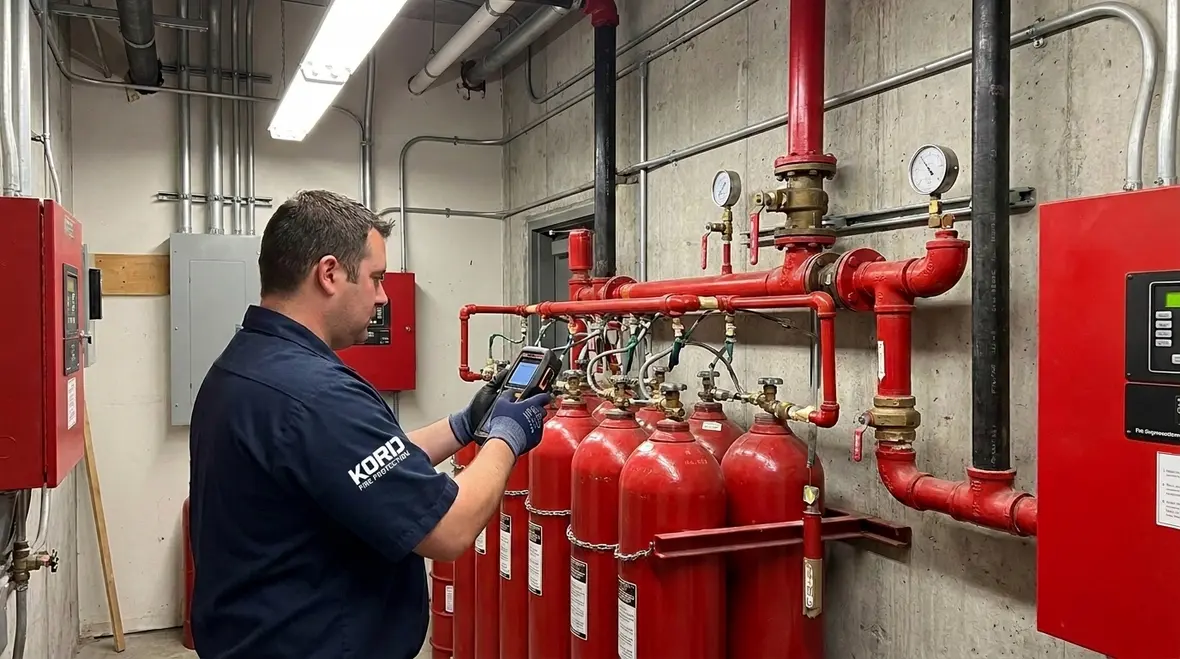
NFPA 18 Section 10.1: Fixed Extinguishing System Inspection, Testing, and Maintenance
Quick Answer: NFPA 18 section 10.1 sets inspection, testing, and maintenance expectations for fixed extinguishing systems so they remain reliable during a fire. Facilities must follow defined procedures, maintain documentation, address impairments quickly, and verify system performance through scheduled testing.
For teams building a broader reliability program around fixed extinguishing systems, Kord Fire Protection also offers a related guide on water spray fixed system inspection and maintenance, which fits naturally into the same compliance conversation.
What does NFPA 18 section 10.1 cover in practice?
NFPA 18 section 10.1 fixed extinguishing system ITM requirements focus on keeping total system performance within acceptable tolerances for the protected hazard. In commercial kitchens, industrial process areas, and retail back of house storage, compliance often fails not because systems were poorly designed, but because inspection and testing routines drift due to staffing constraints, operational interruptions, or incomplete records. This section establishes the practical framework: verify the system is ready, verify key components function as intended, and maintain it so it will discharge and operate when required.
Because fixed extinguishing systems integrate detection, actuation, distribution, and extinguishing agent storage, “ITM” must be treated as a system-level reliability program, not a single checklist item. The operational intent is simple: if the system initiates, it should discharge the correct agent at the correct time and in the correct manner.
Key inspection and readiness items facilities should not miss
Section 10.1 expects periodic inspection and verification activities that confirm the system remains capable. For most fixed extinguishing installations, readiness depends on recurring checks across multiple subsystems:
- Control panel and initiating devices: confirm correct status indications, power supply condition, and that detection and manual actuation interfaces are not disabled or impaired.
- Detection and actuation pathways: verify clear, unobstructed pathways and correct device condition without tampering or drift from installation settings.
- Agent storage and distribution: confirm containers, cylinders, piping, nozzles, and discharge devices show no evidence of damage, leakage, or blockage.
- Valves, release mechanisms, and operating sequences: ensure actuators and release devices are in the correct state and that the operational sequence can be completed.
- Signage, access, and impairment controls: ensure hazard-specific signage is visible, access is maintained, and any impairment is controlled, documented, and time bound.
A common commercial failure point is administrative rather than mechanical. If the site logs “inspected” but cannot demonstrate verification of key components or cannot show impairment clearance dates, the system’s operational readiness becomes questionable during audits and in incident investigations.
Testing and functional verification: where reliability is proven
Inspection confirms visible condition and readiness cues. Testing confirms function. Fixed extinguishing systems in the field must be tested to verify key performance attributes across the chain from signal receipt to discharge effectiveness. In real facilities, testing often encounters operational barriers such as production schedules, hot work restrictions, and confined spaces. Good ITM programs manage these constraints through planning and methodical execution.
1) Actuation sequence integrity
When testing validates the actuation pathway, facilities confirm that initiating signals cause the control system to send the proper release action to the extinguishing mechanism. This prevents the situation where the system appears normal during visual inspection but fails to actuate under alarm conditions.
2) Release and discharge capability
Testing must address whether the system can release agent reliably. For many installations, this requires careful coordination with shutdown procedures and safe discharge controls. The operational lesson: any delay, partial actuation, or valve control issue can degrade performance during an actual event.
3) Distribution path and nozzle condition
Distribution effectiveness depends on nozzle condition, piping integrity, and the absence of blockages. Grease accumulation, corrosion, and mechanical damage can compromise distribution. Testing programs must align with the hazard environment and the facility’s maintenance access patterns.
Where wetting agents or other additives are used, performance can also depend on correct agent composition and system compatibility. For teams working with wetting agent concepts in fire suppression applications, Kord Fire Protection provides context here: NFPA 18 overview and wetting agents. This supports more defensible ITM decisions when agent behavior influences effectiveness.
Maintenance activities that prevent repeat failures
Maintenance turns test outcomes into corrected performance. It should remove the root cause of abnormal findings and restore the system to an “as required” operating state. Section 10.1 expects that maintenance does not end at component replacement. It must also address how failures occurred and how they will be prevented from recurring.
Common maintenance drivers in commercial sites
- Seals, fittings, and leak prevention: minor leakage can go unnoticed without targeted verification, especially in systems with integrated pressure monitoring or concealed piping.
- Corrosion and environmental exposure: industrial facilities often face moisture, chemical exposure, and vibration that affect valves and discharge components.
- Obstructions and mechanical damage: transport, maintenance works, and storage practices can lead to blocked nozzles or damaged discharge paths.
- Incorrect or undocumented modifications: changes to the protected hazard area or HVAC airflow patterns can affect coverage or operational behavior if not assessed.
Maintaining documentation as part of compliance
Operational compliance depends on more than performing work. The facility must keep maintenance and test records that support traceability, including dates, results, impairments, corrective actions, and verification that the system returned to service.
Commercial and industrial customers typically benefit from an ITM program that is coordinated across fire protection assets rather than managed in isolation. For sprinkler and water supply support that often interfaces with extinguishing strategies, teams can review the related service approach here: Australian fire sprinkler services.
Operational compliance challenges: inspections fail when systems are not stable
Even well installed systems can fail compliance outcomes when facilities cannot maintain stable operating conditions between inspections and tests. The most frequent challenges include:
- High turnover of contractors and building staff: new staff may alter access routes, disable devices, or leave impairments unresolved.
- Production downtime constraints: delayed testing can lead to long gaps between verified performance checks.
- Hazard evolution: changes to stored materials, cooking equipment, process configuration, or layout can affect how the fixed extinguishing system protects the hazard.
- Service scheduling and water supply considerations: when extinguishing strategy relies on pumps or water movement, reliability depends on maintaining the pump system and readiness controls. For pump-focused awareness, see firepumps.org for supporting technical context commonly used by facilities managing water supply components.
The practical mitigation is a structured ITM schedule linked to facility operations, with clear impairment management and swift corrective action. Kord Fire Protection supports these real world compliance needs through recurring service planning, site tailored inspection approaches, and documentation that withstands internal review and external scrutiny.
How Kord Fire Protection supports NFPA 18 section 10.1 ITM execution
Fixed extinguishing systems often integrate specialized components that require methodical handling and correct test discipline. Kord Fire Protection works with commercial, industrial, and retail facilities to keep systems serviceable through consistent ITM execution aligned with the intent of NFPA 18 section 10.1 fixed extinguishing system ITM requirements.
- Planned inspection and test scheduling: aligned to operational windows to reduce downtime and maintain readiness.
- Defect finding and corrective maintenance: focused on restoring system performance and addressing recurring failure patterns.
- Compliance documentation: record keeping that clearly demonstrates what was verified, what failed or was abnormal, and what restored service.
This approach helps facilities move from “check the box” compliance to defensible, risk informed reliability. Where extinguishing performance may depend on agent behavior, component compatibility, or protected hazard condition, Kord Fire Protection also supports hazard specific review and service planning.
Frequently Asked Questions
Conclusion and Call to Action
NFPA 18 section 10.1 fixed extinguishing system ITM requirements help facilities maintain dependable performance through disciplined inspection, functional testing, and documented maintenance. If a site cannot consistently prove readiness, it cannot defend compliance or reliability. Kord Fire Protection can review existing ITM practices, align schedules to operational realities, and deliver maintenance that restores system capability. Contact Kord Fire Protection to confirm your fixed extinguishing system ITM program is audit ready.

Join Our Newsletter!
Get the latest fire safety tips delivered straight to your inbox From our Newsletter.



